Loading...
Bhagat Singh vs Muhammad ibn Abd al-Karim al-Khattabi
Bhagat Singh leads by 5.1 pts · 2 figures compared
…
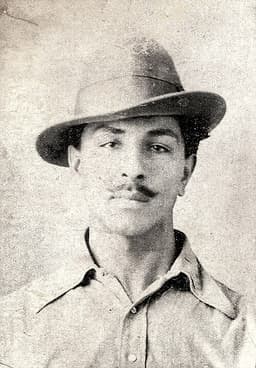
Bhagat Singh
Revolutionary · Modern
46.8Total
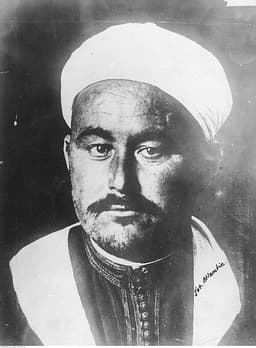
Muhammad ibn Abd al-Karim al-Khattabi
Revolutionary · Modern
41.7Total
Basic Information
Born
1907
1854
Died
1931
1927
Era
Modern
Modern
Nationality
India
Sudan
Occupation
Revolutionary
Revolutionary
Civilization
Indian
Other
Score Comparison
Military (10%)
30.0
47.5
Political (20%)
25.0
25.0
Influence (20%)
61.0
52.5
Legacy (20%)
50.0
40.0
Leadership (15%)
65.0
41.5
Strategy (15%)
25.0
38.3
TOTAL
46.8
41.7
Bhagat Singh — Complete Timeline
1928 AD
Killing of John SaundersPolitical Action◆ Major
Bhagat Singh and his associates killed British police officer John Saunders in Lahore, mistaking him for James Scott, who had ordered the lathi charge that killed Lala Lajpat Rai. This act of revenge escalated the revolutionary movement.
AssassinationRevolutionary Action
Impact: national
1929 AD
Central Legislative Assembly BombingPolitical Action◆ Major
Bhagat Singh and Batukeshwar Dutt threw bombs in the Central Legislative Assembly in Delhi to protest the Public Safety Bill and Trade Disputes Act. They were arrested and used the trial to propagate revolutionary ideas.
ProtestRevolutionary Action
Impact: national
Hunger Strike in JailPolitical Action◆ Major
Bhagat Singh and fellow prisoners went on a 116-day hunger strike in Lahore jail demanding better treatment for political prisoners. The strike drew national attention and forced the British to make concessions.
ProtestPrison Reform
Impact: national
1931 AD
Execution by HangingPolitical Action◆ Major
Bhagat Singh was executed by hanging at Lahore jail at age 23, along with Rajguru and Sukhdev. His execution sparked widespread protests and made him a martyr for the Indian independence movement.
ExecutionMartyrdom
Impact: nationaltragic
Muhammad ibn Abd al-Karim al-Khattabi — Complete Timeline
1884 AD
Command at the Battle of El TebWar◆ Major
Muhammad ibn Abd al-Karim al-Khattabi led Mahdist forces at the Battle of El Teb against a British relief column. Although the Mahdists were defeated, the battle demonstrated their ability to challenge British military power in Sudan.
Mahdist WarBattle of El TebBritish Relief
Impact: regional
Participation in the Siege of KhartoumWar◆ Major
Al-Khattabi commanded Mahdist forces during the siege of Khartoum. His troops played a key role in the final assault that captured the city and killed General Gordon, contributing to the Mahdist victory.
Siege of KhartoumMahdist WarGordon's Death
Impact: regional
1899 AD
Capture by British ForcesWar◆ Major
Following the fall of the Mahdist state, al-Khattabi was captured by British forces. He was taken prisoner and later exiled, ending his military career and role in the Mahdist movement.
CaptureExileMahdist Defeat
Impact: regionaltragic
Expert Analysis
Muhammad ibn Abd al-Karim al-Khattabi vs Bhagat Singh
# The Revolutionary’s Crossroads: Bhagat Singh and al-Khattabi
In a Lahore jail cell in March 1931, a 23-year-old man kissed the gallows with a smile, his last words echoing defiance. Half a century earlier and thousands of miles away, in the Sudanese desert, another revolutionary watched his Mahdist army shatter against British Maxim guns, knowing his cause had died with the men around him. Both men faced the same empire—the British—yet their paths could not have diverged more starkly. One became a martyr whose name still ignites passions across India; the other faded into historical obscurity, a footnote in the annals of colonial resistance. What explains the difference? The answer lies not in their courage, which both possessed in abundance, but in the worlds they inhabited and the revolutions they served.
Origins
Bhagat Singh was born in 1907 in Punjab, into a family steeped in anti-colonial activism. His father and uncle were both involved in the Ghadar Party, a revolutionary movement that sought to overthrow British rule. From childhood, Singh breathed the air of resistance: the Jallianwala Bagh massacre of 1919, which he witnessed at age twelve, seared into him a hatred of British oppression. He grew up reading European anarchist literature—Bakunin, Marx, Lenin—and dreaming of a socialist India free from both colonial rule and feudal exploitation. His was a revolution of ideas, of pamphlets and bombs, of a young man who believed that violence was a language the empire understood.
Muhammad ibn Abd al-Karim al-Khattabi, born in 1854 in the Sudan, came from a different tradition entirely. He was a follower of the Mahdi, Muhammad Ahmad, a religious leader who proclaimed himself the prophesied redeemer of Islam. The Mahdist movement was a millenarian uprising, grounded in Islamic eschatology and a visceral rejection of Egyptian and British domination. Al-Khattabi’s world was one of tribal loyalties, religious fervor, and a holy war against infidel rule. He did not read European philosophy; he recited the Quran and followed the Mahdi’s commands. His revolution was not of the intellect but of the soul.
Rise to Power
Bhagat Singh’s ascent was rapid and deliberate. He joined the Hindustan Republican Association (HRA) as a teenager, quickly rising through its ranks. His first major action came in 1928: the killing of John Saunders, a British police officer, in Lahore. It was a case of mistaken identity—Singh and his comrades had intended to kill James Scott, the superintendent of police, but the error did not diminish the act’s symbolic weight. Singh became a wanted man, a hero to India’s youth. In 1929, he and Batukeshwar Dutt threw bombs into the Central Legislative Assembly in Delhi, not to kill but to protest the Public Safety Bill. They courted arrest, using the courtroom as a stage to broadcast their ideology. Singh’s hunger strike in Lahore jail—a 116-day ordeal demanding better treatment for political prisoners—turned him into a national icon. He was not just a revolutionary; he was a symbol.
Al-Khattabi’s rise was slower and more martial. He fought under the Mahdi at the Battle of El Teb in 1884, where his forces faced a British relief column. The battle was a defeat, but al-Khattabi survived, learning the harsh lessons of colonial warfare. Later that year, he participated in the Siege of Khartoum, commanding troops during the final assault that killed General Charles Gordon. This was his moment of triumph—a victory that seemed to fulfill the Mahdi’s prophecy. But the Mahdi died soon after, and the state he built crumbled under Anglo-Egyptian pressure. Al-Khattabi’s rise was tied to a movement, not to his own agency; when the movement fell, so did he.
Leadership & Governance
As a leader, Bhagat Singh was an organizer and an intellectual. His political wisdom lay in understanding that revolution needed a narrative. He wrote essays, smuggled letters from prison, and turned his trial into a platform. His military score of 34.3 reflects his limited direct combat experience—he was no general. But his strategy score of 47.8 hints at his tactical cunning: the Assembly bombing was designed for maximum propaganda effect, not maximum casualties. He governed nothing, but he shaped a generation’s consciousness.
Al-Khattabi, by contrast, was a military commander. His leadership score of 75.4 and military score of 43.2 indicate a man who led from the front, who understood the rhythms of tribal warfare and the psychology of his fighters. At El Teb, he faced a modern British army with spears and outdated rifles; his defeat was inevitable, but his courage was not. At Khartoum, he succeeded because the Mahdi’s forces outnumbered and outmaneuvered the defenders. Yet al-Khattabi lacked the political vision to sustain victory. He was a soldier in a holy war, not a statesman building a state.
Triumph & Tragedy
Bhagat Singh’s greatest triumph was his death. On March 23, 1931, he was hanged at Lahore jail, along with Rajguru and Sukhdev. His execution sparked protests across India, from Calcutta to Karachi, and turned him into a martyr whose image still adorns walls and posters. His tragedy was that he died so young, before he could see the India he dreamed of. Yet his death was a victory of sorts—it galvanized the independence movement in ways his life never could.
Al-Khattabi’s triumph was Khartoum, the fall of Gordon, the moment when the Mahdist state seemed invincible. His tragedy came in 1899, when he was captured by British forces after the fall of the Mahdist state. He was taken prisoner, his cause dead, his God seemingly silent. He did not die a martyr’s death; he faded into exile, a ghost of a failed revolution.
Character & Destiny
Bhagat Singh’s personality was shaped by modernity. He was an atheist, a socialist, a reader of European philosophy. He believed in the power of ideas to change the world, and he was willing to die for those ideas. His decisions—the hunger strike, the court theatrics, the embrace of martyrdom—were calculated to maximize his impact. He was a revolutionary of the twentieth century, using the tools of print media and mass politics.
Al-Khattabi’s character was shaped by tradition. He was a man of faith, a follower of a messianic leader. His decisions were guided by religious duty, not political calculation. He fought because the Mahdi commanded it, not because he had a blueprint for a post-colonial Sudan. His tragedy was that he lived in a world where empires were industrializing, and his revolution was still pre-industrial.
Legacy
Bhagat Singh’s legacy is immense. His influence score of 72.2 and legacy score of 68.4 reflect a man who transcends history. He is remembered as a symbol of resistance, a hero to India’s left, an icon of youthful defiance. His writings—especially “Why I Am an Atheist”—are still read. His image is ubiquitous. He is not just a historical figure; he is a myth.
Al-Khattabi’s legacy is more muted. His influence score of 69.2 is high, but his legacy score of 52.3 suggests a figure who is remembered only within a narrow context. In Sudan, he is a footnote to the Mahdi; outside Sudan, he is unknown. He represents a world that lost—a world where faith met industrial firepower and was consumed.
Conclusion
Two revolutionaries, one empire. Bhagat Singh and Muhammad ibn Abd al-Karim al-Khattabi both fought the British, but they fought in different wars. Singh fought a war of ideas, using the tools of modernity to build a movement that outlived him. Al-Khattabi fought a war of faith, using the weapons of the past to defend a world that was already dying. The difference between them is not courage—both had that in abundance. It is not strategy—both understood their enemies. It is the age they inhabited. Singh was a man of the twentieth century, a revolutionary who understood that the future belongs to those who can tell its story. Al-Khattabi was a man of the nineteenth, a warrior who believed that God would provide. In the end, the empire won against both, but only one won the war of memory. That is the cruelest lesson of history: it is not the brave who are remembered, but those who master the art of being remembered.
Rankings
🥇
Bhagat SinghLeader
Mil: 30.0Pol: 25.0Inf: 61.0
46.8
🥈
Muhammad ibn Abd al-Karim al-Khattabi
Mil: 47.5Pol: 25.0Inf: 52.5
41.7
+5.1 behind
How This Comparison Works
Algorithm
Each figure is scored on 6 dimensions (0—100 scale) based on structured historical data: Military (10%), Political (20%), Influence (20%), Legacy (20%), Leadership (15%), Strategy (15%). The weighted total produces the final ranking.
Data Sources
Scores are computed from structured sub-indicators in the database. Scale factors adjust for era (Ancient ×0.85, Modern ×1.0) and civilization size (Eastern ×1.05, Other ×0.80) to account for differences in population and military scale.
Maximum 3 Figures
Comparisons are limited to 2—3 figures to ensure readability and statistical meaningfulness.
Error Margins
±5 points per dimension — Sub-scores are derived from historical records with inherent uncertainty. Two figures within 5 points on a dimension should be considered roughly equivalent in that area.
Total Score Accuracy
±3 points overall — The weighted combination of 6 dimensions produces a total score with approximately ±3 points of uncertainty. Differences of less than 3 points are not statistically significant— the figures are effectively tied.
Known Limitations
- Historical records are incomplete and uneven across civilizations
- Figures from oral-tradition societies may be underrepresented
- Occupation labels can misclassify multi-role figures
- Scores measure capability and impact, not moral character
- Quantitative scoring is a comparison tool, not absolute truth
Capability Radar
Military (10%) — Battles & Warfare
Battles
0
35
Win Rate
0
30
Expansion
0
25
Political (20%) — Governance & Reform
Reform
15
15
Diplomacy
5
15
Economy
0
10
Influence (20%) — Cultural & Global Reach
Cultural
55
15
Global
50
10
Legacy (20%) — Historical Impact
Historical
60
20
Longevity
55
10
Leadership (15%) — Power & Stability
Tenure
0
20
Stability
0
10
Strategy (15%) — Tactics & Innovation
Strategy
5
35
Tactics
10
40
Reform
0
20
Similar Comparisons
Muhammad ibn Abd al-Karim al-Khattabi vs Abd el-KrimMuhammad ibn Abd al-Karim al-Khattabi vs Bal Gangadhar TilakMuhammad ibn Abd al-Karim al-Khattabi vs Theobald Wolfe ToneMuhammad ibn Abd al-Karim al-Khattabi vs Li ZichengMuhammad ibn Abd al-Karim al-Khattabi vs Shamil BasayevMuhammad ibn Abd al-Karim al-Khattabi vs Miguel Hidalgo
Comments & Discussion
No comments yet. Be the first to share your thoughts!