Loading...
Miguel Hidalgo vs Muhammad ibn Abd al-Karim al-Khattabi
Miguel Hidalgo leads by 5.3 pts · 2 figures compared
…
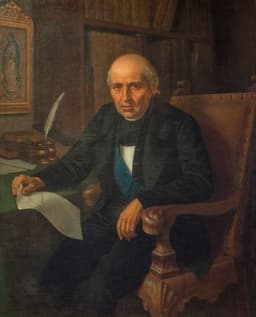
Miguel Hidalgo
Revolutionary · Modern
47.0Total
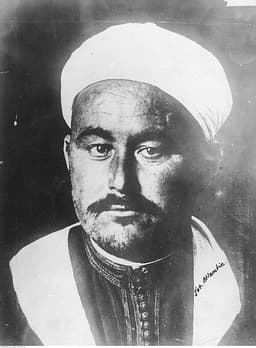
Muhammad ibn Abd al-Karim al-Khattabi
Revolutionary · Modern
41.7Total
Basic Information
Born
1753
1854
Died
1811
1927
Era
Modern
Modern
Nationality
Mexico
Sudan
Occupation
Revolutionary
Revolutionary
Civilization
Western
Other
Score Comparison
Military (10%)
50.0
47.5
Political (20%)
36.5
25.0
Influence (20%)
55.0
52.5
Legacy (20%)
52.0
40.0
Leadership (15%)
39.0
41.5
Strategy (15%)
39.6
38.3
TOTAL
47.0
41.7
Miguel Hidalgo — Complete Timeline
1810 AD
Captured Guanajuato and massacred SpaniardsWar◆ Major
Hidalgo's army of 80,000 captured the city of Guanajuato on September 28, 1810. After taking the Alh
BattleMassacreViolence
Impact: regionaldestructive
Issued the Grito de DoloresPolitical Action
On September 16, 1810, Father Miguel Hidalgo rang the church bell in Dolores and called for rebellion against Spanish colonial rule. His speech, known as the Grito de Dolores, urged Mexicans to rise up against the Spanish and marked the beginning of the Mexican War of Independence.
IndependenceRebellionGrito de Dolores
Impact: nationalconstructive
1811 AD
Defeated at the Battle of Calderón BridgeWar◆ Major
Hidalgo's poorly trained army was decisively defeated by a smaller Spanish royalist force at the Battle of Calder
DefeatSpanish RoyalistsTurning Point
Impact: regionaltragic
Executed by Spanish authoritiesPolitical Action◆ Major
Hidalgo was captured in Acatita de Baj
ExecutionMartyrdomIndependence Movement
Impact: nationaltragic
Muhammad ibn Abd al-Karim al-Khattabi — Complete Timeline
1884 AD
Command at the Battle of El TebWar◆ Major
Muhammad ibn Abd al-Karim al-Khattabi led Mahdist forces at the Battle of El Teb against a British relief column. Although the Mahdists were defeated, the battle demonstrated their ability to challenge British military power in Sudan.
Mahdist WarBattle of El TebBritish Relief
Impact: regional
Participation in the Siege of KhartoumWar◆ Major
Al-Khattabi commanded Mahdist forces during the siege of Khartoum. His troops played a key role in the final assault that captured the city and killed General Gordon, contributing to the Mahdist victory.
Siege of KhartoumMahdist WarGordon's Death
Impact: regional
1899 AD
Capture by British ForcesWar◆ Major
Following the fall of the Mahdist state, al-Khattabi was captured by British forces. He was taken prisoner and later exiled, ending his military career and role in the Mahdist movement.
CaptureExileMahdist Defeat
Impact: regionaltragic
Expert Analysis
Muhammad ibn Abd al-Karim al-Khattabi vs Miguel Hidalgo
# The Bell and the Banner: Two Paths to Revolution
On a September morning in 1810, a sixty-year-old priest stepped onto the porch of a small church in Dolores, Mexico, and rang the bell that would echo through centuries. Across the Atlantic, in the deserts of Sudan, another holy warrior—Muhammad ibn Abd al-Karim al-Khattabi—raised the black banner of the Mahdi and prepared his followers for a different kind of holy war. Both men sought liberation from foreign rule. Both led armies of the faithful against seemingly invincible empires. And both would end their lives in defeat, their dreams unfinished. Yet the stories of Miguel Hidalgo and al-Khattabi reveal how vastly different revolutions can be, even when they share the same essential ambition.
Origins
Miguel Hidalgo y Costilla was born in 1753 into a world of rigid colonial hierarchy. A creole—a person of Spanish blood born in the New World—he occupied a frustrating middle ground: superior to indigenous Mexicans and mestizos, yet barred from the highest offices reserved for peninsulares born in Spain. Hidalgo was educated at the Colegio de San Nicolás in Valladolid, where he absorbed Enlightenment ideas alongside Catholic theology. He became a priest, but an unconventional one: he read banned books, questioned Church doctrine, and taught his indigenous parishioners how to grow olives and grapes—crops the Spanish crown had forbidden to protect Spanish producers. His was a revolution of ideas before it became a revolution of arms.
Al-Khattabi, born in 1854 in the Sudan, inhabited a world shaped by different forces. The Sudan was a land of Sufi mysticism, tribal loyalties, and growing resentment against Ottoman-Egyptian rule, which had grown corrupt and exploitative. Where Hidalgo had been shaped by Rousseau and Voltaire, al-Khattabi was shaped by the Quran and the teachings of Muhammad Ahmad, the self-proclaimed Mahdi—the guided one who would restore true Islam. Al-Khattabi was not a scholar-priest but a warrior-mystic, a commander who found his purpose not in books but in the heat of battle and the promise of divine justice.
Rise to Power
Hidalgo did not seek revolution. He stumbled into it. In 1810, a conspiracy of creole intellectuals in Querétaro had been planning an uprising against Spanish rule. When their plot was discovered, they turned to Hidalgo—not because he was a military man, but because he had the moral authority to rally the masses. On September 16, he issued the *Grito de Dolores*, a cry not for independence in the modern sense, but for a vague restoration of justice: “Long live Ferdinand VII! Long live America! Death to bad government!” It was a call that blended loyalty to the Spanish king with hatred for Spanish officials—a contradiction that would haunt the movement.
Al-Khattabi’s rise was more deliberate. He had been a follower of the Mahdi, Muhammad Ahmad, since the early 1880s. When the Mahdi declared jihad against the Egyptian occupiers, al-Khattabi emerged as a capable commander. At the Battle of El Teb in 1884, he led Mahdist forces against a British relief column. Though the battle was a defeat—the British, armed with modern rifles and artillery, cut down the charging Ansar—al-Khattabi survived and learned. He participated in the Siege of Khartoum later that year, where the Mahdi’s forces finally broke through and killed General Charles Gordon. That victory made the Mahdist state a reality, and al-Khattabi became one of its pillars.
Leadership & Governance
Hidalgo was a leader of passion, not strategy. His army grew from a few hundred to eighty thousand—peasants, miners, indigenous villagers armed with machetes, slings, and captured muskets. They swept through the Bajío region, capturing the rich mining city of Guanajuato on September 28, 1810. But what followed was a massacre. Hidalgo’s forces stormed the Alhóndiga de Granaditas, a granary where Spanish families had taken refuge, and killed everyone inside. The violence was not military necessity; it was fury unleashed. Hidalgo had given the people a voice, but he could not control what they said with their weapons.
Al-Khattabi was a different kind of leader. His military score of 43.2 and strategy of 63.7 reflect a man who understood discipline and terrain. The Mahdist forces were not a mob; they were organized into units, driven by religious fervor but tempered by command structures. Al-Khattabi’s leadership score of 75.4 suggests a commander who could inspire loyalty without losing control. Where Hidalgo’s army dissolved into chaos after victories, al-Khattabi’s forces held together through defeats. The difference was faith—not just in God, but in a system of authority.
Triumph & Tragedy
Hidalgo’s greatest moment was also his undoing. After Guanajuato, he marched toward Mexico City. The capital lay defenseless; the Spanish viceroy had no army to stop him. But Hidalgo hesitated. He turned back, perhaps fearing the destruction his undisciplined army would cause, perhaps doubting his own purpose. It was a fatal pause. The Spanish regrouped, and at the Battle of Calderón Bridge on January 17, 1811, a force of 6,000 royalists defeated Hidalgo’s 80,000. The battlefield was a slaughter. Hidalgo fled north, was captured, defrocked by the Inquisition, and executed by firing squad on July 30, 1811.
Al-Khattabi’s tragedy was slower. The Mahdist state fell in 1898 at the Battle of Omdurman, where British machine guns mowed down thousands of charging Ansar. Al-Khattabi survived the collapse, but was captured in 1899. Unlike Hidalgo, he was not executed. He was taken prisoner, then exiled. He lived until 1927, a ghost of a lost kingdom, watching the British and Egyptians divide his world.
Character & Destiny
Hidalgo was a man of intellect and heart, but not of iron. He could inspire a nation but not command an army. His political score of 63.2 and leadership of 43.4 tell the story: he was a better symbol than general. He dreamed of a free Mexico but had no plan for how to build it. His legacy score of 75.0 reflects what he became after death—the Father of the Nation—more than what he achieved in life.
Al-Khattabi was harder, more patient. His political score of 60.7 and influence of 69.2 show a man who understood power even in defeat. He was not a creative thinker like Hidalgo; he was a faithful soldier. His legacy score of 52.3 is lower, because his cause—a Mahdist Islamic state—did not survive to become a nation. Sudan’s independence in 1956 owed little to him; it was a product of twentieth-century nationalism, not nineteenth-century holy war.
Legacy
Today, every Mexican schoolchild knows the name Miguel Hidalgo. The *Grito de Dolores* is reenacted every September 15th by the President of Mexico, a ritual that binds the nation to its revolutionary birth. Hidalgo’s face appears on coins, his statue stands in every plaza. He failed as a general, but succeeded as a myth.
Al-Khattabi is less known, even in Sudan. The Mahdist state is remembered as a heroic but failed episode, a prelude to colonial domination. His name survives in historical texts, not in national celebrations. He was a commander of a lost war, not a founder of a new country.
Conclusion
Both men rang bells that did not stop. Hidalgo’s bell called a nation into being, even if he did not live to see it. Al-Khattabi’s banner fell, but the idea of resistance it represented would rise again in different forms. Their differences were not just personal but historical: Hidalgo’s revolution succeeded because it could evolve into a modern state; al-Khattabi’s failed because it could not. One became a father; the other remained a fighter. And the difference between a father and a fighter is the difference between a nation and a memory.
Rankings
🥇
Miguel HidalgoLeader
Mil: 50.0Pol: 36.5Inf: 55.0
47.0
🥈
Muhammad ibn Abd al-Karim al-Khattabi
Mil: 47.5Pol: 25.0Inf: 52.5
41.7
+5.3 behind
How This Comparison Works
Algorithm
Each figure is scored on 6 dimensions (0—100 scale) based on structured historical data: Military (10%), Political (20%), Influence (20%), Legacy (20%), Leadership (15%), Strategy (15%). The weighted total produces the final ranking.
Data Sources
Scores are computed from structured sub-indicators in the database. Scale factors adjust for era (Ancient ×0.85, Modern ×1.0) and civilization size (Eastern ×1.05, Other ×0.80) to account for differences in population and military scale.
Maximum 3 Figures
Comparisons are limited to 2—3 figures to ensure readability and statistical meaningfulness.
Error Margins
±5 points per dimension — Sub-scores are derived from historical records with inherent uncertainty. Two figures within 5 points on a dimension should be considered roughly equivalent in that area.
Total Score Accuracy
±3 points overall — The weighted combination of 6 dimensions produces a total score with approximately ±3 points of uncertainty. Differences of less than 3 points are not statistically significant— the figures are effectively tied.
Known Limitations
- Historical records are incomplete and uneven across civilizations
- Figures from oral-tradition societies may be underrepresented
- Occupation labels can misclassify multi-role figures
- Scores measure capability and impact, not moral character
- Quantitative scoring is a comparison tool, not absolute truth
Capability Radar
Military (10%) — Battles & Warfare
Battles
30
35
Win Rate
25
30
Expansion
20
25
Political (20%) — Governance & Reform
Reform
60
15
Diplomacy
30
15
Economy
20
10
Influence (20%) — Cultural & Global Reach
Cultural
70
15
Global
60
10
Legacy (20%) — Historical Impact
Historical
75
20
Longevity
70
10
Leadership (15%) — Power & Stability
Tenure
15
20
Stability
10
10
Strategy (15%) — Tactics & Innovation
Strategy
25
35
Tactics
20
40
Reform
10
20
Similar Comparisons
Muhammad ibn Abd al-Karim al-Khattabi vs Bal Gangadhar TilakMuhammad ibn Abd al-Karim al-Khattabi vs Theobald Wolfe ToneMuhammad ibn Abd al-Karim al-Khattabi vs Bhagat SinghMuhammad ibn Abd al-Karim al-Khattabi vs Li ZichengMuhammad ibn Abd al-Karim al-Khattabi vs Shamil BasayevMuhammad ibn Abd al-Karim al-Khattabi vs Abd el-Krim
Comments & Discussion
No comments yet. Be the first to share your thoughts!