Loading...
Muhammad ibn Abd al-Karim al-Khattabi vs Shamil Basayev
Shamil Basayev leads by 1.4 pts · 2 figures compared
…
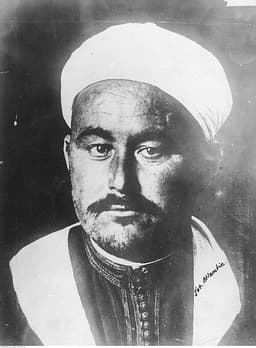
Muhammad ibn Abd al-Karim al-Khattabi
Revolutionary · Modern
41.7Total
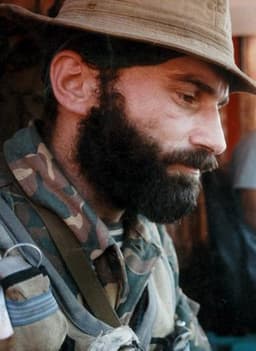
Shamil Basayev
Revolutionary · Modern
43.1Total
Basic Information
Born
1854
1965
Died
1927
—
Era
Modern
Modern
Nationality
Sudan
Chechnya
Occupation
Revolutionary
Revolutionary
Civilization
Other
Western
Score Comparison
Military (10%)
47.5
40.0
Political (20%)
25.0
35.0
Influence (20%)
52.5
45.5
Legacy (20%)
40.0
35.0
Leadership (15%)
41.5
57.1
Strategy (15%)
38.3
51.7
TOTAL
41.7
43.1
Muhammad ibn Abd al-Karim al-Khattabi — Complete Timeline
1884 AD
Command at the Battle of El TebWar◆ Major
Muhammad ibn Abd al-Karim al-Khattabi led Mahdist forces at the Battle of El Teb against a British relief column. Although the Mahdists were defeated, the battle demonstrated their ability to challenge British military power in Sudan.
Mahdist WarBattle of El TebBritish Relief
Impact: regional
Participation in the Siege of KhartoumWar◆ Major
Al-Khattabi commanded Mahdist forces during the siege of Khartoum. His troops played a key role in the final assault that captured the city and killed General Gordon, contributing to the Mahdist victory.
Siege of KhartoumMahdist WarGordon's Death
Impact: regional
1899 AD
Capture by British ForcesWar◆ Major
Following the fall of the Mahdist state, al-Khattabi was captured by British forces. He was taken prisoner and later exiled, ending his military career and role in the Mahdist movement.
CaptureExileMahdist Defeat
Impact: regionaltragic
Shamil Basayev — Complete Timeline
1995 AD
Budyonnovsk Hospital Hostage CrisisWar◆ Major
Basayev led a raid on the Russian town of Budyonnovsk, taking over 1,000 hostages in a hospital. The crisis ended with a negotiated settlement that allowed him to return to Chechnya. This attack demonstrated Chechen reach into Russia.
Hostage CrisisTerrorismChechnya
Impact: nationaldestructive
1999 AD
Invasion of DagestanWar
Basayev led Chechen and Islamist fighters into Dagestan to support local rebels. This invasion triggered the Second Chechen War as Russia responded with a full-scale military campaign. The invasion failed to gain local support.
DagestanChechnyaInvasion
Impact: regionaldestructive
2002 AD
Moscow Theater Hostage CrisisWar◆ Major
Basayev orchestrated the Moscow theater hostage crisis, where Chechen militants took 850 people hostage. Russian forces ended the siege with gas, killing 130 hostages. The attack increased international condemnation of Chechen rebels.
Hostage CrisisTerrorismMoscow
Impact: nationaldestructive
2004 AD
Beslan School SiegeWar◆ Major
Basayev planned the Beslan school siege, where militants took over 1,100 people hostage. The siege ended in a bloody assault, resulting in 334 deaths, mostly children. This attack was widely condemned globally.
Hostage CrisisTerrorismBeslan
Impact: globaltragic
2006 AD
Killed by Russian ExplosivesWar◆ Major
Basayev was killed in Ingushetia when a truck loaded with explosives detonated. Russian intelligence claimed responsibility. His death removed the most prominent Chechen rebel commander.
AssassinationChechnyaRussia
Impact: regional
Expert Analysis
Muhammad ibn Abd al-Karim al-Khattabi vs Shamil Basayev
# The Revolutionary's Crossroads
On a September morning in 2004, children in Beslan, Russia, arrived at School Number One with flowers and backpacks, unaware they were walking into a trap that would become one of the most horrifying terrorist attacks in modern history. Across the desert of time, in 1884, a different kind of revolutionary stood before the walls of Khartoum, watching his forces prepare to bring down an empire. Shamil Basayev and Muhammad ibn Abd al-Karim al-Khattabi both led insurgencies against powerful adversaries, yet their paths diverged into radically different destinies. Why did one become a symbol of resistance and the other a byword for terror?
Origins
Shamil Basayev was born in 1965 in the mountainous region of Chechnya, a land that had known centuries of struggle against Russian domination. His childhood was shaped by the trauma of Stalin's deportation of the Chechen people in 1944, a collective wound that never fully healed. The collapse of the Soviet Union in 1991 opened a window of opportunity for Chechen nationalism, and Basayev, then a young man in his twenties, seized it with both hands. He was a product of the post-Soviet chaos, where old certainties had vanished and new ideologies—Islamism, nationalism, and anti-colonialism—competed for allegiance.
Al-Khattabi, born in 1854 in Sudan, came of age in a world where the Ottoman Empire was fading and European colonialism was tightening its grip on Africa. Sudan in the late nineteenth century was a crucible of suffering: oppressive Egyptian rule, slave raids, and economic exploitation had created a powder keg. When Muhammad Ahmad declared himself the Mahdi—the guided one of Islamic prophecy—in 1881, al-Khattabi found his calling. He was a product of the religious revivalism that swept through the Islamic world in response to Western encroachment, a movement that sought salvation through faith and holy war.
Rise to Power
Basayev's ascent was meteoric and violent. In 1991, he hijacked a Russian plane to protest Chechnya's treatment, but his true emergence came during the First Chechen War (1994–1996). The 1995 Budyonnovsk hospital hostage crisis made him infamous: leading a raid into Russian territory, he took over 1,000 hostages in a hospital, demanding an end to the war. After a chaotic siege that left over 100 dead, Russian authorities negotiated a ceasefire that allowed Basayev to return to Chechnya a hero. This was his turning point—he had forced a superpower to blink.
Al-Khattabi's rise was more methodical. He proved himself at the 1884 Battle of El Teb, where his Mahdist forces faced a British relief column. Though the battle ended in defeat, his leadership impressed the Mahdi, who entrusted him with greater responsibilities. His crowning moment came at the Siege of Khartoum later that year, where he commanded troops in the final assault that killed General Charles Gordon and captured the city. Unlike Basayev, al-Khattabi operated within a structured religious movement, his authority derived from the Mahdi's divine mandate rather than personal charisma alone.
Leadership & Governance
Basayev's leadership style was improvisational and ruthless. He commanded through personal bravery and a willingness to use extreme violence. His military score of 55.8 and strategy score of 45.6 reflect a commander who could inspire but struggled with long-term planning. The 1999 invasion of Dagestan was a strategic blunder—it triggered the Second Chechen War and united Russian public opinion against the Chechen cause. His political score of 38.8 reveals a man who could not translate battlefield success into sustainable governance.
Al-Khattabi, by contrast, was a more balanced leader. With a political score of 60.7 and leadership score of 75.4, he understood that revolution required administration as well as warfare. After the Mahdi's death in 1885, al-Khattabi served under the Khalifa, helping to govern the Mahdist state. He enforced Islamic law while maintaining order, a difficult balance in a society torn by war. His strategy score of 63.7 suggests a commander who thought beyond the next battle, even if he ultimately could not prevent the state's collapse.
Triumph & Tragedy
Basayev's greatest triumph was also his darkest moment. The 2002 Moscow theater hostage crisis and the 2004 Beslan school siege were meticulously planned operations that paralyzed Russia. At Beslan, over 1,100 people were taken hostage, and the siege ended in a bloodbath that killed 334 civilians, including 186 children. These attacks achieved global attention but destroyed any moral legitimacy Basayev might have claimed. His death in 2006, killed by Russian explosives in Ingushetia, was inglorious—a truck bomb that ended a life built on bombs.
Al-Khattabi's tragedy was different. After the fall of Khartoum in 1885, the Mahdist state survived for thirteen years, but internal divisions and British military pressure proved insurmountable. In 1898, at the Battle of Omdurman, British forces under Kitchener annihilated the Mahdist army. Al-Khattabi was captured in 1899 and exiled, dying in obscurity. His tragedy was not infamy but irrelevance—a revolutionary who outlived his revolution.
Character & Destiny
Basayev was driven by a burning hatred of Russia and a conviction that only extreme violence could liberate Chechnya. His personality—charismatic, impulsive, and utterly ruthless—shaped his decisions. He chose terror over politics, believing that shocking the world would force concessions. Instead, he hardened Russian resolve and isolated his cause.
Al-Khattabi was more pragmatic, a product of a religious movement that offered a vision of society, not just destruction. He fought within a framework of faith that imposed limits, however harsh. His capture and exile suggest a man who accepted defeat with dignity, unlike Basayev, who fought to the bloody end.
Legacy
Basayev's legacy is toxic. With a legacy score of 47.7, he is remembered primarily as a terrorist, his name synonymous with school sieges and theater attacks. Chechen nationalism has largely disowned him, and even Islamist groups have distanced themselves from his methods. He left behind fear, not inspiration.
Al-Khattabi's legacy score of 52.3 is more complex. In Sudan, he is remembered as a fighter against colonialism, a figure in the Mahdist narrative that still resonates. His defeat was not personal failure but the inevitable triumph of industrial military power over religious fervor. He represents a lost cause, romanticized by some, studied by historians.
Conclusion
Two revolutionaries, two centuries, two fates. Basayev and al-Khattabi both fought against overwhelming odds, both believed violence could reshape history. But one chose the path of terror, the other of holy war within a broader movement. Their differences were not simply personal—they reflected their eras. Al-Khattabi lived in a world where revolutions could still be religious and hierarchical; Basayev operated in a fractured, globalized age where spectacle and shock became weapons. In the end, both failed, but their failures teach us something profound: that the means a revolutionary chooses determines not only his fate but the judgment of history.
Rankings
🥇
Shamil BasayevLeader
Mil: 40.0Pol: 35.0Inf: 45.5
43.1
🥈
Muhammad ibn Abd al-Karim al-Khattabi
Mil: 47.5Pol: 25.0Inf: 52.5
41.7
+1.4 behind
How This Comparison Works
Algorithm
Each figure is scored on 6 dimensions (0—100 scale) based on structured historical data: Military (10%), Political (20%), Influence (20%), Legacy (20%), Leadership (15%), Strategy (15%). The weighted total produces the final ranking.
Data Sources
Scores are computed from structured sub-indicators in the database. Scale factors adjust for era (Ancient ×0.85, Modern ×1.0) and civilization size (Eastern ×1.05, Other ×0.80) to account for differences in population and military scale.
Maximum 3 Figures
Comparisons are limited to 2—3 figures to ensure readability and statistical meaningfulness.
Error Margins
±5 points per dimension — Sub-scores are derived from historical records with inherent uncertainty. Two figures within 5 points on a dimension should be considered roughly equivalent in that area.
Total Score Accuracy
±3 points overall — The weighted combination of 6 dimensions produces a total score with approximately ±3 points of uncertainty. Differences of less than 3 points are not statistically significant— the figures are effectively tied.
Known Limitations
- Historical records are incomplete and uneven across civilizations
- Figures from oral-tradition societies may be underrepresented
- Occupation labels can misclassify multi-role figures
- Scores measure capability and impact, not moral character
- Quantitative scoring is a comparison tool, not absolute truth
Capability Radar
Military (10%) — Battles & Warfare
Battles
35
45
Win Rate
30
40
Expansion
25
15
Political (20%) — Governance & Reform
Reform
15
5
Diplomacy
15
10
Economy
10
5
Influence (20%) — Cultural & Global Reach
Cultural
15
20
Global
10
20
Legacy (20%) — Historical Impact
Historical
20
25
Longevity
10
15
Leadership (15%) — Power & Stability
Tenure
20
10
Stability
10
5
Strategy (15%) — Tactics & Innovation
Strategy
35
35
Tactics
40
55
Reform
20
20
Similar Comparisons
Muhammad ibn Abd al-Karim al-Khattabi vs Abd el-KrimMuhammad ibn Abd al-Karim al-Khattabi vs Bal Gangadhar TilakMuhammad ibn Abd al-Karim al-Khattabi vs Theobald Wolfe ToneMuhammad ibn Abd al-Karim al-Khattabi vs Bhagat SinghMuhammad ibn Abd al-Karim al-Khattabi vs Li ZichengMuhammad ibn Abd al-Karim al-Khattabi vs Miguel Hidalgo
Comments & Discussion
No comments yet. Be the first to share your thoughts!