Loading...
Muhammad ibn Abd al-Karim al-Khattabi vs Qin Shi Huang
Qin Shi Huang leads by 43.5 pts · 2 figures compared
…
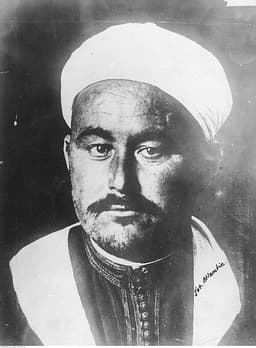
Muhammad ibn Abd al-Karim al-Khattabi
Revolutionary · Modern
41.7Total
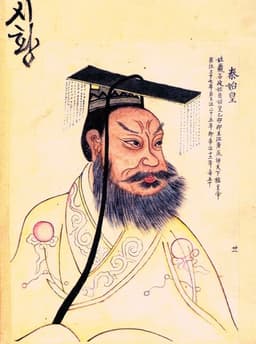
Qin Shi Huang
Emperor · Ancient
85.2Total
Basic Information
Born
1854
-259
Died
1927
-210
Era
Modern
Ancient
Nationality
Sudan
China
Occupation
Revolutionary
Emperor
Civilization
Other
Eastern
Score Comparison
Military (10%)
47.5
80.0
Political (20%)
25.0
90.0
Influence (20%)
52.5
85.0
Legacy (20%)
40.0
90.0
Leadership (15%)
41.5
78.0
Strategy (15%)
38.3
82.0
TOTAL
41.7
85.2
Muhammad ibn Abd al-Karim al-Khattabi — Complete Timeline
1884 AD
Command at the Battle of El TebWar◆ Major
Muhammad ibn Abd al-Karim al-Khattabi led Mahdist forces at the Battle of El Teb against a British relief column. Although the Mahdists were defeated, the battle demonstrated their ability to challenge British military power in Sudan.
Mahdist WarBattle of El TebBritish Relief
Impact: regional
Participation in the Siege of KhartoumWar◆ Major
Al-Khattabi commanded Mahdist forces during the siege of Khartoum. His troops played a key role in the final assault that captured the city and killed General Gordon, contributing to the Mahdist victory.
Siege of KhartoumMahdist WarGordon's Death
Impact: regional
1899 AD
Capture by British ForcesWar◆ Major
Following the fall of the Mahdist state, al-Khattabi was captured by British forces. He was taken prisoner and later exiled, ending his military career and role in the Mahdist movement.
CaptureExileMahdist Defeat
Impact: regionaltragic
Qin Shi Huang — Complete Timeline
246 BC
Construction of the Mausoleum and Terracotta ArmyOther◆ Major
Qin Shi Huang commissioned a vast mausoleum complex near Xi'an, guarded by thousands of life-sized terracotta soldiers, horses, and chariots. The project employed hundreds of thousands of workers and reflected his obsession with immortality and imperial power.
Impact: global
230 BC
Conquest of the Six Warring StatesWar
From 230 to 221 BCE, Ying Zheng led the Qin state in a series of campaigns that conquered the Han, Zhao, Wei, Chu, Yan, and Qi states. This unified China under a single ruler for the first time, ending the Warring States period.
Impact: global
221 BC
Standardization of Writing, Currency, and MeasurementsReform◆ Major
Qin Shi Huang ordered the standardization of Chinese script, currency, and weights and measures across the unified empire. This facilitated administration, trade, and cultural integration, laying a foundation for future dynasties.
Impact: globalconstructive
Proclamation of the Qin DynastyPolitical Action
After conquering the last independent state, Ying Zheng declared himself Shi Huangdi (First Emperor), founding the Qin Dynasty. He adopted a new title to signify his supreme authority and initiated centralized imperial rule.
Impact: global
214 BC
Initiation of the Great Wall ConstructionOther◆ Major
Qin Shi Huang ordered the connection and extension of existing northern fortifications to create a unified defensive wall against nomadic Xiongnu raids. This project involved massive conscripted labor and became the precursor to the later Great Wall.
Impact: regional
213 BC
Burning of Books and Burying of ScholarsPolitical Action◆ Major
On the advice of Li Si, Qin Shi Huang ordered the burning of historical records and philosophical texts not aligned with Legalist doctrine. He also had 460 Confucian scholars buried alive to suppress dissent and consolidate ideological control.
Impact: nationaldestructive
Expert Analysis
muhammad-ibn-abd-al-karim-al-khattabi-vs-qin-shi-huang
# The Emperor and the Mahdist: Two Paths to Power, Two Destinies
On a spring morning in 221 BC, a thirty-eight-year-old king stood before his assembled generals in the city of Xianyang, having just completed the most extraordinary military conquest in Chinese history. Ying Zheng, ruler of the Qin state, had swallowed the last of the six warring kingdoms and now declared himself Shi Huangdi—the First Emperor. Two millennia later, in the scorching desert of eastern Sudan, another commander named Muhammad ibn Abd al-Karim al-Khattabi watched British artillery shells tear through his Mahdist lines at the Battle of El Teb. Where one man would forge an empire that echoes through eternity, the other would become a footnote in the collapse of his own.
Origins
Qin Shi Huang was born into a world of chaos and opportunity. The Warring States period had torn China apart for centuries, and his father, King Zhuangxiang of Qin, ruled a state that had already begun to accumulate power through ruthless reform. The young prince grew up in a court where Legalist philosophers preached that human nature was inherently selfish and that only strict laws and harsh punishments could create order. By the time he ascended the throne at thirteen, he had absorbed this cold pragmatism like a blade takes its temper.
Al-Khattabi emerged from an entirely different crucible. Born in 1854, he came of age in a Sudan where Ottoman-Egyptian rule had grown corrupt and oppressive. The Mahdist movement, led by Muhammad Ahmad, promised a return to pure Islamic governance and liberation from foreign domination. Al-Khattabi, a devout and capable commander, threw his lot in with this apocalyptic vision. His world was one of religious fervor and tribal loyalty, not bureaucratic logic.
Rise to Power
The First Emperor’s path was methodical and devastating. Between 230 and 221 BC, he unleashed the Qin military machine against the Han, Zhao, Wei, Chu, Yan, and Qi kingdoms. Each campaign was a masterpiece of strategy—he bribed enemy ministers, exploited internal divisions, and struck with overwhelming force. When the last king surrendered, Ying Zheng did not merely conquer territory; he erased the very concept of independent states.
Al-Khattabi’s rise was more desperate. He fought not as a conqueror but as a rebel. At the Siege of Khartoum in 1884, his troops played a crucial role in the final assault that killed General Charles Gordon. But victory came at a terrible cost. The Mahdist state that emerged was surrounded by hostile powers, plagued by internal rivalries, and ultimately no match for the industrialized armies of the British Empire.
Leadership & Governance
Here the two men diverged irrevocably. Qin Shi Huang was a revolutionary administrator. In 221 BC, he ordered the standardization of Chinese script, currency, and weights and measures—a single stroke that unified a civilization. He built roads, canals, and the first Great Wall, linking existing fortifications into a defensive line that stretched for thousands of miles. His political genius lay in creating systems that outlasted his dynasty.
But his methods were terrifying. In 213 BC, on the advice of his minister Li Si, he ordered the burning of all historical records and philosophical texts not aligned with Legalist doctrine. Scholars who resisted were buried alive. This was not cruelty for its own sake—it was a calculated attempt to erase the past and impose a single narrative on his new empire.
Al-Khattabi governed as a military commander, not a state-builder. After the Mahdi’s death, the movement fragmented. Al-Khattabi’s leadership score of 75.4 reflects genuine charisma and tactical ability, but he lacked the political infrastructure to sustain his victories. The Mahdist state never standardized anything; it relied on religious authority and personal loyalty, which evaporated under pressure.
Triumph & Tragedy
Qin Shi Huang’s greatest triumph was the Terracotta Army—a vast mausoleum complex of thousands of life-sized soldiers, horses, and chariots, built to guard him in the afterlife. This project, begun in 246 BC, consumed immense resources and labor. It symbolizes both his ambition and his obsession with immortality. His tragedy came from the same source: he consumed himself searching for an elixir of eternal life, dying at fifty-one from mercury poisoning.
Al-Khattabi’s finest hour was Khartoum. But it was a victory that led nowhere. In 1898, the British and Egyptians returned with machine guns and river gunboats. The Mahdist state fell, and al-Khattabi was captured in 1899. He spent his remaining years as a prisoner, watching his cause die.
Character & Destiny
Qin Shi Huang believed that history was something to be controlled. He built walls, burned books, and standardized everything because he feared chaos above all else. His personality—paranoid, brilliant, ruthless—drove him to create order through absolute power. The same traits that unified China also made him unable to trust anyone, even his own sons.
Al-Khattabi believed in destiny, not control. He fought for a divine cause, trusting that God would provide. This faith gave him courage but also made him inflexible. When the British arrived with superior technology and organization, his religious conviction could not stop their bullets.
Legacy
Qin Shi Huang’s legacy is immeasurable. His political score of 88 and influence of 82 reflect the simple truth: every Chinese emperor who followed ruled in the shadow of his administrative system. The Great Wall, the standardized script, the very idea of a unified China—all trace back to this one man. He is remembered as both a visionary and a tyrant, but never forgotten.
Al-Khattabi’s legacy is smaller but not meaningless. His military score of 43 and legacy of 52 understate his role as a symbol of resistance. In Sudan, he is remembered as a patriot who fought against colonialism. But he founded no dynasty, created no enduring institutions, and left behind no system that outlasted him.
Conclusion
Two men, separated by two thousand years and half a world, both sought to reshape their world through war. One succeeded so completely that his name became synonymous with imperial power. The other failed so thoroughly that he ended his life in captivity. The difference was not in courage or conviction—both possessed those in abundance. It was in vision. Qin Shi Huang understood that empires are built not with battles alone, but with laws, measurements, and words carved into stone. Al-Khattabi understood only that he was right, and that God would vindicate him. In the end, the First Emperor’s terracotta soldiers still stand guard, while the Mahdist’s banners have turned to dust. History, it seems, rewards those who build more than those who believe.
Rankings
🥇
Qin Shi HuangLeader
Mil: 80.0Pol: 90.0Inf: 85.0
85.2
🥈
Muhammad ibn Abd al-Karim al-Khattabi
Mil: 47.5Pol: 25.0Inf: 52.5
41.7
+43.5 behind
How This Comparison Works
Algorithm
Each figure is scored on 6 dimensions (0—100 scale) based on structured historical data: Military (10%), Political (20%), Influence (20%), Legacy (20%), Leadership (15%), Strategy (15%). The weighted total produces the final ranking.
Data Sources
Scores are computed from structured sub-indicators in the database. Scale factors adjust for era (Ancient ×0.85, Modern ×1.0) and civilization size (Eastern ×1.05, Other ×0.80) to account for differences in population and military scale.
Maximum 3 Figures
Comparisons are limited to 2—3 figures to ensure readability and statistical meaningfulness.
Error Margins
±5 points per dimension — Sub-scores are derived from historical records with inherent uncertainty. Two figures within 5 points on a dimension should be considered roughly equivalent in that area.
Total Score Accuracy
±3 points overall — The weighted combination of 6 dimensions produces a total score with approximately ±3 points of uncertainty. Differences of less than 3 points are not statistically significant— the figures are effectively tied.
Known Limitations
- Historical records are incomplete and uneven across civilizations
- Figures from oral-tradition societies may be underrepresented
- Occupation labels can misclassify multi-role figures
- Scores measure capability and impact, not moral character
- Quantitative scoring is a comparison tool, not absolute truth
Capability Radar
Military (10%) — Battles & Warfare
Battles
35
85
Win Rate
30
90
Expansion
25
90
Political (20%) — Governance & Reform
Reform
15
95
Diplomacy
15
75
Economy
10
90
Influence (20%) — Cultural & Global Reach
Cultural
15
95
Global
10
85
Legacy (20%) — Historical Impact
Historical
20
95
Longevity
10
95
Leadership (15%) — Power & Stability
Tenure
20
70
Stability
10
65
Strategy (15%) — Tactics & Innovation
Strategy
35
85
Tactics
40
80
Reform
20
95
Similar Comparisons
Muhammad ibn Abd al-Karim al-Khattabi vs Abd el-KrimMuhammad ibn Abd al-Karim al-Khattabi vs Bal Gangadhar TilakMuhammad ibn Abd al-Karim al-Khattabi vs Theobald Wolfe ToneMuhammad ibn Abd al-Karim al-Khattabi vs Bhagat SinghMuhammad ibn Abd al-Karim al-Khattabi vs Li ZichengMuhammad ibn Abd al-Karim al-Khattabi vs Miguel Hidalgo
Comments & Discussion
EMPEROR’S TRUMPET6/17/2026
Qin Shi Huang united China through blood and iron—a military genius who crushed six states with disciplined Qin legions. Al-Khattabi? A desert rebel who relied on religious fervor against British Maxim guns. Facts: The First Emperor standardized writing, weights, and built the Great Wall; Al-Khattabi’s Mahdist state fell in 1899 at Omdurman, a slaughter. One built an empire, the other a failed uprising. No contest: Qin’s strategic vision dwarfs any tribal resistance.
沙漠谜语者6/17/2026
秦始皇家底厚,祖上六代积攒国力,他不过摘了果实。阿尔·哈塔比?一个被埃及压迫的苏丹人,硬是拉起义军打了场敖德曼战役,虽败犹荣。秦灭六国靠的是铁血法家,可焚书坑儒毁了文化;玛迪运动虽短命,但给殖民地人民点了火。历史不是比谁活得久,而是谁点燃了反抗的火种。秦只算暴君,哈塔比才是真英雄。