Loading...
Mohammad Fahim vs Ranoji Scindia
Ranoji Scindia leads by 7.3 pts · 2 figures compared
…

Mohammad Fahim
General · Modern
49.7Total
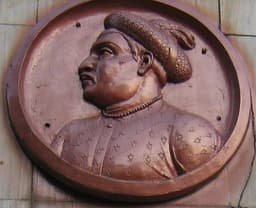
Ranoji Scindia
General · Modern
57.0Total
Basic Information
Born
1957
1700
Died
—
1745
Era
Modern
Modern
Nationality
Afghanistan
India
Occupation
General
General
Civilization
Middle Eastern
Indian
Score Comparison
Military (10%)
40.0
50.0
Political (20%)
43.7
54.7
Influence (20%)
51.0
58.0
Legacy (20%)
43.3
54.0
Leadership (15%)
74.0
65.0
Strategy (15%)
45.0
60.0
TOTAL
49.7
57.0
Mohammad Fahim — Complete Timeline
2001 AD
Led Northern Alliance Forces in Fall of KabulWar
Mohammad Fahim, as a senior Northern Alliance commander, led forces that captured Kabul from the Taliban in November 2001. This victory followed the US invasion and was a turning point in the war, leading to the collapse of Taliban rule.
AfghanistanWarTaliban
Impact: national
Appointed Vice President of AfghanistanPolitical Action◆ Major
Mohammad Fahim was appointed Vice President of Afghanistan under Hamid Karzai in 2001, serving until 2004. He was a key Northern Alliance commander and his appointment was part of the post-Taliban power-sharing arrangement.
AfghanistanVice PresidencyNorthern Alliance
Impact: nationalconstructive
Served as Minister of DefensePolitical Action◆ Major
Mohammad Fahim served as Afghanistan's Minister of Defense from 2001 to 2004. He oversaw the formation of the new Afghan National Army and security forces, integrating former mujahideen and Northern Alliance fighters.
AfghanistanDefenseMilitary
Impact: nationalconstructive
2009 AD
Appointed First Vice President in 2009Political Action◆ Major
Mohammad Fahim was appointed First Vice President of Afghanistan under President Hamid Karzai in 2009. He served until his death in 2014, playing a key role in security and political affairs.
AfghanistanVice PresidencyGovernment
Impact: nationalconstructive
Ranoji Scindia — Complete Timeline
1726 AD
Appointed Subedar of MalwaPolitical Action◆ Major
Ranoji Scindia was appointed as the Maratha subedar of Malwa by Peshwa Baji Rao I. This gave him control over a large territory and laid the foundation for the Scindia dynasty of Gwalior.
Maratha EmpireMalwaScindia Dynasty
Impact: regionalconstructive
1737 AD
Battle of DelhiWar◆ Major
Ranoji Scindia participated in the Maratha raid on Delhi under Baji Rao I. The attack on the Mughal capital demonstrated Maratha power and led to the extraction of tribute.
Maratha-Mughal WarsDelhiRaid
Impact: national
1739 AD
Battle of VasaiWar
Ranoji Scindia fought alongside Malhar Rao Holkar in the siege of Vasai against the Portuguese. The victory ended Portuguese control in the Konkan region.
Maratha-Portuguese WarsSiegeKonkan
Impact: regional
1740 AD
Founded Gwalior as CapitalPolitical Action◆ Major
Ranoji Scindia established his capital at Gwalior, fortifying the Gwalior Fort and building a palace. This city became the center of Scindia power for over a century.
FoundingGwaliorScindia Dynasty
Impact: regionalconstructive
1745 AD
Death in BattleWar
Ranoji Scindia was killed in a battle against the Nizam of Hyderabad's forces near the Narmada River. His death occurred during a Maratha campaign to expand into the Deccan.
DeathBattleMaratha-Nizam Wars
Impact: regionaltragic
Expert Analysis
Mohammad Fahim vs Ranoji Scindia
# The General and the Warlord: Two Paths to Power in Divided Empires
On a spring morning in 1745, Ranoji Scindia fell near the Narmada River, his blood soaking into the dust of a battlefield he had chosen but would not survive. More than 250 years later, in November 2001, Mohammad Fahim rode into Kabul at the head of Northern Alliance fighters, the city's surrender unfolding before him like a promise kept. Both men were generals who built kingdoms from chaos. One died in the saddle, his dynasty enduring for centuries. The other died in bed, his legacy crumbling within a generation. What separated them was not luck alone, but the architecture of the worlds they inhabited.
Origins
Ranoji Scindia was born in 1700 into the Maratha Confederacy, a rising power that had shattered Mughal supremacy in western India. His family were minor nobles, but the Maratha system rewarded talent over birth. The young Scindia entered the service of the Peshwa, the Brahmin prime minister who had become the de facto ruler of the Maratha empire. He learned war in a tradition that valued mobility, intelligence, and audacity—qualities that defined the Maratha light cavalry.
Mohammad Fahim, born in 1957 in the Panjshir Valley of Afghanistan, came of age in a country bleeding from two decades of war. His ethnic Tajik identity placed him in a perpetual contest with Pashtun dominance. Unlike Scindia, who inherited a structured military hierarchy, Fahim learned war in the guerrilla camps of the 1980s, fighting Soviet occupation alongside the legendary Ahmad Shah Massoud. The difference was profound: Scindia rose through an established system; Fahim helped build one from ruins.
Rise to Power
In 1726, Peshwa Baji Rao I appointed Ranoji Scindia as Subedar of Malwa, a vast territory in central India. This was no gift—Malwa was a frontier of constant conflict with Mughal remnants and rival Maratha chiefs. Scindia proved himself in the crucible. In 1737, he participated in the audacious Maratha raid on Delhi, a demonstration that the Mughal capital was no longer inviolable. Two years later, at the Battle of Vasai, he fought alongside Malhar Rao Holkar to expel the Portuguese from their last stronghold on India's west coast. Each campaign sharpened his reputation.
Fahim's rise was swifter and bloodier. He served as Massoud's intelligence chief during the 1990s civil war, then fled with the Northern Alliance when the Taliban seized Kabul in 1996. When Massoud was assassinated on September 9, 2001—two days before the World Trade Center fell—Fahim inherited command of the Alliance's military forces. The American invasion turned his struggle into a global cause. In November 2001, he led the capture of Kabul, a victory that made him the most powerful man in Afghanistan after Hamid Karzai.
Leadership & Governance
Scindia's leadership was defined by consolidation. In 1740, he established his capital at Gwalior, fortifying its ancient hill fortress and building a palace that would house his descendants for generations. He understood that power required a permanent seat, not just a moving camp. His military style—aggressive but calculating—mirrored the Maratha philosophy of rapid campaigns and negotiated settlements. He was a builder as much as a warrior.
Fahim's leadership was defined by survival and patronage. As Minister of Defense from 2001 to 2004, he oversaw the creation of a new Afghan army, but critics accused him of packing it with his own Tajik loyalists. As Vice President from 2009 until his death, he wielded influence through networks of former commanders, not institutions. Where Scindia built a dynasty that would rule Gwalior for two centuries, Fahim built a faction that dissolved after his death. The difference was structural: Scindia operated in a world where hereditary power was legitimate; Fahim operated in a world where warlordism was a necessity that became a liability.
Triumph & Tragedy
Scindia's greatest moment was the founding of Gwalior—a city that became synonymous with his family name. His tragedy came in 1745, when he was killed in battle against the Nizam of Hyderabad's forces. He died as he had lived, in the saddle, but his death left his young sons to inherit a fragile domain. Yet the Scindia dynasty survived, adapting to British rule and remaining a princely state until 1947.
Fahim's triumph was the fall of Kabul in 2001, a moment that seemed to vindicate two decades of struggle. His tragedy was the slow unraveling of everything he helped build. The Afghan state he helped create proved hollow; the Taliban returned in 2021, erasing the Northern Alliance's victory. Fahim died of natural causes in 2014, spared the sight of Kabul's collapse but leaving no institution that could outlast him.
Character & Destiny
Ranoji Scindia was a product of a civilization that understood empire as a family enterprise. His ambition was dynastic—he built for sons and grandsons he would never see. His personality, as far as history records, was that of a patient builder who understood that power required roots.
Mohammad Fahim was a product of a civilization shattered by war. His ambition was immediate—he fought for survival, then for control, then for relevance. His personality was that of a survivor who understood that power required allies, not institutions. The difference was not moral but historical: Scindia inherited a system that rewarded long-term vision; Fahim inherited a system that punished it.
Legacy
Today, Ranoji Scindia is remembered as the founder of a dynasty that still exists, though reduced. The Scindia family remains prominent in Indian politics, a living link to the 18th century. The Gwalior Fort he fortified still stands, a monument to his ambition.
Mohammad Fahim is remembered, if at all, as a figure in Afghanistan's tragic cycle—a warlord who became a statesman but could not become a nation-builder. His legacy is the cautionary tale of how military victory does not guarantee political endurance.
Conclusion
The contrast between these two generals is not a judgment of their abilities—both were skilled commanders and shrewd politicians. It is a reflection of the worlds they inhabited. Scindia lived in an era when empire was a family business, and he built accordingly. Fahim lived in an era when empire was a foreign imposition, and he built accordingly. One founded a dynasty; the other founded a faction. Both did what their times demanded, and both were consumed by what their times allowed. In the end, the general's fate is written not by his sword, but by the soil it strikes.
Rankings
🥇
Ranoji ScindiaLeader
Mil: 50.0Pol: 54.7Inf: 58.0
57.0
🥈
Mohammad Fahim
Mil: 40.0Pol: 43.7Inf: 51.0
49.7
+7.3 behind
How This Comparison Works
Algorithm
Each figure is scored on 6 dimensions (0—100 scale) based on structured historical data: Military (10%), Political (20%), Influence (20%), Legacy (20%), Leadership (15%), Strategy (15%). The weighted total produces the final ranking.
Data Sources
Scores are computed from structured sub-indicators in the database. Scale factors adjust for era (Ancient ×0.85, Modern ×1.0) and civilization size (Eastern ×1.05, Other ×0.80) to account for differences in population and military scale.
Maximum 3 Figures
Comparisons are limited to 2—3 figures to ensure readability and statistical meaningfulness.
Error Margins
±5 points per dimension — Sub-scores are derived from historical records with inherent uncertainty. Two figures within 5 points on a dimension should be considered roughly equivalent in that area.
Total Score Accuracy
±3 points overall — The weighted combination of 6 dimensions produces a total score with approximately ±3 points of uncertainty. Differences of less than 3 points are not statistically significant— the figures are effectively tied.
Known Limitations
- Historical records are incomplete and uneven across civilizations
- Figures from oral-tradition societies may be underrepresented
- Occupation labels can misclassify multi-role figures
- Scores measure capability and impact, not moral character
- Quantitative scoring is a comparison tool, not absolute truth
Capability Radar
Military (10%) — Battles & Warfare
Battles
35
45
Win Rate
40
50
Expansion
25
55
Political (20%) — Governance & Reform
Reform
20
30
Diplomacy
40
45
Economy
15
35
Influence (20%) — Cultural & Global Reach
Cultural
15
30
Global
20
30
Legacy (20%) — Historical Impact
Historical
30
50
Longevity
20
55
Leadership (15%) — Power & Stability
Tenure
45
40
Stability
20
40
Strategy (15%) — Tactics & Innovation
Strategy
35
45
Tactics
30
40
Reform
20
35
Similar Comparisons
Comments & Discussion
CONQUEROR_TWEED6/16/2026
Ranoji Scindia died in the saddle leading charges; Fahim died in bed surrounded by aides. That’s the difference between a warlord who built a hereditary dynasty and a Northern Alliance opportunist who rode piggyback on US airpower. Scindia’s Maratha light cavalry outmaneuvered Mughal cannons; Fahim’s men needed B-52s to break Taliban trenches. One forged a legacy, the other got lucky.
战术收割机6/16/2026
数据不说谎:斯辛迪亚1745年战死时控制了西印度15万平方公里,法希姆2001年进城时实际控制区不到潘杰希尔一省。一个靠自己骑兵砍出王国,一个靠美军炸弹炸开城门。所谓“北方联盟主将”,不过是美国支票本上的临时签名。
CLASSICS_DISSECTOR6/16/2026
Scindia’s death reads like Plutarch—a general killed leading his vanguard at the Narmada, his corpse carried off by Maratha horse. Fahim’s end is pure 21st-century farce: expiring in bed from a heart attack after weeks of partying. The contrast isn’t just valor versus vice; it’s the difference between a man who bled for a kingdom and one who cashed in on chaos. Scindia’s dynasty ruled Gwalior for 150 years; Fahim’s family got generic condolences.
史观矫正器6/16/2026
Revisionist alert:把法希姆和斯辛迪亚并列本身就是侮辱。斯辛迪亚1745年阵亡时他的马拉塔骑兵正把莫卧儿帝国打得跪地求饶,法希姆2001年“凯旋”时北方联盟连喀布尔都守不住,要不是美军空袭塔利班自己撤了。一个创造历史,一个只是历史路过的苍蝇。
VANGUARD_VALIDATOR6/16/2026
Both men rose from minority backgrounds—Scindia’s low-born Maratha clan versus Fahim’s Tajik identity in Pashtun Afghanistan. But Scindia proved his mettle through 20 years of campaigning under Baji Rao I, learning war from the finest cavalry commander of the century. Fahim’s résumé: intelligence chief under Massoud, then beneficiary of a sudden American checkbook. One earned his battlefield; the other got a forwarding address.
帝国博弈论6/16/2026
把法希姆和斯辛迪亚放一起比较,就像拿地方税吏和帝国建筑师对比。斯辛迪亚1745年阵亡前已经把势力从浦那延伸到德里城下,为辛迪亚王朝打下150年基业。法希姆2001年占领喀布尔时连内阁人选都要美国大使点头。事实是:一个死后有国可继,另一个死后账本清零。