Loading...
Mohammad Fahim vs Muhammadu Buhari
Muhammadu Buhari leads by 1.8 pts · 2 figures compared
…

Mohammad Fahim
General · Modern
49.7Total
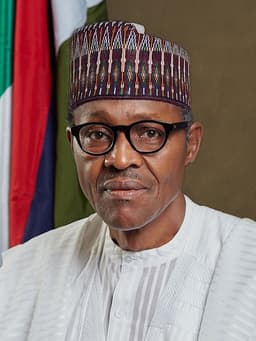
Muhammadu Buhari
General · Modern
51.5Total
Basic Information
Born
1957
1942
Died
—
—
Era
Modern
Modern
Nationality
Afghanistan
Nigeria
Occupation
General
General
Civilization
Middle Eastern
Other
Score Comparison
Military (10%)
40.0
22.6
Political (20%)
43.7
68.0
Influence (20%)
51.0
53.3
Legacy (20%)
43.3
43.3
Leadership (15%)
74.0
72.0
Strategy (15%)
45.0
41.0
TOTAL
49.7
51.5
Mohammad Fahim — Complete Timeline
2001 AD
Led Northern Alliance Forces in Fall of KabulWar
Mohammad Fahim, as a senior Northern Alliance commander, led forces that captured Kabul from the Taliban in November 2001. This victory followed the US invasion and was a turning point in the war, leading to the collapse of Taliban rule.
AfghanistanWarTaliban
Impact: national
Appointed Vice President of AfghanistanPolitical Action◆ Major
Mohammad Fahim was appointed Vice President of Afghanistan under Hamid Karzai in 2001, serving until 2004. He was a key Northern Alliance commander and his appointment was part of the post-Taliban power-sharing arrangement.
AfghanistanVice PresidencyNorthern Alliance
Impact: nationalconstructive
Served as Minister of DefensePolitical Action◆ Major
Mohammad Fahim served as Afghanistan's Minister of Defense from 2001 to 2004. He oversaw the formation of the new Afghan National Army and security forces, integrating former mujahideen and Northern Alliance fighters.
AfghanistanDefenseMilitary
Impact: nationalconstructive
2009 AD
Appointed First Vice President in 2009Political Action◆ Major
Mohammad Fahim was appointed First Vice President of Afghanistan under President Hamid Karzai in 2009. He served until his death in 2014, playing a key role in security and political affairs.
AfghanistanVice PresidencyGovernment
Impact: nationalconstructive
Muhammadu Buhari — Complete Timeline
1983 AD
1983 Nigerian coup d'étatPolitical Action
Major General Muhammadu Buhari led a military coup that overthrew the civilian government of President Shehu Shagari. Buhari cited corruption and economic mismanagement as justifications, and he became the head of state.
CoupMilitary RuleCorruption
Impact: nationaldestructive
1984 AD
War Against Indiscipline (WAI)Reform◆ Major
Buhari launched the War Against Indiscipline, a campaign to enforce discipline and order in Nigerian society. It included harsh penalties for minor offenses, such as queue-jumping, and was criticized for human rights abuses.
DisciplineSocial PolicyHuman Rights
Impact: nationaldestructive
1985 AD
Overthrow by Ibrahim BabangidaPolitical Action◆ Major
Buhari was overthrown in a palace coup led by his Chief of Army Staff, Ibrahim Babangida. Babangida cited Buhari's authoritarian style and failure to address the economy as reasons for the coup.
CoupOverthrowBabangida
Impact: national
2015 AD
Anti-corruption campaignReform◆ Major
Buhari launched a high-profile anti-corruption campaign, targeting government officials and recovering stolen assets. The campaign was praised internationally but criticized for being selective and politically motivated.
Anti-CorruptionReformGovernance
Impact: nationalconstructive
Election as President of NigeriaPolitical Action
Buhari won the 2015 Nigerian presidential election, defeating incumbent Goodluck Jonathan. This was the first time an opposition candidate had defeated a sitting president in Nigeria's history, marking a democratic milestone.
ElectionDemocracyOpposition Victory
Impact: nationalprogressive
Expert Analysis
Muhammadu Buhari vs Mohammad Fahim
The General and the Warlord
On a December morning in 1983, Muhammadu Buhari, a stern-faced major general, stepped before Nigerian television cameras to announce that the nation’s experiment with democracy had failed. The economy was in shambles, corruption was rampant, and the military—once again—would take charge. Eighteen years later, in November 2001, another commander, Mohammad Fahim, rode into Kabul atop a captured Taliban tank, his beard dusted with the grit of war. Both men were generals; both seized moments of national crisis. But one would return to power through the ballot box, while the other would die a vice president, his legacy tangled in the very violence that lifted him.
Origins
Muhammadu Buhari was born in 1942 in Daura, a dusty town in northern Nigeria, into a Fulani family with deep roots in the region’s Islamic aristocracy. His father was a village chief, his mother a homemaker. The British colonial order was crumbling, and young Buhari absorbed a world where discipline, hierarchy, and military service offered the only ladder to power. He joined the Nigerian Army in 1962, trained at the Royal Military Academy Sandhurst in England, and rose through the ranks during the Biafran War. His Nigeria was a sprawling, oil-rich state where ethnic rivalries and military coups had become the rhythm of political life.
Mohammad Fahim was born in 1957 in the Panjshir Valley of Afghanistan, a rugged, mountainous region that bred fighters like other places bred farmers. His father was a landowner of modest means, but the Soviet invasion of 1979 shattered any ordinary path. Fahim joined the mujahideen resistance, aligning himself with the legendary commander Ahmad Shah Massoud. His Afghanistan was a battlefield where loyalty was measured in blood and the only currency was the Kalashnikov. Unlike Buhari, who learned war in a formal academy, Fahim learned it in the caves and passes of the Hindu Kush.
Rise to Power
Buhari’s ascent followed a well-worn script for African generals. In 1983, after six years of civilian rule under President Shehu Shagari, Nigeria’s economy was collapsing under the weight of oil price crashes and institutional graft. Buhari, then a major general, led a bloodless coup on December 31, citing the need to “save the nation from collapse.” He was 41. His path was institutional: he had the army’s command structure behind him, and his takeover was swift, surgical, and—for a time—popular.
Fahim’s rise was messier, born of war’s chaos. He fought alongside Massoud against the Soviets in the 1980s, then against the Taliban in the 1990s. When Massoud was assassinated by Al-Qaeda on September 9, 2001, Fahim inherited command of the Northern Alliance’s military wing. Two months later, as American bombs pounded Taliban positions, Fahim led his forces into Kabul. He was not elected; he was the last man standing. The United States needed a strongman to hold the capital, and Fahim was there.
Leadership & Governance
As Nigeria’s military ruler from 1984 to 1985, Buhari governed with an iron fist. He launched the “War Against Indiscipline” (WAI), a campaign that forced civil servants to line up for work, punished lateness with public humiliation, and jailed journalists who criticized him. He was not a reformer in the modern sense—he was a disciplinarian, convinced that Nigeria’s problems were moral, not structural. His military score of 20.7 reflects his lack of battlefield experience; his political score of 61.0 suggests a man who understood power but not persuasion. His economic policies—austerity, border closures, and price controls—deepened the recession.
Fahim, by contrast, was a warlord turned politician. As Minister of Defense from 2001 to 2004, he oversaw the creation of a new Afghan army, but he also packed it with his own Panjshiri loyalists, earning a reputation for sectarianism. His military score of 57.3 reflects his combat experience; his strategy score of 48.9 reveals a commander who relied on brute force rather than finesse. He was accused of drug trafficking and human rights abuses—charges he denied. Yet he also served as Hamid Karzai’s vice president, a role that required coalition-building in a fractured land.
Triumph & Tragedy
Buhari’s greatest moment came in 2015, when he won the Nigerian presidency in a democratic election—the first time an opposition candidate had unseated an incumbent. It was a stunning redemption for a man once thrown out by his own generals. He launched a high-profile anti-corruption campaign, recovering billions in stolen assets and targeting political elites. But his tragedy was the same: the campaign became a weapon against rivals, and his economic management—especially during the 2016 recession—left millions poorer.
Fahim’s triumph was the fall of Kabul in 2001. He had avenged Massoud and driven the Taliban from power. But his tragedy was that he could not hold what he had won. His forces were accused of looting and reprisal killings, and his political influence waned as Karzai sought to balance ethnic factions. He died in 2014, still vice president, but largely sidelined—a warlord who had outlived his usefulness.
Character & Destiny
Buhari was austere, stoic, and opaque. He rarely smiled, spoke in clipped phrases, and seemed to view governance as a moral crusade. His personality—rigid, suspicious of democracy, yet craving its legitimacy—drove his strange arc from coup-maker to elected president. He believed in order above all, and that belief both saved and damned him.
Fahim was a survivor, pragmatic and ruthless. He switched alliances when needed, enriched his followers, and never lost sight of his Panjshiri base. He was not a visionary; he was a fixer. His personality reflected the Afghan war: short-term, violent, and transactional.
Legacy
Buhari’s legacy is contested. To his supporters, he is a patriot who fought corruption and restored dignity. To critics, he is a failed autocrat who returned to power only to repeat old mistakes. His score of 56.7 for legacy suggests a figure who will be remembered, but not revered.
Fahim’s legacy is even more ambiguous. He helped topple the Taliban, but his role in building a corrupt, warlord-dominated state taints that victory. His score of 56.7 mirrors Buhari’s, a sign that both men are footnotes in larger stories—Nigeria’s struggle for democracy, Afghanistan’s endless war.
Conclusion
One general governed a nation by decree, then returned as a democrat. The other commanded a guerrilla army, then became a vice president. Both rose through violence, both tried to rule, and both left behind countries still searching for peace. Their lives remind us that the line between hero and tyrant is often just the passage of time—and the judgment of history.
Rankings
🥇
Muhammadu BuhariLeader
Mil: 22.6Pol: 68.0Inf: 53.3
51.5
🥈
Mohammad Fahim
Mil: 40.0Pol: 43.7Inf: 51.0
49.7
+1.8 behind
How This Comparison Works
Algorithm
Each figure is scored on 6 dimensions (0—100 scale) based on structured historical data: Military (10%), Political (20%), Influence (20%), Legacy (20%), Leadership (15%), Strategy (15%). The weighted total produces the final ranking.
Data Sources
Scores are computed from structured sub-indicators in the database. Scale factors adjust for era (Ancient ×0.85, Modern ×1.0) and civilization size (Eastern ×1.05, Other ×0.80) to account for differences in population and military scale.
Maximum 3 Figures
Comparisons are limited to 2—3 figures to ensure readability and statistical meaningfulness.
Error Margins
±5 points per dimension — Sub-scores are derived from historical records with inherent uncertainty. Two figures within 5 points on a dimension should be considered roughly equivalent in that area.
Total Score Accuracy
±3 points overall — The weighted combination of 6 dimensions produces a total score with approximately ±3 points of uncertainty. Differences of less than 3 points are not statistically significant— the figures are effectively tied.
Known Limitations
- Historical records are incomplete and uneven across civilizations
- Figures from oral-tradition societies may be underrepresented
- Occupation labels can misclassify multi-role figures
- Scores measure capability and impact, not moral character
- Quantitative scoring is a comparison tool, not absolute truth
Capability Radar
Military (10%) — Battles & Warfare
Battles
35
10
Win Rate
40
10
Expansion
25
5
Political (20%) — Governance & Reform
Reform
20
30
Diplomacy
40
25
Economy
15
20
Influence (20%) — Cultural & Global Reach
Cultural
15
25
Global
20
25
Legacy (20%) — Historical Impact
Historical
30
30
Longevity
20
20
Leadership (15%) — Power & Stability
Tenure
45
45
Stability
20
15
Strategy (15%) — Tactics & Innovation
Strategy
35
15
Tactics
30
15
Reform
20
20
Similar Comparisons
Comments & Discussion
No comments yet. Be the first to share your thoughts!