Loading...
Mohammad Fahim vs Yitzhak Rabin
Yitzhak Rabin leads by 16.7 pts · 2 figures compared
…
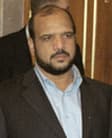
Mohammad Fahim
General · Modern
49.7Total
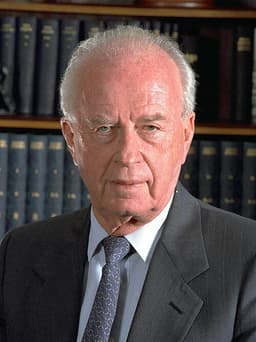
Yitzhak Rabin
General · Modern
66.4Total
Basic Information
Born
1957
1922
Died
—
—
Era
Modern
Modern
Nationality
Afghanistan
Israel
Occupation
General
General
Civilization
Middle Eastern
Middle Eastern
Score Comparison
Military (10%)
40.0
61.7
Political (20%)
43.7
82.0
Influence (20%)
51.0
68.0
Legacy (20%)
43.3
55.0
Leadership (15%)
74.0
78.0
Strategy (15%)
45.0
55.0
TOTAL
49.7
66.4
Mohammad Fahim — Complete Timeline
2001 AD
Led Northern Alliance Forces in Fall of KabulWar
Mohammad Fahim, as a senior Northern Alliance commander, led forces that captured Kabul from the Taliban in November 2001. This victory followed the US invasion and was a turning point in the war, leading to the collapse of Taliban rule.
AfghanistanWarTaliban
Impact: national
Appointed Vice President of AfghanistanPolitical Action◆ Major
Mohammad Fahim was appointed Vice President of Afghanistan under Hamid Karzai in 2001, serving until 2004. He was a key Northern Alliance commander and his appointment was part of the post-Taliban power-sharing arrangement.
AfghanistanVice PresidencyNorthern Alliance
Impact: nationalconstructive
Served as Minister of DefensePolitical Action◆ Major
Mohammad Fahim served as Afghanistan's Minister of Defense from 2001 to 2004. He oversaw the formation of the new Afghan National Army and security forces, integrating former mujahideen and Northern Alliance fighters.
AfghanistanDefenseMilitary
Impact: nationalconstructive
2009 AD
Appointed First Vice President in 2009Political Action◆ Major
Mohammad Fahim was appointed First Vice President of Afghanistan under President Hamid Karzai in 2009. He served until his death in 2014, playing a key role in security and political affairs.
AfghanistanVice PresidencyGovernment
Impact: nationalconstructive
Yitzhak Rabin — Complete Timeline
1967 AD
Chief of Staff during the Six-Day WarWar
As Chief of Staff of the Israel Defense Forces, Rabin commanded the Israeli military during the Six-Day War against Egypt, Jordan, and Syria. Israel captured the Sinai Peninsula, Gaza Strip, West Bank, East Jerusalem, and Golan Heights, reshaping the region.
Six-Day WarTerritorial ExpansionMilitary Victory
Impact: global
1993 AD
Signing of the Oslo AccordsPolitical Action
As prime minister, Rabin signed the Oslo Accords with PLO Chairman Yasser Arafat on the White House lawn. The agreement established the Palestinian Authority and set a framework for Palestinian self-governance in the West Bank and Gaza Strip.
Peace ProcessPalestiniansOslo
Impact: globalconstructive
1995 AD
Assassination at Peace RallyPolitical Action
Rabin was assassinated by Israeli extremist Yigal Amir after a peace rally in Tel Aviv. The assassination shocked Israel and the world, derailing the Oslo peace process and leading to a period of political instability.
AssassinationPeace ProcessPolitical Violence
Impact: globaltragic
Expert Analysis
Yitzhak Rabin vs Mohammad Fahim
# The General’s Two Fates
On a balmy November evening in 1995, Yitzhak Rabin stood before a crowd of 100,000 people in Tel Aviv’s Kings of Israel Square, singing a peace song. Moments later, three gunshots rang out, and the Israeli prime minister crumpled to the ground, killed by a fellow Jew who believed his pursuit of peace was treason. Half a world away and six years later, another general—Mohammad Fahim—rode into Kabul at the head of Northern Alliance forces, his tanks crushing the last resistance of a fallen regime. Both men were military commanders turned political leaders in volatile regions. Both faced the impossible task of building peace in lands soaked with blood. Yet one became a global symbol of sacrifice, while the other remains a footnote in a country still at war. Why did their paths diverge so sharply?
Origins
Yitzhak Rabin was born in 1922 in Jerusalem, the son of socialist Zionist immigrants from Eastern Europe. He grew up in a world where the creation of a Jewish state was not a dream but a desperate necessity. His generation was forged in the crucible of the Holocaust and the 1948 War of Independence. Rabin joined the Palmach, the elite strike force of the Jewish underground, at age 19. He learned war as a young man because survival demanded it. His education was practical—tactics, logistics, command—not philosophical. The land he fought for was small, surrounded by enemies, and every decision carried existential weight.
Mohammad Fahim was born in 1957 in the Panjshir Valley of Afghanistan, a rugged region that bred resistance fighters like others bred wheat. He came of age during the Soviet invasion of 1979, joining the mujahideen as a teenager. His teacher was not a school but a war: the grinding, decade-long guerrilla struggle against the Red Army. Fahim fought alongside Ahmad Shah Massoud, the “Lion of Panjshir,” learning the art of mountain warfare and tribal politics. His world was fragmented—ethnic Tajiks versus Pashtuns, warlords versus central government, Islam versus communism. For Fahim, loyalty was local, power was personal, and the state was an abstraction.
Rise to Power
Rabin’s ascent was methodical, almost bureaucratic. He rose through the ranks of the Israel Defense Forces, becoming Chief of Staff in 1964. His defining moment came in June 1967, when he commanded the lightning strikes of the Six-Day War. In six days, Israel captured the Sinai, Gaza, the West Bank, and the Golan Heights—territories that would define the conflict for decades. Rabin did not seek glory; he sought victory. The war’s success made him a national hero, and he transitioned naturally from military command to political leadership, serving as ambassador to the United States and later as prime minister in 1974. His power came from institutions: a unified army, a functioning state, and a democratic process.
Fahim’s path was far more chaotic. After the Soviet withdrawal in 1989, Afghanistan descended into civil war. Massoud and Fahim held the Panjshir Valley against the Taliban’s advance in the 1990s, but by 1996, the Taliban had taken Kabul. Fahim became a commander of the Northern Alliance, a loose coalition of ethnic militias fighting a losing battle. His rise to power came not through elections but through a bullet: when Massoud was assassinated by al-Qaeda on September 9, 2001, just two days before 9/11, Fahim inherited the leadership of the Northern Alliance. The American invasion that followed gave him his chance. In November 2001, his forces captured Kabul, and he was appointed Vice President and Minister of Defense under Hamid Karzai. His power was a product of war, patronage, and American necessity.
Leadership & Governance
Rabin governed as a pragmatist. As prime minister during the 1990s, he shocked his nation by shaking hands with Yasser Arafat on the White House lawn in 1993, signing the Oslo Accords that promised Palestinian self-rule. He understood that Israel could not rule millions of Palestinians forever—that military victory had to be transformed into political settlement. “You don’t make peace with friends,” he said. “You make it with very unsavory enemies.” Rabin’s military background gave him the credibility to make concessions; Israelis trusted that no one would call him soft. He built coalitions, managed a fractious cabinet, and pushed through reforms while facing constant threats from settlers and right-wing extremists. His leadership was strategic, not charismatic—a quiet, chain-smoking man who believed in process over personality.
Fahim was a warlord in a statesman’s suit. As Defense Minister, he oversaw the creation of the new Afghan National Army, but his methods were those of a militia commander. He distributed weapons and money to his own Tajik loyalists, alienating Pashtuns and other ethnic groups. Corruption flourished under his watch; American aid vanished into private pockets. When he served as First Vice President from 2009 until his death in 2014, his role was largely symbolic. He did not build institutions; he built networks. The Afghan state remained weak, dependent on foreign troops and foreign money, because men like Fahim never fully committed to a national project. His governance was tribal, not transformational.
Triumph & Tragedy
Rabin’s greatest triumph was also the seed of his tragedy. The Oslo Accords earned him a Nobel Peace Prize in 1994, shared with Arafat and Shimon Peres. But it also earned him enemies. Israeli extremists accused him of betraying the land of Israel; Palestinian militants saw the accords as a surrender. He walked a tightrope between hope and hatred. On November 4, 1995, at a peace rally in Tel Aviv, Yigal Amir, a Jewish law student, shot him three times. Rabin died on the spot. His assassination was a tragedy not because he was perfect, but because he was the one leader who might have made peace possible. His death shattered Israeli faith in the process, and the peace he envisioned never came.
Fahim’s triumph was the fall of Kabul in 2001. He rode into the capital as a liberator, driving the Taliban from power. But his tragedy was that he never understood the peace that followed. He amassed wealth and power, building a mansion in Kabul while the country crumbled around him. When he died of a heart attack in 2014 at age 57, Afghanistan was already sliding back into war. The Taliban would retake Kabul in 2021, erasing his victory. His triumph was temporary; his failure was permanent.
Character & Destiny
Rabin was a man of contradictions: a warrior who sought peace, an introvert who led a nation, a secular socialist who governed a religiously divided society. His character was shaped by the belief that history could be steered—that a small country could make choices, not merely react. His destiny was to become a martyr for the cause he championed, a symbol of what might have been. When he fell, the bullet did not just kill a man; it killed a moment.
Fahim was a survivor in a land of survivors. He adapted to every change: Soviet invasion, civil war, American occupation. But he never grew beyond his origins. He remained a Panjshiri commander, not an Afghan statesman. His character was flexible, not visionary. His destiny was to be forgotten—a footnote in a country that has too many footnotes and too few heroes.
Legacy
Rabin is remembered as one of Israel’s greatest leaders, his name etched into the national memory. Every year on the anniversary of his assassination, Israelis gather to remember him. The square where he died was renamed Rabin Square. His legacy is a question: What if? Did he die for peace, or did peace die with him? The answer is unclear, but the question endures.
Fahim is remembered, if at all, as a warlord who got lucky. No squares bear his name. The schools and hospitals he promised to build were never built. His legacy is the Afghan state’s failure to cohere—a reminder that military victory without political vision is just another form of defeat.
Conclusion
Two generals, two regions, two eras. Rabin and Fahim both rose through war, both held power in fragile states, both faced the challenge of transforming conflict into peace. One succeeded briefly and died for it; the other survived but failed to build. The difference was not talent or courage—it was vision. Rabin believed that a nation could be more than its enemies. Fahim believed that a man could be more than his tribe. One was right, and the other was wrong. Their stories remind us that in the Middle East, the hardest battle is not the one you fight with guns—it is the one you fight with hope.
Rankings
🥇
Yitzhak RabinLeader
Mil: 61.7Pol: 82.0Inf: 68.0
66.4
🥈
Mohammad Fahim
Mil: 40.0Pol: 43.7Inf: 51.0
49.7
+16.7 behind
How This Comparison Works
Algorithm
Each figure is scored on 6 dimensions (0—100 scale) based on structured historical data: Military (10%), Political (20%), Influence (20%), Legacy (20%), Leadership (15%), Strategy (15%). The weighted total produces the final ranking.
Data Sources
Scores are computed from structured sub-indicators in the database. Scale factors adjust for era (Ancient ×0.85, Modern ×1.0) and civilization size (Eastern ×1.05, Other ×0.80) to account for differences in population and military scale.
Maximum 3 Figures
Comparisons are limited to 2—3 figures to ensure readability and statistical meaningfulness.
Error Margins
±5 points per dimension — Sub-scores are derived from historical records with inherent uncertainty. Two figures within 5 points on a dimension should be considered roughly equivalent in that area.
Total Score Accuracy
±3 points overall — The weighted combination of 6 dimensions produces a total score with approximately ±3 points of uncertainty. Differences of less than 3 points are not statistically significant— the figures are effectively tied.
Known Limitations
- Historical records are incomplete and uneven across civilizations
- Figures from oral-tradition societies may be underrepresented
- Occupation labels can misclassify multi-role figures
- Scores measure capability and impact, not moral character
- Quantitative scoring is a comparison tool, not absolute truth
Capability Radar
Military (10%) — Battles & Warfare
Battles
35
65
Win Rate
40
70
Expansion
25
50
Political (20%) — Governance & Reform
Reform
20
65
Diplomacy
40
85
Economy
15
60
Influence (20%) — Cultural & Global Reach
Cultural
15
55
Global
20
70
Legacy (20%) — Historical Impact
Historical
30
75
Longevity
20
60
Leadership (15%) — Power & Stability
Tenure
45
70
Stability
20
40
Strategy (15%) — Tactics & Innovation
Strategy
35
75
Tactics
30
60
Reform
20
55
Similar Comparisons
Comments & Discussion
KnessetSniper6/16/2026
Rabin’s death wasn’t just a tragedy, it was a strategic assassination that altered the course of the Middle East. If he’d lived, Oslo might have held, and we wouldn’t have the walled ghettos of today. Fahim? He was a warlord who rode CIA tanks to power, not peace. Rabin’s sin was believing in diplomacy; Fahim’s success was being useful to the West. One died for his ideals, the other survived for lack of them—that’s the real divergence.
塔吉克骑兵6/16/2026
拉宾算是以色列的“被迫和平者”,而法希姆是阿富汗的“临时工将军”。拉宾90年代和阿拉法特握手,签了奥斯陆协议,结果被自己人崩了——这说明和平在极端主义面前多脆弱。法希姆呢?2001年美军一撤,他就被塔利班打回原形,现在死了连个纪念公园都没有。一个殉道,一个湮灭,差距在于前者真有理想,后者就一军阀。实战经验丰富?那是靠苏联武器和美国钞票堆出来的。
MamlukScribe6/16/2026
From a military historian’s lens, Rabin was a genius of maneuver warfare—think 1967 Six-Day War, where his logistical prep and timing crushed three armies. Fahim was a brute-force commander, smashing defensive lines in the Shomali Plain with sheer numbers. One projected power to force peace, the other to grab territory. Rabin’s legacy is a bullet in the chest from a fanatic; Fahim’s is a grave in Panjshir that nobody visits. Commanders shape nations, but nations also discard them.
数据猎人6/16/2026
别扯什么英雄叙事,看硬数字:拉宾执政期间,以色列GDP从1992年的780亿美元涨到1995年的990亿,和平红利实实在在。法希姆呢?2004年当副总统,阿富汗鸦片产量从3400吨飙到4200吨,他管过吗?拉宾是被暗杀,但数据证明他死前政策有效;法希姆活到2014年,但治下国家腐败烂透。一个用数据写英雄传,一个用数据写失败账。别混淆殉道者和混混。
KurdishContractor6/16/2026
Rabin’s tragedy is that he was killed by a Jew who thought peace was treason. Fahim’s farce is that he was a Tajik warlord who outlived his usefulness. Rabin forced the Oslo Accords through a Knesset that hated him; Fahim just rode the Northern Alliance’s coattails. One had a vision—a Palestinian state next to Israel—while the other had a grudge against the Pashtuns. Rabin’s name is a square