Loading...
J. B. M. Hertzog vs Mohammad Fahim
J. B. M. Hertzog leads by 6.4 pts · 2 figures compared
…
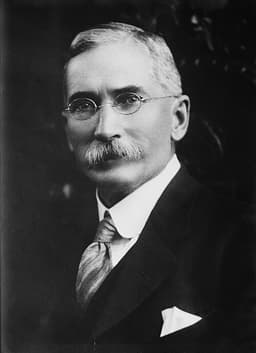
J. B. M. Hertzog
General · Modern
56.1Total
Mohammad Fahim
General · Modern
49.7Total
Basic Information
Born
1866
1957
Died
1942
—
Era
Modern
Modern
Nationality
South Africa
Afghanistan
Occupation
General
General
Civilization
Other
Middle Eastern
Score Comparison
Military (10%)
25.0
40.0
Political (20%)
60.0
43.7
Influence (20%)
56.7
51.0
Legacy (20%)
50.0
43.3
Leadership (15%)
79.8
74.0
Strategy (15%)
60.0
45.0
TOTAL
56.1
49.7
J. B. M. Hertzog — Complete Timeline
1899 AD
Boer War GeneralWar◆ Major
Hertzog served as a Boer general in the Second Boer War, commanding forces in the Orange Free State. He participated in several battles and became a prominent Afrikaner military leader.
Second Boer WarGeneralMilitary
Impact: regional
1914 AD
Founded the National PartyPolitical Action
Hertzog broke away from the South African Party and founded the National Party, which championed Afrikaner nationalism and opposed British imperial influence. The party would later implement apartheid.
National PartyAfrikaner NationalismFounding
Impact: nationalconstructive
1924 AD
Prime Minister of South AfricaPolitical Action◆ Major
Hertzog became Prime Minister after his National Party won the general election in coalition with the Labour Party. His government implemented policies to protect white workers and promote Afrikaner interests, including the 'civilized labour' policy.
Prime MinisterAfrikaner RightsLabour Policy
Impact: national
1934 AD
Merged with Smuts to Form United PartyPolitical Action◆ Major
Hertzog merged his National Party with Jan Smuts' South African Party to form the United Party. The coalition aimed to address the economic crisis of the Great Depression and promote national unity, but it alienated hardline Afrikaner nationalists.
United PartyCoalitionNational Unity
Impact: nationalconstructive
1936 AD
Passed the Representation of Natives ActReform◆ Major
Hertzog's government passed the Representation of Natives Act, which removed Black voters from the common voters' roll in the Cape Province and allowed them to elect white representatives instead. This further entrenched racial segregation.
SegregationDisenfranchisementLegislation
Impact: nationaldestructive
1939 AD
Resigned Over Neutrality in WWIIPolitical Action◆ Major
Hertzog advocated for South African neutrality in World War II, but his cabinet voted to enter the war on the Allied side. He resigned as Prime Minister and was succeeded by Jan Smuts, splitting the United Party.
World War IINeutralityResignation
Impact: national
Mohammad Fahim — Complete Timeline
2001 AD
Led Northern Alliance Forces in Fall of KabulWar
Mohammad Fahim, as a senior Northern Alliance commander, led forces that captured Kabul from the Taliban in November 2001. This victory followed the US invasion and was a turning point in the war, leading to the collapse of Taliban rule.
AfghanistanWarTaliban
Impact: national
Appointed Vice President of AfghanistanPolitical Action◆ Major
Mohammad Fahim was appointed Vice President of Afghanistan under Hamid Karzai in 2001, serving until 2004. He was a key Northern Alliance commander and his appointment was part of the post-Taliban power-sharing arrangement.
AfghanistanVice PresidencyNorthern Alliance
Impact: nationalconstructive
Served as Minister of DefensePolitical Action◆ Major
Mohammad Fahim served as Afghanistan's Minister of Defense from 2001 to 2004. He oversaw the formation of the new Afghan National Army and security forces, integrating former mujahideen and Northern Alliance fighters.
AfghanistanDefenseMilitary
Impact: nationalconstructive
2009 AD
Appointed First Vice President in 2009Political Action◆ Major
Mohammad Fahim was appointed First Vice President of Afghanistan under President Hamid Karzai in 2009. He served until his death in 2014, playing a key role in security and political affairs.
AfghanistanVice PresidencyGovernment
Impact: nationalconstructive
Expert Analysis
J. B. M. Hertzog vs Mohammad Fahim
# The General and the Warlord: Two Paths of Power in Fractured Nations
In the winter of 1939, J. B. M. Hertzog sat in his Cape Town office, a man who had shaped South Africa for decades, watching his cabinet vote to join a war he believed would destroy his people. Half a world away and sixty-two years later, Mohammad Fahim rode into Kabul at the head of Northern Alliance forces, the city falling before him like a ripe fruit. Both men were generals turned politicians. Both led peoples who had been marginalized and brutalized. But their stories could not have diverged more sharply—one seeking to build a nation through law and compromise, the other through raw power and survival. What drove them to such different ends?
Origins
James Barry Munnik Hertzog was born in 1866 on a farm in the Cape Colony, the son of a Boer frontiersman. He grew up speaking Afrikaans, watching British imperial power encroach on his people's land. He studied law in the Netherlands, returning to become a judge in the Orange Free State. The Boer War of 1899–1902 burned itself into his soul—he served as a general, commanding forces in the Orange Free State, witnessing the scorched-earth tactics and concentration camps that broke the Boer republics. That war made him a lifelong champion of Afrikaner rights, convinced that his people could only survive through political unity.
Mohammad Fahim was born in 1957 in the Panjshir Valley of Afghanistan, a Tajik in a country long dominated by Pashtuns. The Soviet invasion of 1979 shaped him as the Boer War shaped Hertzog. He joined the mujahideen resistance, fighting alongside Ahmad Shah Massoud, the "Lion of Panjshir." Where Hertzog had studied law, Fahim studied war—guerrilla tactics, mountain ambushes, the art of survival against a superpower. His world was one of constant violence, where loyalty was measured in blood.
Rise to Power
Hertzog's path was political. In 1914, he broke from the South African Party to found the National Party, which championed Afrikaner nationalism. He built a movement on language rights, cultural pride, and the bitter memory of British oppression. His rise was slow, deliberate, legal—he won elections, formed coalitions, and in 1924 became Prime Minister. The law was his weapon.
Fahim's rise was forged in war. After the Soviet withdrawal, Afghanistan collapsed into civil war. When the Taliban emerged in the 1990s, Fahim remained with Massoud, fighting a desperate rearguard action from the mountains. By 2001, when the United States invaded after 9/11, Fahim was Massoud's successor—the Northern Alliance's most powerful commander. He led the forces that captured Kabul in November 2001, a stunning military victory that made him the de facto strongman of a new Afghanistan.
Leadership and Governance
Hertzog governed as a constitutionalist. His premiership from 1924 to 1939 was marked by pragmatic nation-building. He protected Afrikaans language and culture, expanded welfare for white South Africans, and sought to reconcile Boer and Briton. His greatest political achievement was the 1934 merger with Jan Smuts to form the United Party, a coalition aimed at national unity. But his vision was narrow—it was unity for whites only. In 1936, his government passed the Representation of Natives Act, removing Black voters from the common roll. It was a foundational step toward apartheid, a legal betrayal of the very principles of justice he claimed to uphold.
Fahim governed as a warlord. As Minister of Defense from 2001 to 2004, he oversaw the creation of a new Afghan army, but he also packed it with his own Tajik loyalists. He became Vice President under Hamid Karzai in 2001, then First Vice President in 2009. His power was personal, not institutional—he commanded militias, controlled patronage networks, and answered to no law but his own. Where Hertzog built a party, Fahim built a faction.
Triumph and Tragedy
Hertzog's triumph was the 1934 merger, a moment when he seemed to transcend ethnic division. His tragedy came in 1939, when he advocated for South African neutrality in World War II. For him, the war was a British imperial conflict that would drag Afrikaners into another bloodbath. His cabinet voted to join the Allies. He resigned, broken, and died three years later, a man who had given his life to Afrikanerdom only to be rejected by it.
Fahim's triumph was Kabul in 2001, the moment the Taliban fell. His tragedy was that he could not build on it. He died in 2014, leaving behind a fractured Afghanistan where his militias became a source of instability, where his corruption fueled the very insurgency he had fought. He had won the war but lost the peace.
Character and Destiny
Hertzog was a man of principle and rigidity. He believed in law, in process, in the power of institutions. But his principles were selective—they applied only to his own people. He could not see that the Afrikaner struggle for freedom mirrored the Black struggle he suppressed. That blindness was his destiny.
Fahim was a man of survival and pragmatism. He had no grand ideology, only the instinct to protect his people and himself. He was ruthless when necessary, generous to allies, and utterly indifferent to the state's long-term health. His destiny was to be a transitional figure, a bridge between war and something that never quite arrived.
Legacy
Hertzog is remembered as a founding father of Afrikaner nationalism, a man whose work was twisted into apartheid. His legacy is ambiguous—he fought for freedom for his people while denying it to others. Today, his name appears on streets and statues, contested symbols of a divided nation.
Fahim is remembered as a warlord who helped topple the Taliban but whose corruption and factionalism undermined the new Afghanistan. His legacy is fading, overtaken by the Taliban's return. He was a man of his time—a time of chaos—and when order failed to come, he was forgotten.
Conclusion
Two generals, two nations, two different answers to the same question: How do you lead a people who have been crushed? Hertzog chose law, but only for some. Fahim chose power, but without vision. Both failed—not because they were evil, but because they could not see beyond their own people's suffering. Their stories remind us that leadership is not just about winning battles or passing laws. It is about the capacity to imagine a world where everyone belongs. That, in the end, is the hardest campaign of all.
Rankings
🥇
J. B. M. HertzogLeader
Mil: 25.0Pol: 60.0Inf: 56.7
56.1
🥈
Mohammad Fahim
Mil: 40.0Pol: 43.7Inf: 51.0
49.7
+6.4 behind
How This Comparison Works
Algorithm
Each figure is scored on 6 dimensions (0—100 scale) based on structured historical data: Military (10%), Political (20%), Influence (20%), Legacy (20%), Leadership (15%), Strategy (15%). The weighted total produces the final ranking.
Data Sources
Scores are computed from structured sub-indicators in the database. Scale factors adjust for era (Ancient ×0.85, Modern ×1.0) and civilization size (Eastern ×1.05, Other ×0.80) to account for differences in population and military scale.
Maximum 3 Figures
Comparisons are limited to 2—3 figures to ensure readability and statistical meaningfulness.
Error Margins
±5 points per dimension — Sub-scores are derived from historical records with inherent uncertainty. Two figures within 5 points on a dimension should be considered roughly equivalent in that area.
Total Score Accuracy
±3 points overall — The weighted combination of 6 dimensions produces a total score with approximately ±3 points of uncertainty. Differences of less than 3 points are not statistically significant— the figures are effectively tied.
Known Limitations
- Historical records are incomplete and uneven across civilizations
- Figures from oral-tradition societies may be underrepresented
- Occupation labels can misclassify multi-role figures
- Scores measure capability and impact, not moral character
- Quantitative scoring is a comparison tool, not absolute truth
Capability Radar
Military (10%) — Battles & Warfare
Battles
45
35
Win Rate
40
40
Expansion
20
25
Political (20%) — Governance & Reform
Reform
60
20
Diplomacy
55
40
Economy
50
15
Influence (20%) — Cultural & Global Reach
Cultural
50
15
Global
45
20
Legacy (20%) — Historical Impact
Historical
55
30
Longevity
40
20
Leadership (15%) — Power & Stability
Tenure
65
45
Stability
45
20
Strategy (15%) — Tactics & Innovation
Strategy
50
35
Tactics
45
30
Reform
30
20
Similar Comparisons
Comments & Discussion
BronzeMilitarist6/16/2026
Hertzog was a principled constitutionalist who fought his war with parliamentary motions, while Fahim was a gun-wielding warlord who never met a battlefield he didn’t like. One tried to avoid British boots on African soil in WWII, the other rode into Kabul on a tank. Hertzog founded the National Party; Fahim inherited Ahmad Shah Massoud’s dusty Kalashnikov. Different times, sure, but one built a political legacy, the other just piles of spent shells. You tell me who actually served their people
战地史官6/16/2026
赫佐格是个讲究法治的参政将领,二战时为了南非利益竟想和希特勒苟合,最后被议会逼退位;法希姆则是纯粹靠枪杆子起的草莽军阀,2001年骑着一辆破坦克就冲进喀布尔抢地盘。一个试着用法律护住布尔人的未来,一个只会靠暴力换自己的权势。拿这两人比,简直是把律师和土匪硬拉到一张桌前吃饭。