Loading...
Mohammad Fahim vs Ramon Castilla
Ramon Castilla leads by 10.0 pts · 2 figures compared
…
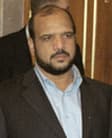
Mohammad Fahim
General · Modern
49.7Total
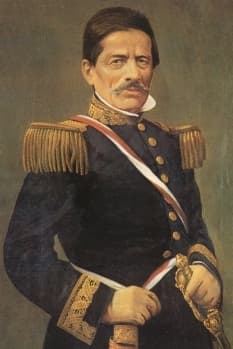
Ramon Castilla
General · Modern
59.7Total
Basic Information
Born
1957
1797
Died
—
1867
Era
Modern
Modern
Nationality
Afghanistan
Peru
Occupation
General
General
Civilization
Middle Eastern
Western
Score Comparison
Military (10%)
40.0
40.0
Political (20%)
43.7
72.0
Influence (20%)
51.0
56.7
Legacy (20%)
43.3
52.0
Leadership (15%)
74.0
78.0
Strategy (15%)
45.0
60.0
TOTAL
49.7
59.7
Mohammad Fahim — Complete Timeline
2001 AD
Led Northern Alliance Forces in Fall of KabulWar
Mohammad Fahim, as a senior Northern Alliance commander, led forces that captured Kabul from the Taliban in November 2001. This victory followed the US invasion and was a turning point in the war, leading to the collapse of Taliban rule.
AfghanistanWarTaliban
Impact: national
Appointed Vice President of AfghanistanPolitical Action◆ Major
Mohammad Fahim was appointed Vice President of Afghanistan under Hamid Karzai in 2001, serving until 2004. He was a key Northern Alliance commander and his appointment was part of the post-Taliban power-sharing arrangement.
AfghanistanVice PresidencyNorthern Alliance
Impact: nationalconstructive
Served as Minister of DefensePolitical Action◆ Major
Mohammad Fahim served as Afghanistan's Minister of Defense from 2001 to 2004. He oversaw the formation of the new Afghan National Army and security forces, integrating former mujahideen and Northern Alliance fighters.
AfghanistanDefenseMilitary
Impact: nationalconstructive
2009 AD
Appointed First Vice President in 2009Political Action◆ Major
Mohammad Fahim was appointed First Vice President of Afghanistan under President Hamid Karzai in 2009. He served until his death in 2014, playing a key role in security and political affairs.
AfghanistanVice PresidencyGovernment
Impact: nationalconstructive
Ramon Castilla — Complete Timeline
1824 AD
Battle of AyacuchoWar
Castilla fought as a junior officer in the decisive Battle of Ayacucho, which ended Spanish rule in Peru. This victory secured Peruvian independence and marked the end of the Spanish Empire in South America, shaping Castilla's nationalist views.
Peruvian War of IndependenceBattleLiberation
Impact: regional
1845 AD
First Presidency of PeruPolitical Action◆ Major
Castilla was elected President of Peru in 1845, serving until 1851. His first term focused on economic development, including the guano boom, and infrastructure projects such as railroads and ports, modernizing the Peruvian state.
PresidencyEconomic DevelopmentGuano
Impact: nationalconstructive
1854 AD
Abolition of Slavery in PeruReform◆ Major
During his second presidency, Castilla issued a decree abolishing slavery in Peru on December 3, 1854. This reform freed approximately 25,000 slaves and was part of a broader liberal agenda, though it faced opposition from slave-owning elites.
AbolitionSlaveryHuman Rights
Impact: nationalprogressive
Abolition of Indigenous TributeReform◆ Major
Castilla also abolished the indigenous tribute tax in 1854, which had been a burden on native communities since colonial times. This measure aimed to integrate indigenous peoples into the Peruvian state as equal citizens, though its implementation was uneven.
Indigenous RightsTax ReformCitizenship
Impact: nationalprogressive
1855 AD
Second Presidency and Guano BoomPolitical Action◆ Major
Castilla served a second term from 1855 to 1862, during the peak of the guano export boom. He used guano revenues to fund public works, pay off foreign debt, and modernize the military, but also faced criticism for corruption and over-reliance on a single resource.
PresidencyGuanoModernization
Impact: nationalconstructive
1860 AD
Constitutional Reform of 1860Reform◆ Major
Castilla oversaw the adoption of a new constitution in 1860, which established a centralized republic with a strong executive. The constitution remained in effect until 1920 and shaped Peru's political structure, though it limited regional autonomy.
ConstitutionPolitical ReformCentralization
Impact: nationalconstructive
Expert Analysis
Ramon Castilla vs Mohammad Fahim
### The Liberator and the Warlord: Two Paths Through the Ruins of Empire
In the high, thin air of the Peruvian Andes, a young officer named Ramón Castilla watched the Spanish viceroy’s army shatter at the Battle of Ayacucho in 1824. The victory was absolute, the Spanish Empire in South America finished. Castilla was twenty-seven, a junior officer on the winning side of history. One hundred and seventy-seven years later, in the dust-choked streets of Kabul, another general, Mohammad Fahim, watched a different empire crumble. His Northern Alliance fighters, backed by American bombs, streamed into the capital in November 2001, sending the Taliban fleeing into the mountains. Both men stood at the hinge-points of their nations, inheriting the wreckage of collapsed orders. Both would rise to the highest offices of the land. Yet one forged a nation from the spoils of war, while the other could only hold together a fragile peace with his own hands. The difference was not merely in their times, but in what they believed power was *for*.
### Origins
Ramón Castilla was born in 1797 in Tarapacá, a remote province of the Viceroyalty of Peru. His father was a Spanish official, his mother a descendant of indigenous nobility. This mixed heritage gave him a foot in two worlds—the colonial establishment and the exploited native majority—a duality that would define his political vision. The wars of independence that began when he was a teenager radicalized him. He joined the patriot army not as a theorist of liberty, but as a practical soldier. The chaos of the early republic taught him that survival required alliances, but also that a nation could not survive on heroism alone.
Mohammad Fahim was born in 1957 in the Panjshir Valley of Afghanistan, a landscape of jagged peaks and fierce clan loyalties. His people, the Tajik, had long chafed under the dominance of the Pashtun. He came of age during the Soviet invasion of 1979, a conflict that turned ordinary farmers into guerrilla commanders. Fahim learned war as a young mujahideen fighter, but unlike Castilla, he never experienced a stable state. The Afghanistan of his youth was a battlefield, then a failed state, then a battlefield again. Where Castilla saw the end of a war as the beginning of a project, Fahim saw it as the opening of a new round of fighting.
### Rise to Power
Castilla’s ascent was methodical. After Ayacucho, he served in various military and administrative posts, building a reputation for competence and moderation. By the 1840s, Peru was bankrupt and fractured by caudillo feuds. In 1845, he was elected president—a rare peaceful transfer of power in a country accustomed to coups. His first term was a masterclass in state-building: he paid down foreign debt, expanded the navy, and began constructing railroads. The key was the guano boom. Peru sat on islands of bird dung that the world suddenly craved as fertilizer. Castilla nationalized the industry and channeled the revenue into infrastructure and bureaucracy. He was not a visionary economist; he was a pragmatist who saw that money without institutions was merely loot.
Fahim’s rise was faster and bloodier. He fought alongside the legendary commander Ahmad Shah Massoud against the Soviets and, later, the Taliban. When Massoud was assassinated by Al-Qaeda on September 9, 2001, Fahim inherited the Northern Alliance’s military command. Two months later, the American invasion gave him the chance to avenge his mentor. He led the capture of Kabul in November 2001, and within weeks, he was appointed Vice President and Minister of Defense under Hamid Karzai. He had not been elected; he had been *installed*—a warlord given a title by foreign powers who needed his guns. His power came from his men, not from a constitution.
### Leadership & Governance
Castilla’s second presidency, from 1855 to 1862, was his masterpiece. In 1854, he issued decrees abolishing slavery and the indigenous tribute tax—two pillars of the colonial economy. The move was partly moral, partly practical: he needed to build a unified nation, and forced labor and racial hierarchies were obstacles. He then oversaw the adoption of a new constitution in 1860, which centralized the state and strengthened the executive. It was not a democratic charter by modern standards, but it gave Peru a legal framework for stability. Castilla ruled as a reformer, using the guano wealth to build schools, hospitals, and a postal service. He was a general who governed like an accountant: disciplined, cautious, and obsessed with solvency.
Fahim’s governance was the opposite. As Minister of Defense, he oversaw the creation of a new Afghan army, but the force remained a collection of militia loyalties rather than a national institution. He was accused of corruption, of funneling American aid to his own commanders, of running the ministry like a personal fiefdom. His political skills were those of a tribal leader: negotiation, patronage, and the careful distribution of arms. When he was appointed First Vice President in 2009, it was not because he had won a mandate, but because Karzai needed his Tajik militia to balance Pashtun power. Fahim governed by holding the pieces together, not by building anything new.
### Triumph & Tragedy
Castilla’s greatest triumph was the abolition of slavery. On December 3, 1854, he signed the decree in a small town in the south, surrounded by former slaves who had joined his army. It was a moment of genuine liberation, and it cemented his legacy as a liberator. His tragedy was that the guano boom was a curse in disguise. The easy money created a dependency that later generations could not escape. When the guano ran out, so did Peru’s stability. Castilla built a state on a finite resource, and the foundation was sand.
Fahim’s triumph was the fall of Kabul. In November 2001, he rode into the city as a liberator, and for a few weeks, Afghanistan glimpsed a future without the Taliban. His tragedy was everything that followed. He could not transform military victory into political order. The warlord system he embodied became the greatest obstacle to Afghan state-building. When he died in 2014—of natural causes, a rare fate for an Afghan commander—the country was already sliding back toward civil war. He had spent his life fighting, but he never learned how to build.
### Character & Destiny
Castilla was a man of discipline and calculation. He was not a charismatic firebrand; he was a steady hand. His personality matched his era: the early republic needed consolidation, not revolution. He understood that power, to be lasting, must be institutionalized. Fahim was a man of war. He was brave, loyal to his men, and ruthless when necessary. But his personality was shaped by decades of conflict, and he could not imagine a politics beyond the battlefield. Where Castilla saw a constitution as a tool, Fahim saw it as a piece of paper. One built a nation; the other commanded a faction.
### Legacy
Castilla is remembered as Peru’s great modernizer. His name adorns streets, schools, and a currency denomination. He is not without critics—some note that his abolition of indigenous tribute did not end exploitation—but he is broadly revered as the president who gave Peru its first taste of order. Fahim’s legacy is more ambiguous. In Afghanistan, he is remembered as a powerful commander who kept the Tajik minority at the table. Outside Afghanistan, he is seen as a symbol of the warlord politics that doomed the post-2001 experiment. One man’s reforms outlasted him; the other’s power died with him.
### Conclusion
Standing at the gates of Kabul in 2001, Mohammad Fahim might have felt what Ramón Castilla felt at Ayacucho in 1824: the intoxicating certainty that history had chosen him. Both men had won. But winning a war is not the same as founding a peace. Castilla had the luck of a windfall—guano—and the wisdom to use it for institutions. Fahim had the burden of a fractured country and the habits of a lifetime of fighting. In the end, the difference between them is not one of talent or courage, but of vision. Castilla saw a state that could be built. Fahim saw a fortress that needed to be held. History judges the builders more kindly.
Rankings
🥇
Ramon CastillaLeader
Mil: 40.0Pol: 72.0Inf: 56.7
59.7
🥈
Mohammad Fahim
Mil: 40.0Pol: 43.7Inf: 51.0
49.7
+10.0 behind
How This Comparison Works
Algorithm
Each figure is scored on 6 dimensions (0—100 scale) based on structured historical data: Military (10%), Political (20%), Influence (20%), Legacy (20%), Leadership (15%), Strategy (15%). The weighted total produces the final ranking.
Data Sources
Scores are computed from structured sub-indicators in the database. Scale factors adjust for era (Ancient ×0.85, Modern ×1.0) and civilization size (Eastern ×1.05, Other ×0.80) to account for differences in population and military scale.
Maximum 3 Figures
Comparisons are limited to 2—3 figures to ensure readability and statistical meaningfulness.
Error Margins
±5 points per dimension — Sub-scores are derived from historical records with inherent uncertainty. Two figures within 5 points on a dimension should be considered roughly equivalent in that area.
Total Score Accuracy
±3 points overall — The weighted combination of 6 dimensions produces a total score with approximately ±3 points of uncertainty. Differences of less than 3 points are not statistically significant— the figures are effectively tied.
Known Limitations
- Historical records are incomplete and uneven across civilizations
- Figures from oral-tradition societies may be underrepresented
- Occupation labels can misclassify multi-role figures
- Scores measure capability and impact, not moral character
- Quantitative scoring is a comparison tool, not absolute truth
Capability Radar
Military (10%) — Battles & Warfare
Battles
35
45
Win Rate
40
50
Expansion
25
30
Political (20%) — Governance & Reform
Reform
20
85
Diplomacy
40
70
Economy
15
75
Influence (20%) — Cultural & Global Reach
Cultural
15
55
Global
20
50
Legacy (20%) — Historical Impact
Historical
30
65
Longevity
20
60
Leadership (15%) — Power & Stability
Tenure
45
65
Stability
20
60
Strategy (15%) — Tactics & Innovation
Strategy
35
45
Tactics
30
40
Reform
20
55
Similar Comparisons
Comments & Discussion
El Libertador Contra el Guardi6/16/2026
Castilla outlawed slavery and abolished indigenous tribute while Fahim was busy looting Kabul's treasury. That's the difference between a statesman and a warlord. One built institutions that lasted a century, the other couldn't build a functioning ministry. Fahim wasn't even the best general in his own coalition—he just had opium money and a brutal street force. History remembers builders, not thugs with guns.
边境之锤6/16/2026
Castilla废除奴隶制时,Fahim还在靠掠夺和走私毒品填满国库。别跟我说时代不同,1840年代的秘鲁穷得叮当响,Castilla照样给国家留下了铁路和公共教育。Fahim掌权十几年,阿富汗修了几公里柏油路?他唯一擅长的就是把权力变成私人提款机。这就是将军和军阀的区别。
Skeptical Eruditio6/16/2026
Yeah but without Fahim's raw power, the Northern Alliance would've been a footnote. Castilla had the luxury of fighting a unified, exhausted Spain; Fahim had to keep warlords in line while dodging Taliban assassins. Different games, different rules. One built with paper and ink, the other with AK-47s and backroom deals. I'm not saying Fahim was a hero, but don't pretend Castilla's path was available in 2001 Afghanistan.
古典学人6/16/2026
有趣的是,两人都站在帝国废墟上,但Castilla把旧西班牙的行政框架重塑成现代国家,而Fahim只是把苏联留下的军阀体系换了个主子。Castilla懂得制度重于个人,Fahim却把国家当采邑。Castilla让秘鲁在19世纪站起来了,Fahim留的遗产是毒枭和代理人战争。一个真解放者,一个假救世主。