Loading...
Mohammad Fahim vs Plutarco Elias Calles
Plutarco Elias Calles leads by 8.8 pts · 2 figures compared
…

Mohammad Fahim
General · Modern
49.7Total
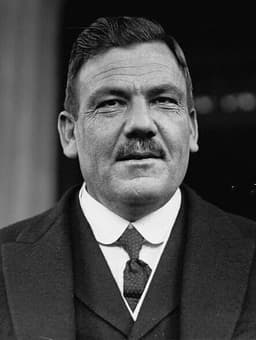
Plutarco Elias Calles
General · Modern
58.5Total
Basic Information
Born
1957
1877
Died
—
1945
Era
Modern
Modern
Nationality
Afghanistan
Mexico
Occupation
General
General
Civilization
Middle Eastern
Western
Score Comparison
Military (10%)
40.0
40.0
Political (20%)
43.7
70.3
Influence (20%)
51.0
68.0
Legacy (20%)
43.3
40.0
Leadership (15%)
74.0
78.0
Strategy (15%)
45.0
52.5
TOTAL
49.7
58.5
Mohammad Fahim — Complete Timeline
2001 AD
Led Northern Alliance Forces in Fall of KabulWar
Mohammad Fahim, as a senior Northern Alliance commander, led forces that captured Kabul from the Taliban in November 2001. This victory followed the US invasion and was a turning point in the war, leading to the collapse of Taliban rule.
AfghanistanWarTaliban
Impact: national
Appointed Vice President of AfghanistanPolitical Action◆ Major
Mohammad Fahim was appointed Vice President of Afghanistan under Hamid Karzai in 2001, serving until 2004. He was a key Northern Alliance commander and his appointment was part of the post-Taliban power-sharing arrangement.
AfghanistanVice PresidencyNorthern Alliance
Impact: nationalconstructive
Served as Minister of DefensePolitical Action◆ Major
Mohammad Fahim served as Afghanistan's Minister of Defense from 2001 to 2004. He oversaw the formation of the new Afghan National Army and security forces, integrating former mujahideen and Northern Alliance fighters.
AfghanistanDefenseMilitary
Impact: nationalconstructive
2009 AD
Appointed First Vice President in 2009Political Action◆ Major
Mohammad Fahim was appointed First Vice President of Afghanistan under President Hamid Karzai in 2009. He served until his death in 2014, playing a key role in security and political affairs.
AfghanistanVice PresidencyGovernment
Impact: nationalconstructive
Plutarco Elias Calles — Complete Timeline
1915 AD
Governorship of SonoraPolitical Action
Calles served as Governor of Sonora from 1915 to 1919, implementing radical reforms including land redistribution, anti-clerical laws, and labor rights. His governorship established him as a key figure in the Sonoran dynasty and a proponent of revolutionary change.
GovernorshipSonoraReforms
Impact: regionalconstructive
1924 AD
Presidency of MexicoPolitical Action◆ Major
Calles was elected President of Mexico in 1924, serving until 1928. His administration continued revolutionary reforms, including land reform, labor rights, and secularization, but also faced opposition from the Catholic Church and conservative groups.
PresidencyMexican RevolutionReforms
Impact: nationalconstructive
1926 AD
Cristero WarWar◆ Major
Calles enforced anti-clerical laws, including the Calles Law, which restricted the Catholic Church's role in society. This sparked the Cristero War (1926-1929), a violent rebellion by Catholic peasants against the state, resulting in tens of thousands of deaths.
Cristero WarAnti-clericalismReligious Conflict
Impact: nationaldestructive
1928 AD
MaximatoPolitical Action◆ Major
After his presidency, Calles remained the de facto ruler of Mexico during the Maximato (1928-1934), controlling puppet presidents. He continued to influence policy, but his power waned as President L
MaximatoPolitical ControlCárdenas
Impact: national
1929 AD
Founding of the National Revolutionary Party (PNR)Political Action
Calles founded the National Revolutionary Party (PNR) in 1929, which later became the Institutional Revolutionary Party (PRI). This party dominated Mexican politics for over 70 years, institutionalizing the revolution's legacy and centralizing power.
Political PartyPRIInstitutionalization
Impact: nationalconstructive
Expert Analysis
Plutarco Elias Calles vs Mohammad Fahim
# The General as Architect, the Commander as Client
In a dusty Sonoran governor's office in 1915, Plutarco Elías Calles signed land reform decrees with the steady hand of a man who believed the state could reshape society. Across the world and nearly a century later, Mohammad Fahim stood in the ruins of Kabul in November 2001, his Northern Alliance fighters having just driven the Taliban from power—but with no blueprint for what came next. Both men were generals who became political kingmakers. Yet one built a party that ruled Mexico for seven decades; the other watched his influence dissolve into factional chaos. What explains the difference? The answer lies not in their wars, but in their visions of power.
Origins
Calles was born in 1877 in the border state of Sonora, a region shaped by revolutionary violence and pragmatic ambition. His father died young; he worked as a teacher, a bartender, a small farmer—experiences that gave him an intimate understanding of Mexico's rural poor. By 1915, when he became governor of Sonora, he was a hardened revolutionary who had fought alongside Álvaro Obregón. His era was one of institutional collapse and rebuilding, where the Mexican Revolution had shattered the old Porfiriato order, leaving a vacuum that demanded not just soldiers but organizers.
Fahim, born in 1957 in the Panjshir Valley of Afghanistan, emerged from a very different crucible. His mentor was Ahmad Shah Massoud, the "Lion of Panjshir," whose guerrilla war against the Soviet occupation defined Afghan resistance. Fahim was a field commander, not a theorist. He learned war in the mountains, not governance in a capital. When Massoud was assassinated by al-Qaeda on September 9, 2001—just two days before the 9/11 attacks—Fahim inherited the Northern Alliance's military command. His era was one of external intervention, where the United States would provide the air power and the money, but Afghans would provide the ground forces and the chaos.
Rise to Power
Calles rose through political organization. As governor of Sonora from 1915 to 1919, he implemented radical land redistribution and anti-clerical measures, building a base among peasants and workers. His election as president in 1924 was not a military coup but a political victory—a transition that reflected Mexico's emerging party system. He understood that power in post-revolutionary Mexico required coalitions, not just commands.
Fahim rose through battlefield loyalty. When the Northern Alliance needed to retake Kabul in November 2001, Fahim led the charge. His forces captured the capital with American air support, and he became the de facto military strongman of the new government. But his rise was reactive, not strategic. He was appointed Vice President in 2001 and Minister of Defense because he controlled armed men, not because he commanded political institutions. His power was personal, not structural.
Leadership & Governance
Calles governed with a philosophy. He believed the Catholic Church had too much influence over education, land, and politics. In 1926, he enforced the Calles Law, which restricted religious processions, closed monasteries, and limited the number of priests. This sparked the Cristero War (1926–1929), a brutal Catholic uprising that killed perhaps 90,000 people. Calles did not flinch. He crushed the rebellion with military force, then pivoted to negotiate a peaceful resolution. He understood that power required both ruthlessness and flexibility.
After his presidency ended in 1928, Calles did something remarkable: he created the National Revolutionary Party (PNR) in 1929, a political machine that could manage succession without civil war. During the Maximato (1928–1934), he remained the power behind three puppet presidents, but he built institutions—not just a cult of personality. The PNR would evolve into the Institutional Revolutionary Party (PRI), which governed Mexico until 2000.
Fahim governed with connections. As Minister of Defense from 2001 to 2004, he oversaw the formation of the new Afghan army, but his loyalty was to his own Tajik ethnic base and former Northern Alliance commanders. He was accused of corruption, of packing the military with his own men, of resisting central authority. When he was appointed First Vice President in 2009, it was a gesture of political balance, not a sign of institutional strength. His power depended on President Hamid Karzai's favor and the continued presence of American forces.
Triumph & Tragedy
Calles's greatest triumph was the PRI itself—a party that channeled revolutionary energy into stable governance. His greatest tragedy was the Cristero War, a conflict born of his uncompromising secularism. He won the war, but the wounds it opened in Mexican society—between church and state, between rural piety and urban modernity—never fully healed.
Fahim's greatest triumph was the fall of Kabul in November 2001, a moment of liberation that ended Taliban rule. His greatest tragedy was that he could not build on it. By 2004, when he was dismissed as Defense Minister, the Afghan state was already fragmenting into warlord fiefdoms. Fahim controlled men, not ministries; loyalty, not law.
Character & Destiny
Calles was a builder. He had the patience of an organizer and the ruthlessness of a revolutionary. He could crush enemies and then co-opt them. He understood that power in Mexico required institutions—the army, the party, the bureaucracy—that could survive any single leader. His personality was cold, calculating, and pragmatic. He was not loved, but he was respected.
Fahim was a survivor. He had the courage of a battlefield commander and the instincts of a tribal leader. But he could not think beyond the personal. He saw the state as a collection of loyalties, not a set of rules. His personality was shaped by war, not governance. He was feared, but not followed into the future.
Legacy
Calles is remembered as the father of Mexico's modern political system. The PRI, for all its authoritarian flaws, brought stability and development to a country torn by revolution. His secular reforms, however controversial, created a state that could negotiate with the Church on equal terms. His legacy is institutional, lasting, and contested.
Fahim is remembered as a footnote. He died in 2014, his influence already faded. The Afghan state he helped build collapsed in 2021, just seven years after his death. His legacy is personal, fleeting, and tragic.
Conclusion
The difference between Calles and Fahim is not one of intelligence or courage. Both were capable men in impossible circumstances. The difference is that Calles believed in the power of institutions, while Fahim believed only in the power of men. Calles built a party that could survive his death; Fahim built a network that collapsed without him. In the end, the general who thinks like an architect leaves a city behind. The general who thinks like a client leaves only a rented room.
Rankings
🥇
Plutarco Elias CallesLeader
Mil: 40.0Pol: 70.3Inf: 68.0
58.5
🥈
Mohammad Fahim
Mil: 40.0Pol: 43.7Inf: 51.0
49.7
+8.8 behind
How This Comparison Works
Algorithm
Each figure is scored on 6 dimensions (0—100 scale) based on structured historical data: Military (10%), Political (20%), Influence (20%), Legacy (20%), Leadership (15%), Strategy (15%). The weighted total produces the final ranking.
Data Sources
Scores are computed from structured sub-indicators in the database. Scale factors adjust for era (Ancient ×0.85, Modern ×1.0) and civilization size (Eastern ×1.05, Other ×0.80) to account for differences in population and military scale.
Maximum 3 Figures
Comparisons are limited to 2—3 figures to ensure readability and statistical meaningfulness.
Error Margins
±5 points per dimension — Sub-scores are derived from historical records with inherent uncertainty. Two figures within 5 points on a dimension should be considered roughly equivalent in that area.
Total Score Accuracy
±3 points overall — The weighted combination of 6 dimensions produces a total score with approximately ±3 points of uncertainty. Differences of less than 3 points are not statistically significant— the figures are effectively tied.
Known Limitations
- Historical records are incomplete and uneven across civilizations
- Figures from oral-tradition societies may be underrepresented
- Occupation labels can misclassify multi-role figures
- Scores measure capability and impact, not moral character
- Quantitative scoring is a comparison tool, not absolute truth
Capability Radar
Military (10%) — Battles & Warfare
Battles
35
45
Win Rate
40
50
Expansion
25
30
Political (20%) — Governance & Reform
Reform
20
85
Diplomacy
40
65
Economy
15
60
Influence (20%) — Cultural & Global Reach
Cultural
15
70
Global
20
60
Legacy (20%) — Historical Impact
Historical
30
75
Longevity
20
70
Leadership (15%) — Power & Stability
Tenure
45
70
Stability
20
55
Strategy (15%) — Tactics & Innovation
Strategy
35
55
Tactics
30
40
Reform
20
60
Similar Comparisons
Comments & Discussion
GeneralissimoBlueprint6/16/2026
Calles was a state-builder who understood that armies don't govern—institutions do. He founded the PNR, the party that became PRI and ruled Mexico until 2000. Fahim, by contrast, was a military fixer who thought controlling the Defense Ministry and a few warlord loyalties was enough. In 2001, when the Northern Alliance entered Kabul, Fahim had no land reform, no party structure, no vision beyond "we're not the Taliban." That's why Calles's legacy lasted 70 years and Fahim's faction crumbled with
铁锤与蓝图6/16/2026
拿卡列斯和法希姆比,简直就像拿建筑师比包工头。卡列斯在1929年创立PNR,建立了一个能持续执政七十一年的政党机器,而法希姆连个像样的政治平台都没造出来。注意卡列斯在1926年还推行了反教权政策——他知道国家权力需要压制旧势力才能巩固。法希姆呢?掌握阿富汗国防部后,只会靠分配官职和走私毒品维持忠诚,连个最低限度的行政体系都没建立。这不是能力差距,这是对政治本质的认知差距。
DataSkepticKhan6/16/2026
Let's not romanticize Calles. His "architect" act required massacring Cristero rebels—estimates range from 50,000 to 200,000 dead—and rigging elections through the PNR's patronage machine. Fahim inherited a country with 0% literacy infrastructure outside Kabul and no central treasury. Comparing their "visions" ignores that Calles had a functioning state to work with after Obregón pacified Mexico. Fahim got crumbs of foreign aid and endless interference from Pakistan's ISI. Context matters more t
数据怀疑论者6/16/2026
你们夸卡列斯的时候别忘了他的政治机器是靠清洗和贪污维持的。1929年他下令关闭所有教堂,处决了大量天主教徒,同时用石油和铁路合同养肥自己的派系。法希姆在2001年接手的是个连中央银行都没的国家,塔利班留下了价值三百美元的国库。卡列斯有奥布雷贡帮他建国,而法希姆面对的是一群不听话的军阀、满地的地雷和每年数十亿美元的鸦片经济。拿他们的制度设计能力比较,本质上是在比较两个完全不同的国家条件。
PanjshirLens6/16/2026
The Panjshir Valley produced commanders, not bureaucrats, because no one in Afghan history built lasting institutions—except maybe Abdur Rahman Khan, who also used massacres. Fahim was Massoud's lieutenant, inheriting a network of personal loyalties, not a governance manual. When he took Kabul in 2001, he tried to replicate Massoud's clan-based rule, but that system only works during guerrilla warfare. Calles