Loading...
Mobutu Sese Seko vs Suharto
Suharto leads by 10.6 pts · 2 figures compared
…
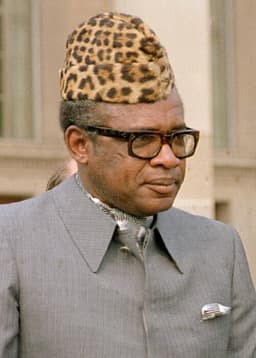
Mobutu Sese Seko
General · Modern
46.6Total
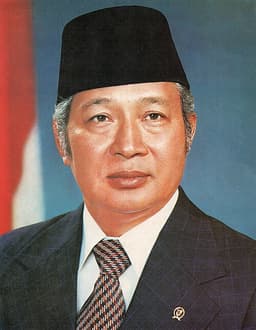
Suharto
General · Modern
57.2Total
Basic Information
Born
1930
1921
Died
—
—
Era
Modern
Modern
Nationality
Congo
Indonesia
Occupation
General
General
Civilization
Other
Eastern
Score Comparison
Military (10%)
10.2
20.0
Political (20%)
37.9
59.3
Influence (20%)
56.4
60.0
Legacy (20%)
45.0
52.0
Leadership (15%)
80.0
82.0
Strategy (15%)
25.0
60.0
TOTAL
46.6
57.2
Mobutu Sese Seko — Complete Timeline
1965 AD
Seized power in coup d'étatPolitical Action
Mobutu, as army chief of staff, led a bloodless coup against President Joseph Kasa-Vubu on November 24, 1965. He suspended the constitution, assumed full executive powers, and began a 32-year dictatorship, initially as president of the Democratic Republic of the Congo.
Coup d'étatDictatorshipCentralization
Impact: nationaldestructive
1971 AD
Renamed country to Zaire and implemented AuthenticityCultural◆ Major
Mobutu renamed the Democratic Republic of the Congo to Zaire and launched the Authenticity campaign. He forced citizens to adopt African names, banned Western clothing, and promoted traditional culture. The country's name, flag, and currency were changed to reflect African identity.
Cultural PolicyNationalismAfricanization
Impact: national
1973 AD
Nationalized foreign-owned businessesPolitical Action◆ Major
Mobutu's Zairianization policy seized foreign-owned plantations, mines, and businesses, transferring them to political allies and family members. The policy led to economic collapse, corruption, and a sharp decline in production, forcing partial reversal by 1977.
NationalizationEconomic DeclineCorruption
Impact: nationaldestructive
1997 AD
Overthrown in the First Congo WarWar
A coalition of Rwandan, Ugandan, and Congolese rebel forces led by Laurent Kabila advanced across Zaire. Mobutu, suffering from cancer, fled the capital Kinshasa on May 16, 1997. He died in exile in Morocco four months later, ending his 32-year rule.
OverthrowCivil WarExile
Impact: regionaltragic
Suharto — Complete Timeline
1966 AD
Supersemar and Transfer of PowerPolitical Action
President Sukarno signed the Supersemar order, delegating authority to General Suharto to restore order after the 30 September Movement. Suharto used this to ban the Communist Party, purge leftists, and gradually assume executive power, effectively beginning his New Order regime.
SupersemarNew OrderIndonesia
Impact: nationaldestructive
1967 AD
New Order Economic DevelopmentReform◆ Major
Suharto implemented the New Order's economic policies, focusing on foreign investment, agricultural self-sufficiency, and industrialization. The government achieved high growth rates, reduced poverty, and stabilized the economy, but also fostered crony capitalism and corruption.
Economic GrowthDevelopmentIndonesia
Impact: nationalconstructive
1975 AD
Invasion of East TimorWar◆ Major
Suharto ordered the invasion of East Timor after Portugal withdrew. Indonesian forces occupied the territory, leading to a 24-year occupation marked by widespread human rights abuses, including massacres and forced displacement, resulting in an estimated 100,000-200,000 deaths.
East TimorOccupationHuman Rights
Impact: regionaldestructive
1998 AD
Asian Financial Crisis and Fall from PowerPolitical Action
The Asian Financial Crisis devastated Indonesia's economy, leading to massive unemployment and food shortages. Widespread protests and riots forced Suharto to resign in May 1998 after 31 years in power, ending his authoritarian rule and ushering in the Reformasi era.
Financial CrisisResignationReformasi
Impact: nationaltragic
Expert Analysis
Origins
Mobutu Sese Seko was born in 1930 in Lisala, Belgian Congo. He attended missionary schools and later joined the colonial army, the Force Publique, as a clerk. His early exposure to Belgian military structure shaped his disciplined but authoritarian mindset. Mobutu rose through the ranks as a journalist and protégé of Prime Minister Patrice Lumumba, eventually becoming army chief of staff in 1960 after independence.
Suharto was born in 1921 in Kemusuk, Java, Dutch East Indies. He came from a poor peasant family and was raised by relatives. He joined the Dutch colonial army in 1940, then switched to the Japanese-sponsored PETA during World War II. After independence, he fought in the Indonesian National Revolution, rising to become a key general in the military.
Rise to Power
Mobutu seized power in a bloodless coup on November 24, 1965, deposing President Joseph Kasa-Vubu. He had previously served as army chief and used his leverage to neutralize political rivals, including Lumumba. By 1967, he had consolidated power and established a one-party state under the Popular Movement of the Revolution.
Suharto rose during the turbulent 1960s. After the failed 30 September Movement coup in 1965, General Suharto took command of the army and blamed the Indonesian Communist Party. He used the Supersemar order of March 11, 1966, to gain executive authority from President Sukarno, then systematically sidelined him. By 1968, Suharto was formally president, ushering in the New Order.
Leadership & Governance
Mobutu ruled through a cult of personality and patronage. He renamed the country Zaire and forced citizens to adopt African names under his Authenticity campaign. He nationalized foreign businesses in 1973, transferring them to political allies, which collapsed productivity. His governance scored 80.0 in leadership but only 37.9 in political effectiveness, reflecting his kleptocratic system.
Suharto built a stable, development-oriented regime. He welcomed foreign investment, achieved rice self-sufficiency by 1984, and industrialized Indonesia with manufacturing growth averaging 7% annually. However, his rule was authoritarian, suppressing dissent and rigging elections. His political score of 59.3 reflects moderate institutionalization compared to Mobutu's chaos.
Triumph & Tragedy
Mobutu's greatest success was maintaining control over a vast, ethnically divided country for 32 years. He hosted the 1974 Muhammad Ali vs. George Foreman fight and promoted African identity. His tragedy was economic collapse: GDP per capita fell from $380 in 1960 to $100 by 1997. His total score of 46.6 reflects low military (10.2) and strategy (25.0) scores.
Suharto's triumph was economic transformation: Indonesia's GDP grew from $8 billion in 1965 to $240 billion in 1996, lifting millions out of poverty. His tragedy was the invasion of East Timor in 1975, resulting in over 100,000 deaths, and the 1997 Asian Financial Crisis that exposed crony capitalism. His total of 57.2 is boosted by influence (60.0) and strategy (60.0).
Character & Destiny
Mobutu was extravagant and paranoid. He amassed a personal fortune estimated at $5 billion while his country crumbled. His decision to nationalize businesses without expertise led to ruin. He fled Zaire in 1997 as rebels advanced, dying in Morocco in exile.
Suharto was calculating and pragmatic. He maintained a network of family and business cronies, but also listened to technocrats. His downfall came when he refused to step down during the 1998 protests, eventually resigning after 31 years. He faced no trial and died in 2008 under house arrest.
Legacy
Mobutu left a devastated country: infrastructure destroyed, debt of $14 billion, and a legacy of corruption that crippled the DRC. His Authenticity campaign had lasting cultural impact but failed economically. He is remembered as the archetypal African dictator.
Suharto's legacy is mixed: his New Order brought stability and growth but entrenched corruption and human rights abuses. Indonesia's democratic transition after his fall preserved many of his economic policies. His influence score of 60.0 reflects his lasting impact on Southeast Asia.
Conclusion
Suharto had greater impact than Mobutu. While both were dictators, Suharto's Indonesia achieved sustained economic growth, poverty reduction, and political stability, scoring 57.2 total versus Mobutu's 46.6. Mobutu's rule was purely extractive, leaving Zaire worse off. Suharto's strategic use of oil revenues and technocrats created a more durable system, even if flawed. In terms of legacy, Suharto's development model influenced other nations, whereas Mobutu's kleptocracy became a cautionary tale. Therefore, Suharto's total score of 57.2 surpasses Mobutu's 46.6, making him the more consequential leader.
Rankings
🥇
SuhartoLeader
Mil: 20.0Pol: 59.3Inf: 60.0
57.2
🥈
Mobutu Sese Seko
Mil: 10.2Pol: 37.9Inf: 56.4
46.6
+10.6 behind
How This Comparison Works
Algorithm
Each figure is scored on 6 dimensions (0—100 scale) based on structured historical data: Military (10%), Political (20%), Influence (20%), Legacy (20%), Leadership (15%), Strategy (15%). The weighted total produces the final ranking.
Data Sources
Scores are computed from structured sub-indicators in the database. Scale factors adjust for era (Ancient ×0.85, Modern ×1.0) and civilization size (Eastern ×1.05, Other ×0.80) to account for differences in population and military scale.
Maximum 3 Figures
Comparisons are limited to 2—3 figures to ensure readability and statistical meaningfulness.
Error Margins
±5 points per dimension — Sub-scores are derived from historical records with inherent uncertainty. Two figures within 5 points on a dimension should be considered roughly equivalent in that area.
Total Score Accuracy
±3 points overall — The weighted combination of 6 dimensions produces a total score with approximately ±3 points of uncertainty. Differences of less than 3 points are not statistically significant— the figures are effectively tied.
Known Limitations
- Historical records are incomplete and uneven across civilizations
- Figures from oral-tradition societies may be underrepresented
- Occupation labels can misclassify multi-role figures
- Scores measure capability and impact, not moral character
- Quantitative scoring is a comparison tool, not absolute truth
Capability Radar
Military (10%) — Battles & Warfare
Battles
5
40
Win Rate
5
45
Expansion
5
30
Political (20%) — Governance & Reform
Reform
20
55
Diplomacy
40
60
Economy
10
65
Influence (20%) — Cultural & Global Reach
Cultural
30
40
Global
40
50
Legacy (20%) — Historical Impact
Historical
40
55
Longevity
30
45
Leadership (15%) — Power & Stability
Tenure
85
85
Stability
10
50
Strategy (15%) — Tactics & Innovation
Strategy
10
40
Tactics
10
35
Reform
15
50
Similar Comparisons
Comments & Discussion
No comments yet. Be the first to share your thoughts!