Loading...
Midhat Pasha vs Themistocles
Themistocles leads by 4.1 pts · 2 figures compared
…
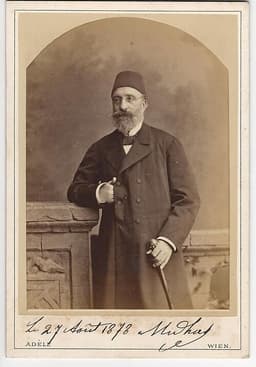
Midhat Pasha
Politician · Modern
64.3Total
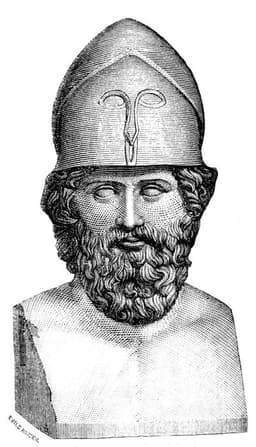
Themistocles
Politician · Ancient
68.4Total
Basic Information
Born
1822
-524
Died
1884
-459
Era
Modern
Ancient
Nationality
Ottoman Empire
Greece
Occupation
Politician
Politician
Civilization
Middle Eastern
Western
Score Comparison
Military (10%)
10.0
80.0
Political (20%)
78.0
72.0
Influence (20%)
82.0
40.0
Legacy (20%)
72.0
80.0
Leadership (15%)
62.0
79.8
Strategy (15%)
38.3
76.0
TOTAL
64.3
68.4
Midhat Pasha — Complete Timeline
1864 AD
Governorship of the Danube VilayetReform◆ Major
As governor of the Danube Vilayet from 1864 to 1868, Midhat Pasha implemented extensive reforms. He built roads, bridges, and schools, established a provincial bank, and promoted agricultural development. His administration became a model for Tanzimat provincial governance.
GovernorshipReformInfrastructure
Impact: regionalconstructive
1872 AD
Appointment as Grand VizierPolitical Action◆ Major
Midhat Pasha was appointed Grand Vizier for the first time in 1872. He had previously served as governor of the Danube Vilayet and was known for his reformist ideas. His tenure was short-lived due to opposition from conservative factions and the sultan.
AppointmentReformOttoman Politics
Impact: nationalconstructive
1876 AD
Proclamation of the Ottoman Constitution of 1876Reform
Midhat Pasha was the chief architect of the first Ottoman Constitution, proclaimed on December 23, 1876. The constitution established a bicameral parliament, guaranteed civil liberties, and limited the sultan's powers. It was a landmark in Ottoman modernization, though it was suspended in 1878.
ConstitutionReformParliament
Impact: nationalprogressive
1881 AD
Exile and TrialPolitical Action◆ Major
Midhat Pasha was arrested in 1881 on charges of involvement in the murder of Sultan Abd
ExileTrialExecution
Impact: nationaltragic
Themistocles — Complete Timeline
483 BC
Construction of the Athenian FleetReform◆ Major
Themistocles persuaded the Athenian assembly to use silver from the Laurion mines to build a fleet of 200 triremes. This naval expansion transformed Athens into a major maritime power and was crucial for the victory at Salamis.
AthensNaval PowerReform
Impact: nationalconstructive
480 BC
Battle of SalamisWar
Themistocles commanded the Greek navy against the Persian fleet at Salamis. He lured the Persians into the narrow straits, where the Greek ships destroyed the larger Persian fleet. This victory ended the Persian threat to Greece and preserved Greek independence.
Greco-Persian WarsNaval BattleAthens
Impact: regionalconstructive
472 BC
Ostracism from AthensPolitical Action◆ Major
Themistocles was ostracized by the Athenian assembly, likely due to political rivalries and accusations of arrogance. He went into exile, first to Argos, then to Persia, where he was received by King Artaxerxes I.
AthensExileOstracism
Impact: nationaltragic
465 BC
Service under the Persian KingPolitical Action
After his ostracism, Themistocles fled to Persia and offered his services to King Artaxerxes I. He was granted governorship of Magnesia and other cities in Asia Minor, where he lived until his death. This act was seen as treason by many Athenians.
PersiaExileTreason
Impact: regional
Expert Analysis
Themistocles vs Midhat Pasha
# The Man Who Saved Athens and the Man Who Died for Reform
In the autumn of 480 BCE, as the Persian fleet crowded into the narrow strait of Salamis, a single Athenian commander stood on the deck of his trireme and watched his trap spring shut. Two thousand years later, on a December morning in 1876, another statesman stood before the Ottoman Sultan and watched him sign a constitution that would limit his own power. Themistocles won a victory that echoed through three millennia. Midhat Pasha lost everything within eight years. Both men sought to save their civilizations through radical change. One succeeded and was cast out; the other failed and was murdered. The difference between their fates tells us something profound about the nature of power, timing, and the terrible cost of foresight.
Origins
Themistocles was born around 524 BCE into a world of city-states and constant war. His father was a minor aristocrat, his mother likely not even Athenian. He grew up in the shadow of the Persian Empire, a juggernaut that had already swallowed the Greek cities of Ionia. From his earliest years, he understood that Athens was vulnerable—a land power with a coastline that invited invasion. He was clever, ambitious, and ruthlessly pragmatic. Plutarch would later write that Themistocles was "a man whose genius was more to be admired than trusted."
Midhat Pasha was born in 1822 in Istanbul, into an Ottoman Empire that had been called "the sick man of Europe" for decades. His father was a judge, his family part of the religious-legal elite. He came of age during the Tanzimat reforms, a period when the Ottoman state was desperately trying to modernize its army, bureaucracy, and legal system to fend off European encroachment. Where Themistocles saw an enemy at the gates, Midhat saw an empire rotting from within. Both men understood that survival required transformation. But their eras shaped them differently: Themistocles could act through the volatile democracy of Athens; Midhat had to navigate the treacherous currents of an absolute monarchy.
Rise to Power
Themistocles entered politics in the decade after the Battle of Marathon (490 BCE). His rise was not through noble birth but through persuasion. He became archon in 493 BCE and began fortifying the Piraeus, Athens’ port. His great moment came in 483 BCE, when a rich vein of silver was discovered in the Laurion mines. The assembly wanted to distribute the wealth among citizens. Themistocles convinced them instead to build a fleet of 200 triremes—warships that would transform Athens into a naval power. It was a masterstroke of political genius: he disguised a military necessity as a democratic benefit, arguing that the ships would provide employment and protect trade.
Midhat Pasha rose through administrative excellence. As governor of the Danube Vilayet from 1864 to 1868, he built roads, bridges, and schools, reformed tax collection, and created a provincial council that gave local notables a voice. He was a builder, not a warrior. His reputation for competence and honesty made him a natural candidate for grand vizier, the highest office in the empire. He was first appointed in 1872, but his tenure lasted only three months. The Sultan, Abdülaziz, found him too reform-minded, too insistent on limiting imperial power. Midhat's path to influence was blocked by the very system he sought to change.
Leadership & Governance
Themistocles was a strategist of the first order, though his military score of 64.1 reflects his limited role in land combat. At Salamis in 480 BCE, he did not simply fight the Persians; he tricked them. He sent a false message that the Greek fleet was fleeing, luring the Persian ships into the narrow strait where their numerical advantage became a fatal liability. His leadership score of 79.3 captures his ability to hold together a coalition of quarreling Greek city-states. He was not a beloved leader but an effective one—decisive, cunning, and willing to sacrifice popularity for results.
Midhat Pasha was a different kind of leader. His military score of 30.2 is negligible; he was a civilian reformer. His political score of 63.7 reflects his skill in navigating bureaucracy, but his true strength was his leadership score of 81.0—higher than Themistocles'. He inspired loyalty through integrity. As grand vizier, he pushed for the constitution of 1876, a document that established a parliament, guaranteed civil liberties, and limited the Sultan's authority. It was the first constitution in the Islamic world. Midhat believed that only by becoming a constitutional monarchy could the Ottoman Empire survive the pressure of European nationalism.
Triumph & Tragedy
Themistocles' triumph was absolute. Salamis saved Greece, and with it, the foundations of Western civilization. After the war, he rebuilt Athens' walls against Spartan opposition, again using deception to buy time. But his very success bred resentment. In 472 BCE, he was ostracized—exiled by popular vote. He fled to Argos, then to Corcyra, and finally, in a stunning reversal, to Persia itself. He offered his services to King Artaxerxes I, who granted him the governorship of Magnesia. The man who defeated the Persian Empire died in Persian service around 459 BCE, a traitor to his own people in their eyes.
Midhat Pasha's triumph was the constitution itself, proclaimed on December 23, 1876. But the celebration was short-lived. The new Sultan, Abdülhamid II, had never intended to honor the document. In February 1877, he exiled Midhat. In 1881, the Sultan had him arrested on fabricated charges of involvement in the murder of Sultan Abdülaziz. After a show trial, Midhat was sentenced to death, commuted to life exile in Taif, Arabia. In 1884, he was strangled in his cell. The constitution was suspended; the empire lurched toward its final collapse.
Character & Destiny
Themistocles was a survivor. His character was flexible, even cynical. He could charm the Athenian assembly, deceive the Persian navy, and then serve the Persian king. He was not a man of principle but a man of action. His exile was the price of his success—Athens could not tolerate a hero so powerful. Midhat Pasha was a man of conviction. He believed in law, in reform, in the possibility of a modern Ottoman state. He was not naive; he knew the risks. But he trusted that the constitution, once written, would protect itself. It did not. His character was his fate: too principled to compromise, too visible to survive.
Legacy
Themistocles' legacy is immense. His fleet became the foundation of the Athenian Empire. The Battle of Salamis is studied in every military academy. His influence score of 84.7 and legacy score of 79.0 reflect his role in shaping the West. Yet he remains a controversial figure—the savior who ended as a turncoat.
Midhat Pasha's legacy is quieter but no less significant. His constitution was a beacon for reformers across the Ottoman world. His legacy score of 73.9 is a testament to his vision. He is remembered in Turkey as a martyr for democracy. But his failure also serves as a warning: constitutions are only as strong as the will to defend them.
Conclusion
Themistocles and Midhat Pasha lived two thousand years apart, yet their stories echo each other. Both saw that their civilizations faced existential threats. Both chose radical reform over complacency. Both were destroyed by the very people they saved. But there is a difference. Themistocles saved Athens and was cast out; Midhat tried to save the Ottoman Empire and was murdered. The first lived to serve his enemies; the second died at the hands of his own Sultan. Perhaps the difference is not in the men but in their times. In the ancient world, exile was a punishment; in the modern world, it was a prelude to assassination. Progress, it seems, does not always bring mercy.
Rankings
🥇
ThemistoclesLeader
Mil: 80.0Pol: 72.0Inf: 40.0
68.4
🥈
Midhat Pasha
Mil: 10.0Pol: 78.0Inf: 82.0
64.3
+4.1 behind
How This Comparison Works
Algorithm
Each figure is scored on 6 dimensions (0—100 scale) based on structured historical data: Military (10%), Political (20%), Influence (20%), Legacy (20%), Leadership (15%), Strategy (15%). The weighted total produces the final ranking.
Data Sources
Scores are computed from structured sub-indicators in the database. Scale factors adjust for era (Ancient ×0.85, Modern ×1.0) and civilization size (Eastern ×1.05, Other ×0.80) to account for differences in population and military scale.
Maximum 3 Figures
Comparisons are limited to 2—3 figures to ensure readability and statistical meaningfulness.
Error Margins
±5 points per dimension — Sub-scores are derived from historical records with inherent uncertainty. Two figures within 5 points on a dimension should be considered roughly equivalent in that area.
Total Score Accuracy
±3 points overall — The weighted combination of 6 dimensions produces a total score with approximately ±3 points of uncertainty. Differences of less than 3 points are not statistically significant— the figures are effectively tied.
Known Limitations
- Historical records are incomplete and uneven across civilizations
- Figures from oral-tradition societies may be underrepresented
- Occupation labels can misclassify multi-role figures
- Scores measure capability and impact, not moral character
- Quantitative scoring is a comparison tool, not absolute truth
Capability Radar
Military (10%) — Battles & Warfare
Battles
0
75
Win Rate
0
85
Expansion
0
60
Political (20%) — Governance & Reform
Reform
85
75
Diplomacy
70
85
Economy
60
65
Influence (20%) — Cultural & Global Reach
Cultural
55
70
Global
55
75
Legacy (20%) — Historical Impact
Historical
70
85
Longevity
60
80
Leadership (15%) — Power & Stability
Tenure
65
70
Stability
40
60
Strategy (15%) — Tactics & Innovation
Strategy
0
90
Tactics
0
95
Reform
10
80
Similar Comparisons
Comments & Discussion
数据拆解者6/16/2026
说这两人都"救国"太浪漫了。萨拉米斯胜利背后是雅典海上帝国主义的开端——提洛同盟很快变成雅典的殖民工具。米德哈特帕夏的1876宪法更是骗局,苏丹哈米德二世签字后不到两年就冻结了议会。一个靠战争掠夺创造短期辉煌,一个用纸面改革掩饰制度腐烂。别把野心家包装成先知,把妥协包装成殉道。
历史修正派6/16/2026
别再美化这两个帝国主义走卒了。忒米斯托克勒斯驱逐雅典穷人出城,烧毁自己城市,用奴隶划桨打仗——萨拉米斯是阶级压迫的胜利。米德哈特帕夏更虚伪,他起草的宪法规定"奥斯曼帝国所有臣民平等",却继续向基督教社区征收歧视性人头税。改革只为延续专制,救国实为自救。真正的民主要他们死,他们值得。
Historian7596/16/2026
Themistocles didn't just win at Salamis—he engineered a naval arms race years before the invasion. While other Athenians debated building walls, he convinced them to spend silver from the Laurion mines on 200 triremes. That's the difference between reaction and preparation. Midhat Pasha, for all his vision, waited until crisis to act. Themistocles saw the storm coming and built the ark. Midhat tried to patch the leak while the ship was already sinking.
Chronicler42326/16/2026
There's a tragic symmetry here that classicists love. Both men were exiled by the very people they saved. Themistocles ended up as governor of Magnesia—for the Persian king he crushed at Salamis. Midhat Pasha was strangled in Ta'if on the orders of the Sultan whose authority he tried to limit. History's irony is cruel: the savior of Athens died serving Persia; the reformer of the Ottoman Empire was killed by its own reaction. Their foresight didn't just cost them power—it cost them everything.