Loading...
Marouf al-Bakhit vs Sitiveni Rabuka
Sitiveni Rabuka leads by 10.1 pts · 2 figures compared
…
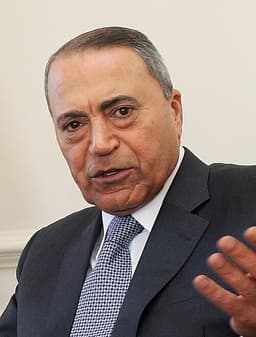
Marouf al-Bakhit
General · Modern
41.6Total
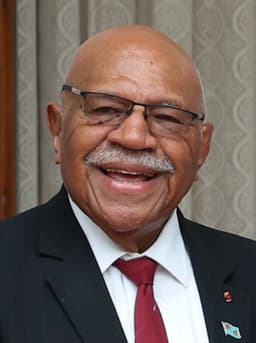
Sitiveni Rabuka
General · Modern
51.7Total
Basic Information
Born
1947
1948
Died
—
—
Era
Modern
Modern
Nationality
Jordan
Fiji
Occupation
General
General
Civilization
Middle Eastern
Other
Score Comparison
Military (10%)
10.2
10.2
Political (20%)
61.3
60.0
Influence (20%)
48.6
53.3
Legacy (20%)
38.3
46.7
Leadership (15%)
40.0
85.0
Strategy (15%)
36.8
39.6
TOTAL
41.6
51.7
Marouf al-Bakhit — Complete Timeline
2005 AD
Appointed Prime Minister of JordanPolitical Action◆ Major
King Abdullah II appointed Marouf al-Bakhit as Prime Minister of Jordan in November 2005, following the 2005 Amman bombings. Al-Bakhit, a former intelligence chief, was tasked with restoring security and stability.
JordanPrime MinisterAppointment
Impact: national
2007 AD
Resigned as Prime MinisterPolitical Action
Marouf al-Bakhit resigned as Prime Minister of Jordan in November 2007 after parliamentary elections. His resignation followed criticism of economic policies and political reforms.
JordanPrime MinisterResignation
Impact: national
2011 AD
Appointed Prime Minister for Second TermPolitical Action◆ Major
King Abdullah II appointed Marouf al-Bakhit as Prime Minister again in February 2011, during the Arab Spring protests. Al-Bakhit was tasked with implementing political reforms to address public demands.
JordanArab SpringPrime Minister
Impact: national
Resigned as Prime Minister for Second TermPolitical Action
Marouf al-Bakhit resigned as Prime Minister in October 2011, after failing to satisfy protesters' demands for faster political reforms. His resignation marked the end of his second term.
JordanArab SpringResignation
Impact: national
Sitiveni Rabuka — Complete Timeline
1987 AD
1987 Fijian Coup d'étatPolitical Action
Rabuka, as a colonel in the Fijian military, led a coup overthrowing the elected government of Timoci Bavadra. The coup was motivated by ethnic Fijian opposition to Indo-Fijian political influence. Rabuka declared Fiji a republic.
CoupMilitary InterventionEthnic Tension
Impact: nationaldestructive
1992 AD
1992 Election as Prime MinisterPolitical Action◆ Major
Rabuka transitioned from military leader to civilian politician, winning the 1992 general election as leader of the Fijian Political Party. He became Prime Minister, serving until 1999.
ElectionCivilian GovernmentPolitical Transition
Impact: national
1997 AD
1997 Constitution ReformReform◆ Major
Rabuka's government oversaw the adoption of a new constitution that removed ethnic-based voting and provided for a multi-ethnic government. The constitution aimed to reduce ethnic tensions and promote national unity.
ConstitutionReformEthnic Reconciliation
Impact: nationalconstructive
1999 AD
1999 General Election DefeatPolitical Action◆ Major
Rabuka's government was defeated in the general election by the Labour Party led by Mahendra Chaudhry. Rabuka stepped down as Prime Minister, marking the end of his first period in power.
Election DefeatGovernment ChangeChaudhry
Impact: national
2022 AD
2022 Return as Prime MinisterPolitical Action◆ Major
Rabuka led the People's Alliance to victory in the 2022 general election, forming a coalition government. He became Prime Minister again, 23 years after his previous tenure, promising democratic reforms.
ElectionReturn to PowerCoalition Government
Impact: national
Expert Analysis
Sitiveni Rabuka vs Marouf al-Bakhit
### The General Who Would Be Prime Minister: Two Paths from Uniform to Civilian Rule
In the hot, tense month of May 1987, a Fijian colonel named Sitiveni Rabuka walked into the Parliament building in Suva, ordered the elected government out, and declared himself in charge. Half a world away, in the hushed corridors of the Royal Palace in Amman, another man in uniform, Marouf al-Bakhit, was quietly building a career in the intelligence services, a world of shadows and whispers that would one day deliver him into the prime minister’s office. Both were generals. Both became prime ministers. But the stories of how they got there, what they did with power, and what they left behind could not be more different. One man seized power with a rifle; the other was handed it on a silver platter. One would return to democracy after a long exile; the other would fade into irrelevance after failing to satisfy a restless street. Their contrasting fates reveal the deep, often contradictory relationship between military men and democratic politics in the modern world.
### Origins: Two Islands, Two Worlds
Sitiveni Rabuka was born in 1948 on the island of Vanua Levu, into a world of chiefly traditions and colonial legacies. Fiji was then a British colony, a patchwork of indigenous Fijians and Indo-Fijian descendants of indentured laborers. Rabuka was a product of this divided soil: a devout Methodist, a proud indigenous Fijian, and a man who believed his people’s land and political supremacy were under threat. He joined the military young, rising through the ranks of a small, British-trained army. By 1987, he was a colonel, a man of action rather than words, deeply suspicious of the multiracial coalition government that had just taken power under Timoci Bavadra, which he saw as a vehicle for Indo-Fijian dominance.
Marouf al-Bakhit was born a year earlier, in 1947, in a very different world. Jordan was a fragile Hashemite kingdom, a state carved out of the desert with a large Palestinian population and a monarchy that balanced on a knife’s edge between tribal loyalties, Western patronage, and the pressures of the Arab-Israeli conflict. Al-Bakhit was a career soldier and intelligence officer, a man of the system. He earned a PhD in political science from the University of Southern California, a credential that marked him as a technocrat, not a revolutionary. His world was one of loyalty to the throne, not to a cause. Where Rabuka was a nationalist firebrand, al-Bakhit was a royal servant.
### Rise to Power: The Coup and the Appointment
Rabuka’s rise was violent and dramatic. On May 14, 1987, he led a coup d’état, the first in the Pacific Islands in modern history. His stated reason: to protect indigenous Fijian land rights and political control. He was not a power-hungry tyrant in the classic mold; he was a man who believed he was saving his people. After the coup, he handed power to a civilian government, then staged a second coup in September when that government failed to satisfy him. By 1992, he had transformed himself from a military strongman into a civilian politician, winning the general election as leader of the Soqosoqo ni Vakavulewa ni Taukei party. His path was forged in blood and ballots.
Al-Bakhit’s path was quieter, but no less shaped by crisis. In November 2005, after the devastating Amman bombings—a triple hotel attack by al-Qaeda that killed sixty people—King Abdullah II needed a firm hand. He appointed al-Bakhit, then head of the General Intelligence Department, as prime minister. The king’s message was clear: security first. Al-Bakhit was a man of the apparatus, not a politician. He had no popular base, no party, no mandate. He was a caretaker, a fixer. His second appointment came in February 2011, as the Arab Spring protests swept Jordan. Again, the king turned to him, hoping his reputation as a no-nonsense security man would calm the streets. It did not.
### Leadership & Governance: Reform and Resistance
As prime minister, Rabuka proved to be a complex figure. He was not a dictator in civilian clothes. In 1997, his government oversaw a landmark constitutional reform that removed ethnic-based voting and created a multiracial electoral system. It was a remarkable act for a man who had seized power to preserve ethnic supremacy. Yet his economic record was mixed, and his government was plagued by corruption allegations. He was a reformer, but a reluctant one, always torn between his indigenous Fijian base and the need to build a modern, inclusive state. His leadership score of 77.4 reflects a man who could inspire loyalty but struggled to govern effectively.
Al-Bakhit, by contrast, was a manager, not a visionary. His first term (2005–2007) was focused on security and stability. He pushed through some economic reforms, but political liberalization was slow. His second term, in 2011, was defined by the Arab Spring. Protesters demanded faster political reform, an end to corruption, and a more accountable government. Al-Bakhit offered cautious steps—a new electoral law, some anti-corruption measures—but he was fundamentally a conservative. He saw the protests as a security threat, not a democratic opportunity. By October 2011, he resigned, having failed to satisfy either the protesters or the king. His political score of 63.0 reflects a man who was competent but never transformative.
### Triumph & Tragedy: The Return and the Retreat
Rabuka’s greatest triumph came in 2022. After twenty-three years in the political wilderness, he returned as prime minister at the age of seventy-four. His People’s Alliance party won the general election, and he formed a coalition government. It was a stunning comeback for a man who had once been a pariah. He had apologized for the coup, acknowledged the pain it caused, and re-entered the political arena as a democrat. His legacy, once defined by the coup, was now being rewritten by his return. But the tragedy remains: he had shattered Fiji’s democratic institutions in 1987, and the wounds have never fully healed.
Al-Bakhit’s tragedy was one of missed opportunity. He was appointed twice to steer Jordan through crisis, but he never rose above being a functionary. His greatest failure was in 2011, when he could not channel the Arab Spring’s energy into meaningful reform. He left office quietly, and his name is now largely forgotten outside Jordan. He was a loyal servant, but loyalty is not legacy.
### Character & Destiny: The Zealot and the Bureaucrat
Rabuka was a man of passion and contradiction. He believed in God, in his people, and in his own destiny. His political score of 72.0 and influence score of 70.3 reflect a man who shaped his country’s history, for better and for worse. He was impulsive, proud, and capable of great change—and great destruction. Al-Bakhit was the opposite: cautious, disciplined, and anonymous. His leadership score of 77.9 is high, but it is the leadership of a manager, not a prophet. One man’s destiny was to break his country and then try to rebuild it. The other’s was to serve his king and then disappear.
### Legacy: The Coup and the Footnote
Rabuka will be remembered as the man who overthrew Fiji’s first Indo-Fijian-led government and then, decades later, returned to lead a multiracial coalition. His legacy is contested: some see a patriot, others a villain. His total score of 61.0 places him as a figure of moderate historical significance, but his story is far from over. Al-Bakhit’s legacy is thinner. He was a prime minister in a monarchy that does not allow prime ministers to be truly powerful. His total score of 56.3 reflects a life of service, but not of lasting impact. He is a footnote in the history of the Arab Spring, a man who was given a chance and could not take it.
### Conclusion: Two Generals, One Question
Both men were generals who became prime ministers. But Rabuka seized his chance; al-Bakhit was given his. One broke the rules; the other followed them. And yet, in the end, it was the rule-breaker who returned to power, who apologized, who tried to build something new. The loyal servant simply faded away. The question their lives pose is uncomfortable: in politics, is it better to break the rules and then try to fix them, or to obey the rules and change nothing? The answer, like their lives, is not simple. It is a question that haunts every society where the line between soldier and statesman is blurred—and where the fate of democracy hangs in the balance.
Rankings
🥇
Sitiveni RabukaLeader
Mil: 10.2Pol: 60.0Inf: 53.3
51.7
🥈
Marouf al-Bakhit
Mil: 10.2Pol: 61.3Inf: 48.6
41.6
+10.1 behind
How This Comparison Works
Algorithm
Each figure is scored on 6 dimensions (0—100 scale) based on structured historical data: Military (10%), Political (20%), Influence (20%), Legacy (20%), Leadership (15%), Strategy (15%). The weighted total produces the final ranking.
Data Sources
Scores are computed from structured sub-indicators in the database. Scale factors adjust for era (Ancient ×0.85, Modern ×1.0) and civilization size (Eastern ×1.05, Other ×0.80) to account for differences in population and military scale.
Maximum 3 Figures
Comparisons are limited to 2—3 figures to ensure readability and statistical meaningfulness.
Error Margins
±5 points per dimension — Sub-scores are derived from historical records with inherent uncertainty. Two figures within 5 points on a dimension should be considered roughly equivalent in that area.
Total Score Accuracy
±3 points overall — The weighted combination of 6 dimensions produces a total score with approximately ±3 points of uncertainty. Differences of less than 3 points are not statistically significant— the figures are effectively tied.
Known Limitations
- Historical records are incomplete and uneven across civilizations
- Figures from oral-tradition societies may be underrepresented
- Occupation labels can misclassify multi-role figures
- Scores measure capability and impact, not moral character
- Quantitative scoring is a comparison tool, not absolute truth
Capability Radar
Military (10%) — Battles & Warfare
Battles
5
5
Win Rate
5
5
Expansion
5
5
Political (20%) — Governance & Reform
Reform
30
50
Diplomacy
40
45
Economy
30
40
Influence (20%) — Cultural & Global Reach
Cultural
10
30
Global
10
20
Legacy (20%) — Historical Impact
Historical
10
40
Longevity
10
30
Leadership (15%) — Power & Stability
Tenure
40
55
Stability
35
35
Strategy (15%) — Tactics & Innovation
Strategy
10
10
Tactics
10
10
Reform
10
5
Similar Comparisons
Comments & Discussion
RabukaRanger6/16/2026
Rabuka’s 1987 coup wasn't patriotism—it was panic. Indigenous Fijian domination was never under real threat, but he sold the narrative of ethnic survival to justify tearing up a constitution. Compare to al-Bakhit, who ran Jordan’s intelligence service under a monarchy that doesn’t even pretend to be democratic. Both men rode fear to power, but Rabuka’s bloody fingerprints are on Fiji's decades of instability.
TruthInTheDetails6/16/2026
数据告诉我们什么?Rabuka发动政变时斐济的种姓比例是46%原住民对44%印度裔,实际差距极小。但他硬说"土著权利受威胁"——什么威胁?人口普查数字没变。al-Bakhit更透明:约旦情报总监出身,做首相唯一目的就是替王室挡改革。两个将军都在用安全幌子巩固特权,一个拿枪,一个拿文件。
ClassicsChaser6/16/2026
Thucydides would recognize them both. Rabuka is like Alcibiades—charismatic, reckless, driven by wounded honor. Al-Bakhit is a Themistocles: a spymaster who rules from the shadows. One seized power in a dramatic Parliament raid; the other was handed it by a king who knew he’d never rock the boat. Two classical archetypes of military men in politics, only one actually led his country back to elections, albiet reluctantly.
FijiFirster6/16/2026
别把将军们混为一谈。Rabuka至少后来有勇气还政于民——1997年宪法是斐济走向和解的基石。al-Bakhit呢?2005年阿拉尔危机时当首相,街头要求民主,他做了什么?派秘密警察抓人。七年里五届政府轮流转,他不过是个听话的盖章机器。将军也有高低:一个有悔改能力,一个只是王室的狗。Rabuka敢认错,Bakhit连场合都没有。
ShadowScribe6/16/2026
Here’s the real difference: Rabuka had a parliament to seize, al-Bakhit had a palace to serve. Fiji had real democratic institutions—flawed, yes—that Rabuka had to physically dismantle. Jordan’s parliament was already a rubber stamp. One general destroyed democracy; the other never had one to destroy. Rabuka’s coup at least proves he believed the system had power; al-Bakhit’s appointment proves he knew it had none.