Loading...
Marouf al-Bakhit vs Muhammadu Buhari
Muhammadu Buhari leads by 9.9 pts · 2 figures compared
…
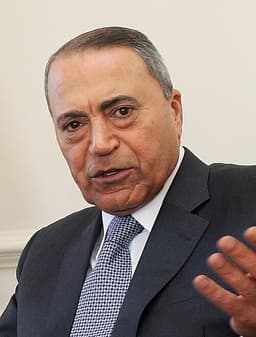
Marouf al-Bakhit
General · Modern
41.6Total
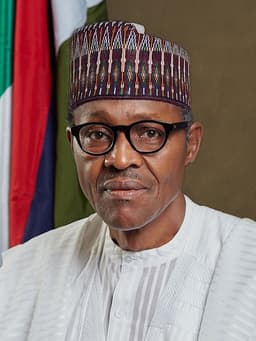
Muhammadu Buhari
General · Modern
51.5Total
Basic Information
Born
1947
1942
Died
—
—
Era
Modern
Modern
Nationality
Jordan
Nigeria
Occupation
General
General
Civilization
Middle Eastern
Other
Score Comparison
Military (10%)
10.2
22.6
Political (20%)
61.3
68.0
Influence (20%)
48.6
53.3
Legacy (20%)
38.3
43.3
Leadership (15%)
40.0
72.0
Strategy (15%)
36.8
41.0
TOTAL
41.6
51.5
Marouf al-Bakhit — Complete Timeline
2005 AD
Appointed Prime Minister of JordanPolitical Action◆ Major
King Abdullah II appointed Marouf al-Bakhit as Prime Minister of Jordan in November 2005, following the 2005 Amman bombings. Al-Bakhit, a former intelligence chief, was tasked with restoring security and stability.
JordanPrime MinisterAppointment
Impact: national
2007 AD
Resigned as Prime MinisterPolitical Action
Marouf al-Bakhit resigned as Prime Minister of Jordan in November 2007 after parliamentary elections. His resignation followed criticism of economic policies and political reforms.
JordanPrime MinisterResignation
Impact: national
2011 AD
Appointed Prime Minister for Second TermPolitical Action◆ Major
King Abdullah II appointed Marouf al-Bakhit as Prime Minister again in February 2011, during the Arab Spring protests. Al-Bakhit was tasked with implementing political reforms to address public demands.
JordanArab SpringPrime Minister
Impact: national
Resigned as Prime Minister for Second TermPolitical Action
Marouf al-Bakhit resigned as Prime Minister in October 2011, after failing to satisfy protesters' demands for faster political reforms. His resignation marked the end of his second term.
JordanArab SpringResignation
Impact: national
Muhammadu Buhari — Complete Timeline
1983 AD
1983 Nigerian coup d'étatPolitical Action
Major General Muhammadu Buhari led a military coup that overthrew the civilian government of President Shehu Shagari. Buhari cited corruption and economic mismanagement as justifications, and he became the head of state.
CoupMilitary RuleCorruption
Impact: nationaldestructive
1984 AD
War Against Indiscipline (WAI)Reform◆ Major
Buhari launched the War Against Indiscipline, a campaign to enforce discipline and order in Nigerian society. It included harsh penalties for minor offenses, such as queue-jumping, and was criticized for human rights abuses.
DisciplineSocial PolicyHuman Rights
Impact: nationaldestructive
1985 AD
Overthrow by Ibrahim BabangidaPolitical Action◆ Major
Buhari was overthrown in a palace coup led by his Chief of Army Staff, Ibrahim Babangida. Babangida cited Buhari's authoritarian style and failure to address the economy as reasons for the coup.
CoupOverthrowBabangida
Impact: national
2015 AD
Anti-corruption campaignReform◆ Major
Buhari launched a high-profile anti-corruption campaign, targeting government officials and recovering stolen assets. The campaign was praised internationally but criticized for being selective and politically motivated.
Anti-CorruptionReformGovernance
Impact: nationalconstructive
Election as President of NigeriaPolitical Action
Buhari won the 2015 Nigerian presidential election, defeating incumbent Goodluck Jonathan. This was the first time an opposition candidate had defeated a sitting president in Nigeria's history, marking a democratic milestone.
ElectionDemocracyOpposition Victory
Impact: nationalprogressive
Expert Analysis
Muhammadu Buhari vs Marouf al-Bakhit
# The General’s Dilemma: Two Paths from Power to Politics
In the winter of 2011, as protests swept across the Arab world, King Abdullah II of Jordan summoned a familiar figure to the palace. Marouf al-Bakhit, a former intelligence chief and general, was asked to form a government. Across the continent, in Nigeria, another retired general, Muhammadu Buhari, was watching these events unfold from his home in Daura—a man who had once ruled his country with an iron fist and now dreamed of returning to power through the ballot box. Both men were military officers turned political leaders, but their journeys diverged in ways that reveal the profound differences between Africa’s largest democracy and a small, fragile kingdom.
Origins
Muhammadu Buhari was born in 1942 in the northern Nigerian town of Daura, into a Muslim Fulani family. His father was a farmer, and Buhari grew up in a world of cattle herding and Islamic education. The British colonial system gave him a path: military training at the Nigerian Military Training College, then Sandhurst in England. By the time he was thirty, he was a major, and by forty-one, he was ready to seize power.
Marouf al-Bakhit, born in 1947 in the Jordanian village of Mahis, came from a Circassian minority family—a community that had served the Hashemite monarchy for generations. He studied at the University of Jordan, then at the Royal Military Academy Sandhurst, and later earned a PhD in political science from the University of London. His rise was slower, more careful: intelligence officer, then director of the General Intelligence Department, then ambassador to Israel and Turkey. By 2005, he was sixty years old and had never held elected office.
Rise to Power
Buhari’s entry onto the historical stage was violent. On December 31, 1983, he led a coup that overthrew the civilian government of President Shehu Shagari, citing corruption and economic mismanagement. The coup was bloodless, but the message was clear: democracy had failed, and the military would save Nigeria. Buhari was not a politician; he was a disciplinarian, a man who believed that what Nigeria needed was order, not debate.
Al-Bakhit’s rise was quieter, more constitutional. When King Abdullah II appointed him prime minister in November 2005, it was in the aftermath of the Amman bombings—al-Qaeda attacks that killed sixty people. The king needed a security man, someone who could restore calm. Al-Bakhit was that man: a general who understood intelligence, a bureaucrat who knew how to manage a crisis. He was not elected; he was chosen.
Leadership & Governance
Buhari’s rule in the 1980s was defined by the War Against Indiscipline (WAI), launched in 1984. This was not a military campaign but a social one: citizens were forced to queue at bus stops, public servants were required to be punctual, and those who littered were publicly shamed. “We must cultivate the spirit of discipline,” Buhari declared. But the campaign was harsh—journalists were jailed, political opponents were detained, and the economy stagnated. By 1985, his own Chief of Army Staff, Ibrahim Babangida, had overthrown him, citing his “authoritarian” style.
Al-Bakhit’s governance was more cautious. During his first term (2005–2007), he focused on security and economic reform, but he never challenged the monarchy’s authority. He was a prime minister, not a president; his power was delegated, not absolute. When the Arab Spring erupted in 2011, the king called him back, hoping his security background would reassure a nervous population. But al-Bakhit offered only slow, incremental change—a new electoral law, some anti-corruption measures—while protesters demanded constitutional reform. By October 2011, he was gone again, resigning after failing to satisfy anyone.
Triumph & Tragedy
Buhari’s greatest triumph came in 2015, when he won the Nigerian presidency in a democratic election—the first time an opposition candidate had defeated an incumbent in Nigeria’s history. It was a remarkable redemption: the former military dictator, now a seventy-two-year-old man, had reinvented himself as a democrat. He launched a high-profile anti-corruption campaign, targeting government officials and recovering stolen assets. For a moment, Nigeria believed.
But the tragedy was already brewing. Buhari’s health declined; he spent months in London for medical treatment. His anti-corruption campaign became selective, targeting political enemies while protecting allies. The economy fell into recession. And the war against Boko Haram, which he had promised to win, dragged on. The same authoritarian instincts that had defined his 1980s rule—the suspicion of dissent, the reliance on the security services—reappeared.
Al-Bakhit’s triumphs were smaller. He prevented Jordan from descending into civil war during the Arab Spring, a feat that should not be underestimated. But his tragedy was that he could never escape his role as a servant of the monarchy. He was a general who had become a politician, but he was never a leader in his own right. When he resigned in 2011, he left no lasting reforms, no movement, no legacy.
Character & Destiny
Buhari was shaped by his origins: a northern Nigerian soldier who believed in discipline, order, and the power of the state. He was stubborn, often to a fault; he once said, “I belong to everyone, and I belong to no one.” This detachment made him seem incorruptible, but it also made him inflexible. He could not adapt to the messy compromises of democracy.
Al-Bakhit was shaped by his role: a Circassian general serving a Hashemite king. He was loyal, cautious, and competent. He understood that his power was conditional, that he could be dismissed at any moment. This made him effective in a crisis but incapable of bold action. He was a manager, not a visionary.
Legacy
Buhari’s legacy is contested. To some, he is a reformer who fought corruption and proved that democracy could work in Nigeria. To others, he is a failed dictator who returned to power only to repeat his mistakes. His scores—Military: 20.7, Political: 61.0, Influence: 70.3, Legacy: 56.7—reflect this ambivalence. He was more influential than successful, more symbol than substance.
Al-Bakhit’s legacy is quieter. He is remembered, if at all, as a caretaker, a man who held the line during a storm but who never changed the course. His scores—Military: 19.9, Political: 63.0, Influence: 64.0, Legacy: 50.0—are similar to Buhari’s in their mediocrity. But they mask a deeper truth: al-Bakhit was never meant to be great. He was meant to be useful.
Conclusion
In the end, the difference between Buhari and al-Bakhit is not in their scores or their events but in their relationship to power. Buhari seized power, lost it, and then won it back through democracy. He was a man who believed he was destined to rule. Al-Bakhit was given power, used it, and returned it. He was a man who understood that he was replaceable. Both were generals, but only one truly believed he could be a king. The other knew he was always a servant.
Rankings
🥇
Muhammadu BuhariLeader
Mil: 22.6Pol: 68.0Inf: 53.3
51.5
🥈
Marouf al-Bakhit
Mil: 10.2Pol: 61.3Inf: 48.6
41.6
+9.9 behind
How This Comparison Works
Algorithm
Each figure is scored on 6 dimensions (0—100 scale) based on structured historical data: Military (10%), Political (20%), Influence (20%), Legacy (20%), Leadership (15%), Strategy (15%). The weighted total produces the final ranking.
Data Sources
Scores are computed from structured sub-indicators in the database. Scale factors adjust for era (Ancient ×0.85, Modern ×1.0) and civilization size (Eastern ×1.05, Other ×0.80) to account for differences in population and military scale.
Maximum 3 Figures
Comparisons are limited to 2—3 figures to ensure readability and statistical meaningfulness.
Error Margins
±5 points per dimension — Sub-scores are derived from historical records with inherent uncertainty. Two figures within 5 points on a dimension should be considered roughly equivalent in that area.
Total Score Accuracy
±3 points overall — The weighted combination of 6 dimensions produces a total score with approximately ±3 points of uncertainty. Differences of less than 3 points are not statistically significant— the figures are effectively tied.
Known Limitations
- Historical records are incomplete and uneven across civilizations
- Figures from oral-tradition societies may be underrepresented
- Occupation labels can misclassify multi-role figures
- Scores measure capability and impact, not moral character
- Quantitative scoring is a comparison tool, not absolute truth
Capability Radar
Military (10%) — Battles & Warfare
Battles
5
10
Win Rate
5
10
Expansion
5
5
Political (20%) — Governance & Reform
Reform
30
30
Diplomacy
40
25
Economy
30
20
Influence (20%) — Cultural & Global Reach
Cultural
10
25
Global
10
25
Legacy (20%) — Historical Impact
Historical
10
30
Longevity
10
20
Leadership (15%) — Power & Stability
Tenure
40
45
Stability
35
15
Strategy (15%) — Tactics & Innovation
Strategy
10
15
Tactics
10
15
Reform
10
20
Similar Comparisons
Comments & Discussion
Revisionist's Edge6/16/2026
Don't romanticize either. Buhari's 2015 election win was hailed as a democratic triumph, but Amnesty International documented 10,000 human rights abuses under his watch by 2018. Bakhit's 2011 cabinet included former security chiefs who violently dispersed protests. Both used their military pasts to justify repression: Buhari as a 'disciplinarian,' Bakhit as a 'stabilizer.' The comparison isn't about noble soldiers turned democrats—it's about
General's Gambit6/16/2026
Buhari's 1984 coup was a classic strongman play—he overthrew a civilian government, banned politics, and jailed opponents. Bakhit, by contrast, was a palace appointee called in to steady a monarchy during Arab Spring tremors. Buhari's later electoral wins show he adapted to democracy's game, while Bakhit remained a loyalist tool, never winning a vote. One gambled on people power; the other on royal favor. That's the real divide—ballots vs. backroom deals.
数据独眼侠6/16/2026
比较两人履历?Buhari执政期间尼日利亚GDP增速从2015年的2.7%跌到2020年的-1.8%,而Bakhit只在2011年短暂掌权,约旦GDP当年还涨了2.6%。说穿了,Buhari的经济账本烂透了——石油价格崩盘时他束手无策,反观Bakhit至少没让国家崩盘。数字不说谎:Buhari是个经济败将,Bakhit只是个沉默管家。
Sandhurst Scholar6/16/2026
Both men are Sandhurst graduates—Buhari in 1963, Bakhit in 1972—but their military paths diverged starkly. Buhari seized power in a coup, Bakhit served a king. Buhari's military rule was harsh, with decrees suppressing dissent; Bakhit's intelligence background made him a fixer, not a dictator. The irony? Buhari the coup-maker later won democratic elections, while Bakhit the loyalist never faced a popular vote. Which trajectory shows more respect for the people's will?
历史鉴赏家6/16/2026
看时间线就有意思了:Buhari1983年政变上台,1985年被推翻,这短短两年里他搞了"清廉运动",抓了一堆官员,还把诺贝尔奖得主索因卡关起来。Bakhit2011年上任时,约旦正闹革命,他动用军队维稳,却避免了全面镇压。Buhari是铁腕清教徒,Bakhit是危机消防员。两人都穿军装执政,但Buhari的文化烙印更深——他来自富拉尼牧区传统,而Bakhit的切尔克斯族背景让他始终是局内人又是局外人。