Loading...
Marouf al-Bakhit vs Yitzhak Rabin
Yitzhak Rabin leads by 24.8 pts · 2 figures compared
…
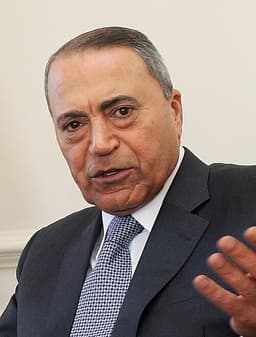
Marouf al-Bakhit
General · Modern
41.6Total
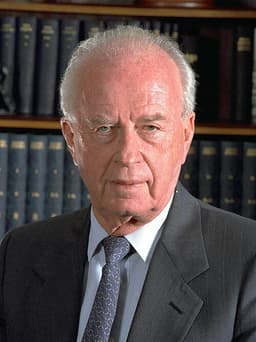
Yitzhak Rabin
General · Modern
66.4Total
Basic Information
Born
1947
1922
Died
—
—
Era
Modern
Modern
Nationality
Jordan
Israel
Occupation
General
General
Civilization
Middle Eastern
Middle Eastern
Score Comparison
Military (10%)
10.2
61.7
Political (20%)
61.3
82.0
Influence (20%)
48.6
68.0
Legacy (20%)
38.3
55.0
Leadership (15%)
40.0
78.0
Strategy (15%)
36.8
55.0
TOTAL
41.6
66.4
Marouf al-Bakhit — Complete Timeline
2005 AD
Appointed Prime Minister of JordanPolitical Action◆ Major
King Abdullah II appointed Marouf al-Bakhit as Prime Minister of Jordan in November 2005, following the 2005 Amman bombings. Al-Bakhit, a former intelligence chief, was tasked with restoring security and stability.
JordanPrime MinisterAppointment
Impact: national
2007 AD
Resigned as Prime MinisterPolitical Action
Marouf al-Bakhit resigned as Prime Minister of Jordan in November 2007 after parliamentary elections. His resignation followed criticism of economic policies and political reforms.
JordanPrime MinisterResignation
Impact: national
2011 AD
Appointed Prime Minister for Second TermPolitical Action◆ Major
King Abdullah II appointed Marouf al-Bakhit as Prime Minister again in February 2011, during the Arab Spring protests. Al-Bakhit was tasked with implementing political reforms to address public demands.
JordanArab SpringPrime Minister
Impact: national
Resigned as Prime Minister for Second TermPolitical Action
Marouf al-Bakhit resigned as Prime Minister in October 2011, after failing to satisfy protesters' demands for faster political reforms. His resignation marked the end of his second term.
JordanArab SpringResignation
Impact: national
Yitzhak Rabin — Complete Timeline
1967 AD
Chief of Staff during the Six-Day WarWar
As Chief of Staff of the Israel Defense Forces, Rabin commanded the Israeli military during the Six-Day War against Egypt, Jordan, and Syria. Israel captured the Sinai Peninsula, Gaza Strip, West Bank, East Jerusalem, and Golan Heights, reshaping the region.
Six-Day WarTerritorial ExpansionMilitary Victory
Impact: global
1993 AD
Signing of the Oslo AccordsPolitical Action
As prime minister, Rabin signed the Oslo Accords with PLO Chairman Yasser Arafat on the White House lawn. The agreement established the Palestinian Authority and set a framework for Palestinian self-governance in the West Bank and Gaza Strip.
Peace ProcessPalestiniansOslo
Impact: globalconstructive
1995 AD
Assassination at Peace RallyPolitical Action
Rabin was assassinated by Israeli extremist Yigal Amir after a peace rally in Tel Aviv. The assassination shocked Israel and the world, derailing the Oslo peace process and leading to a period of political instability.
AssassinationPeace ProcessPolitical Violence
Impact: globaltragic
Expert Analysis
Yitzhak Rabin vs Marouf al-Bakhit
### The General and the Spy: Two Paths from the Middle East’s Crucible
On a balmy November evening in 1995, Yitzhak Rabin stood on a stage in Tel Aviv, singing a song of peace. Moments later, a gunshot ended his life—and shattered a nation’s hope. Just sixteen years earlier, in the same region, another man in uniform had begun a very different journey: Marouf al-Bakhit, a Jordanian intelligence officer, would rise to become prime minister not through bullets or ballots, but through the quiet patronage of a king. Both were generals. Both served their countries in turbulent times. Yet one became a martyr for peace, the other a footnote in the annals of cautious reform. What drove these two men—born a quarter-century apart, shaped by the same unforgiving geography—to such divergent fates?
### Origins: The Forging of Two Soldiers
Yitzhak Rabin was born in 1922 in Jerusalem, then part of British Mandate Palestine, to a family of socialist Zionist pioneers. His father, a volunteer in the Jewish Legion, and his mother, a political activist, instilled in him a sense of duty and sacrifice. Rabin grew up in a world where survival meant fighting—first against the British, then against Arab armies. He joined the Palmach, the elite strike force of the Jewish underground, and learned war as a farmer-soldier. The land itself was his classroom; the desert, his proving ground. By contrast, Marouf al-Bakhit was born in 1947 in the village of Mahis, Jordan, into a more traditional, tribal society. His father was a local notable, and Bakhit’s path was academic: he studied political science in Jordan, then earned a PhD in international relations from the University of Southern California. While Rabin was learning to read maps of enemy positions, Bakhit was reading textbooks on diplomacy. Their eras, too, were different. Rabin came of age during the birth of Israel and the existential wars of 1948, 1956, and 1967. Bakhit’s formative years were the quieter, if no less tense, decades of Jordan’s monarchy, where the greatest threat was not invasion but internal unrest.
### Rise to Power: The Sword and the Shadow
Rabin’s ascent was meteoric and bloody. In 1967, as Chief of Staff of the Israel Defense Forces, he commanded the Six-Day War—a stunning, preemptive victory that captured the Sinai, Gaza, the West Bank, and the Golan Heights. The war was a turning point: it made Rabin a national hero, but it also planted seeds of occupation that would haunt him. His path to politics was direct. He served as ambassador to the United States, then as prime minister for the first time in 1974, navigating the aftermath of the Yom Kippur War. Bakhit’s rise was quieter, more deliberate. He spent decades in Jordan’s intelligence service, the General Intelligence Directorate (GID), where he specialized in surveillance and security. In 2005, after the Amman bombings—a series of al-Qaeda attacks on hotels that killed 60 people—King Abdullah II needed a steady hand. He appointed Bakhit prime minister. The appointment was not a reward for battlefield glory but a response to crisis: Bakhit was a fixer, not a visionary.
### Leadership & Governance: The Visionary and the Manager
Rabin’s leadership was defined by transformation. As prime minister in the 1990s, he reversed his own hawkish past. In 1993, on the White House lawn, he shook hands with Yasser Arafat and signed the Oslo Accords, a framework for Palestinian self-rule. It was a moment of raw political courage—a general forging peace with his former enemy. Rabin’s military wisdom informed his political strategy: he knew that victories on the battlefield could not erase the human cost of occupation. He pursued peace with the same precision he had once applied to war. Bakhit, by contrast, governed as a manager of stability. His first term (2005–2007) focused on security and economic reform, but he was constrained by the monarchy’s power. His second term (2011) came during the Arab Spring, when protests swept Jordan. Bakhit’s response was cautious: he offered limited reforms—a new election law, a cabinet reshuffle—but refused to cede real power. Where Rabin took risks, Bakhit played defense. His military background made him effective at counterterrorism, but his political wisdom was reactive, not proactive.
### Triumph & Tragedy: The Summit and the Fall
Rabin’s greatest moment was the Oslo Accords, but his greatest failure was the peace itself. The accords stalled; settlements grew; violence continued. On November 4, 1995, at a rally in Tel Aviv, a Jewish extremist named Yigal Amir shot Rabin three times. The assassin’s bullet killed not just a man but a moment. Rabin’s tragedy was that he died believing peace was possible—and that his own people turned against him. Bakhit’s triumph was his survival. He navigated the Arab Spring without bloodshed, keeping Jordan stable while neighbors like Syria and Egypt collapsed. But his failure was the same: he left office in 2011 with protesters still angry, reforms incomplete, and the monarchy untouched. Bakhit’s tragedy was not a dramatic death but a quiet irrelevance—a man who managed crises but never resolved them.
### Character & Destiny: The Hero and the Bureaucrat
Rabin was a man of contradictions: a gruff, chain-smoking soldier who wrote poetry, a security hawk who became a dove. His personality—stubborn, introspective, principled—drove his decisions. He believed in the power of a single handshake to change history. That belief cost him his life. Bakhit was different: cautious, loyal, unassuming. He was a servant of the system, not its challenger. His destiny was to be a caretaker, not a revolutionary. The difference lies in their eras and their choices. Rabin lived in a time when a general could reshape a nation; Bakhit lived in a time when a general could only hold the line.
### Legacy: The Martyr and the Footnote
Rabin’s legacy is etched in stone and memory. His assassination is a national trauma; his peace process, though flawed, is a touchstone for future negotiations. He is remembered as a leader who dared to change. Bakhit’s legacy is more modest. He is a name in Jordanian history—a competent administrator, a loyal servant, but not a transformative figure. In the Middle East, where history is written in blood and ink, Rabin’s story is a tragedy of hope; Bakhit’s, a chronicle of survival.
### Conclusion: The Weight of Choice
Rabin and Bakhit both wore uniforms, but they walked different paths. One chose to risk everything for peace; the other chose to preserve everything for stability. Their lives remind us that leadership is not just about power—it is about purpose. Rabin died singing a song of peace; Bakhit retired to a quiet life. In the end, the difference between them is the difference between a man who changed his country and a man who managed it. The Middle East still awaits leaders who, like Rabin, dare to dream—and who, unlike Bakhit, dare to pay the price.
Rankings
🥇
Yitzhak RabinLeader
Mil: 61.7Pol: 82.0Inf: 68.0
66.4
🥈
Marouf al-Bakhit
Mil: 10.2Pol: 61.3Inf: 48.6
41.6
+24.8 behind
How This Comparison Works
Algorithm
Each figure is scored on 6 dimensions (0—100 scale) based on structured historical data: Military (10%), Political (20%), Influence (20%), Legacy (20%), Leadership (15%), Strategy (15%). The weighted total produces the final ranking.
Data Sources
Scores are computed from structured sub-indicators in the database. Scale factors adjust for era (Ancient ×0.85, Modern ×1.0) and civilization size (Eastern ×1.05, Other ×0.80) to account for differences in population and military scale.
Maximum 3 Figures
Comparisons are limited to 2—3 figures to ensure readability and statistical meaningfulness.
Error Margins
±5 points per dimension — Sub-scores are derived from historical records with inherent uncertainty. Two figures within 5 points on a dimension should be considered roughly equivalent in that area.
Total Score Accuracy
±3 points overall — The weighted combination of 6 dimensions produces a total score with approximately ±3 points of uncertainty. Differences of less than 3 points are not statistically significant— the figures are effectively tied.
Known Limitations
- Historical records are incomplete and uneven across civilizations
- Figures from oral-tradition societies may be underrepresented
- Occupation labels can misclassify multi-role figures
- Scores measure capability and impact, not moral character
- Quantitative scoring is a comparison tool, not absolute truth
Capability Radar
Military (10%) — Battles & Warfare
Battles
5
65
Win Rate
5
70
Expansion
5
50
Political (20%) — Governance & Reform
Reform
30
65
Diplomacy
40
85
Economy
30
60
Influence (20%) — Cultural & Global Reach
Cultural
10
55
Global
10
70
Legacy (20%) — Historical Impact
Historical
10
75
Longevity
10
60
Leadership (15%) — Power & Stability
Tenure
40
70
Stability
35
40
Strategy (15%) — Tactics & Innovation
Strategy
10
75
Tactics
10
60
Reform
10
55
Similar Comparisons
Comments & Discussion
Rabin’s Ghost6/16/2026
Calling Rabin a "martyr for peace" is a lazy myth. Military historian here: Rabin was a ruthless general who crushed the First Intifada with "force, power, and beatings." Oslo wasn't a conversion—it was a strategic pivot after the Cold War left Israel isolated. His assassination didn't kill peace; it ended a tactical gambit that was already failing. Al-Bakhit at least understood that survival in the Middle East means adapting quietly, not grand gestures.
数据猎人6/16/2026
比较表格里Rabin战功一栏写着"1967六日战争总参谋长",但没提他当时指挥了多惨烈的空袭?数据党吐槽:al-Bakhit参与约旦镇压巴勒斯坦武装的数字倒是有零有整——1980年代清剿行动伤亡约300人。可Rabin的"和平缔造者"光环全靠1995年那声枪响镀金,之前他可是镇压能手。别忘了拉宾广场地下还埋着多少抗议者的血呢。
Classics Nerd6/16/2026
Cicero would have despised Rabin's hubris. Nobel Peace Prize winner who still authorized 180 new settlement homes in East Jerusalem during Oslo talks—that's not a peacemaker, that's a conqueror playing diplomat. Al-Bakhit was no hero, but as a Shahid of the Jordanian Mukhabarat, he knew his place: guard the throne, never steal the spotlight. One died like Caesar, the other like a loyal prefect. Which legacy actually served stability?
起义记录员6/16/2026
说al-Bakhit是"谨小慎微的改革者"太客气了。他1991年海湾战争后管安全事务时,约旦境内巴勒斯坦人连抗议都不敢大声——这叫"谨慎"还是"铁腕"?反观Rabin,至少1950年代作为国防部官员敢遣散阿拉伯村庄(比如Lifta),承认土地争夺的残酷性。al-Bakhit一辈子躲在哈希姆王朝影子下,连个体面封号都没混到,哪来的脸跟Rabin并列称为"将军"?
Revisionist Scourge6/16/2026
Bakhit's greatest achievement was not becoming "footnote"—it was seeing Rabin's military-intelligence state spawn a settler-colonial project that made his own Hashemite patrons look like amateurs. True, Rabin fought wars; Bakhit spied on refugees. But Oslo's "peace dividend" gave us 50% more West Bank settlers by 2000. Which general actually served his nation's long-term interests? The spy who kept Jordan stable through a civil war, or the hero who cosplayed as a dove while arming the West Bank