Loading...
Marouf al-Bakhit vs Ramon Castilla
Ramon Castilla leads by 18.1 pts · 2 figures compared
…
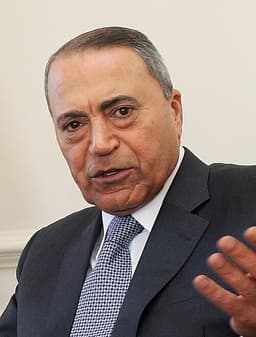
Marouf al-Bakhit
General · Modern
41.6Total
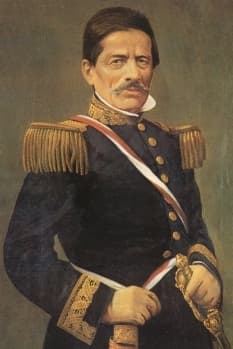
Ramon Castilla
General · Modern
59.7Total
Basic Information
Born
1947
1797
Died
—
1867
Era
Modern
Modern
Nationality
Jordan
Peru
Occupation
General
General
Civilization
Middle Eastern
Western
Score Comparison
Military (10%)
10.2
40.0
Political (20%)
61.3
72.0
Influence (20%)
48.6
56.7
Legacy (20%)
38.3
52.0
Leadership (15%)
40.0
78.0
Strategy (15%)
36.8
60.0
TOTAL
41.6
59.7
Marouf al-Bakhit — Complete Timeline
2005 AD
Appointed Prime Minister of JordanPolitical Action◆ Major
King Abdullah II appointed Marouf al-Bakhit as Prime Minister of Jordan in November 2005, following the 2005 Amman bombings. Al-Bakhit, a former intelligence chief, was tasked with restoring security and stability.
JordanPrime MinisterAppointment
Impact: national
2007 AD
Resigned as Prime MinisterPolitical Action
Marouf al-Bakhit resigned as Prime Minister of Jordan in November 2007 after parliamentary elections. His resignation followed criticism of economic policies and political reforms.
JordanPrime MinisterResignation
Impact: national
2011 AD
Appointed Prime Minister for Second TermPolitical Action◆ Major
King Abdullah II appointed Marouf al-Bakhit as Prime Minister again in February 2011, during the Arab Spring protests. Al-Bakhit was tasked with implementing political reforms to address public demands.
JordanArab SpringPrime Minister
Impact: national
Resigned as Prime Minister for Second TermPolitical Action
Marouf al-Bakhit resigned as Prime Minister in October 2011, after failing to satisfy protesters' demands for faster political reforms. His resignation marked the end of his second term.
JordanArab SpringResignation
Impact: national
Ramon Castilla — Complete Timeline
1824 AD
Battle of AyacuchoWar
Castilla fought as a junior officer in the decisive Battle of Ayacucho, which ended Spanish rule in Peru. This victory secured Peruvian independence and marked the end of the Spanish Empire in South America, shaping Castilla's nationalist views.
Peruvian War of IndependenceBattleLiberation
Impact: regional
1845 AD
First Presidency of PeruPolitical Action◆ Major
Castilla was elected President of Peru in 1845, serving until 1851. His first term focused on economic development, including the guano boom, and infrastructure projects such as railroads and ports, modernizing the Peruvian state.
PresidencyEconomic DevelopmentGuano
Impact: nationalconstructive
1854 AD
Abolition of Slavery in PeruReform◆ Major
During his second presidency, Castilla issued a decree abolishing slavery in Peru on December 3, 1854. This reform freed approximately 25,000 slaves and was part of a broader liberal agenda, though it faced opposition from slave-owning elites.
AbolitionSlaveryHuman Rights
Impact: nationalprogressive
Abolition of Indigenous TributeReform◆ Major
Castilla also abolished the indigenous tribute tax in 1854, which had been a burden on native communities since colonial times. This measure aimed to integrate indigenous peoples into the Peruvian state as equal citizens, though its implementation was uneven.
Indigenous RightsTax ReformCitizenship
Impact: nationalprogressive
1855 AD
Second Presidency and Guano BoomPolitical Action◆ Major
Castilla served a second term from 1855 to 1862, during the peak of the guano export boom. He used guano revenues to fund public works, pay off foreign debt, and modernize the military, but also faced criticism for corruption and over-reliance on a single resource.
PresidencyGuanoModernization
Impact: nationalconstructive
1860 AD
Constitutional Reform of 1860Reform◆ Major
Castilla oversaw the adoption of a new constitution in 1860, which established a centralized republic with a strong executive. The constitution remained in effect until 1920 and shaped Peru's political structure, though it limited regional autonomy.
ConstitutionPolitical ReformCentralization
Impact: nationalconstructive
Expert Analysis
Ramon Castilla vs Marouf al-Bakhit
# The General and the Statesman
On a December morning in 1854, Ramon Castilla sat in his Lima office and signed his name to a document that would change Peru forever. The ink was barely dry when word spread through the capital: slavery was abolished. Thousands of enslaved people, who had labored under Spanish rule and continued under the republic, were now free. Across the Atlantic and a century and a half later, another general named Marouf al-Bakhit stood in the royal palace in Amman, receiving his appointment as Prime Minister of Jordan from King Abdullah II. It was November 2005, and the country was reeling from the deadliest terrorist attack in its history. Both men were generals who entered politics. Both governed in times of crisis. Yet one became a transformative national leader, while the other remains a footnote. Why?
Origins
Ramon Castilla was born in 1797 in Tarapacá, then part of the Viceroyalty of Peru, to a Spanish father and a mother of mixed indigenous and Spanish ancestry. He grew up in a world of rigid colonial hierarchies, where birth determined destiny. The wars of independence that swept Latin America in the early nineteenth century offered young men like Castilla a rare chance to rise through merit rather than lineage. He joined the patriot army and fought at the Battle of Ayacucho in 1824, the decisive engagement that ended three centuries of Spanish rule. That battlefield forged his identity: he was a soldier of the republic, not a servant of the crown.
Marouf al-Bakhit was born in 1947 in Salt, Jordan, into a country that had only recently gained independence from British mandate rule. His Jordan was a young kingdom, carved from the remnants of the Ottoman Empire and shaped by the competing pressures of Arab nationalism, the Cold War, and the unresolved conflict with Israel. He chose a military career, rising through the ranks of the Jordanian Armed Forces and later serving as director of the General Intelligence Department, the kingdom's feared security apparatus. Where Castilla was shaped by revolution, al-Bakhit was shaped by the quiet, steady work of maintaining order in a fragile state.
Rise to Power
Castilla's path to power was long and bloody. After Ayacucho, he spent two decades navigating the chaotic politics of early republican Peru, where caudillos—military strongmen—fought for control. He served as a minister, went into exile, and returned. In 1845, at the age of forty-eight, he was elected president. His rise was not a coup but an election, a rare moment of stability in a nation that had seen more than a dozen presidents in its first two decades. The key turning point was the guano boom: Peru sat on vast deposits of seabird droppings that became the world's premier fertilizer. Castilla understood that this sudden wealth could either corrupt or transform his country.
Al-Bakhit's rise was quieter but no less significant. His appointment in 2005 came after the Amman bombings, when al-Qaeda terrorists attacked three hotels, killing sixty people. King Abdullah II needed a prime minister who could restore security and reassure a terrified public. Al-Bakhit, the former intelligence chief, was the obvious choice. His second appointment in February 2011 came during the Arab Spring, when protests demanding political reform swept Jordan. Once again, the king turned to a man known for stability, not change.
Leadership & Governance
Castilla's leadership was defined by audacious reform. During his first presidency from 1845 to 1851, he used guano revenues to pay off foreign debt, build railroads, and modernize the military. But his most enduring achievement came during his second term, from 1855 to 1862. On December 3, 1854, he abolished slavery, freeing roughly 25,000 people. That same year, he abolished the indigenous tribute tax, a colonial-era levy that had forced native communities to pay for the right to exist on their own land. In 1860, he oversaw a new constitution that centralized the republic and strengthened the executive. Castilla governed with a vision: he wanted to build a modern nation-state out of the wreckage of the Spanish empire.
Al-Bakhit governed with a different mandate: stability. His first term focused on rebuilding after the bombings, improving security, and managing Jordan's delicate relationship with its neighbors. During his second term, he faced the Arab Spring protests with a mix of concessions and firmness. He announced economic reforms and promised political liberalization, but the protesters wanted faster, deeper change. By October 2011, he resigned, having failed to satisfy either the street or the palace. His governance was competent but cautious, a reflection of a man who saw his role as managing crises rather than transforming society.
Triumph & Tragedy
Castilla's triumph was the abolition of slavery. It was a moral act, but also a practical one: by freeing enslaved people, he created a larger labor force for the guano economy and undermined the power of the old landed elite. His tragedy was that the guano boom eventually became a curse. The easy money bred corruption, dependency, and a disastrous war with Chile that would devastate Peru after his death. Castilla could not have foreseen this, but his reliance on a single resource sowed the seeds of future catastrophe.
Al-Bakhit's triumph was his steady hand after the Amman bombings. He restored order without the brutal repression that might have triggered a backlash. His tragedy was the Arab Spring. He was the right man for 2005 but the wrong man for 2011. The protesters did not want a security chief; they wanted a reformer. Al-Bakhit's loyalty to the king and his instinct for control made him unable to read the moment.
Character & Destiny
Castilla was ambitious, pragmatic, and visionary. He had the soldier's discipline but the statesman's imagination. He knew when to fight and when to compromise. His character was forged in the crucible of independence, where he learned that nations are built, not inherited. Al-Bakhit was loyal, competent, and cautious. He was a product of Jordan's security state, where the first priority was survival. His character was shaped by the Cold War and the shadow of Israel, where stability was the highest virtue. One man dared to change his country; the other dared only to keep it from breaking.
Legacy
Castilla is remembered as Peru's great reformer, the man who ended slavery and modernized the state. His portrait hangs in government buildings, and his name adorns schools and streets. His legacy is complex—the guano boom that funded his reforms also led to ruin—but his place in history is secure. Al-Bakhit is remembered, if at all, as a transitional figure, a prime minister who served in difficult times but left no lasting mark. His scores reflect this: a total of 56.3 against Castilla's 72.0, with a stark contrast in military and strategic ratings.
Conclusion
The difference between Castilla and al-Bakhit is not simply a matter of talent or opportunity. It is a matter of era and imagination. Castilla lived in a time when a general could become a founder, when the old world was dying and a new one could be built. Al-Bakhit lived in a time when the structures were already in place, when the task was not creation but maintenance. The general who abolishes slavery and the general who manages a crisis are both products of their age. But only one saw history as something to be shaped rather than endured. In the end, that is the difference between a footnote and a monument.
Rankings
🥇
Ramon CastillaLeader
Mil: 40.0Pol: 72.0Inf: 56.7
59.7
🥈
Marouf al-Bakhit
Mil: 10.2Pol: 61.3Inf: 48.6
41.6
+18.1 behind
How This Comparison Works
Algorithm
Each figure is scored on 6 dimensions (0—100 scale) based on structured historical data: Military (10%), Political (20%), Influence (20%), Legacy (20%), Leadership (15%), Strategy (15%). The weighted total produces the final ranking.
Data Sources
Scores are computed from structured sub-indicators in the database. Scale factors adjust for era (Ancient ×0.85, Modern ×1.0) and civilization size (Eastern ×1.05, Other ×0.80) to account for differences in population and military scale.
Maximum 3 Figures
Comparisons are limited to 2—3 figures to ensure readability and statistical meaningfulness.
Error Margins
±5 points per dimension — Sub-scores are derived from historical records with inherent uncertainty. Two figures within 5 points on a dimension should be considered roughly equivalent in that area.
Total Score Accuracy
±3 points overall — The weighted combination of 6 dimensions produces a total score with approximately ±3 points of uncertainty. Differences of less than 3 points are not statistically significant— the figures are effectively tied.
Known Limitations
- Historical records are incomplete and uneven across civilizations
- Figures from oral-tradition societies may be underrepresented
- Occupation labels can misclassify multi-role figures
- Scores measure capability and impact, not moral character
- Quantitative scoring is a comparison tool, not absolute truth
Capability Radar
Military (10%) — Battles & Warfare
Battles
5
45
Win Rate
5
50
Expansion
5
30
Political (20%) — Governance & Reform
Reform
30
85
Diplomacy
40
70
Economy
30
75
Influence (20%) — Cultural & Global Reach
Cultural
10
55
Global
10
50
Legacy (20%) — Historical Impact
Historical
10
65
Longevity
10
60
Leadership (15%) — Power & Stability
Tenure
40
65
Stability
35
60
Strategy (15%) — Tactics & Innovation
Strategy
10
45
Tactics
10
40
Reform
10
55
Similar Comparisons
Comments & Discussion
TARAPACÁ'S GHOST6/16/2026
This comparison ignores context. Castilla abolished slavery in 1854, sure—but Peru’s slave economy was already collapsing. The real catalyst was the 1854 liberal revolution, not his magnanimity. Al-Bakhit got handed a counterterrorism mess in 2005; Castilla had decades to build a legacy. Put al-Bakhit in 1850s Peru with an army and zero institutional checks, and he might look like a statesman too. Comparison is lazy without factoring in structural power.
数字游牧者6/16/2026
把秘鲁独立战争英雄和约旦危机总理比,根本是拿玛咖比鹰嘴豆。Castilla有1824年阿亚库乔战役的军事资本,横扫西班牙军团后建立威信;al-Bakhit呢?他2005年上任时约旦正被安曼酒店爆炸案炸得七窍流血,国王要他维稳而非改革。一个打江山,一个守烂摊,历史评价能一样?别拿时代错位当分析工具。
CLASSICS GRINDER6/16/2026
The battle of Ayacucho isn’t just a footnote—it’s the hinge. Castilla fought alongside Sucre to crush the Spanish, which gave him unassailable republican credibility. Al-Bakhit never had that founding myth moment; he was a royal appointee, not a liberator. In ancient terms: Castilla was a Cincinnatus rising from a war of survival, al-Bakhit was a prefect sent to pacify a province. The difference isn’t character—it’s the legitimacy of the sword that won the state.
数据瞪眼睛6/16/2026
别被“奴隶解放”的故事骗了。Castilla废除奴隶制时,秘鲁黑奴只剩约1.7万人,在250万总人口里占比不到1%。经济上这举措不痛不痒,真正获利的是他借机拉拢自由派和英国投资者的政治计算。al-Bakhit呢?他2005-2007年任内镇压了约旦穆斯林兄弟会的影响力扩大,维稳手段铁血但有效。比道德光环?Castilla有历史红利,al-Bakhit只有现实债务。
VELITAS OF LIMA6/16/2026
You’re both missing the military-administrative pivot. Castilla didn’t just fight at Ayacucho—he later served as prefect of multiple departments, building a patronage network through guano revenues from the 1840s onward. Al-Bakhit was a major general in the intelligence branch, but never ran a civilian economy. Castilla’s 1854 abolition was paired with modernizing the army and infrastructure; al-Bakhit’s tenure was crisis management without structural change. Generalship without statecraft is ju