Loading...
Marouf al-Bakhit vs Plutarco Elias Calles
Plutarco Elias Calles leads by 16.9 pts · 2 figures compared
…
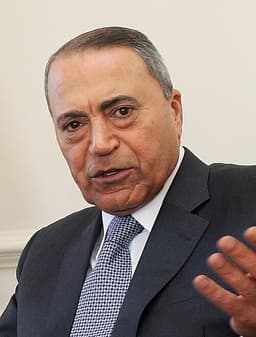
Marouf al-Bakhit
General · Modern
41.6Total
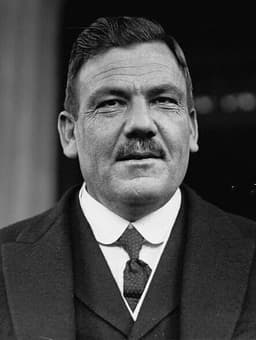
Plutarco Elias Calles
General · Modern
58.5Total
Basic Information
Born
1947
1877
Died
—
1945
Era
Modern
Modern
Nationality
Jordan
Mexico
Occupation
General
General
Civilization
Middle Eastern
Western
Score Comparison
Military (10%)
10.2
40.0
Political (20%)
61.3
70.3
Influence (20%)
48.6
68.0
Legacy (20%)
38.3
40.0
Leadership (15%)
40.0
78.0
Strategy (15%)
36.8
52.5
TOTAL
41.6
58.5
Marouf al-Bakhit — Complete Timeline
2005 AD
Appointed Prime Minister of JordanPolitical Action◆ Major
King Abdullah II appointed Marouf al-Bakhit as Prime Minister of Jordan in November 2005, following the 2005 Amman bombings. Al-Bakhit, a former intelligence chief, was tasked with restoring security and stability.
JordanPrime MinisterAppointment
Impact: national
2007 AD
Resigned as Prime MinisterPolitical Action
Marouf al-Bakhit resigned as Prime Minister of Jordan in November 2007 after parliamentary elections. His resignation followed criticism of economic policies and political reforms.
JordanPrime MinisterResignation
Impact: national
2011 AD
Appointed Prime Minister for Second TermPolitical Action◆ Major
King Abdullah II appointed Marouf al-Bakhit as Prime Minister again in February 2011, during the Arab Spring protests. Al-Bakhit was tasked with implementing political reforms to address public demands.
JordanArab SpringPrime Minister
Impact: national
Resigned as Prime Minister for Second TermPolitical Action
Marouf al-Bakhit resigned as Prime Minister in October 2011, after failing to satisfy protesters' demands for faster political reforms. His resignation marked the end of his second term.
JordanArab SpringResignation
Impact: national
Plutarco Elias Calles — Complete Timeline
1915 AD
Governorship of SonoraPolitical Action
Calles served as Governor of Sonora from 1915 to 1919, implementing radical reforms including land redistribution, anti-clerical laws, and labor rights. His governorship established him as a key figure in the Sonoran dynasty and a proponent of revolutionary change.
GovernorshipSonoraReforms
Impact: regionalconstructive
1924 AD
Presidency of MexicoPolitical Action◆ Major
Calles was elected President of Mexico in 1924, serving until 1928. His administration continued revolutionary reforms, including land reform, labor rights, and secularization, but also faced opposition from the Catholic Church and conservative groups.
PresidencyMexican RevolutionReforms
Impact: nationalconstructive
1926 AD
Cristero WarWar◆ Major
Calles enforced anti-clerical laws, including the Calles Law, which restricted the Catholic Church's role in society. This sparked the Cristero War (1926-1929), a violent rebellion by Catholic peasants against the state, resulting in tens of thousands of deaths.
Cristero WarAnti-clericalismReligious Conflict
Impact: nationaldestructive
1928 AD
MaximatoPolitical Action◆ Major
After his presidency, Calles remained the de facto ruler of Mexico during the Maximato (1928-1934), controlling puppet presidents. He continued to influence policy, but his power waned as President L
MaximatoPolitical ControlCárdenas
Impact: national
1929 AD
Founding of the National Revolutionary Party (PNR)Political Action
Calles founded the National Revolutionary Party (PNR) in 1929, which later became the Institutional Revolutionary Party (PRI). This party dominated Mexican politics for over 70 years, institutionalizing the revolution's legacy and centralizing power.
Political PartyPRIInstitutionalization
Impact: nationalconstructive
Expert Analysis
Plutarco Elias Calles vs Marouf al-Bakhit
### The General and the Strongman: Two Paths to Power in a Revolutionary Age
On a dusty morning in 1926, Plutarco Elías Calles, the President of Mexico, signed a law that would plunge his nation into a brutal civil war. Across the Atlantic, in the hushed corridors of the Royal Palace in Amman, another general, Marouf al-Bakhit, was taking notes. Decades later, in 2005, he would receive a phone call from his king, tasked with a very different kind of war—one fought with ballots, not bullets. Both men were generals. Both became political leaders. But their stories illuminate two starkly different ways power is seized, held, and lost in the modern world.
### Origins
Plutarco Elías Calles was born in 1877 in Guaymas, Sonora, into a world of revolutionary upheaval. Mexico was a cauldron of inequality, where a tiny elite owned the land and the Catholic Church held immense political sway. Calles, a former schoolteacher and bartender, was a product of the Mexican Revolution—a self-made man forged in the fires of a decade-long war. He learned that power was something to be taken, not given.
Marouf al-Bakhit, born in 1947 in the Jordanian village of Mahis, came of age in a very different crucible. Jordan was a fragile, young kingdom, carved out by the British and ruled by the Hashemite monarchy. Stability was its only export. Bakhit rose through the ranks of the military and intelligence services, not by revolting against the system, but by mastering it. He became a guardian of the state, not its destroyer. Where Calles saw a world to be remade, Bakhit saw a house to be kept in order.
### Rise to Power
Calles’s ascent was violent and direct. By 1915, at age 38, he was Governor of Sonora, where he began implementing radical land reforms and crushing his political enemies. His path was paved with battlefield victories and ruthless pragmatism. In 1924, he was elected President of Mexico. For Calles, the presidency was not the end of a journey; it was the beginning of a transformation. He intended to use the full weight of the state to secularize a deeply Catholic nation.
Bakhit’s rise was quieter, but no less calculated. He served as Jordan’s director of general intelligence, a position that demands absolute loyalty and discretion. In 2005, after the horrific Amman bombings by Al-Qaeda, King Abdullah II needed a steady hand. He appointed Bakhit as Prime Minister. The general’s job was not to lead a revolution, but to manage a crisis. His power was entirely derivative—lent by the king, never owned.
### Leadership & Governance
Calles governed like a bull in a china shop, but with the mind of a chess grandmaster. His signature achievement was the Calles Law of 1926, which severely restricted the Catholic Church. The result was the Cristero War (1926–1929), a bloody rebellion that killed tens of thousands. Calles did not flinch. He crushed the revolt, then pivoted. In 1929, he founded the National Revolutionary Party (PNR), a political machine designed to channel all competing interests into a single, controllable party. This was his true genius: he understood that a state needs institutions, not just generals.
Bakhit governed as a technician. His first term (2005–2007) focused on security and economic reform. He was not a visionary; he was a fixer. When the Arab Spring erupted in 2011, King Abdullah reappointed him, hoping his security background would calm the streets. Bakhit’s response was cautious: he offered minor political concessions, but refused to cede real power. His leadership score of 77.9, higher than his political score of 63.0, reveals a man trained to command, not to persuade. He was a loyal soldier, not a political architect.
### Triumph & Tragedy
Calles’s greatest triumph was the Maximato (1928–1934). After his presidency ended, he remained the *jefe máximo*—the supreme chief—ruling Mexico through a series of puppet presidents. It was a masterclass in informal power. But his tragedy was that he created a monster he could not tame. The PNR he founded evolved into the Institutional Revolutionary Party (PRI), which would rule Mexico for over 70 years, but often through corruption and authoritarianism. Calles himself was eventually exiled by his own protégé, Lázaro Cárdenas.
Bakhit’s triumph was survival. He served his king during two of Jordan’s most dangerous moments: the 2005 bombings and the 2011 protests. His tragedy was irrelevance. He resigned in 2011 after failing to satisfy either the protesters or the palace. His total score of 56.3, with a military score of just 19.9, reflects a man who was never truly a warrior, nor truly a politician. He was a placeholder.
### Character & Destiny
Calles was a man of iron will and ideological fire. He believed the state must be supreme over the church, and he was willing to burn the country to prove it. His personality—ruthless, visionary, paranoid—shaped Mexico’s destiny. He created the modern Mexican state, for better and for worse.
Bakhit was a man of duty and caution. He was not driven by ideology, but by loyalty to the Hashemite throne. His personality—disciplined, discreet, risk-averse—made him the perfect servant in a monarchy that tolerates no rivals. He never sought to change Jordan; he sought only to protect it.
### Legacy
Calles is remembered as the “Father of Modern Mexico.” His legacy is the PRI, the secular state, and the institutionalization of the revolution. He is a controversial figure: admired for his vision, reviled for his brutality. His total score of 74.5 reflects a life of immense impact, both constructive and destructive.
Bakhit is barely remembered. His legacy is a footnote in Jordanian history—a loyal general who did his duty during a crisis. His score of 56.3 is a quiet testament to the limits of power in a system where the king is the sun, and all others are merely planets.
### Conclusion
One man built a party that ruled for a century. The other served a king who rules for life. Calles seized power from chaos; Bakhit was given power to prevent chaos. Both were generals, but their fates were written not by their rank, but by the worlds they inhabited. In revolutionary Mexico, a strongman could forge a nation. In a stable monarchy, a general could only hold a door. The difference is not in the men, but in the doors they were allowed to open.
Rankings
🥇
Plutarco Elias CallesLeader
Mil: 40.0Pol: 70.3Inf: 68.0
58.5
🥈
Marouf al-Bakhit
Mil: 10.2Pol: 61.3Inf: 48.6
41.6
+16.9 behind
How This Comparison Works
Algorithm
Each figure is scored on 6 dimensions (0—100 scale) based on structured historical data: Military (10%), Political (20%), Influence (20%), Legacy (20%), Leadership (15%), Strategy (15%). The weighted total produces the final ranking.
Data Sources
Scores are computed from structured sub-indicators in the database. Scale factors adjust for era (Ancient ×0.85, Modern ×1.0) and civilization size (Eastern ×1.05, Other ×0.80) to account for differences in population and military scale.
Maximum 3 Figures
Comparisons are limited to 2—3 figures to ensure readability and statistical meaningfulness.
Error Margins
±5 points per dimension — Sub-scores are derived from historical records with inherent uncertainty. Two figures within 5 points on a dimension should be considered roughly equivalent in that area.
Total Score Accuracy
±3 points overall — The weighted combination of 6 dimensions produces a total score with approximately ±3 points of uncertainty. Differences of less than 3 points are not statistically significant— the figures are effectively tied.
Known Limitations
- Historical records are incomplete and uneven across civilizations
- Figures from oral-tradition societies may be underrepresented
- Occupation labels can misclassify multi-role figures
- Scores measure capability and impact, not moral character
- Quantitative scoring is a comparison tool, not absolute truth
Capability Radar
Military (10%) — Battles & Warfare
Battles
5
45
Win Rate
5
50
Expansion
5
30
Political (20%) — Governance & Reform
Reform
30
85
Diplomacy
40
65
Economy
30
60
Influence (20%) — Cultural & Global Reach
Cultural
10
70
Global
10
60
Legacy (20%) — Historical Impact
Historical
10
75
Longevity
10
70
Leadership (15%) — Power & Stability
Tenure
40
70
Stability
35
55
Strategy (15%) — Tactics & Innovation
Strategy
10
55
Tactics
10
40
Reform
10
60
Similar Comparisons
Comments & Discussion
CRISTERO CRUSADER6/16/2026
Calles wasn’t just a strongman—he was a revolutionary who actually finished what he started. The Cristero War proves he understood that church power had to be broken for Mexico to modernize. People forget that in 1926, the Church was basically a parallel state. Bakhit? He was a palace fixer, not a founder. Calles built the PRI machine that ran Mexico for 70 years. That’s legacy. Bakhit’s only legacy is being a royal fingerprint on a ballot box.
马背上的宪法6/16/2026
卡列斯是个矛盾人物:他一边高喊“革命制度党万岁”,一边允许个人独裁。但至少他敢对抗天主教会,那个控制了墨西哥土地和教育的超级机构。1926年的《宪法改革法》直接禁止修道院,这可比巴希特在2007年打击伊斯兰兄弟会时只会喊“温和伊斯兰”要狠得多。巴希特的“开放名单”根本就是个政治笑话,连真实选举都不敢搞。卡列斯至少用子弹说话,巴希特只用橡皮图章。
SECULAR SCORPION6/16/2026
Let's be real: Calles was a quasi-dictator who rigged the 1929 election and banned opposition parties. The so-called "Maximato" was him pulling strings from behind a curtain. Bakhit at least operated within a constitutional monarchy. Calles’s cronyism crushed Mexico's democratic potential. Bakhit’s 2007 reforms, however minor, tried to expand the electoral map. Calles may have built a party machine, but Bakhit actually supervised elections that weren't entirely foregone conclusions. Slight edge
沙漠与龙舌兰6/16/2026
拿一个1920年代的墨西哥革命将军和2000年代的约旦官场老手比?这本身就是时空错乱。卡列斯面对的是推翻封建教会、建立现代国家的任务;巴希特只需要在国王画好的圈子里玩议会游戏。卡列斯的下台标志着一个世代的终结,巴希特的五次组阁只证明他是个好用的工具人。非要比,卡列斯至少改变了历史走向,巴希特连约旦的失业率都没降过。一个塑造了国家,一个随波逐流。
DATA DETECTIVE6/16/2026
Number one fact: Under Calles, Mexico's GDP grew at 1.8% annually from 1925-1930, while church-state conflict cost tens of thousands of lives. Bakhit's 2007 government saw Jordan's GDP grow 8.2% with zero civil war. Calles's economic "modernization" was just oil revenues and crony contracts. Bakhit stabilized the budget and cut corruption in the intelligence services. The body count doesn't lie