Loading...
Mahatma Gandhi vs Winston Churchill
Winston Churchill leads by 3.1 pts · 2 figures compared
…
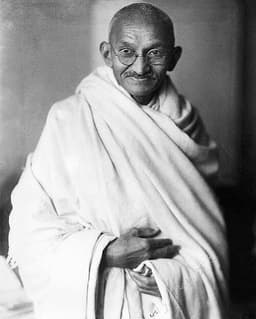
Mahatma Gandhi
Politician · Modern
68.7Total
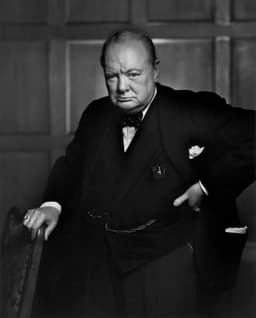
Winston Churchill
Politician · Modern
71.8Total
Basic Information
Born
1869
1874
Died
1948
1965
Era
Modern
Modern
Nationality
India
United Kingdom
Occupation
Politician
Politician
Civilization
Indian
Western
Score Comparison
Military (10%)
42.3
55.0
Political (20%)
65.0
78.0
Influence (20%)
80.0
75.0
Legacy (20%)
75.0
68.0
Leadership (15%)
70.0
82.0
Strategy (15%)
55.0
65.0
TOTAL
68.7
71.8
Mahatma Gandhi — Complete Timeline
1917 AD
Champaran SatyagrahaPolitical Action
Gandhi led his first nonviolent protest in India, supporting indigo farmers in Champaran, Bihar, against exploitative British planters. He organized a campaign of civil disobedience and negotiations, resulting in the abolition of the oppressive tinkathia system.
Civil disobedienceFarmers' rightsBritish Raj
Impact: nationalprogressive
1919 AD
Jallianwala Bagh massacre aftermathPolitical Action◆ Major
After British troops killed hundreds of unarmed civilians in Amritsar, Gandhi organized a nationwide hartal (strike) and nonviolent protests. He returned his medals and launched the Rowlatt Satyagraha, marking a shift from cooperation to non-cooperation with British rule.
ProtestBritish RajMassacre
Impact: nationaltragic
1930 AD
Salt MarchPolitical Action
Gandhi led a 240-mile march from Sabarmati to Dandi, Gujarat, to defy the British salt monopoly. Thousands joined him, making salt from seawater. This act of civil disobedience sparked mass protests across India and drew global attention to the independence movement.
Civil disobedienceSalt taxIndependence movement
Impact: globalprogressive
1942 AD
Quit India Movement launchPolitical Action◆ Major
Gandhi launched the Quit India Movement, calling for an end to British rule with the slogan 'Do or Die'. The British arrested him and other leaders, but the movement led to widespread protests and repression, accelerating the end of colonial rule.
IndependenceCivil disobedienceBritish Raj
Impact: nationalprogressive
1948 AD
AssassinationPolitical Action
Gandhi was shot and killed by Nathuram Godse, a Hindu nationalist, during a prayer meeting in New Delhi. His assassination shocked the world and led to a wave of grief and violence, but also reinforced his legacy as a martyr for nonviolence.
AssassinationMartyrdomNonviolence
Impact: globaltragic
Winston Churchill — Complete Timeline
1940 AD
Appointed Prime Minister of the United KingdomPolitical Action◆ Major
On May 10, 1940, Winston Churchill became Prime Minister of the United Kingdom, replacing Neville Chamberlain. His appointment came as Nazi Germany invaded France and the Low Countries, and Churchill formed a coalition government to lead Britain through World War II.
World War IILeadershipCoalition Government
Impact: globalconstructive
Delivered the 'We Shall Fight on the Beaches' SpeechOther◆ Major
On June 4, 1940, Churchill delivered a speech to the House of Commons following the evacuation of British forces from Dunkirk. He declared that Britain would fight on the beaches, landing grounds, fields, streets, and hills, and never surrender, rallying British morale during the darkest days of World War II.
World War IIOratoryMorale
Impact: nationalconstructive
1941 AD
Signed the Atlantic CharterOther◆ Major
On August 14, 1941, Churchill and U.S. President Franklin D. Roosevelt signed the Atlantic Charter aboard HMS Prince of Wales. This joint declaration outlined post-war goals including self-determination, disarmament, and free trade, and became a foundational document for the Allied war aims and the United Nations.
World War IIAllied CooperationPost-war Planning
Impact: globalconstructive
1945 AD
Attended the Yalta ConferenceOther◆ Major
In February 1945, Churchill attended the Yalta Conference with Roosevelt and Stalin to discuss the post-war reorganization of Europe. The conference agreed on the division of Germany, the establishment of the United Nations, and the fate of Eastern Europe, though Churchill later expressed regret over concessions to Stalin.
World War IIPost-war SettlementBig Three
Impact: global
1946 AD
Delivered the 'Iron Curtain' SpeechOther◆ Major
On March 5, 1946, Churchill delivered a speech at Westminster College in Fulton, Missouri, where he stated that an 'iron curtain' had descended across Europe from Stettin to Trieste. This speech is widely regarded as marking the beginning of the Cold War, as it highlighted the division between Soviet-controlled Eastern Europe and the West.
Cold WarSoviet UnionDivision of Europe
Impact: globaldestructive
1953 AD
Awarded the Nobel Prize in LiteratureOther◆ Major
In 1953, Churchill was awarded the Nobel Prize in Literature for his historical writings, particularly 'The Second World War' and 'A History of the English-Speaking Peoples'. The Nobel committee cited his mastery of historical and biographical description as well as his brilliant oratory in defending human values.
LiteratureNobel PrizeHistorical Writing
Impact: nationalconstructive
Expert Analysis
Winston Churchill vs Mahatma Gandhi
# The Lion and the Saint: Churchill, Gandhi, and the Two Faces of Leadership
In the autumn of 1931, Winston Churchill stood before a microphone in London and delivered one of the most infamous descriptions of a man he had never met. Mahatma Gandhi, Churchill declared, was a “seditious Middle Temple lawyer” who should be “kept in prison” for threatening the British Empire. Across the sea, in a Bombay jail cell, Gandhi likely heard of the remark and smiled. These two men, born just five years apart in the twilight of the Victorian era, would come to embody the deepest divide of the twentieth century: the clash between imperial power and moral resistance, between the sword and the spinning wheel. How did two figures from such similar historical moments arrive at such radically different destinies?
Origins
Winston Churchill entered the world in 1874 at Blenheim Palace, the grand estate built for his ancestor the Duke of Marlborough. His father, Lord Randolph Churchill, was a brilliant but erratic Conservative politician; his mother, Jennie Jerome, was an American socialite. Churchill grew up in the shadow of greatness and neglect—adored from a distance, starved of affection. He failed at school, stammered through speeches, and found his refuge in the British Army, serving in Cuba, India, and South Africa. The empire was his birthright, and he never doubted its righteousness.
Mohandas Gandhi was born in 1869 in Porbandar, a coastal town in Gujarat, into a family of merchants and administrators. His father was a chief minister of a small princely state; his mother was a devout Hindu who instilled in him a deep sense of non-violence. Shy and mediocre in school, Gandhi sailed to London at nineteen to study law, where he tried desperately to become an English gentleman—buying suits, taking dancing lessons, and eating meat to overcome his vegetarian upbringing. He failed at this too. The humiliation of being an Indian in an empire that respected only power would become the wound that shaped his life.
Rise to Power
Churchill’s path was conventional and aggressive. He rode in the last great cavalry charge of the British Army at Omdurman in 1898, escaped from a Boer prison camp in 1899, and entered Parliament at twenty-five. He switched political parties twice, held every major cabinet post, and was, by 1940, a man whose career seemed finished—a relic of a bygone age, mocked as a warmonger. Then came the fall of France, and Churchill’s moment. He was sixty-five when he became Prime Minister, and his entire life had been preparation for this single hour.
Gandhi’s rise was slower and stranger. He spent twenty years in South Africa, where he was thrown off a train for refusing to leave a first-class compartment, beaten for walking in a whites-only area, and slowly forged a philosophy of resistance that he called *Satyagraha*—truth-force. He returned to India in 1915, a stranger to his own country, and spent a year traveling by train, listening. In 1917, he led his first protest at Champaran, supporting indigo farmers against British landlords. It was a small affair, but it taught him that the peasant could be the greatest weapon of all.
Leadership & Governance
Churchill led through words. In the dark summer of 1940, when Britain stood alone against Nazi Germany, his speeches—“We shall fight on the beaches,” “Their finest hour”—were not just rhetoric. They were acts of creation, summoning a nation’s will from thin air. He micromanaged the war, pestered his generals, and made terrible mistakes—Gallipoli in 1915, the disastrous Norway campaign in 1940, the Bengal famine of 1943. But he understood something deeper: that leadership is the art of making people believe they are stronger than they are. His political score of 82.0 and leadership score of 85.0 reflect this mastery, even as his military score of 55.0 acknowledges his strategic flaws.
Gandhi led through silence. He did not give speeches to rally crowds; he gave speeches to teach them. When he launched the Salt March in 1930, walking 240 miles to the sea to make salt in defiance of British law, he turned a mundane act into a national drama. Thousands joined him, and the British arrested them by the tens of thousands. Gandhi’s genius was to make the empire’s violence look clumsy and cruel. He never held political office, never commanded an army, and yet his influence score of 85.0 rivals Churchill’s. His strategy was not to defeat the enemy but to convert him.
Triumph & Tragedy
Churchill’s greatest triumph was also his greatest tragedy: he won the war and lost the peace. In July 1945, with victory in Europe secured, the British people voted him out of office. He had led them through hell, but they wanted a new world, not a return to the old one. His legacy score of 75.0 reflects this ambiguity—the savior of democracy who was also the defender of empire.
Gandhi’s triumph was Indian independence in 1947, but it came with the horror of partition. A million people died in the communal violence that accompanied the birth of India and Pakistan. Gandhi had always believed that Hindus and Muslims were one nation; the slaughter broke him. He spent his last months walking through riot-torn villages, fasting until the killing stopped. On January 30, 1948, he was shot by a Hindu nationalist who believed Gandhi had betrayed his people. His assassination was not a random act of violence—it was the logical conclusion of a life that had challenged every assumption about power.
Character & Destiny
Churchill was a man of appetites—brandy, cigars, war, words. He was arrogant, sentimental, and often cruel. He believed in the superiority of the British race and the necessity of empire. Yet he also understood that some things are worth fighting for. His character was a contradiction: a democrat who loved aristocracy, a romantic who waged a modern war. He died in 1965, full of years and honors, mourned by a nation that had already begun to forget his flaws.
Gandhi was a man of renunciation—celibacy, poverty, silence. He was stubborn, manipulative, and sometimes impossible. He demanded that his followers live as he did, spinning their own cloth and emptying their own latrines. Yet he understood something Churchill never could: that power does not always come from guns. His character was also a contradiction: a lawyer who despised courts, a politician who hated politics, a saint who was also a strategist. He died poor, owning nothing but a pair of sandals and a watch.
Legacy
Churchill’s legacy is the survival of liberal democracy in Europe. Without his refusal to negotiate with Hitler, the world would be unrecognizable. But his legacy is also the Bengal famine, the bombing of Dresden, and the quiet assumption that some lives matter more than others. Today, statues of Churchill are debated, his words quoted, his memory contested. He is no longer a hero without blemish—and that makes him more interesting.
Gandhi’s legacy is the idea that nonviolence is a form of power, not a form of weakness. Martin Luther King Jr., Nelson Mandela, and Aung San Suu Kyi all walked in his shadow. But his legacy is also the failure of that vision—the violence of partition, the persistence of caste, the rise of Hindu nationalism that killed him. Today, Gandhi is revered and ignored, his image on currency, his teachings forgotten. He is a saint who could not save his own country from itself.
Conclusion
Churchill and Gandhi never met, but they understood each other perfectly. Churchill saw in Gandhi a threat to everything he loved—the empire, the order, the certainty of British rule. Gandhi saw in Churchill a man who would rather destroy the world than admit it was changing. Both were right. They represent the eternal choice of leadership: between the lion who defends the fortress and the saint who walks through its gates unarmed. The world needs both, and the world is still deciding which one is braver.
Rankings
🥇
Winston ChurchillLeader
Mil: 55.0Pol: 78.0Inf: 75.0
71.8
🥈
Mahatma Gandhi
Mil: 42.3Pol: 65.0Inf: 80.0
68.7
+3.1 behind
How This Comparison Works
Algorithm
Each figure is scored on 6 dimensions (0—100 scale) based on structured historical data: Military (10%), Political (20%), Influence (20%), Legacy (20%), Leadership (15%), Strategy (15%). The weighted total produces the final ranking.
Data Sources
Scores are computed from structured sub-indicators in the database. Scale factors adjust for era (Ancient ×0.85, Modern ×1.0) and civilization size (Eastern ×1.05, Other ×0.80) to account for differences in population and military scale.
Maximum 3 Figures
Comparisons are limited to 2—3 figures to ensure readability and statistical meaningfulness.
Error Margins
±5 points per dimension — Sub-scores are derived from historical records with inherent uncertainty. Two figures within 5 points on a dimension should be considered roughly equivalent in that area.
Total Score Accuracy
±3 points overall — The weighted combination of 6 dimensions produces a total score with approximately ±3 points of uncertainty. Differences of less than 3 points are not statistically significant— the figures are effectively tied.
Known Limitations
- Historical records are incomplete and uneven across civilizations
- Figures from oral-tradition societies may be underrepresented
- Occupation labels can misclassify multi-role figures
- Scores measure capability and impact, not moral character
- Quantitative scoring is a comparison tool, not absolute truth
Capability Radar
Military (10%) — Battles & Warfare
Battles
45
55
Win Rate
46
60
Expansion
51
40
Political (20%) — Governance & Reform
Reform
85
70
Diplomacy
80
85
Economy
40
60
Influence (20%) — Cultural & Global Reach
Cultural
85
85
Global
90
85
Legacy (20%) — Historical Impact
Historical
90
90
Longevity
85
80
Leadership (15%) — Power & Stability
Tenure
60
75
Stability
55
70
Strategy (15%) — Tactics & Innovation
Strategy
52
85
Tactics
56
65
Reform
55
70
Similar Comparisons
Comments & Discussion
No comments yet. Be the first to share your thoughts!