Loading...
Mahatma Gandhi vs Otto von Bismarck
Mahatma Gandhi leads by 2.9 pts · 2 figures compared
…
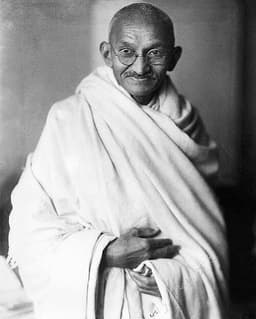
Mahatma Gandhi
Politician · Modern
68.7Total
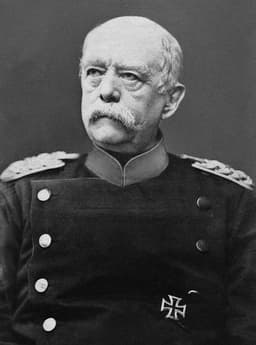
Otto von Bismarck
Politician · Modern
65.8Total
Basic Information
Born
1869
1815
Died
1948
1898
Era
Modern
Modern
Nationality
India
Germany
Occupation
Politician
Politician
Civilization
Indian
Western
Score Comparison
Military (10%)
42.3
55.0
Political (20%)
65.0
85.0
Influence (20%)
80.0
82.0
Legacy (20%)
75.0
40.0
Leadership (15%)
70.0
80.0
Strategy (15%)
55.0
50.0
TOTAL
68.7
65.8
Mahatma Gandhi — Complete Timeline
1917 AD
Champaran SatyagrahaPolitical Action
Gandhi led his first nonviolent protest in India, supporting indigo farmers in Champaran, Bihar, against exploitative British planters. He organized a campaign of civil disobedience and negotiations, resulting in the abolition of the oppressive tinkathia system.
Civil disobedienceFarmers' rightsBritish Raj
Impact: nationalprogressive
1919 AD
Jallianwala Bagh massacre aftermathPolitical Action◆ Major
After British troops killed hundreds of unarmed civilians in Amritsar, Gandhi organized a nationwide hartal (strike) and nonviolent protests. He returned his medals and launched the Rowlatt Satyagraha, marking a shift from cooperation to non-cooperation with British rule.
ProtestBritish RajMassacre
Impact: nationaltragic
1930 AD
Salt MarchPolitical Action
Gandhi led a 240-mile march from Sabarmati to Dandi, Gujarat, to defy the British salt monopoly. Thousands joined him, making salt from seawater. This act of civil disobedience sparked mass protests across India and drew global attention to the independence movement.
Civil disobedienceSalt taxIndependence movement
Impact: globalprogressive
1942 AD
Quit India Movement launchPolitical Action◆ Major
Gandhi launched the Quit India Movement, calling for an end to British rule with the slogan 'Do or Die'. The British arrested him and other leaders, but the movement led to widespread protests and repression, accelerating the end of colonial rule.
IndependenceCivil disobedienceBritish Raj
Impact: nationalprogressive
1948 AD
AssassinationPolitical Action
Gandhi was shot and killed by Nathuram Godse, a Hindu nationalist, during a prayer meeting in New Delhi. His assassination shocked the world and led to a wave of grief and violence, but also reinforced his legacy as a martyr for nonviolence.
AssassinationMartyrdomNonviolence
Impact: globaltragic
Otto von Bismarck — Complete Timeline
1870 AD
Franco-Prussian WarWar
Bismarck provoked France into declaring war by editing the Ems Dispatch to appear insulting. The resulting conflict saw Prussia and its allies decisively defeat France, leading to the fall of Napoleon III, the capture of Paris, and the annexation of Alsace-Lorraine.
WarProvocationAnnexation
Impact: globaldestructive
1871 AD
Unification of Germany ProclaimedPolitical Action
Following the Franco-Prussian War, Bismarck orchestrated the proclamation of the German Empire in the Hall of Mirrors at Versailles. King Wilhelm I of Prussia was declared German Emperor, uniting the German states under Prussian leadership and establishing the Second Reich.
UnificationGerman EmpireNationalism
Impact: globalconstructive
1878 AD
Enactment of the Anti-Socialist LawsPolitical Action◆ Major
After two assassination attempts on Kaiser Wilhelm I, Bismarck pushed through laws banning socialist organizations, publications, and meetings. The laws remained in force until 1890, suppressing the Social Democratic Party while Bismarck simultaneously introduced welfare reforms to undercut its appeal.
RepressionSocialismWelfare State
Impact: nationaldestructive
Congress of BerlinPolitical Action◆ Major
Bismarck hosted the Congress of Berlin to revise the Treaty of San Stefano and resolve the Eastern Crisis. He acted as 'honest broker,' reducing Russian gains, granting independence to Romania, Serbia, and Montenegro, and placing Bosnia-Herzegovina under Austro-Hungarian administration.
DiplomacyBalkansBalance of Power
Impact: global
1883 AD
Establishment of the Welfare StateReform◆ Major
Bismarck introduced the Health Insurance Bill (1883), Accident Insurance Bill (1884), and Old Age and Disability Insurance Bill (1889). These laws created the first modern welfare state, providing workers with social security and aiming to reduce support for socialist movements.
Social ReformWelfareInsurance
Impact: globalprogressive
1890 AD
Dismissal as ChancellorPolitical Action◆ Major
Emperor Wilhelm II forced Bismarck to resign due to policy disagreements, particularly over anti-socialist laws and foreign policy. Bismarck's departure marked the end of an era, leading to a more aggressive German foreign policy and the eventual unraveling of his alliance system.
ResignationWilhelm IIPolicy Shift
Impact: global
Expert Analysis
Otto von Bismarck vs Mahatma Gandhi
# The Iron Chancellor and the Saint of Sabarmati
On a January morning in 1871, Otto von Bismarck stood in the Hall of Mirrors at Versailles, watching as German princes proclaimed Wilhelm I Emperor of a unified Germany. The Franco-Prussian War had ended in triumph, and Bismarck had achieved what centuries of German history could not. Half a century later, on a March morning in 1930, a frail man in a loincloth began walking from Sabarmati to the sea. Mahatma Gandhi’s Salt March would not conquer an empire through armies—it would shame one into retreat. Two men, two worlds, two visions of power. One built a nation through blood and iron; the other freed one through truth and suffering. What drove such different paths, and what do their contrasts reveal about the nature of historical greatness?
Origins
Bismarck was born in 1815 into the Prussian Junker aristocracy, a class that lived by the sword and the land. His father was a country squire; his mother came from a family of scholars and civil servants. Young Otto was a restless, brilliant student who drank and dueled his way through university, but beneath the bluster lay a calculating mind. The revolutions of 1848 terrified his class, and Bismarck emerged as a reactionary who believed that only strong monarchy and military power could hold back chaos.
Gandhi was born in 1869 in coastal Gujarat, into a merchant caste family. His father was a chief minister in a small princely state; his mother was deeply religious, fasting and praying with a devotion that marked her son for life. Young Mohandas was a shy, mediocre student who once stole gold from his brother and later wrote of the shame that haunted him. He sailed to London to study law, then to South Africa to practice it—where a train conductor threw him off a first-class carriage because of his skin color. That moment on a cold railway platform lit a fire that would never go out.
Rise to Power
Bismarck’s ascent was a masterclass in opportunism. He served as Prussia’s ambassador to Russia and France, studying the chessboard of European diplomacy. In 1862, when King Wilhelm I faced a budget crisis over military reform, Bismarck was summoned as Minister President. He famously told the Prussian parliament that “the great questions of the day will not be decided by speeches and majority decisions—but by blood and iron.” He then governed without a budget, in open defiance of the constitution, betting that success would silence his critics.
Gandhi’s rise was slower, more inward. In South Africa, he organized the Indian community against discriminatory laws, developing the philosophy of *Satyagraha*—truth-force, nonviolent resistance. He returned to India in 1915, a hero to some, a strange ascetic to others. His first major campaign came in 1917 at Champaran, where he led indigo farmers against British planters. The British tried to deport him; he refused to leave. Thousands flocked to his cause. He had found his weapon: not the gun, but the moral witness.
Leadership & Governance
Bismarck governed through manipulation, divide-and-rule, and the calculated use of force. He fought three wars—against Denmark (1864), Austria (1866), and France (1870)—each carefully engineered to isolate the enemy and unify German sentiment behind Prussia. After unification, he became the “honest broker” of Europe, hosting the Congress of Berlin in 1878 to prevent a general war. At home, he was both repressive and progressive: he crushed the Catholic Church’s political influence in the *Kulturkampf*, banned socialist organizations in 1878, yet simultaneously created the world’s first welfare state—health insurance in 1883, accident insurance in 1884, old-age pensions in 1889. He was, in his own words, “a conservative revolutionary.”
Gandhi governed through moral suasion and mass mobilization. He had no army, no treasury, no bureaucracy. His power came from the willingness of millions to suffer without striking back. After the 1919 Jallianwala Bagh massacre, where British troops killed hundreds of unarmed civilians, Gandhi organized nationwide strikes and boycotts. The 1930 Salt March was a stroke of political genius: by defying the salt tax, he turned a mundane necessity into a symbol of imperial injustice. He negotiated with the British as an equal, fasting when talks stalled, walking when they failed.
Triumph & Tragedy
Bismarck’s greatest triumph was the unification of Germany in 1871, a feat that reshaped Europe. His greatest tragedy was his dismissal in 1890 by the young Emperor Wilhelm II, who wanted to rule personally. Bismarck left office in bitterness, spending his final years writing memoirs that blamed everyone but himself. He died in 1898, having seen his carefully constructed system of alliances begin to unravel.
Gandhi’s triumph was India’s independence in 1947, achieved through nonviolence. His tragedy was the partition of India into Hindu-majority India and Muslim-majority Pakistan, followed by communal bloodshed that killed hundreds of thousands. Gandhi fasted to stop the violence, but he could not prevent the division. In January 1948, he was shot dead by a Hindu nationalist who believed Gandhi had betrayed the nation.
Character & Destiny
Bismarck was cynical, pragmatic, and ruthless. He once said, “Politics is the art of the possible.” He believed that human nature was base and that only force and cunning could maintain order. His personality shaped his strategy: he never trusted allies, always kept a path of retreat, and struck only when victory was certain.
Gandhi was idealistic, stubborn, and self-sacrificing. He said, “Be the change you wish to see in the world.” He believed that human nature was capable of transformation, that suffering could awaken conscience, and that truth was stronger than armies. His personality shaped his strategy: he never compromised on nonviolence, even when it seemed futile, and he led by example, living in poverty while millions followed.
Legacy
Bismarck left a unified Germany, a welfare state, and a tradition of realpolitik that would be imitated and distorted by later generations. His creation—a powerful, militaristic German state—survived him but also contributed to the catastrophes of the twentieth century. He is remembered as the Iron Chancellor, a man who made history through will and calculation.
Gandhi left an independent India, a philosophy of nonviolence, and a model for civil rights movements from the American South to South Africa. His legacy is moral as much as political: he proved that the powerless could defeat the powerful through courage and discipline. He is remembered as the Mahatma—the Great Soul—a man who made history through suffering and love.
Conclusion
Bismarck and Gandhi represent two poles of political genius. One built a nation by forging steel; the other freed a nation by spinning cloth. One believed in the primacy of power; the other in the power of truth. Yet both understood that history is not made by good intentions alone—it requires strategy, timing, and the willingness to sacrifice. Their lives remind us that greatness takes many forms, and that the same century that produced the Iron Chancellor also produced the Saint of Sabarmati. The question they leave us is not which path is better, but which path our own times demand.
Rankings
🥇
Mahatma GandhiLeader
Mil: 42.3Pol: 65.0Inf: 80.0
68.7
🥈
Otto von Bismarck
Mil: 55.0Pol: 85.0Inf: 82.0
65.8
+2.9 behind
How This Comparison Works
Algorithm
Each figure is scored on 6 dimensions (0—100 scale) based on structured historical data: Military (10%), Political (20%), Influence (20%), Legacy (20%), Leadership (15%), Strategy (15%). The weighted total produces the final ranking.
Data Sources
Scores are computed from structured sub-indicators in the database. Scale factors adjust for era (Ancient ×0.85, Modern ×1.0) and civilization size (Eastern ×1.05, Other ×0.80) to account for differences in population and military scale.
Maximum 3 Figures
Comparisons are limited to 2—3 figures to ensure readability and statistical meaningfulness.
Error Margins
±5 points per dimension — Sub-scores are derived from historical records with inherent uncertainty. Two figures within 5 points on a dimension should be considered roughly equivalent in that area.
Total Score Accuracy
±3 points overall — The weighted combination of 6 dimensions produces a total score with approximately ±3 points of uncertainty. Differences of less than 3 points are not statistically significant— the figures are effectively tied.
Known Limitations
- Historical records are incomplete and uneven across civilizations
- Figures from oral-tradition societies may be underrepresented
- Occupation labels can misclassify multi-role figures
- Scores measure capability and impact, not moral character
- Quantitative scoring is a comparison tool, not absolute truth
Capability Radar
Military (10%) — Battles & Warfare
Battles
45
60
Win Rate
46
70
Expansion
51
80
Political (20%) — Governance & Reform
Reform
85
90
Diplomacy
80
95
Economy
40
80
Influence (20%) — Cultural & Global Reach
Cultural
85
65
Global
90
75
Legacy (20%) — Historical Impact
Historical
90
85
Longevity
85
70
Leadership (15%) — Power & Stability
Tenure
60
85
Stability
55
70
Strategy (15%) — Tactics & Innovation
Strategy
52
85
Tactics
56
55
Reform
55
75
Similar Comparisons
Comments & Discussion
JunkerSkeptic6/16/2026
Bismarck didn't "unify" Germany—he conquered it for Prussia. The 1871 constitution left Bavaria, Saxony, and Württemberg with their own armies, railways, and postal systems. That's not unification; that's a Prussian takeover with fancy wrapping. My ancestors in the Bavarian Landtag fought his every move. Gandhi at least understood that real change comes from the ground up, not from blood and champagne in a French palace. Hero-worship of Bismarck ignores the 500,000 French and German dead he need