Loading...
Lucius Junius Brutus vs Zhao Kuangyin
Lucius Junius Brutus leads by 1.2 pts · 2 figures compared
…
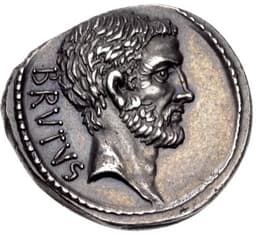
Lucius Junius Brutus
Politician · Ancient
72.7Total
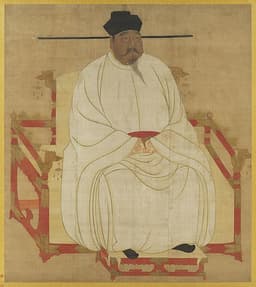
Zhao Kuangyin
Emperor · Medieval
71.5Total
Basic Information
Born
-540
927
Died
-509
976
Era
Ancient
Medieval
Nationality
Roman Republic
China
Occupation
Politician
Emperor
Civilization
Western
Eastern
Score Comparison
Military (10%)
45.0
78.0
Political (20%)
72.0
84.0
Influence (20%)
75.0
68.0
Legacy (20%)
90.0
65.0
Leadership (15%)
71.0
74.0
Strategy (15%)
54.8
68.0
TOTAL
72.7
71.5
Lucius Junius Brutus — Complete Timeline
509 BC
Battle of Silva ArsiaWar◆ Major
Brutus led the Roman army against the forces of Tarquinius Superbus and his Etruscan allies at Silva Arsia. During the battle, Brutus and Arruns Tarquinius, the king's son, killed each other in single combat, but the Romans ultimately won the battle, securing the Republic's survival.
BattleSingle CombatFounding Myth
Impact: nationaltragic
Expulsion of the TarquinsPolitical Action
Lucius Junius Brutus led a revolt against the Tarquin monarchy after the rape of Lucretia by Sextus Tarquinius. He organized the Senate and the people to expel the royal family, ending the Roman Kingdom and establishing the Roman Republic with himself as one of the first consuls.
RevolutionFounding of RepublicOverthrow of Monarchy
Impact: globalprogressive
Execution of His SonsPolitical Action◆ Major
Brutus discovered that his own sons, Titus and Tiberius, had conspired to restore the Tarquins. As consul, he ordered their arrest, trial, and execution by beheading in the Forum, demonstrating his unwavering commitment to the Republic over family loyalty.
ExecutionConspiracyRepublican Virtue
Impact: nationaltragic
Oath of BrutusPolitical Action◆ Major
After the expulsion of the Tarquins, Brutus made the Roman people swear an oath never to allow a king to rule Rome again. This oath became a foundational principle of the Republic, reinforcing the commitment to liberty and opposition to tyranny.
OathRepublican IdeologyAnti-Monarchy
Impact: nationalprogressive
Zhao Kuangyin — Complete Timeline
960 AD
Founded Song dynastyPolitical Action
Zhao Kuangyin, a general of Later Zhou, was proclaimed emperor by his troops at Chenqiao. He established the Song dynasty, ending the Five Dynasties period and beginning a new era of Chinese history.
Song dynastyFoundingChenqiao
Impact: globalconstructive
961 AD
Removed military power from generalsPolitical Action◆ Major
Zhao Kuangyin invited senior generals to a banquet and persuaded them to retire peacefully. This 'removal of military power over wine' prevented military coups and centralized control.
Song dynastyMilitary reformCentralization
Impact: nationalconstructive
963 AD
Unified southern ChinaWar◆ Major
Zhao Kuangyin launched campaigns to conquer the southern kingdoms, including Jingnan, Later Shu, and Southern Tang. By his death, most of China was reunified under Song rule.
Song unificationConquestSouthern kingdoms
Impact: national
Expert Analysis
Lucius Junius Brutus vs Zhao Kuangyin
### The Emperor Who Drank Wine and the Consul Who Spilled Blood
On a moonlit night in 961, the most powerful general in China invited his old comrades to a banquet. As cups clinked and laughter filled the hall, Zhao Kuangyin, the new emperor of the Song dynasty, suddenly grew somber. He spoke of sleepless nights, of the fear that one day his friends might be forced by their own ambitious troops to don the yellow robe he now wore. The generals fell silent. By dawn, they had accepted rich estates and comfortable retirements, and the sword of rebellion had been sheathed without a single drop of blood.
Half a world away and fourteen centuries earlier, another founder faced a different kind of banquet. Lucius Junius Brutus, first consul of the Roman Republic, discovered that his own sons had conspired to restore the hated monarchy. He did not invite them for wine. He ordered them stripped, beaten with rods, and beheaded before the assembled Roman people. Their heads were fixed on poles in the Forum.
Two men, both founders of political orders that would last for centuries. One used persuasion; the other, terror. Why? The answer lies not in morality but in the brutal logic of their different worlds.
### Origins
Zhao Kuangyin was born in 927, a child of the fractured chaos that followed the collapse of the Tang dynasty. China had splintered into a dozen warring states, and warlords rose and fell like waves. Zhao’s father was a military officer, and the son grew up riding horses, drawing bows, and watching the endless betrayals of the Five Dynasties and Ten Kingdoms period. He learned early that loyalty was a fragile thing, that today’s general could be tomorrow’s corpse.
Lucius Junius Brutus was born around 540 BCE, into a Rome ruled by the Etruscan Tarquin dynasty. He was the nephew of the king, Tarquinius Superbus, a tyrant who murdered his rivals. Brutus survived by playing the fool—the word “brutus” means “dullard” in Latin. He feigned idiocy to avoid the king’s suspicion, biding his time in the shadows of a world where power was personal, bloody, and absolute.
Zhao was forged in the fires of anarchy; Brutus was shaped in the ice of tyranny.
### Rise to Power
Zhao rose through merit. He served as a general under the Later Zhou dynasty, earning a reputation for discipline and fairness. When the young emperor died in 960, leaving a child on the throne, Zhao’s army mutinied at Chenqiao, draping a yellow robe over his shoulders. He accepted—reluctantly, as the story goes—and rode back to the capital to claim power. It was a coup, but a bloodless one. He spared the previous imperial family and set about consolidating his rule.
Brutus rose through deception. When the king’s son raped the noblewoman Lucretia, Brutus threw off his mask. He pulled the dagger from her body, swore a terrible oath, and roused the Roman people. He did not seize power by military force; he led a political revolution. The Tarquins were expelled, and a republic was born. Brutus was elected one of the first two consuls.
Zhao’s path was that of a general who became emperor. Brutus’s was that of a conspirator who became a statesman.
### Leadership & Governance
Zhao Kuangyin’s genius was his ability to disarm his enemies without destroying them. The famous “Removal of Military Power Over Wine” in 961 was a masterstroke of political wisdom. He did not execute his former comrades; he bought them out. He centralized the army, rotated commanders, and created a bureaucracy that valued civilian scholars over soldiers. His campaigns to unify southern China were methodical, not reckless. He conquered Jingnan, Later Shu, and Southern Tang not through overwhelming force but through a combination of military pressure and diplomatic persuasion.
Brutus’s governance was built on iron principle. As consul, he shared power with a colleague, Lucius Tarquinius Collatinus, and insisted on term limits. He established the Senate as the guiding council and made the people swear an oath never to tolerate a king again. But his leadership had a terrifying edge. When his own sons conspired with the exiled Tarquins, Brutus did not hesitate. He presided over their execution, watching as the axes fell. It was a lesson in absolute devotion to the state.
Zhao ruled by consensus and generosity. Brutus ruled by example and terror.
### Triumph & Tragedy
Zhao’s greatest triumph was the unification of China, a feat that ended decades of war. By the time of his death in 976, the Song dynasty controlled most of the heartland. His tragedy was that he could not complete the work—the northern territories of the Sixteen Prefectures remained in the hands of the Khitan Liao dynasty, a wound that would fester for centuries.
Brutus’s greatest moment was the expulsion of the Tarquins and the founding of the Republic. His tragedy was immediate and personal. At the Battle of Silva Arsia in 509 BCE, he fought the king’s Etruscan allies in single combat, killing the enemy commander. But he was also mortally wounded. He died on the battlefield, and Roman matrons mourned him for a year. His triumph and his tragedy were the same: he gave everything, including his life, to the Republic.
### Character & Destiny
Zhao Kuangyin was pragmatic, patient, and generous. He understood that power in a fractured China came from legitimacy, not fear. He once said, “The empire is not the private property of one family.” He treated defeated rulers with respect and promoted scholars over soldiers. His character shaped a dynasty that would prize culture over conquest, poetry over war.
Brutus was rigid, fanatical, and sacrificial. He believed that liberty was worth any price, even the blood of his own sons. His character shaped a Republic that would endure for nearly five centuries, but it also planted a seed of ruthless ideology. The Romans would remember Brutus not as a warm father but as a cold statue of virtue.
Zhao’s destiny was to build a stable empire. Brutus’s destiny was to die for an idea.
### Legacy
Zhao Kuangyin is remembered as the founder of the Song dynasty, a golden age of Chinese civilization. His decision to weaken the military and elevate the civil service gave China a period of unprecedented prosperity, art, and technology. But it also left the Song vulnerable to northern invaders, a weakness that would eventually lead to its fall. His legacy is one of peaceful unification and long-term fragility.
Lucius Junius Brutus is remembered as the father of the Roman Republic. His oath, his execution of his sons, and his death in battle became foundational myths. Every Roman who hated tyranny looked back to Brutus. But his legacy also includes a warning: a state built on absolute principle can become inhuman. Later Brutus—Marcus Junius Brutus, Caesar’s assassin—would invoke his ancestor’s name to justify another murder.
### Conclusion
Zhao Kuangyin and Lucius Junius Brutus both founded new political orders, but they faced opposite problems. Zhao inherited a world of too many ambitious generals; he solved it with wine and pensions. Brutus inherited a world of a single tyrannical king; he solved it with blood and oaths. One needed to tame power; the other needed to destroy it.
Their stories remind us that leadership is not a universal formula but a response to specific circumstances. Zhao’s gentle hand would have failed in Brutus’s Rome, where the Tarquins would have laughed at a banquet of retirement. Brutus’s iron fist would have shattered Zhao’s China, where generals would have revolted at the sight of their comrade’s severed head. History does not reward the kind leader or the cruel one. It rewards the leader who understands the moment.
And perhaps that is the deepest lesson of all: the same action that makes a man a hero in one age makes him a monster in another. Zhao Kuangyin and Lucius Junius Brutus were both founders. They were also both prisoners of their times.
Rankings
🥇
Lucius Junius BrutusLeader
Mil: 45.0Pol: 72.0Inf: 75.0
72.7
🥈
Zhao Kuangyin
Mil: 78.0Pol: 84.0Inf: 68.0
71.5
+1.2 behind
How This Comparison Works
Algorithm
Each figure is scored on 6 dimensions (0—100 scale) based on structured historical data: Military (10%), Political (20%), Influence (20%), Legacy (20%), Leadership (15%), Strategy (15%). The weighted total produces the final ranking.
Data Sources
Scores are computed from structured sub-indicators in the database. Scale factors adjust for era (Ancient ×0.85, Modern ×1.0) and civilization size (Eastern ×1.05, Other ×0.80) to account for differences in population and military scale.
Maximum 3 Figures
Comparisons are limited to 2—3 figures to ensure readability and statistical meaningfulness.
Error Margins
±5 points per dimension — Sub-scores are derived from historical records with inherent uncertainty. Two figures within 5 points on a dimension should be considered roughly equivalent in that area.
Total Score Accuracy
±3 points overall — The weighted combination of 6 dimensions produces a total score with approximately ±3 points of uncertainty. Differences of less than 3 points are not statistically significant— the figures are effectively tied.
Known Limitations
- Historical records are incomplete and uneven across civilizations
- Figures from oral-tradition societies may be underrepresented
- Occupation labels can misclassify multi-role figures
- Scores measure capability and impact, not moral character
- Quantitative scoring is a comparison tool, not absolute truth
Capability Radar
Military (10%) — Battles & Warfare
Battles
10
75
Win Rate
10
85
Expansion
10
75
Political (20%) — Governance & Reform
Reform
90
90
Diplomacy
40
85
Economy
30
80
Influence (20%) — Cultural & Global Reach
Cultural
70
70
Global
70
60
Legacy (20%) — Historical Impact
Historical
80
80
Longevity
80
75
Leadership (15%) — Power & Stability
Tenure
30
65
Stability
40
85
Strategy (15%) — Tactics & Innovation
Strategy
10
80
Tactics
10
70
Reform
20
90
Similar Comparisons
Comments & Discussion
BRUTUS_BUTCHER6/16/2026
Lucius Junius Brutus made his point in a way that brooks no debate—heads on poles in the Forum don't whisper conspiracies. Compare that to Zhao's wine-soaked retirement package: sure, it was bloodless, but it also left those generals alive, rich, and potentially plotting. Brutus understood that tolerance breeds rot in fragile republics. His sons had to die because Rome's survival demanded zero tolerance for monarchists. Zhao's "peaceful" solution just postponed the next coup. History remembers t
酒剑文帅6/16/2026
说到底还是政治资源不同。赵匡胤那帮将领都是结拜兄弟,杯酒释兵权玩的是人情牌,对吧?但布鲁图斯面对的是亲儿子,血亲叛国那就没得商量。法律上讲,罗马刚建国,元老院给的权力就是铁腕维稳,你敢动共和根基,那就得动刀子。中国这边五代十国刚结束,兵权收回就行,杀武将寒了军心谁替你防守契丹?方案不同而已,别脑补什么道德高下,都是现实逼出来的。
HISTORY_HAWKEYE6/16/2026
Let's get one thing straight: Brutus didn't kill his sons because he was some stoic paragon of virtue. He did it because he was a ruthless pragmatist. The conspirators aimed to bring back Tarquinius Superbus, and Brutus knew that mercy would be read as weakness. Within the same year, he himself went to war against his own co-consul, Collatinus, forcing him into exile. This was a man who understood that republican foundations require blood sacrifice—literally. Zhao's banquet was a masterclass in
血墨书生6/16/2026
比较这两者最致命的地方在于时代语境完全跑偏。赵匡胤的目标是维持内部稳定,五代十国谁有兵谁造反,所以他解决的是"兵权"这个变量。布鲁图斯要解决的是"制度认同",新生共和国的敌人是君主制残余,所以他必须杀死所有有王权倾向的人,包括亲生骨肉。从法家角度看,一个用势,一个用术,都用对了。但从人文角度看,布鲁图斯那套酷刑是表演,赵匡胤那套劝酒也是表演——两个都精着呢。
RADICAL_REDUX6/16/2026
Stop romanticizing Brutus. He was a political opportunist who married into the Tarquin family, then butchered his own kids to prove his "pure republican" credentials the moment the winds shifted. Classic toxic masculinity mixed with posturing. Zhao, at least, had a