Loading...
Cleisthenes vs Lucius Junius Brutus
Cleisthenes leads by 5.6 pts · 2 figures compared
…
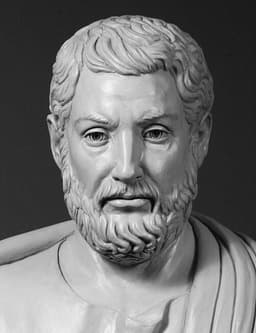
Cleisthenes
Politician · Ancient
78.3Total
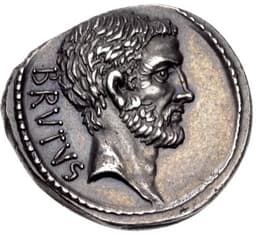
Lucius Junius Brutus
Politician · Ancient
72.7Total
Basic Information
Born
-570
-540
Died
-508
-509
Era
Ancient
Ancient
Nationality
Greece
Roman Republic
Occupation
Politician
Politician
Civilization
Western
Western
Score Comparison
Military (10%)
49.4
45.0
Political (20%)
62.7
72.0
Influence (20%)
92.0
75.0
Legacy (20%)
92.0
90.0
Leadership (15%)
72.0
71.0
Strategy (15%)
71.3
54.8
TOTAL
78.3
72.7
Cleisthenes — Complete Timeline
510 BC
Expulsion of the PeisistratidsPolitical Action◆ Major
Cleisthenes, with the support of the Alcmaeonid family and Spartan assistance, led the overthrow of the tyrant Hippias, son of Peisistratus. This ended the Peisistratid tyranny in Athens and opened the way for democratic reforms.
Tyranny OverthrownAthensSparta
Impact: nationalconstructive
508 BC
Reforms of CleisthenesReform
Cleisthenes reorganized the Athenian citizen body into ten new tribes based on demes, replacing the old four Ionian tribes. He established the Council of 500 (Boule) and introduced ostracism, creating a system of isonomia (equal rights) that is considered the foundation of Athenian democracy.
Athenian DemocracyConstitutional ReformAncient Greece
Impact: globalprogressive
507 BC
Introduction of OstracismReform◆ Major
Cleisthenes instituted ostracism, a procedure allowing Athenian citizens to vote annually to exile a prominent citizen deemed a threat to democracy for ten years. This mechanism aimed to prevent the rise of a new tyrant and stabilize the democratic system.
Athenian DemocracyPolitical MechanismExile
Impact: national
Lucius Junius Brutus — Complete Timeline
509 BC
Battle of Silva ArsiaWar◆ Major
Brutus led the Roman army against the forces of Tarquinius Superbus and his Etruscan allies at Silva Arsia. During the battle, Brutus and Arruns Tarquinius, the king's son, killed each other in single combat, but the Romans ultimately won the battle, securing the Republic's survival.
BattleSingle CombatFounding Myth
Impact: nationaltragic
Expulsion of the TarquinsPolitical Action
Lucius Junius Brutus led a revolt against the Tarquin monarchy after the rape of Lucretia by Sextus Tarquinius. He organized the Senate and the people to expel the royal family, ending the Roman Kingdom and establishing the Roman Republic with himself as one of the first consuls.
RevolutionFounding of RepublicOverthrow of Monarchy
Impact: globalprogressive
Execution of His SonsPolitical Action◆ Major
Brutus discovered that his own sons, Titus and Tiberius, had conspired to restore the Tarquins. As consul, he ordered their arrest, trial, and execution by beheading in the Forum, demonstrating his unwavering commitment to the Republic over family loyalty.
ExecutionConspiracyRepublican Virtue
Impact: nationaltragic
Oath of BrutusPolitical Action◆ Major
After the expulsion of the Tarquins, Brutus made the Roman people swear an oath never to allow a king to rule Rome again. This oath became a foundational principle of the Republic, reinforcing the commitment to liberty and opposition to tyranny.
OathRepublican IdeologyAnti-Monarchy
Impact: nationalprogressive
Expert Analysis
Cleisthenes vs Lucius Junius Brutus
# The Founders of Freedom: Cleisthenes and Brutus
On a spring morning in 509 BCE, two men stood at the precipice of history, each about to sever his world from the grip of tyranny. In Athens, Cleisthenes watched the tyrant Hippias sail into exile, the Acropolis rising behind him like a promise. In Rome, Lucius Junius Brutus gazed upon the body of Lucretia, her suicide a spark that would ignite a revolution. Both men would be remembered as founders—one of democracy, the other of a republic. Yet their paths, their characters, and their legacies diverged as sharply as the cities they shaped. Why did Cleisthenes give power to the people, while Brutus gave it to the Senate? The answer lies in the soil of their origins, the storms of their rise, and the iron of their souls.
Origins
Cleisthenes was born around 570 BCE into the Alcmaeonid family, one of Athens' most powerful and controversial clans. His lineage was aristocratic, but it was also cursed—the Alcmaeonids bore a religious stain for a massacre of suppliants generations earlier. This shadow of disgrace may have shaped Cleisthenes’ willingness to break with tradition. He grew up in an Athens ruled by tyrants, where the old aristocratic order had been shattered by Peisistratus and his sons. The city was restless, its clans feuding, its poor alienated. Cleisthenes understood that the old ways were dying.
Lucius Junius Brutus, born around 540 BCE, came from a different world. Rome was a monarchy, but a fragile one, ruled by the Etruscan Tarquins. Brutus was of noble blood, but he wore a mask of stupidity to survive—his name “Brutus” meant “dullard,” a guise he cultivated to avoid the tyrant’s suspicion. Where Cleisthenes was a reformer born into privilege, Brutus was a revolutionary forged by fear. Rome was a warrior society, hierarchical and harsh, where honor and family loyalty were absolute. Brutus knew that to overthrow a king, he would have to sacrifice everything.
Rise to Power
Cleisthenes’ rise was a masterclass in political maneuvering. In 510 BCE, he allied with Sparta—Athens’ traditional rival—to expel Hippias, the last Peisistratid tyrant. But the victory was hollow. The aristocratic faction led by Isagoras seized power, and Cleisthenes found himself outmaneuvered. Rather than fight, he turned to the people. He proposed a radical vision: reorganize Athenian society so that no clan could dominate. This gamble won him popular support, and when Isagoras called in Spartan troops to crush him, the Athenian demos rose up. Cleisthenes returned in triumph.
Brutus’s rise was swifter and bloodier. In 509 BCE, the rape of Lucretia by the king’s son Sextus Tarquinius ignited a fury that Brutus channeled into revolution. He seized the moment, rallying the Roman people, and personally led the expulsion of the Tarquins. There was no negotiation, no reform—only rupture. Brutus became one of the first consuls of the new Republic, but his power was built on a single, terrible act of defiance.
Leadership & Governance
Here the two men diverged most profoundly. Cleisthenes was a political architect. In 508 BCE, he reorganized Athens into ten tribes based on demes—local villages—breaking the power of the old aristocratic clans. He created a Council of Five Hundred, chosen by lot, to govern daily affairs, and expanded the Assembly to include all citizens. In 507 BCE, he introduced ostracism, a peaceful mechanism to exile dangerous leaders without bloodshed. Cleisthenes did not seek personal power; he built systems that distributed it. His genius was to make democracy self-sustaining.
Brutus, by contrast, was a military and moral enforcer. As consul, his priority was survival. The deposed Tarquins rallied Etruscan allies, and at the Battle of Silva Arsia in 509 BCE, Brutus led Rome’s army to victory—but died in combat, pierced by enemy spears. Before that, he had faced a greater horror: his own sons, Titus and Tiberius, conspired to restore the monarchy. Brutus ordered their execution, watching stone-faced as they were beaten to death. He made the Roman people swear an oath never to tolerate a king again. Where Cleisthenes built institutions, Brutus forged a creed.
Triumph & Tragedy
Cleisthenes’ triumph was the creation of Athenian democracy, a system that would inspire millennia. His tragedy was personal: he faded from history after his reforms, possibly ostracized himself, his fate unknown. He gave his city freedom but disappeared into its machinery.
Brutus’s triumph was the foundation of the Roman Republic, which would endure for nearly five centuries. His tragedy was absolute: to save his country, he destroyed his family. The image of Brutus watching his sons die haunted Roman memory. Cicero called him “a man of incredible virtue,” yet even admirers shuddered. Brutus became a symbol of duty so severe it consumed love itself.
Character & Destiny
Cleisthenes was a pragmatist, a politician who believed in compromise and structure. He understood that power corrupts, so he dispersed it. His personality was cool, calculating, and visionary—he saw that the future belonged to the many, not the few. His destiny was to be the father of democracy, yet he remains a shadowy figure, known more for his reforms than his soul.
Brutus was a zealot, a man of iron principle and terrible resolve. He played the fool to survive, then revealed himself as a liberator willing to kill his own blood. His personality was forged in the fire of oppression: he hated tyranny more than he loved his sons. His destiny was to be the first consul, the martyr of liberty, the model of Roman virtue. But that virtue came at a cost—Brutus’s Rome would be a republic of elites, not equals.
Legacy
Cleisthenes’ legacy is the idea that ordinary people can govern themselves. His reforms laid the groundwork for Periclean Athens, for democracy itself. Today, his name is spoken wherever citizens vote, though few remember his face. His score of 90.0 for influence and 87.6 for legacy reflects a quiet revolution that changed the world.
Brutus’s legacy is the Republic, the rejection of kings, the rule of law—but also a warning. His execution of his sons became a cautionary tale about the price of freedom. Rome remembered him as a founder, but also as a man who could not forgive. His scores of 80.0 for influence and 90.0 for legacy show a different kind of greatness: fierce, unforgettable, and chilling.
Conclusion
Cleisthenes and Brutus both killed tyrants—one with ballots, the other with blood. One built a democracy that welcomed the poor; the other built a republic that enshrined the Senate. One disappeared into history; the other died on a battlefield, his sons’ corpses in his memory. Their differences are not accidents of fate but reflections of their worlds: Athens, a city of merchants and ideas, and Rome, a city of soldiers and oaths. Both gave us freedom, but they gave us different freedoms—Cleisthenes the freedom to participate, Brutus the freedom from kings. Which is more precious? The question lingers, unresolved, as it has for two and a half thousand years.
Rankings
🥇
CleisthenesLeader
Mil: 49.4Pol: 62.7Inf: 92.0
78.3
🥈
Lucius Junius Brutus
Mil: 45.0Pol: 72.0Inf: 75.0
72.7
+5.6 behind
How This Comparison Works
Algorithm
Each figure is scored on 6 dimensions (0—100 scale) based on structured historical data: Military (10%), Political (20%), Influence (20%), Legacy (20%), Leadership (15%), Strategy (15%). The weighted total produces the final ranking.
Data Sources
Scores are computed from structured sub-indicators in the database. Scale factors adjust for era (Ancient ×0.85, Modern ×1.0) and civilization size (Eastern ×1.05, Other ×0.80) to account for differences in population and military scale.
Maximum 3 Figures
Comparisons are limited to 2—3 figures to ensure readability and statistical meaningfulness.
Error Margins
±5 points per dimension — Sub-scores are derived from historical records with inherent uncertainty. Two figures within 5 points on a dimension should be considered roughly equivalent in that area.
Total Score Accuracy
±3 points overall — The weighted combination of 6 dimensions produces a total score with approximately ±3 points of uncertainty. Differences of less than 3 points are not statistically significant— the figures are effectively tied.
Known Limitations
- Historical records are incomplete and uneven across civilizations
- Figures from oral-tradition societies may be underrepresented
- Occupation labels can misclassify multi-role figures
- Scores measure capability and impact, not moral character
- Quantitative scoring is a comparison tool, not absolute truth
Capability Radar
Military (10%) — Battles & Warfare
Battles
58
10
Win Rate
62
10
Expansion
59
10
Political (20%) — Governance & Reform
Reform
95
90
Diplomacy
70
40
Economy
40
30
Influence (20%) — Cultural & Global Reach
Cultural
85
70
Global
85
70
Legacy (20%) — Historical Impact
Historical
90
80
Longevity
95
80
Leadership (15%) — Power & Stability
Tenure
30
30
Stability
60
40
Strategy (15%) — Tactics & Innovation
Strategy
62
10
Tactics
67
10
Reform
72
20
Similar Comparisons
Comments & Discussion
Tyrant-Slayer6/16/2026
Cleisthenes gets too much credit as a "democracy founder." His reforms were a power grab dressed in populist clothing. He created the deme system to break aristocratic influence sure, but also to neuter his rivals while keeping property requirements intact. Real power stayed with wealthy elites who could afford to participate in politics full-time. Brutus at least had the guts to execute his own sons for treason. That's commitment. Cleisthenes exiled opponents. Different league of conviction.
史书判官6/16/2026
拿布鲁图斯跟克里斯提尼比,简直是在侮辱罗马共和精神。克里斯提尼搞的所谓民主本质上就是贵族内斗的延伸,看他驱逐政敌的手段就知道,跟僭主没什么本质区别。布鲁图斯面对的是真正的抉择——为了共和大义处死亲生骨肉。克里斯提尼执政十年留下什么?一个几十年后被伯里克利篡改得面目全非的体制。要我说,七丘之城的政治智慧远胜橄榄之城。