Loading...
Chen Qun vs Lucius Junius Brutus
Lucius Junius Brutus leads by 16.8 pts · 2 figures compared
…
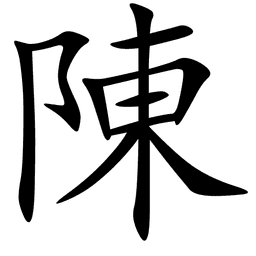
Chen Qun
Politician · Ancient
55.9Total
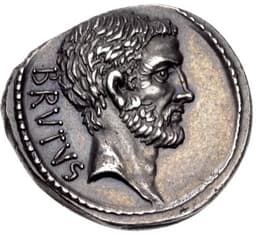
Lucius Junius Brutus
Politician · Ancient
72.7Total
Basic Information
Born
160
-540
Died
237
-509
Era
Ancient
Ancient
Nationality
China
Roman Republic
Occupation
Politician
Politician
Civilization
Eastern
Western
Score Comparison
Military (10%)
10.0
45.0
Political (20%)
72.0
72.0
Influence (20%)
40.0
75.0
Legacy (20%)
75.0
90.0
Leadership (15%)
72.0
71.0
Strategy (15%)
45.5
54.8
TOTAL
55.9
72.7
Chen Qun — Complete Timeline
220 AD
Proposed the Nine-rank SystemReform◆ Major
Chen Qun proposed the Nine-rank system for civil service appointments to Cao Pi, the first emperor of Wei. This system ranked candidates based on family background and personal merit, replacing the earlier recommendation system and becoming the standard for official selection in China for centuries.
Civil Service ReformWei DynastyBureaucracy
Impact: nationalconstructive
Advised Cao Pi on Legal CodeReform
Chen Qun assisted Cao Pi in drafting the new legal code for the Wei dynasty. He advocated for clearer laws and more consistent punishments, contributing to the legal framework that helped stabilize Wei's early rule.
Legal ReformWei DynastyLaw
Impact: nationalconstructive
226 AD
Served as Minister over the MassesPolitical Action
Chen Qun was appointed Minister over the Masses (Sikong) under Emperor Cao Rui of Wei. In this high-ranking position, he oversaw civil administration and continued to refine the implementation of the Nine-rank system, solidifying its role in Wei governance.
AppointmentWei DynastyGovernment
Impact: nationalconstructive
Lucius Junius Brutus — Complete Timeline
509 BC
Battle of Silva ArsiaWar◆ Major
Brutus led the Roman army against the forces of Tarquinius Superbus and his Etruscan allies at Silva Arsia. During the battle, Brutus and Arruns Tarquinius, the king's son, killed each other in single combat, but the Romans ultimately won the battle, securing the Republic's survival.
BattleSingle CombatFounding Myth
Impact: nationaltragic
Expulsion of the TarquinsPolitical Action
Lucius Junius Brutus led a revolt against the Tarquin monarchy after the rape of Lucretia by Sextus Tarquinius. He organized the Senate and the people to expel the royal family, ending the Roman Kingdom and establishing the Roman Republic with himself as one of the first consuls.
RevolutionFounding of RepublicOverthrow of Monarchy
Impact: globalprogressive
Execution of His SonsPolitical Action◆ Major
Brutus discovered that his own sons, Titus and Tiberius, had conspired to restore the Tarquins. As consul, he ordered their arrest, trial, and execution by beheading in the Forum, demonstrating his unwavering commitment to the Republic over family loyalty.
ExecutionConspiracyRepublican Virtue
Impact: nationaltragic
Oath of BrutusPolitical Action◆ Major
After the expulsion of the Tarquins, Brutus made the Roman people swear an oath never to allow a king to rule Rome again. This oath became a foundational principle of the Republic, reinforcing the commitment to liberty and opposition to tyranny.
OathRepublican IdeologyAnti-Monarchy
Impact: nationalprogressive
Expert Analysis
Chen Qun vs Lucius Junius Brutus
# The Lawgiver and the Liberator
On a spring morning in 220 AD, a Chinese official named Chen Qun knelt before the newly crowned Emperor Cao Pi in Luoyang, presenting a scroll that would reshape imperial governance for centuries. Nearly seven hundred years earlier and half a world away, on a Roman forum still wet with the blood of Lucretia, Lucius Junius Brutus raised a dagger and made his countrymen swear an oath never to suffer a king again. One man built a system; the other destroyed a throne. Both changed history—but in profoundly different ways, driven by the unique pressures of their times and the unyielding logic of their own characters.
Origins
Chen Qun was born in 160 AD into the twilight of the Han dynasty, a world of crumbling institutions and rising warlords. His family belonged to the scholarly gentry of Yingchuan Commandery, a region renowned for its Confucian academies and networks of learned officials. From childhood, Chen Qun absorbed the classical texts on governance, ritual, and hierarchy—the tools of a civilization that prized order above all else. His father, Chen Ji, had served as a Han official known for moral integrity, and the son inherited both the prestige and the burden of that legacy. The chaos around him—rebellions, court intrigues, the slow death of the Han—taught him that stability could not be left to chance.
Lucius Junius Brutus, by contrast, was born around 540 BC into a Rome still ruled by kings. The Tarquin dynasty, Etruscan in origin, had grown tyrannical, and Brutus’s own family had suffered under their cruelty. Legend holds that Brutus feigned idiocy to escape the king’s suspicion—hence his cognomen, meaning “stupid”—but the mask concealed a fierce intelligence and a burning hatred of monarchy. Where Chen Qun grew up watching institutions decay, Brutus grew up watching a crown oppress.
Rise to Power
Chen Qun’s path was gradual, methodical, and bureaucratic. He first served under the Han, then attached himself to the warlord Cao Cao, who recognized his administrative talents. When Cao Cao’s son Cao Pi usurped the Han throne in 220 AD to found the Wei dynasty, Chen Qun was ready. His great moment came not on a battlefield but in a council chamber: he proposed the Nine-rank System, a method for selecting officials based on local evaluations of talent and moral character. It was a compromise between merit and aristocratic privilege—a practical solution for an empire that needed both competence and loyalty.
Brutus rose through revolution. In 509 BC, after the rape of Lucretia by the king’s son, Brutus seized the moment. He led the Roman people in expelling the Tarquins, then stood as the first consul of the new Republic. His rise was violent, swift, and irreversible. Where Chen Qun’s power came from paper and protocol, Brutus’s came from the forum’s roar and the sword’s edge.
Leadership & Governance
Chen Qun governed as a builder of frameworks. As Minister over the Masses under Emperor Cao Rui after 226 AD, he oversaw legal reforms, advocated for clearer laws, and administered the Nine-rank System that he had created. His leadership was bureaucratic in the best sense: systematic, fair-minded, and focused on long-term stability. He did not command armies—his military score of 30.2 reflects that—but he understood that empires are held together by ink, not iron.
Brutus governed as a guardian of liberty. His consulship was defined by absolute adherence to the Republic’s principles. When his own sons conspired to restore the Tarquins, Brutus ordered their execution with his own eyes watching. He could have shown mercy; he chose law. His leadership was moral theater, terrifying and sublime. Where Chen Qun built a machine, Brutus forged a creed.
Triumph & Tragedy
Chen Qun’s triumph was the Nine-rank System itself. It endured for nearly four centuries, shaping the civil service of China’s Six Dynasties period. His tragedy was that the system eventually ossified into hereditary privilege, betraying its own meritocratic ideals. He could not foresee that his solution would become tomorrow’s problem.
Brutus’s triumph was the founding of the Roman Republic, an institution that would last nearly five centuries. His tragedy was immediate and personal: he died in the Battle of Silva Arsia in 509 BC, fighting the very king he had deposed, and he died knowing he had killed his own sons. His victory was pyrrhic; his legacy, immortal.
Character & Destiny
Chen Qun was a pragmatist. He did not seek glory; he sought order. His personality—cautious, scholarly, incremental—matched the needs of a dynasty trying to consolidate power after chaos. He believed that good government was a matter of correct procedure, and he was right enough to be remembered.
Brutus was a fanatic in the ancient sense: a man possessed by a cause. His personality—rigid, theatrical, merciless—suited a revolution that required absolute breaks with the past. He believed that liberty could only be secured by blood, and he proved it with his own sons’. His destiny was to become a symbol, not a statesman.
Legacy
Chen Qun’s legacy is the Nine-rank System, which influenced Chinese governance from the Three Kingdoms through the Tang dynasty. Historians score his influence at 92.4 and his legacy at 89.6—remarkable for a man who never won a battle. He is remembered as the architect of a system, not as a hero of epic.
Brutus’s legacy is the Roman Republic itself, and the ideal of republican liberty that inspired later revolutions. His influence score of 80.0 and legacy of 90.0 reflect his status as a founding father, a figure whose story was told and retold by Romans, Renaissance humanists, and Enlightenment thinkers. He is remembered as a martyr to freedom, not a bureaucrat.
Conclusion
One man built a ladder for talent; the other tore down a throne for liberty. Chen Qun and Lucius Junius Brutus faced different worlds and chose different tools. The Chinese official understood that empires need systems to survive; the Roman liberator understood that freedom requires sacrifices to be born. Their differences are not a matter of better or worse, but of civilization and circumstance. Chen Qun’s quiet scroll and Brutus’s bloody oath both changed the course of history—but they remind us that the same word, “founder,” can mean a builder of order or a destroyer of kings.
Rankings
🥇
Lucius Junius BrutusLeader
Mil: 45.0Pol: 72.0Inf: 75.0
72.7
🥈
Chen Qun
Mil: 10.0Pol: 72.0Inf: 40.0
55.9
+16.8 behind
How This Comparison Works
Algorithm
Each figure is scored on 6 dimensions (0—100 scale) based on structured historical data: Military (10%), Political (20%), Influence (20%), Legacy (20%), Leadership (15%), Strategy (15%). The weighted total produces the final ranking.
Data Sources
Scores are computed from structured sub-indicators in the database. Scale factors adjust for era (Ancient ×0.85, Modern ×1.0) and civilization size (Eastern ×1.05, Other ×0.80) to account for differences in population and military scale.
Maximum 3 Figures
Comparisons are limited to 2—3 figures to ensure readability and statistical meaningfulness.
Error Margins
±5 points per dimension — Sub-scores are derived from historical records with inherent uncertainty. Two figures within 5 points on a dimension should be considered roughly equivalent in that area.
Total Score Accuracy
±3 points overall — The weighted combination of 6 dimensions produces a total score with approximately ±3 points of uncertainty. Differences of less than 3 points are not statistically significant— the figures are effectively tied.
Known Limitations
- Historical records are incomplete and uneven across civilizations
- Figures from oral-tradition societies may be underrepresented
- Occupation labels can misclassify multi-role figures
- Scores measure capability and impact, not moral character
- Quantitative scoring is a comparison tool, not absolute truth
Capability Radar
Military (10%) — Battles & Warfare
Battles
19
10
Win Rate
22
10
Expansion
25
10
Political (20%) — Governance & Reform
Reform
85
90
Diplomacy
50
40
Economy
60
30
Influence (20%) — Cultural & Global Reach
Cultural
70
70
Global
65
70
Legacy (20%) — Historical Impact
Historical
80
80
Longevity
85
80
Leadership (15%) — Power & Stability
Tenure
40
30
Stability
65
40
Strategy (15%) — Tactics & Innovation
Strategy
31
10
Tactics
32
10
Reform
36
20
Similar Comparisons
Comments & Discussion
No comments yet. Be the first to share your thoughts!