Loading...
Lucius Junius Brutus vs Themistocles
Lucius Junius Brutus leads by 4.3 pts · 2 figures compared
…
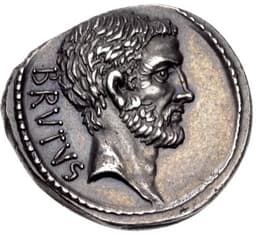
Lucius Junius Brutus
Politician · Ancient
72.7Total
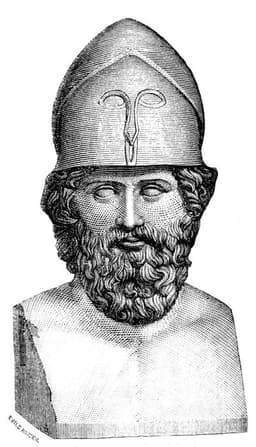
Themistocles
Politician · Ancient
68.4Total
Basic Information
Born
-540
-524
Died
-509
-459
Era
Ancient
Ancient
Nationality
Roman Republic
Greece
Occupation
Politician
Politician
Civilization
Western
Western
Score Comparison
Military (10%)
45.0
80.0
Political (20%)
72.0
72.0
Influence (20%)
75.0
40.0
Legacy (20%)
90.0
80.0
Leadership (15%)
71.0
79.8
Strategy (15%)
54.8
76.0
TOTAL
72.7
68.4
Lucius Junius Brutus — Complete Timeline
509 BC
Battle of Silva ArsiaWar◆ Major
Brutus led the Roman army against the forces of Tarquinius Superbus and his Etruscan allies at Silva Arsia. During the battle, Brutus and Arruns Tarquinius, the king's son, killed each other in single combat, but the Romans ultimately won the battle, securing the Republic's survival.
BattleSingle CombatFounding Myth
Impact: nationaltragic
Expulsion of the TarquinsPolitical Action
Lucius Junius Brutus led a revolt against the Tarquin monarchy after the rape of Lucretia by Sextus Tarquinius. He organized the Senate and the people to expel the royal family, ending the Roman Kingdom and establishing the Roman Republic with himself as one of the first consuls.
RevolutionFounding of RepublicOverthrow of Monarchy
Impact: globalprogressive
Execution of His SonsPolitical Action◆ Major
Brutus discovered that his own sons, Titus and Tiberius, had conspired to restore the Tarquins. As consul, he ordered their arrest, trial, and execution by beheading in the Forum, demonstrating his unwavering commitment to the Republic over family loyalty.
ExecutionConspiracyRepublican Virtue
Impact: nationaltragic
Oath of BrutusPolitical Action◆ Major
After the expulsion of the Tarquins, Brutus made the Roman people swear an oath never to allow a king to rule Rome again. This oath became a foundational principle of the Republic, reinforcing the commitment to liberty and opposition to tyranny.
OathRepublican IdeologyAnti-Monarchy
Impact: nationalprogressive
Themistocles — Complete Timeline
483 BC
Construction of the Athenian FleetReform◆ Major
Themistocles persuaded the Athenian assembly to use silver from the Laurion mines to build a fleet of 200 triremes. This naval expansion transformed Athens into a major maritime power and was crucial for the victory at Salamis.
AthensNaval PowerReform
Impact: nationalconstructive
480 BC
Battle of SalamisWar
Themistocles commanded the Greek navy against the Persian fleet at Salamis. He lured the Persians into the narrow straits, where the Greek ships destroyed the larger Persian fleet. This victory ended the Persian threat to Greece and preserved Greek independence.
Greco-Persian WarsNaval BattleAthens
Impact: regionalconstructive
472 BC
Ostracism from AthensPolitical Action◆ Major
Themistocles was ostracized by the Athenian assembly, likely due to political rivalries and accusations of arrogance. He went into exile, first to Argos, then to Persia, where he was received by King Artaxerxes I.
AthensExileOstracism
Impact: nationaltragic
465 BC
Service under the Persian KingPolitical Action
After his ostracism, Themistocles fled to Persia and offered his services to King Artaxerxes I. He was granted governorship of Magnesia and other cities in Asia Minor, where he lived until his death. This act was seen as treason by many Athenians.
PersiaExileTreason
Impact: regional
Expert Analysis
Themistocles vs Lucius Junius Brutus
### The Price of Freedom: Themistocles and Brutus, Two Founders, Two Fates
History has a cruel sense of symmetry. Consider two men, born within a generation of each other in the ancient Mediterranean, each hailed as a founder of his nation’s liberty. One saved his city from annihilation, only to die a fugitive in the palace of his former enemy. The other executed his own sons to protect a republic still wet with birth, then fell in battle, becoming a name whispered with reverence for two thousand years. Why did Themistocles, the savior of Athens, end his days in Persia, while Lucius Junius Brutus, the father of Rome, was immortalized as a martyr? The answer lies not in their triumphs, but in the very different republics they created and the different tyrants they fought—within their cities and within themselves.
### Origins
Themistocles was born into a world of aristocratic competition. His father, Neocles, was of moderate wealth, but his mother was a foreigner, a stain in the eyes of Athens’ blue-blooded elite. From his youth, he was driven by a ferocious ambition, a hunger for recognition that bordered on obsession. He devoured the political arts of the Athenian assembly, learning to read the moods of the demos like a sailor reads the sea. He was a creature of the city, of the harbor, of the crowded agora where persuasion was the only sword.
Lucius Junius Brutus, by contrast, was born into the heart of Roman power. He was a nephew of Tarquinius Superbus, the last king of Rome, a man whose tyranny was as absolute as it was cruel. To survive, Brutus played the fool. He feigned idiocy—his name “Brutus” itself meant “dullard”—to avoid the king’s suspicion. This was not the ambition of Themistocles; it was the cunning of a man who had learned that in a tyranny, the most dangerous thing is to be seen as capable. His origins were a mask, and he wore it for decades.
### Rise to Power
Themistocles rose through the turbulent democracy of Athens. His path was one of persuasion, coalition-building, and ruthless pragmatism. In 483 BC, he seized his moment. The Athenians had discovered a rich vein of silver at Laurion. The assembly was debating how to distribute the windfall; some proposed a dividend for every citizen. Themistocles, seeing the shadow of Persia on the horizon, argued for a far more radical use: build a fleet of 200 triremes. He painted a vision of Athenian power that was maritime, not agrarian; of a city that could fight from the sea, not just the land. The assembly agreed, and Athens became a naval power. This was his masterstroke—a political victory that would save Greece.
Brutus’s rise was not a matter of persuasion but of revolution. In 509 BC, the rape of Lucretia by the king’s son ignited a fury that Brutus had been waiting for. He threw off his mask. Standing over Lucretia’s body in the Roman Forum, he swore a terrible oath: never again would a king rule Rome. He did not debate in an assembly; he commanded a revolt. Where Themistocles convinced, Brutus compelled. His rise was a thunderclap, not a sunrise.
### Leadership & Governance
As leaders, they were mirror opposites. Themistocles was a genius of improvisation. At the Battle of Salamis in 480 BC, he did not command through rigid discipline but through cunning. He lured the massive Persian fleet into the narrow strait, where their numbers became a liability. He fought not as a general but as a strategist, using deception and psychology. His governance was similarly fluid; he was a master of the oblique approach, always maneuvering, always calculating.
Brutus, as Rome’s first consul, governed through law and iron will. The republic he founded was a fortress of checks and balances—two consuls, a senate, a system designed to prevent any one man from seizing the power of a king. His leadership was not about cleverness but about absolute, terrifying principle. When his own sons conspired to restore the monarchy, Brutus did not hesitate. He ordered them stripped, beaten, and beheaded with the fasces—the very symbols of the authority he had sworn to protect. He watched the execution, his face a mask of stone. This was governance by example, by sacrifice, by blood.
### Triumph & Tragedy
Themistocles’s triumph was Salamis. The narrow victory was complete; the Persian fleet shattered, Xerxes fled, and Greece was free. He was the hero of the hour, feted in Sparta, honored across the Hellenic world. But his tragedy was the flipside of his genius. His arrogance, his willingness to outmaneuver rivals, his very success—all bred envy. In 472 BC, the Athenian assembly, ever fickle, voted to ostracize him. He was exiled from the city he had saved.
Brutus’s triumph was the founding of the Republic itself. He had expelled a king and established a government of laws. His tragedy was, in some ways, even more intimate. He died at the Battle of Silva Arsia, fighting the very king he had deposed. His death was honorable, a warrior’s end. But the true tragedy was the price he had already paid: his sons, dead by his own order, for the crime of loving their father’s enemies more than their father’s republic.
### Character & Destiny
Here is the crux. Themistocles was a pragmatist to his core. He believed in victory, not in virtue. When Athens rejected him, he did not become a martyr. He fled to the court of his former enemy, King Artaxerxes I of Persia, and offered his services. He became a governor of Persian cities, a traitor in the eyes of many. But was it betrayal, or simply survival? He had no fixed ideology; his loyalty was to his own genius. This flexibility saved his life but destroyed his legacy.
Brutus was a fanatic of principle. He believed in the Republic as a sacred trust, and he was willing to sacrifice everything—his sons, his life, his own happiness—to preserve it. There was no negotiation, no exile, no comfortable retirement. The mask he had worn as a fool became his true face: a man of absolute, unbending will. This rigidity cost him his sons, but it gave him eternity.
### Legacy
Themistocles left behind a city that would become the cultural and naval powerhouse of the ancient world. The fleet he built won the Persian Wars and laid the foundation for the Athenian Empire. Yet his personal legacy is ambiguous. He is remembered as a savior, but also as a turncoat. His name is spoken with admiration, but also with a whisper of caution: too clever by half.
Brutus left behind a Republic that would endure for nearly five centuries. He is the founding father, the model of republican virtue. His execution of his sons is not a stain but a monument. It is the story Romans told their children to teach what it means to put the state before the self. His legacy is not ambiguous; it is a pillar.
### Conclusion
In the end, the difference between them is the difference between Athens and Rome. Athens was a democracy of brilliant, restless individuals, where a man could rise, fall, and reinvent himself. Rome was a republic of iron laws and sacred oaths, where a man was expected to be a stone in the wall. Themistocles was a genius who outlived his usefulness; Brutus was a symbol who died for his usefulness. One saved his city and lost his honor; the other lost his sons and gained immortality. The question their lives pose is as old as politics itself: which is the greater price—the freedom to fail, or the duty to endure?
Rankings
🥇
Lucius Junius BrutusLeader
Mil: 45.0Pol: 72.0Inf: 75.0
72.7
🥈
Themistocles
Mil: 80.0Pol: 72.0Inf: 40.0
68.4
+4.3 behind
How This Comparison Works
Algorithm
Each figure is scored on 6 dimensions (0—100 scale) based on structured historical data: Military (10%), Political (20%), Influence (20%), Legacy (20%), Leadership (15%), Strategy (15%). The weighted total produces the final ranking.
Data Sources
Scores are computed from structured sub-indicators in the database. Scale factors adjust for era (Ancient ×0.85, Modern ×1.0) and civilization size (Eastern ×1.05, Other ×0.80) to account for differences in population and military scale.
Maximum 3 Figures
Comparisons are limited to 2—3 figures to ensure readability and statistical meaningfulness.
Error Margins
±5 points per dimension — Sub-scores are derived from historical records with inherent uncertainty. Two figures within 5 points on a dimension should be considered roughly equivalent in that area.
Total Score Accuracy
±3 points overall — The weighted combination of 6 dimensions produces a total score with approximately ±3 points of uncertainty. Differences of less than 3 points are not statistically significant— the figures are effectively tied.
Known Limitations
- Historical records are incomplete and uneven across civilizations
- Figures from oral-tradition societies may be underrepresented
- Occupation labels can misclassify multi-role figures
- Scores measure capability and impact, not moral character
- Quantitative scoring is a comparison tool, not absolute truth
Capability Radar
Military (10%) — Battles & Warfare
Battles
10
75
Win Rate
10
85
Expansion
10
60
Political (20%) — Governance & Reform
Reform
90
75
Diplomacy
40
85
Economy
30
65
Influence (20%) — Cultural & Global Reach
Cultural
70
70
Global
70
75
Legacy (20%) — Historical Impact
Historical
80
85
Longevity
80
80
Leadership (15%) — Power & Stability
Tenure
30
70
Stability
40
60
Strategy (15%) — Tactics & Innovation
Strategy
10
90
Tactics
10
95
Reform
20
80
Similar Comparisons
Comments & Discussion
THESTRATEGOS6/16/2026
The real story here isn't about morality—it's about strategic genius versus rigid principle. Themistocles understood something Brutus never did: survival requires flexibility. When Athens needed walls, he got them. When they needed a fleet, he built it. When he was exiled, he didn't die on principle—he calculated. Serving Persia gave him safety and his family survival. Brutus executed his sons for breaking laws and died in battle, but Rome still fell to emperors. Give me Themistocles' pragmatism
数据侦探6/16/2026
你们都在谈论自由和美德,但数据不会撒谎。Themistocles被陶片放逐后投靠波斯,这是铁的事实。Brutus亲手处决了两个儿子,这也是事实。一个选择自保,一个选择灭亲。我们歌颂Brutus的牺牲精神,但试问:历史上多少统治者会因为极端的“原则”而对自己人下手?这不是美德,这是恐怖统治的雏形。别把残忍当作崇高,数据证明权力扭曲所有人。
CLASSICUS_IUSTUS6/16/2026
The comparison misses the fundamental constitutional context. Brutus wasn't just a father executing sons—he was the first consul enacting the law that he himself proposed to protect the fledgling Republic from monarchy. When his sons conspired to restore the Tarquins, Brutus made them face the fasces. Themistocles, whatever his genius at Salamis, ultimately couldn't accept that Athenian democracy meant no man was above the law—even the savior of the city. That's the difference between a founder
历史辩护士6/16/2026
让我来揭穿这个叙事的虚伪:你们把Brutus塑造成道德完人,却完全忽略了他的动机。作为塔奎尼乌斯的侄子,他装疯卖傻只是为了活命。处决儿子不是为了共和国,而是为了洗清自己是前朝余孽的嫌疑。Themistocles至少光明正大地为自己的城邦战斗,失败了就承认失败、另谋出路。Brutus的行为说好听是“大义灭亲”,说难听就是政治投机。历史是胜利者书写的,但我们应该透过罗马元老院的颂歌,看到那个被迫杀子的可怜人。
PHILOATHENAIOS6/16/2026
Let's not romanticize either man, but at least Themistocles knew what he was fighting for. Athens was a democracy where a foreigner's son could rise to command. Salamis wasn't just a battle—it was the birth of naval power and the freedom of the Aegean. Brutus expelled kings only to create an oligarchic republic that persecuted plebeians for centuries. When Themistocles fled to Persia, he never betrayed Athens' spirit—he simply outlived his usefulness. Brutus'