Loading...
Lucius Junius Brutus vs Yuan Shikai
Lucius Junius Brutus leads by 12.7 pts · 2 figures compared
…
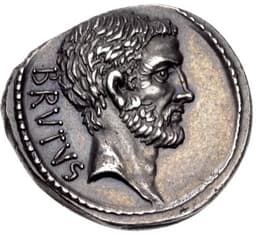
Lucius Junius Brutus
Politician · Ancient
72.7Total
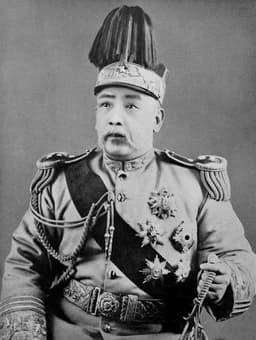
Yuan Shikai
Politician · Modern
60.0Total
Basic Information
Born
-540
1859
Died
-509
1916
Era
Ancient
Modern
Nationality
Roman Republic
China
Occupation
Politician
Politician
Civilization
Western
Eastern
Score Comparison
Military (10%)
45.0
45.0
Political (20%)
72.0
72.0
Influence (20%)
75.0
57.2
Legacy (20%)
90.0
54.0
Leadership (15%)
71.0
72.0
Strategy (15%)
54.8
61.2
TOTAL
72.7
60.0
Lucius Junius Brutus — Complete Timeline
509 BC
Battle of Silva ArsiaWar◆ Major
Brutus led the Roman army against the forces of Tarquinius Superbus and his Etruscan allies at Silva Arsia. During the battle, Brutus and Arruns Tarquinius, the king's son, killed each other in single combat, but the Romans ultimately won the battle, securing the Republic's survival.
BattleSingle CombatFounding Myth
Impact: nationaltragic
Expulsion of the TarquinsPolitical Action
Lucius Junius Brutus led a revolt against the Tarquin monarchy after the rape of Lucretia by Sextus Tarquinius. He organized the Senate and the people to expel the royal family, ending the Roman Kingdom and establishing the Roman Republic with himself as one of the first consuls.
RevolutionFounding of RepublicOverthrow of Monarchy
Impact: globalprogressive
Execution of His SonsPolitical Action◆ Major
Brutus discovered that his own sons, Titus and Tiberius, had conspired to restore the Tarquins. As consul, he ordered their arrest, trial, and execution by beheading in the Forum, demonstrating his unwavering commitment to the Republic over family loyalty.
ExecutionConspiracyRepublican Virtue
Impact: nationaltragic
Oath of BrutusPolitical Action◆ Major
After the expulsion of the Tarquins, Brutus made the Roman people swear an oath never to allow a king to rule Rome again. This oath became a foundational principle of the Republic, reinforcing the commitment to liberty and opposition to tyranny.
OathRepublican IdeologyAnti-Monarchy
Impact: nationalprogressive
Yuan Shikai — Complete Timeline
1901 AD
Command of the Beiyang ArmyReform◆ Major
Yuan Shikai took command of the Beiyang Army, the most modern military force in late Qing China. He expanded and trained the army, which became the basis for his political power and later dominated Chinese politics.
Military reformBeiyang Army
Impact: national
1912 AD
Appointed First President of the Republic of ChinaPolitical Action
Yuan Shikai became the first president of the Republic of China after negotiating the abdication of the Qing emperor. He used his control of the Beiyang Army to pressure the revolutionary government into accepting his leadership.
PresidencyRepublic of China
Impact: national
1915 AD
Declaration of the Empire of ChinaPolitical Action◆ Major
Yuan Shikai declared himself emperor of the Empire of China, attempting to restore the monarchy. This move sparked widespread opposition from provincial leaders and foreign powers, leading to the collapse of his regime.
Monarchy restorationPolitical crisis
Impact: nationaldestructive
Signing of the Twenty-One DemandsPolitical Action◆ Major
Yuan Shikai accepted most of Japan's Twenty-One Demands, which expanded Japanese influence in China. The agreement granted Japan economic rights in Manchuria and Shandong, and was seen as a national humiliation.
DiplomacyJapanese imperialism
Impact: globaltragic
1916 AD
Death and Collapse of the Beiyang GovernmentPolitical Action◆ Major
Yuan Shikai died of uremia, leaving no clear successor. His death led to the fragmentation of the Beiyang Army into warlord factions, plunging China into a period of civil war and political instability.
Warlord eraPolitical fragmentation
Impact: nationaltragic
Expert Analysis
Yuan Shikai vs Lucius Junius Brutus
# The Republic and the Empire: Two Founders, Two Fates
In the winter of 1915, a portly man in dragon robes ascended a hastily prepared altar in Beijing, proclaiming himself Emperor of China. In the summer of 509 BC, a stern-faced Roman consul watched, unmoved, as his own sons were beaten to death with rods for plotting against the Republic. Yuan Shikai and Lucius Junius Brutus both stood at the crossroads of history, each with the power to shape a nation’s destiny. Yet one became the symbol of republican virtue, the other the architect of republican ruin. Why did their paths diverge so dramatically?
Origins
Yuan Shikai was born in 1859 into a minor gentry family in Henan province, a world where the Qing dynasty’s ancient structure was already cracking under the weight of Western imperialism. He failed the civil service examinations—the traditional path to power—and instead purchased a minor military post. This was a man shaped by the twilight of empire, where pragmatism mattered more than principle. His early career was a series of calculated moves: he served in Korea, impressed the Empress Dowager Cixi, and built the Beiyang Army into the most modern fighting force in China.
Lucius Junius Brutus, born around 540 BC, belonged to the patrician class of Rome under the Etruscan Tarquin kings. Legend says he feigned idiocy to escape the king’s suspicion—hence his cognomen “Brutus,” meaning dullard. But beneath this mask lay a fierce intelligence and a burning hatred of tyranny. His world was one of small city-states, where personal honor and clan loyalty still dictated politics. Unlike Yuan, Brutus was formed by a culture that had not yet learned to compromise with power.
Rise to Power
Yuan Shikai’s ascent was a masterclass in opportunism. In 1901, he took command of the Beiyang Army, turning it into his personal instrument. When the Qing dynasty collapsed in 1912, he negotiated the emperor’s abdication, then maneuvered himself into the presidency of the new republic. He was the only man who could hold the fractious country together—or so everyone believed. His power rested not on popular support but on control of the army and the tacit backing of foreign powers.
Brutus rose through revolution. In 509 BC, after the rape of Lucretia by the king’s son, Brutus threw off his mask of stupidity. He rallied the Senate and the people, expelled the Tarquins, and established the Roman Republic. His authority came from moral outrage and the support of the aristocracy. He did not seize power; it was thrust upon him as the first consul.
Leadership & Governance
As president, Yuan Shikai governed through patronage and fear. He suppressed dissent, bribed warlords, and centralized power. His political score of 74.2 reflects a cunning operator who understood the mechanics of control. But his military score of 60.7 reveals a man who, despite his army, never fought a decisive war. His strategy was survival, not glory.
Brutus governed through law and example. As consul, he enforced the Oath of Brutus, binding Romans never to tolerate a king. His political score of 64.0 is lower than Yuan’s, but his legacy score of 90.0 towers—because he created an institution that lasted five centuries. His military score of 34.8 is abysmal; he died in battle at Silva Arsia, but his sacrifice cemented the Republic.
Triumph & Tragedy
Yuan’s greatest triumph was the presidency itself—the peaceful transition from empire to republic. But his tragedy was the Twenty-One Demands of 1915, when he accepted Japan’s humiliating terms to secure foreign recognition, selling China’s sovereignty for a throne. Then came his fatal error: declaring himself emperor in 1915. The nation erupted in revolt, and Yuan died in 1916, disgraced and alone, his body rotting from uremia. His death shattered the Beiyang Army into warlord fragments, plunging China into chaos.
Brutus’s triumph was the expulsion of the Tarquins and the founding of the Republic. His tragedy was discovering his own sons conspiring to restore the monarchy. As consul, he ordered their execution—a moment immortalized by Roman historians as the ultimate test of civic virtue. He then died in battle, but his death was a martyrdom, not a collapse.
Character & Destiny
Yuan Shikai was a pragmatist who believed power was its own justification. He saw the republic as a mask for personal rule. His leadership score of 81.3 suggests genuine ability, but his strategy score of 65.4 reveals a fatal blindness: he could not see that monarchy was dead in the modern world. His character—cunning, ambitious, but ultimately vain—led him to overreach.
Brutus was a zealot who believed principle was worth more than life. His leadership score of 73.9 reflects a man who led by moral authority, not force. His strategy score of 59.7 suggests he was no military genius, but his political instincts were pure. He understood that the Republic required absolute commitment, even from its founder.
Legacy
Today, Yuan Shikai is remembered as a traitor to the republic and a would-be emperor. His total score of 70.6 places him as a competent but failed leader. In China, his name is synonymous with ambition without vision. The warlord era that followed his death killed millions.
Brutus is revered as the father of the Roman Republic, a model of civic virtue. His influence score of 80.0 and legacy of 90.0 reflect a man whose actions echoed through history, inspiring later republicans from Machiavelli to the American Founders. His Oath became a cornerstone of Western political thought.
Conclusion
The difference between Yuan Shikai and Lucius Junius Brutus is the difference between power and principle. One saw the republic as a stepping stone; the other saw it as a sacred trust. Yuan died in bed, but his legacy crumbled. Brutus died on the battlefield, but his legacy endured. In the end, history judges not by what we take, but by what we leave behind. Yuan Shikai left a broken nation; Lucius Junius Brutus left an idea that outlived empires.
Rankings
🥇
Lucius Junius BrutusLeader
Mil: 45.0Pol: 72.0Inf: 75.0
72.7
🥈
Yuan Shikai
Mil: 45.0Pol: 72.0Inf: 57.2
60.0
+12.7 behind
How This Comparison Works
Algorithm
Each figure is scored on 6 dimensions (0—100 scale) based on structured historical data: Military (10%), Political (20%), Influence (20%), Legacy (20%), Leadership (15%), Strategy (15%). The weighted total produces the final ranking.
Data Sources
Scores are computed from structured sub-indicators in the database. Scale factors adjust for era (Ancient ×0.85, Modern ×1.0) and civilization size (Eastern ×1.05, Other ×0.80) to account for differences in population and military scale.
Maximum 3 Figures
Comparisons are limited to 2—3 figures to ensure readability and statistical meaningfulness.
Error Margins
±5 points per dimension — Sub-scores are derived from historical records with inherent uncertainty. Two figures within 5 points on a dimension should be considered roughly equivalent in that area.
Total Score Accuracy
±3 points overall — The weighted combination of 6 dimensions produces a total score with approximately ±3 points of uncertainty. Differences of less than 3 points are not statistically significant— the figures are effectively tied.
Known Limitations
- Historical records are incomplete and uneven across civilizations
- Figures from oral-tradition societies may be underrepresented
- Occupation labels can misclassify multi-role figures
- Scores measure capability and impact, not moral character
- Quantitative scoring is a comparison tool, not absolute truth
Capability Radar
Military (10%) — Battles & Warfare
Battles
10
45
Win Rate
10
55
Expansion
10
50
Political (20%) — Governance & Reform
Reform
90
55
Diplomacy
40
70
Economy
30
50
Influence (20%) — Cultural & Global Reach
Cultural
70
40
Global
70
35
Legacy (20%) — Historical Impact
Historical
80
65
Longevity
80
40
Leadership (15%) — Power & Stability
Tenure
30
60
Stability
40
30
Strategy (15%) — Tactics & Innovation
Strategy
10
65
Tactics
10
60
Reform
20
80
Similar Comparisons
Comments & Discussion
No comments yet. Be the first to share your thoughts!