Loading...
Chiang Kai-shek vs Lucius Junius Brutus
Lucius Junius Brutus leads by 12.1 pts · 2 figures compared
…
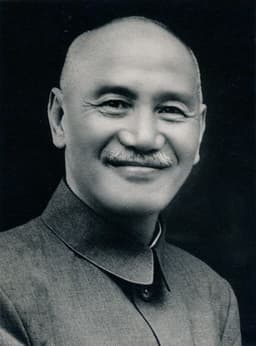
Chiang Kai-shek
Politician · Modern
60.6Total
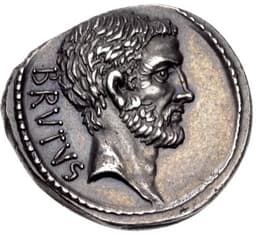
Lucius Junius Brutus
Politician · Ancient
72.7Total
Basic Information
Born
1887
-540
Died
1975
-509
Era
Modern
Ancient
Nationality
China
Roman Republic
Occupation
Politician
Politician
Civilization
Eastern
Western
Score Comparison
Military (10%)
70.0
45.0
Political (20%)
62.7
72.0
Influence (20%)
65.0
75.0
Legacy (20%)
52.0
90.0
Leadership (15%)
66.0
71.0
Strategy (15%)
50.0
54.8
TOTAL
60.6
72.7
Chiang Kai-shek — Complete Timeline
1926 AD
Northern ExpeditionWar◆ Major
Chiang Kai-shek led the National Revolutionary Army in the Northern Expedition to defeat warlords and unify China. The campaign succeeded in capturing Beijing and establishing Kuomintang control over most of the country.
UnificationMilitary campaign
Impact: national
1927 AD
Shanghai Massacre of 1927Political Action◆ Major
Chiang Kai-shek ordered the purge of communists and leftists in Shanghai, resulting in thousands of deaths. This event broke the First United Front between the Kuomintang and the Communist Party, leading to civil war.
PurgeCivil war
Impact: nationaldestructive
1937 AD
Leadership during the Second Sino-Japanese WarWar
Chiang Kai-shek, as leader of the Kuomintang, commanded Chinese forces during the Second Sino-Japanese War. He directed the defense of Shanghai and the relocation of the capital to Chongqing, maintaining resistance against Japan.
World War IIChinese resistance
Impact: global
1945 AD
Signing of the Sino-Soviet Treaty of 1945Political Action◆ Major
Chiang Kai-shek signed the Sino-Soviet Treaty of Friendship and Alliance, which recognized Soviet interests in Manchuria in exchange for Soviet support against Japan. The treaty later facilitated Communist gains in the civil war.
DiplomacySoviet Union
Impact: global
1949 AD
Retreat to TaiwanPolitical Action
After losing the Chinese Civil War to the Communists, Chiang Kai-shek retreated to Taiwan with the remnants of the Kuomintang government and military. He established the Republic of China on Taiwan, claiming legitimacy over all of China.
TaiwanExileCold War
Impact: globaltragic
Lucius Junius Brutus — Complete Timeline
509 BC
Battle of Silva ArsiaWar◆ Major
Brutus led the Roman army against the forces of Tarquinius Superbus and his Etruscan allies at Silva Arsia. During the battle, Brutus and Arruns Tarquinius, the king's son, killed each other in single combat, but the Romans ultimately won the battle, securing the Republic's survival.
BattleSingle CombatFounding Myth
Impact: nationaltragic
Expulsion of the TarquinsPolitical Action
Lucius Junius Brutus led a revolt against the Tarquin monarchy after the rape of Lucretia by Sextus Tarquinius. He organized the Senate and the people to expel the royal family, ending the Roman Kingdom and establishing the Roman Republic with himself as one of the first consuls.
RevolutionFounding of RepublicOverthrow of Monarchy
Impact: globalprogressive
Execution of His SonsPolitical Action◆ Major
Brutus discovered that his own sons, Titus and Tiberius, had conspired to restore the Tarquins. As consul, he ordered their arrest, trial, and execution by beheading in the Forum, demonstrating his unwavering commitment to the Republic over family loyalty.
ExecutionConspiracyRepublican Virtue
Impact: nationaltragic
Oath of BrutusPolitical Action◆ Major
After the expulsion of the Tarquins, Brutus made the Roman people swear an oath never to allow a king to rule Rome again. This oath became a foundational principle of the Republic, reinforcing the commitment to liberty and opposition to tyranny.
OathRepublican IdeologyAnti-Monarchy
Impact: nationalprogressive
Expert Analysis
Lucius Junius Brutus vs Chiang Kai-shek
# The Founder and the Fugitive: Two Men Who Shaped Their Nations Through Blood and Exile
On a battlefield in northern Italy in 509 BCE, a Roman consul fell dead with an Etruscan spear through his chest. His name was Lucius Junius Brutus, and he had just founded a republic that would endure for five centuries. Twenty-five hundred years later and half a world away, another man named Chiang Kai-shek stood on a beach in Taiwan, watching the Chinese mainland disappear into the mist, knowing he would never see it again. One died in triumph, the other in exile. Yet both were driven by the same question: What does it mean to save a nation?
Origins
Lucius Junius Brutus was born into the heart of Roman aristocracy, but his path was shaped by survival. To escape the murderous Tarquin kings, he feigned idiocy—hence his cognomen "Brutus," meaning dullard. He watched his brother die at the hands of tyrants and learned early that power demands masks. The Rome of his youth was a brutal, small city-state, constantly at war with its Etruscan neighbors, where honor and family loyalty were everything.
Chiang Kai-shek emerged from a different world entirely. Born in 1887 in Fenghua, Zhejiang, he grew up in a China crumbling under foreign domination and internal decay. His father died when he was nine, forcing him into a harsh military education. Where Brutus learned to hide his intelligence, Chiang learned to hide his insecurity—he was a provincial boy in a nation of vast regions, and he would spend his life trying to prove his legitimacy.
Rise to Power
Brutus seized his moment in 509 BCE when Lucretia, a noblewoman, was raped by the king's son. He pulled the dagger from her body, held it dripping before the Roman people, and swore an oath: never again would a king rule Rome. His rise was a flash—a single, perfect revolutionary act that transformed a monarchy into a republic overnight. He did not climb; he erupted.
Chiang's ascent was a slow, grinding ascent through the chaos of warlord China. He studied in Japan, joined Sun Yat-sen's revolutionary movement, and by 1926 commanded the National Revolutionary Army in the Northern Expedition. His rise was not a single stroke but a series of compromises, betrayals, and battlefield victories. Where Brutus had moral clarity, Chiang had tactical ambiguity.
Leadership & Governance
As consul, Brutus governed with terrifying consistency. When his own sons conspired to restore the Tarquins, he ordered their execution—watching the axes fall on his own blood. "For the republic," he said. This was not cruelty but principle: the republic was an idea worth more than family, more than life. He made every Roman citizen swear the same oath, and that oath became the foundation of Roman identity.
Chiang governed differently. He was a modernizer who never fully modernized, a nationalist who relied on foreign support, a reformer who protected the landlord class. His 1927 Shanghai Massacre, where he purged thousands of communists, was his own version of Brutus's execution—but where Brutus killed his sons for conspiracy, Chiang killed his allies for ideology. The difference was profound: Brutus's act unified Rome; Chiang's act deepened China's civil war.
Triumph & Tragedy
Brutus's greatest moment was his death. At the Battle of Silva Arsia, he charged directly into the enemy line, falling in combat. He became a martyr, his body carried back to Rome for a state funeral. His tragedy was that he died too soon—he never saw the republic he founded grow into an empire. But perhaps that was his triumph: he died for a republic, not an empire.
Chiang's greatest moment was leading China through the Second Sino-Japanese War from 1937 to 1945. He held together a fractured nation against a brutal invader, directing millions of soldiers, enduring the loss of entire cities. But his tragedy was vast: he lost the civil war to Mao Zedong in 1949, retreating to Taiwan with the remnants of his government. He died in 1975 on an island, still claiming to be China's rightful ruler, while the mainland he loved belonged to his enemies.
Character & Destiny
Brutus was a man of absolute principle. He had no ambition for himself—only for Rome. His personality was cold, rigid, and utterly consistent. This made him a revolutionary hero and a terrible father, but it also made him unforgettable. Destiny gave him the perfect moment and he seized it perfectly.
Chiang was a man of contradictions. He was a Christian in a Confucian society, a modernizer who trusted warlords, a nationalist who relied on American aid. His personality was mercurial—brilliant in strategy, poor in politics, capable of both generosity and cruelty. Destiny gave him a nation to save, but he was always fighting two wars: one against Japan, one against the communists. He could not win both.
Legacy
Brutus's legacy is the Roman Republic itself. Every Roman who said "I am a citizen, not a subject" spoke in his shadow. His face appeared on coins, his story was told in schools for centuries, and his name became synonymous with republican virtue. Even Julius Caesar's assassins called themselves "liberators" in his memory. He is remembered not as a man but as an idea.
Chiang's legacy is contested. In Taiwan, he is the father of the nation, the leader who preserved Chinese civilization on the island. On the mainland, he is a footnote, a villain, or a tragic figure. His military score of 68.4 and political score of 65.8 reflect a man who was competent but never brilliant. Yet his leadership score of 80.3 suggests something deeper: he held together a nation through war, even if he could not hold it together in peace.
Conclusion
Standing at the edge of history, these two men face each other across the centuries. Brutus died with a sword in his hand, his republic born. Chiang died with a map of China on his wall, his nation divided. One founded a system that lasted five hundred years; the other fled to an island that still claims to be the true China.
What drove the difference? Brutus had a single enemy—monarchy—and a single solution—republic. Chiang had too many enemies: warlords, Japanese, communists, and his own corrupt party. Brutus could be pure because his world was simple. Chiang could not be pure because his world was not.
In the end, both men asked the same question: What would you sacrifice for your nation? Brutus answered with his sons' lives and his own. Chiang answered with his homeland, his reputation, and his final years of exile. The answer, for both, was everything.
Rankings
🥇
Lucius Junius BrutusLeader
Mil: 45.0Pol: 72.0Inf: 75.0
72.7
🥈
Chiang Kai-shek
Mil: 70.0Pol: 62.7Inf: 65.0
60.6
+12.1 behind
How This Comparison Works
Algorithm
Each figure is scored on 6 dimensions (0—100 scale) based on structured historical data: Military (10%), Political (20%), Influence (20%), Legacy (20%), Leadership (15%), Strategy (15%). The weighted total produces the final ranking.
Data Sources
Scores are computed from structured sub-indicators in the database. Scale factors adjust for era (Ancient ×0.85, Modern ×1.0) and civilization size (Eastern ×1.05, Other ×0.80) to account for differences in population and military scale.
Maximum 3 Figures
Comparisons are limited to 2—3 figures to ensure readability and statistical meaningfulness.
Error Margins
±5 points per dimension — Sub-scores are derived from historical records with inherent uncertainty. Two figures within 5 points on a dimension should be considered roughly equivalent in that area.
Total Score Accuracy
±3 points overall — The weighted combination of 6 dimensions produces a total score with approximately ±3 points of uncertainty. Differences of less than 3 points are not statistically significant— the figures are effectively tied.
Known Limitations
- Historical records are incomplete and uneven across civilizations
- Figures from oral-tradition societies may be underrepresented
- Occupation labels can misclassify multi-role figures
- Scores measure capability and impact, not moral character
- Quantitative scoring is a comparison tool, not absolute truth
Capability Radar
Military (10%) — Battles & Warfare
Battles
75
10
Win Rate
35
10
Expansion
65
10
Political (20%) — Governance & Reform
Reform
55
90
Diplomacy
60
40
Economy
40
30
Influence (20%) — Cultural & Global Reach
Cultural
60
70
Global
65
70
Legacy (20%) — Historical Impact
Historical
70
80
Longevity
55
80
Leadership (15%) — Power & Stability
Tenure
85
30
Stability
30
40
Strategy (15%) — Tactics & Innovation
Strategy
60
10
Tactics
55
10
Reform
50
20
Similar Comparisons
Comments & Discussion
No comments yet. Be the first to share your thoughts!