Loading...
Alcide De Gasperi vs Lucius Junius Brutus
Lucius Junius Brutus leads by 17.2 pts · 2 figures compared
…
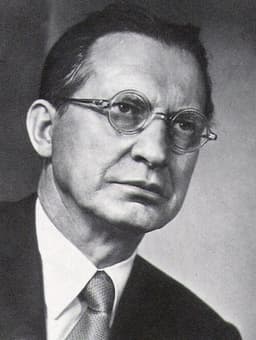
Alcide De Gasperi
Politician · Modern
55.5Total
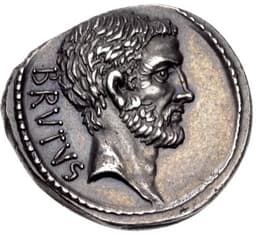
Lucius Junius Brutus
Politician · Ancient
72.7Total
Basic Information
Born
1881
-540
Died
1954
-509
Era
Modern
Ancient
Nationality
Italy
Roman Republic
Occupation
Politician
Politician
Civilization
Western
Western
Score Comparison
Military (10%)
12.4
45.0
Political (20%)
85.0
72.0
Influence (20%)
65.0
75.0
Legacy (20%)
40.0
90.0
Leadership (15%)
80.7
71.0
Strategy (15%)
31.5
54.8
TOTAL
55.5
72.7
Alcide De Gasperi — Complete Timeline
1946 AD
First Prime Minister of the Italian RepublicPolitical Action
De Gasperi became the first prime minister of the newly proclaimed Italian Republic in December 1945. He led a coalition government that included Christian Democrats, Socialists, and Communists. His government oversaw the transition from monarchy to republic.
RepublicGovernmentTransition
Impact: nationalconstructive
1947 AD
Peace Treaty of ParisPolitical Action◆ Major
De Gasperi signed the Treaty of Paris, which formally ended World War II for Italy. Italy lost its colonies, ceded territory to Yugoslavia and France, and paid reparations. The treaty was unpopular but allowed Italy to regain sovereignty and join the Western alliance.
TreatyWorld War IIDiplomacy
Impact: global
Expulsion of Communists from GovernmentPolitical Action
De Gasperi expelled the Italian Communist Party and Socialist Party from his coalition government in May 1947. This move aligned Italy with the United States and the Marshall Plan, deepening the Cold War divide. It solidified Christian Democratic dominance for decades.
Cold WarMarshall PlanCoalition
Impact: global
1949 AD
Italian Membership in NATOPolitical Action◆ Major
De Gasperi led Italy into the North Atlantic Treaty Organization (NATO) as a founding member. This decision anchored Italy in the Western bloc during the Cold War and secured U.S. military and economic support. It was opposed by the Communist Party.
NATOCold WarAlliance
Impact: globalconstructive
Lucius Junius Brutus — Complete Timeline
509 BC
Battle of Silva ArsiaWar◆ Major
Brutus led the Roman army against the forces of Tarquinius Superbus and his Etruscan allies at Silva Arsia. During the battle, Brutus and Arruns Tarquinius, the king's son, killed each other in single combat, but the Romans ultimately won the battle, securing the Republic's survival.
BattleSingle CombatFounding Myth
Impact: nationaltragic
Expulsion of the TarquinsPolitical Action
Lucius Junius Brutus led a revolt against the Tarquin monarchy after the rape of Lucretia by Sextus Tarquinius. He organized the Senate and the people to expel the royal family, ending the Roman Kingdom and establishing the Roman Republic with himself as one of the first consuls.
RevolutionFounding of RepublicOverthrow of Monarchy
Impact: globalprogressive
Execution of His SonsPolitical Action◆ Major
Brutus discovered that his own sons, Titus and Tiberius, had conspired to restore the Tarquins. As consul, he ordered their arrest, trial, and execution by beheading in the Forum, demonstrating his unwavering commitment to the Republic over family loyalty.
ExecutionConspiracyRepublican Virtue
Impact: nationaltragic
Oath of BrutusPolitical Action◆ Major
After the expulsion of the Tarquins, Brutus made the Roman people swear an oath never to allow a king to rule Rome again. This oath became a foundational principle of the Republic, reinforcing the commitment to liberty and opposition to tyranny.
OathRepublican IdeologyAnti-Monarchy
Impact: nationalprogressive
Expert Analysis
Alcide De Gasperi vs Lucius Junius Brutus
# The Republic’s Two Founders: Alcide De Gasperi and Lucius Junius Brutus
In the summer of 1946, an aging Italian politician stood before a shattered nation and declared that the monarchy was dead, that a republic had been born. Two and a half millennia earlier, another man had made almost the same proclamation on the banks of the Tiber, after watching his own sons die for the crime of treason. Alcide De Gasperi and Lucius Junius Brutus never met, never could have met, yet their lives trace the same arc: the founding of a republic, the sacrifice of everything for its survival, and the quiet terror of knowing that freedom is fragile. Why did one succeed where the other became a legend—and both leave behind a world that still remembers their names?
Origins
Lucius Junius Brutus was born into the twilight of Roman kingship, around 540 BC, in a world where power was personal and bloodlines determined destiny. The Tarquin dynasty had ruled Rome for generations, and young Brutus learned early that to appear clever was to invite death. He feigned stupidity—his very name *Brutus* means “dullard” in Latin—to survive the purges of King Tarquinius Superbus. This was a man shaped by fear, by the necessity of deception, by a world where the only law was the king’s will.
Alcide De Gasperi came from a different darkness. Born in 1881 in the Trentino, then part of the Austro-Hungarian Empire, he grew up speaking Italian in a German-speaking administration, a Catholic in a secularizing age. His father was a tax collector; his mother taught him that politics was service, not ambition. Where Brutus learned to hide his mind, De Gasperi learned to negotiate—between languages, between empires, between the Church and the state. He entered the Austrian parliament in 1911, then the Italian one after World War I, always the bridge, never the sword.
Rise to Power
Brutus rose through a single, violent act. In 509 BC, when the king’s son raped the noblewoman Lucretia, Brutus cast off his mask of idiocy. He pulled the dagger from her body, held it dripping before the Roman people, and swore an oath: never again would a king rule Rome. He did not climb a ladder of offices; he seized a moment, turned grief into revolution, and within days was elected one of Rome’s first two consuls.
De Gasperi’s ascent was slower, more torturous. He spent the 1920s opposing Mussolini, was arrested in 1927, and spent sixteen months in prison. After his release, he worked as a librarian in the Vatican, quietly preserving the ideas that would rebuild Italy. When Mussolini fell in 1943, De Gasperi emerged like a man from a cave, blinking in the light of a world that had forgotten him. By December 1945, he was prime minister of a nation in ruins—not through a dramatic dagger, but through sheer persistence, through outliving his enemies.
Leadership & Governance
The two men governed in opposite ways, because their republics faced opposite threats. Brutus’s Rome was threatened from without—the exiled Tarquins rallied Etruscan armies to retake the city. So Brutus became a general. At the Battle of Silva Arsia in 509 BC, he led the Roman cavalry personally, charging into the enemy ranks. He died in that battle, but Rome survived. His leadership was total, immediate, sacrificial.
De Gasperi’s Italy was threatened from within—by poverty, by the Communist Party that had helped win the war, by the ghost of fascism. So he became a diplomat. In 1947, he signed the Treaty of Paris, surrendering Italy’s colonies and accepting humiliating terms to rejoin the community of nations. That same year, he expelled the Communists from his coalition government, a move that required immense political courage. He knew they might take to the streets; he gambled that they would not. He was right. Then he led Italy into NATO in 1949, anchoring the new republic to the West. His weapons were treaties, not swords.
Triumph & Tragedy
Brutus’s greatest moment was also his most terrible. His own sons, Titus and Tiberius, conspired to restore the Tarquins. As consul, Brutus had them arrested, tried, and executed—beaten with rods, then beheaded. He watched. He did not flinch. The Roman historian Livy records that “the father turned his face away during the punishment,” but he did not stop it. This was triumph and tragedy fused into one unbearable act: the republic survived, but at the cost of his bloodline.
De Gasperi’s tragedy was quieter. He died in 1954, just as the Italian economic miracle was beginning, never seeing the prosperity his policies had made possible. His triumph was the republic itself—stable, democratic, free. But he died knowing that the Communists he had expelled might one day return, that the peace he had built was always provisional.
Character & Destiny
Brutus was a man of iron. He had to be. To found a republic in a world of kings required absolute ruthlessness, a willingness to kill even his own children for the principle of liberty. His personality was forged by the tyranny he overthrew: he became hard because the world was hard. His destiny was to be a symbol, not a statesman—he died young, leaving others to build what he had imagined.
De Gasperi was a man of wool—soft, patient, weaving alliances instead of breaking them. He had survived Mussolini’s prisons by being flexible, by knowing when to bend and when to stand. His destiny was to build, not to die dramatically. He governed for eight years, longer than any Italian prime minister until Silvio Berlusconi. His character was shaped by the slow politics of the Habsburg Empire, where nothing happened quickly, but everything happened eventually.
Legacy
Brutus became a name—the first Brutus, the noble Brutus, the man who killed his sons for Rome. Every Roman schoolchild learned his story. Shakespeare would make him a tragic hero. His legacy is the Roman Republic itself, which lasted nearly five centuries and shaped Western civilization. But he is remembered as a founder, not as a ruler; as a man of one great act.
De Gasperi is remembered differently. He has no Shakespeare play, no dramatic death. Instead, he has the Italian Constitution, NATO membership, the Marshall Plan, the European Coal and Steel Community—the architecture of post-war Europe. He is called the “father of the Italian Republic,” but his face is not on coins, his name not in epic poetry. His legacy is boring, which is the highest compliment a democratic founder can receive.
Conclusion
Two men, two republics, two millennia apart. Brutus founded Rome with a dagger and a dead son; De Gasperi founded Italy with a treaty and a coalition. One died in battle, the other in bed. One became a legend, the other a footnote in textbooks. Yet both understood the same truth: that a republic is not natural, not inevitable, not safe. It requires sacrifice—sometimes of blood, sometimes of pride, always of the self. Brutus gave his sons; De Gasperi gave his reputation. In the end, they gave the same thing: everything they had, for a form of government that would outlive them both. That is what founders do. That is why we remember them, even if we cannot quite remember what they looked like.
Rankings
🥇
Lucius Junius BrutusLeader
Mil: 45.0Pol: 72.0Inf: 75.0
72.7
🥈
Alcide De Gasperi
Mil: 12.4Pol: 85.0Inf: 65.0
55.5
+17.2 behind
How This Comparison Works
Algorithm
Each figure is scored on 6 dimensions (0—100 scale) based on structured historical data: Military (10%), Political (20%), Influence (20%), Legacy (20%), Leadership (15%), Strategy (15%). The weighted total produces the final ranking.
Data Sources
Scores are computed from structured sub-indicators in the database. Scale factors adjust for era (Ancient ×0.85, Modern ×1.0) and civilization size (Eastern ×1.05, Other ×0.80) to account for differences in population and military scale.
Maximum 3 Figures
Comparisons are limited to 2—3 figures to ensure readability and statistical meaningfulness.
Error Margins
±5 points per dimension — Sub-scores are derived from historical records with inherent uncertainty. Two figures within 5 points on a dimension should be considered roughly equivalent in that area.
Total Score Accuracy
±3 points overall — The weighted combination of 6 dimensions produces a total score with approximately ±3 points of uncertainty. Differences of less than 3 points are not statistically significant— the figures are effectively tied.
Known Limitations
- Historical records are incomplete and uneven across civilizations
- Figures from oral-tradition societies may be underrepresented
- Occupation labels can misclassify multi-role figures
- Scores measure capability and impact, not moral character
- Quantitative scoring is a comparison tool, not absolute truth
Capability Radar
Military (10%) — Battles & Warfare
Battles
11
10
Win Rate
15
10
Expansion
17
10
Political (20%) — Governance & Reform
Reform
85
90
Diplomacy
80
40
Economy
70
30
Influence (20%) — Cultural & Global Reach
Cultural
60
70
Global
65
70
Legacy (20%) — Historical Impact
Historical
70
80
Longevity
65
80
Leadership (15%) — Power & Stability
Tenure
75
30
Stability
75
40
Strategy (15%) — Tactics & Innovation
Strategy
21
10
Tactics
23
10
Reform
27
20
Similar Comparisons
Comments & Discussion
No comments yet. Be the first to share your thoughts!