Loading...
Cleisthenes vs Yuan Shikai
Cleisthenes leads by 18.3 pts · 2 figures compared
…
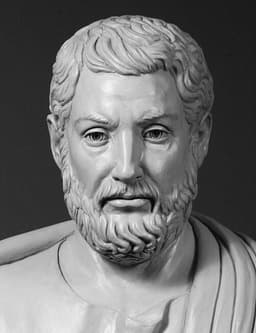
Cleisthenes
Politician · Ancient
78.3Total
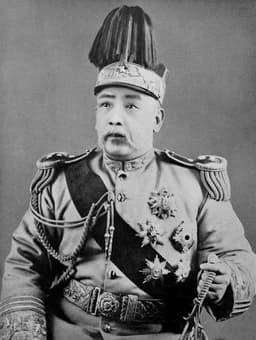
Yuan Shikai
Politician · Modern
60.0Total
Basic Information
Born
-570
1859
Died
-508
1916
Era
Ancient
Modern
Nationality
Greece
China
Occupation
Politician
Politician
Civilization
Western
Eastern
Score Comparison
Military (10%)
49.4
45.0
Political (20%)
62.7
72.0
Influence (20%)
92.0
57.2
Legacy (20%)
92.0
54.0
Leadership (15%)
72.0
72.0
Strategy (15%)
71.3
61.2
TOTAL
78.3
60.0
Cleisthenes — Complete Timeline
510 BC
Expulsion of the PeisistratidsPolitical Action◆ Major
Cleisthenes, with the support of the Alcmaeonid family and Spartan assistance, led the overthrow of the tyrant Hippias, son of Peisistratus. This ended the Peisistratid tyranny in Athens and opened the way for democratic reforms.
Tyranny OverthrownAthensSparta
Impact: nationalconstructive
508 BC
Reforms of CleisthenesReform
Cleisthenes reorganized the Athenian citizen body into ten new tribes based on demes, replacing the old four Ionian tribes. He established the Council of 500 (Boule) and introduced ostracism, creating a system of isonomia (equal rights) that is considered the foundation of Athenian democracy.
Athenian DemocracyConstitutional ReformAncient Greece
Impact: globalprogressive
507 BC
Introduction of OstracismReform◆ Major
Cleisthenes instituted ostracism, a procedure allowing Athenian citizens to vote annually to exile a prominent citizen deemed a threat to democracy for ten years. This mechanism aimed to prevent the rise of a new tyrant and stabilize the democratic system.
Athenian DemocracyPolitical MechanismExile
Impact: national
Yuan Shikai — Complete Timeline
1901 AD
Command of the Beiyang ArmyReform◆ Major
Yuan Shikai took command of the Beiyang Army, the most modern military force in late Qing China. He expanded and trained the army, which became the basis for his political power and later dominated Chinese politics.
Military reformBeiyang Army
Impact: national
1912 AD
Appointed First President of the Republic of ChinaPolitical Action
Yuan Shikai became the first president of the Republic of China after negotiating the abdication of the Qing emperor. He used his control of the Beiyang Army to pressure the revolutionary government into accepting his leadership.
PresidencyRepublic of China
Impact: national
1915 AD
Declaration of the Empire of ChinaPolitical Action◆ Major
Yuan Shikai declared himself emperor of the Empire of China, attempting to restore the monarchy. This move sparked widespread opposition from provincial leaders and foreign powers, leading to the collapse of his regime.
Monarchy restorationPolitical crisis
Impact: nationaldestructive
Signing of the Twenty-One DemandsPolitical Action◆ Major
Yuan Shikai accepted most of Japan's Twenty-One Demands, which expanded Japanese influence in China. The agreement granted Japan economic rights in Manchuria and Shandong, and was seen as a national humiliation.
DiplomacyJapanese imperialism
Impact: globaltragic
1916 AD
Death and Collapse of the Beiyang GovernmentPolitical Action◆ Major
Yuan Shikai died of uremia, leaving no clear successor. His death led to the fragmentation of the Beiyang Army into warlord factions, plunging China into a period of civil war and political instability.
Warlord eraPolitical fragmentation
Impact: nationaltragic
Expert Analysis
Yuan Shikai vs Cleisthenes
# The Emperor Who Would Be King, and the Father of Democracy
In the winter of 1915, Yuan Shikai sat in the Forbidden City, preparing to declare himself emperor of a new Chinese dynasty. Twenty-four centuries earlier, on the rocky slopes of the Athenian Acropolis, Cleisthenes was inscribing the names of citizens onto stone tablets, laying the foundation for the world's first democracy. One man reached for a crown; the other reached for a voting urn. Both sought to reshape their worlds. Only one succeeded—and in doing so, changed history forever.
Origins
Yuan Shikai was born in 1859, the son of a minor military official in Henan province. The Qing Dynasty was crumbling, battered by foreign gunboats and internal rebellions. Yuan grew up in a world where the old Confucian order was dying, and the only path to power lay through military modernization. He studied the classics but embraced Western weaponry, becoming a protégé of Li Hongzhang, the great viceroy who understood that China's salvation required steel and discipline.
Cleisthenes, born around 570 BCE, emerged from the aristocratic Alcmaeonid family of Athens. His world was one of city-states, tyrants, and constant warfare between noble clans. Unlike Yuan, who inherited a collapsing empire, Cleisthenes inherited a small, fractious polis where power was personal and violent. The difference in their starting points was profound: Yuan faced the challenge of managing decline; Cleisthenes faced the opportunity of building something new.
Rise to Power
Yuan Shikai's ascent was methodical and ruthless. In 1901, he took command of the Beiyang Army, transforming it into the most modern military force in China. He drilled his troops with Western tactics, equipped them with German rifles, and bound them to his personal loyalty. When the Qing Dynasty finally collapsed in 1912, Yuan was the only man who could hold the country together. He negotiated the abdication of the child emperor Puyi, and the new Republic of China made him its first president. His rise was a masterclass in political opportunism—he never led a revolution, but he stood ready to inherit its fruits.
Cleisthenes rose differently. In 510 BCE, he led the expulsion of the tyrant Hippias, who had ruled Athens for decades. With Spartan help, Cleisthenes overthrew the Peisistratid dynasty. But he quickly found himself in a power struggle with Isagoras, a rival aristocrat who appealed to Sparta for support. Cleisthenes was initially exiled, but the Athenian people rose in his defense, forcing Isagoras to flee. Cleisthenes returned not as a conqueror, but as a reformer who understood that his survival depended on empowering the masses who had saved him.
Leadership & Governance
Yuan Shikai governed through military might and political manipulation. As president, he ruled by decree, suppressed the nascent parliament, and ordered the assassination of political opponents. His military score of 60.7 reflects his competence as a commander, but his political score of 74.2 reveals a man who understood power but not legitimacy. In 1915, he accepted most of Japan's Twenty-One Demands, a humiliating treaty that granted Japan extensive control over Chinese territory and resources. It was a pragmatic decision—Yuan needed Japanese support for his imperial ambitions—but it destroyed his credibility.
Cleisthenes governed through reform. In 508 BCE, he reorganized Athenian society into ten new tribes based on demes (local villages), breaking the power of the old aristocratic clans. He created the Council of 500, chosen by lottery, and introduced ostracism in 507 BCE, allowing citizens to vote annually to exile a dangerous politician. His political score of 66.6 is modest, but his influence score of 90.0 and legacy score of 87.6 speak to the transformative power of his ideas. He didn't rule Athens; he gave Athens the tools to rule itself.
Triumph & Tragedy
Yuan Shikai's greatest triumph was becoming the first president of the Republic of China in 1912—a moment that seemed to promise national unity after centuries of imperial rule. But his greatest tragedy came three years later, when he declared himself emperor of the Empire of China in 1915. The move sparked nationwide rebellion. Provincial governors denounced him, his own Beiyang generals abandoned him, and foreign powers withdrew support. He died of uremia in 1916, broken and despised, leaving behind a fragmented China that would descend into warlord chaos.
Cleisthenes' triumph was the establishment of Athenian democracy itself. His reforms created a system that would endure for nearly two centuries, producing the golden age of Pericles, the plays of Sophocles, and the philosophy of Socrates. But his tragedy was personal: after his reforms were enacted, he largely disappears from the historical record. He did not become a tyrant or a hero-king. He became a footnote in his own story—the man who made democracy possible, then stepped aside.
Character & Destiny
Yuan Shikai was ambitious, shrewd, and deeply insecure. He craved legitimacy but could not earn it. He built an army loyal to him, not to China, and when he tried to crown himself, that army melted away. His personality was a product of his era—a man caught between tradition and modernity, who chose the trappings of tradition (the throne) while ignoring its substance (the mandate of heaven).
Cleisthenes was visionary, pragmatic, and unusually selfless. He understood that his power came not from crushing his enemies, but from creating institutions that made enemies irrelevant. His character reflected the Greek ideal of *isonomia*—equality before the law. He didn't want to be king; he wanted to make kings unnecessary.
Legacy
Yuan Shikai is remembered as a villain in Chinese history—the man who betrayed the Republic, sold out to Japan, and paved the way for decades of civil war. His total score of 70.6 reflects a competent but ultimately destructive figure. His military legacy survived through the warlords who followed him, but his political legacy is a cautionary tale.
Cleisthenes is remembered as the Father of Athenian Democracy. His reforms shaped Western political thought for millennia. The word "democracy" comes from his Athens. His legacy is not a monument or a dynasty, but an idea—that ordinary people can govern themselves.
Conclusion
Yuan Shikai and Cleisthenes faced similar challenges: how to rule in times of transition. Yuan chose to rule over people; Cleisthenes chose to give people the power to rule themselves. One built an army; the other built a constitution. One died in disgrace; the other lives in every vote cast in a free election. Their stories remind us that the deepest question of leadership is not "How do I gain power?" but "What do I do with it?" Yuan Shikai answered that question with a crown. Cleisthenes answered it with a stone tablet, inscribed with the names of citizens. The crown is gone. The tablet endures.
Rankings
🥇
CleisthenesLeader
Mil: 49.4Pol: 62.7Inf: 92.0
78.3
🥈
Yuan Shikai
Mil: 45.0Pol: 72.0Inf: 57.2
60.0
+18.3 behind
How This Comparison Works
Algorithm
Each figure is scored on 6 dimensions (0—100 scale) based on structured historical data: Military (10%), Political (20%), Influence (20%), Legacy (20%), Leadership (15%), Strategy (15%). The weighted total produces the final ranking.
Data Sources
Scores are computed from structured sub-indicators in the database. Scale factors adjust for era (Ancient ×0.85, Modern ×1.0) and civilization size (Eastern ×1.05, Other ×0.80) to account for differences in population and military scale.
Maximum 3 Figures
Comparisons are limited to 2—3 figures to ensure readability and statistical meaningfulness.
Error Margins
±5 points per dimension — Sub-scores are derived from historical records with inherent uncertainty. Two figures within 5 points on a dimension should be considered roughly equivalent in that area.
Total Score Accuracy
±3 points overall — The weighted combination of 6 dimensions produces a total score with approximately ±3 points of uncertainty. Differences of less than 3 points are not statistically significant— the figures are effectively tied.
Known Limitations
- Historical records are incomplete and uneven across civilizations
- Figures from oral-tradition societies may be underrepresented
- Occupation labels can misclassify multi-role figures
- Scores measure capability and impact, not moral character
- Quantitative scoring is a comparison tool, not absolute truth
Capability Radar
Military (10%) — Battles & Warfare
Battles
58
45
Win Rate
62
55
Expansion
59
50
Political (20%) — Governance & Reform
Reform
95
55
Diplomacy
70
70
Economy
40
50
Influence (20%) — Cultural & Global Reach
Cultural
85
40
Global
85
35
Legacy (20%) — Historical Impact
Historical
90
65
Longevity
95
40
Leadership (15%) — Power & Stability
Tenure
30
60
Stability
60
30
Strategy (15%) — Tactics & Innovation
Strategy
62
65
Tactics
67
60
Reform
72
80
Similar Comparisons
Comments & Discussion
锈迹斑斑6/16/2026
拿克利斯提尼的陶片放逐法和袁大头的洪宪帝制比,简直是关公战秦琼!古希腊那点城邦民主也就几万人在玩,搁中国就是土司寨子的把戏。袁大头至少练出了北洋新军,要是他晚死十年,日本人敢碰东北?民主大爷们写几篇演讲稿就能挡住机枪?
Quill-Driver6/16/2026
Cleisthenes reconfigured clans into demes—ten artificial tribes based on geography, not blood. That's structural genius, not moral superiority. Yuan Shikai recycled Confucian rituals by kowtowing to Heaven at the Temple of Heaven in 1914 before his coronation. Both men were institutional architects: one built voting blocks, the other a personality cult. Reading "democracy" versus "tyranny" into this misses how power actually gets organized.
反骨书虫6/16/2026
你们扯什么民主进步,克利斯提尼搞的是奴隶主贵族分赃游戏,雅典成年男性公民才占人口十分之一!袁大头至少废科举兴学堂,练新军修铁路,清末新政真金白银砸下去,可惜生错时代。雅典那帮人杯酒释兵权?呵,克里斯提尼本人流放后照样被追着打,史书粉饰太平罢了。
Rust-Belt Analyst6/16/2026
Here's the data point nobody cites: Yuan Shikai's Beiyang Army was 125,000 strong by 1912, modeled on German Junker discipline. Cleisthenes' reforms gave Athens 30,000 hoplites—but only after he exiled Isagoras with popular support. One leader militarized state capacity; the other democratized military service. Both used force to reshape institutions. The crown vs. urn framing is just historians picking sides.
Chronicler30786/16/2026
Yuan Shikai wasn't some Confucian emperor wannabe—he was a military realist who saw democracy as weakness. His failure came from overreach in 1915, timing his monarchy bid when Japan was gobbling up Shandong. Cleisthenes had the luxury of small-state reforms; Yuan had to command 500,000 troops while warlords bled China dry. Crown versus urn? Spare me the moralizing.