Loading...
Chen Qun vs Yuan Shikai
Yuan Shikai leads by 4.1 pts · 2 figures compared
…
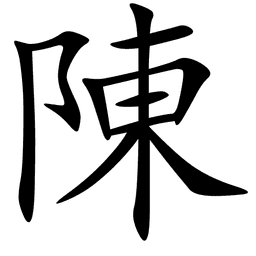
Chen Qun
Politician · Ancient
55.9Total
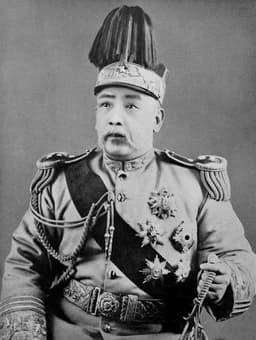
Yuan Shikai
Politician · Modern
60.0Total
Basic Information
Born
160
1859
Died
237
1916
Era
Ancient
Modern
Nationality
China
China
Occupation
Politician
Politician
Civilization
Eastern
Eastern
Score Comparison
Military (10%)
10.0
45.0
Political (20%)
72.0
72.0
Influence (20%)
40.0
57.2
Legacy (20%)
75.0
54.0
Leadership (15%)
72.0
72.0
Strategy (15%)
45.5
61.2
TOTAL
55.9
60.0
Chen Qun — Complete Timeline
220 AD
Proposed the Nine-rank SystemReform◆ Major
Chen Qun proposed the Nine-rank system for civil service appointments to Cao Pi, the first emperor of Wei. This system ranked candidates based on family background and personal merit, replacing the earlier recommendation system and becoming the standard for official selection in China for centuries.
Civil Service ReformWei DynastyBureaucracy
Impact: nationalconstructive
Advised Cao Pi on Legal CodeReform
Chen Qun assisted Cao Pi in drafting the new legal code for the Wei dynasty. He advocated for clearer laws and more consistent punishments, contributing to the legal framework that helped stabilize Wei's early rule.
Legal ReformWei DynastyLaw
Impact: nationalconstructive
226 AD
Served as Minister over the MassesPolitical Action
Chen Qun was appointed Minister over the Masses (Sikong) under Emperor Cao Rui of Wei. In this high-ranking position, he oversaw civil administration and continued to refine the implementation of the Nine-rank system, solidifying its role in Wei governance.
AppointmentWei DynastyGovernment
Impact: nationalconstructive
Yuan Shikai — Complete Timeline
1901 AD
Command of the Beiyang ArmyReform◆ Major
Yuan Shikai took command of the Beiyang Army, the most modern military force in late Qing China. He expanded and trained the army, which became the basis for his political power and later dominated Chinese politics.
Military reformBeiyang Army
Impact: national
1912 AD
Appointed First President of the Republic of ChinaPolitical Action
Yuan Shikai became the first president of the Republic of China after negotiating the abdication of the Qing emperor. He used his control of the Beiyang Army to pressure the revolutionary government into accepting his leadership.
PresidencyRepublic of China
Impact: national
1915 AD
Declaration of the Empire of ChinaPolitical Action◆ Major
Yuan Shikai declared himself emperor of the Empire of China, attempting to restore the monarchy. This move sparked widespread opposition from provincial leaders and foreign powers, leading to the collapse of his regime.
Monarchy restorationPolitical crisis
Impact: nationaldestructive
Signing of the Twenty-One DemandsPolitical Action◆ Major
Yuan Shikai accepted most of Japan's Twenty-One Demands, which expanded Japanese influence in China. The agreement granted Japan economic rights in Manchuria and Shandong, and was seen as a national humiliation.
DiplomacyJapanese imperialism
Impact: globaltragic
1916 AD
Death and Collapse of the Beiyang GovernmentPolitical Action◆ Major
Yuan Shikai died of uremia, leaving no clear successor. His death led to the fragmentation of the Beiyang Army into warlord factions, plunging China into a period of civil war and political instability.
Warlord eraPolitical fragmentation
Impact: nationaltragic
Expert Analysis
Yuan Shikai vs Chen Qun
### The Emperor Who Never Was and the Bureaucrat Who Shaped an Empire
On a crisp autumn day in 1915, Yuan Shikai stood in the Hall of Supreme Harmony in Beijing, preparing to don the yellow dragon robe of a new emperor. He had spent a lifetime clawing his way to power, only to find that the very forces he had unleashed—modern armies, nationalist fervor, and the ghost of a fallen dynasty—would not bend to his will. Half a continent and seventeen centuries away, Chen Qun sat in a quiet study in Luoyang, drafting a memo that would subtly reshape the governance of a rising kingdom. One man sought to revive an ancient throne and died in disgrace; the other invented a system that would define Chinese bureaucracy for four hundred years. What drove these two men, both brilliant politicians, to such different destinies?
### Origins: The Mandate of Heaven and the Weight of Tradition
Yuan Shikai was born in 1859, a child of the twilight of the Qing dynasty. His family was a military clan from Henan, steeped in the Confucian ideals of loyalty and service, but the world around them was crumbling. The Opium Wars had humiliated China, the Taiping Rebellion had nearly toppled the throne, and foreign powers carved out spheres of influence like butchers at a carcass. Yuan grew up watching his father and uncles struggle to hold the empire together with outdated weapons and older ideas. He learned early that power was not a gift of Heaven but a prize to be seized—and that tradition could be a cage or a ladder, depending on how you climbed it.
Chen Qun, born in 160, faced a different kind of chaos. The Han dynasty, which had ruled for four centuries, was in its death throes. Warlords fought across the land, and the central government was a ghost. Chen came from a scholarly family in Yingchuan, a region known for its intellectual ferment. His father was a noted Confucian, and young Chen was raised on the classics, but he also saw that the old ways—the hereditary appointments, the cronyism, the reliance on noble families—had failed. The question that haunted his generation was not how to restore the Han, but how to build something new from the rubble.
### Rise to Power: The Soldier and the Scholar
Yuan Shikai’s ascent was a story of ruthless pragmatism. He passed the imperial examinations, but barely, and soon abandoned the scholar’s path for the soldier’s. In Korea, he crushed a rebellion with such efficiency that the Qing court took notice. By 1901, he had command of the Beiyang Army, the most modern force in China—trained by German instructors, armed with Western rifles, and loyal to him personally. He used this base to become the indispensable man: the strongman who could keep order when the Qing emperor was a child and the revolutionaries were at the gate. In 1912, after the Wuchang Uprising, he negotiated the abdication of the boy emperor Puyi and became the first president of the Republic of China. It was a masterstroke of political maneuvering, but it left him standing on a volcano.
Chen Qun rose through words and ideas. He served under the warlord Cao Cao, the most brilliant strategist of the age, but Chen was no general. He was a counselor, a drafter of laws, a man who understood that power in a fractured age often flowed from the pen. In 220, when Cao Cao’s son Cao Pi was about to declare a new dynasty, Chen presented him with a proposal: the Nine-rank System, a method for selecting officials based on merit and local reputation, rather than birth or bribery. Cao Pi saw its genius—it would weaken the old aristocratic families and bind the new regime to a class of talented administrators. Chen was appointed to high office, eventually becoming Minister over the Masses, the third-highest rank in the Wei state. He did not command armies, but he shaped the men who would.
### Leadership & Governance: The Strongman and the System-Builder
Yuan Shikai’s rule was a paradox of competence and blindness. As president, he modernized the economy, reformed the legal code, and built railways. He crushed the Second Revolution in 1913, a rebellion by southern provinces, with brutal efficiency. But he governed through patronage and fear, not institutions. The Beiyang Army was his personal tool, not a national force. When he faced opposition, he bribed or bullied—never persuaded. His political wisdom was tactical, not strategic: he could win a battle but not build a peace.
Chen Qun governed through systems. The Nine-rank System was not a grand proclamation but a bureaucratic machine: local officials would rate candidates into nine grades, from the most talented to the least, and recommend them for office. It was imperfect—it could be rigged by local elites—but it was a vast improvement over the chaos of warlord appointments. Chen also helped draft a new legal code for Wei, advocating for clear, consistent laws that applied to all, not just the weak. He believed that a stable state required predictable rules, not a strongman’s whims. His leadership was quiet, almost invisible, but it outlasted every emperor he served.
### Triumph & Tragedy: The Crown and the Quill
Yuan Shikai’s greatest triumph was also his tragedy. In 1915, he declared himself emperor of the Empire of China, believing that only a strong monarchy could unite the fractured nation. It was a catastrophic miscalculation. The provinces rose in revolt, foreign powers condemned him, and even his own Beiyang generals abandoned him. He was forced to cancel the monarchy after just 83 days. His final act was the Twenty-One Demands, a humiliating treaty with Japan that granted Tokyo vast economic and political control over China. He died in 1916 of uremia, a broken man, leaving a nation in chaos and a legacy of warlordism.
Chen Qun’s triumph was the Nine-rank System itself. It became the backbone of Chinese civil service for the Wei, Jin, and Southern Dynasties, enduring for nearly 400 years. His tragedy was more subtle: the system eventually ossified, becoming a tool for aristocratic families to cement their power. But Chen did not live to see that. He died in 237, honored and respected, having built something that worked for his time. His failure was not personal but systemic—the fate of all human institutions.
### Character & Destiny: The Gambler and the Architect
Yuan Shikai was a gambler who believed he could outrun history. He was bold, clever, and utterly convinced of his own destiny. But he lacked patience and humility. He saw power as a prize to be seized, not a trust to be stewarded. His personality drove him to overreach—to grasp for the dragon throne when he should have consolidated the republic. His destiny was to be a tragic figure, a man who could destroy an old order but not build a new one.
Chen Qun was an architect who built for the long term. He was cautious, methodical, and deeply aware of his limits. He did not seek the throne or the spotlight; he sought to create systems that would outlast him. His personality was one of restraint and foresight—he knew that the best rulers are often invisible. His destiny was to be remembered not as a king but as a maker of kings.
### Legacy: The Warlord and the Institution
Yuan Shikai’s legacy is a warning. He is remembered as a traitor by Chinese nationalists, a would-be emperor who sold out his country for a crown. The warlord era that followed his death—a decade of chaos and bloodshed—is often laid at his feet. His name is synonymous with ambition without principle.
Chen Qun’s legacy is a foundation. The Nine-rank System shaped Chinese governance for centuries, influencing even the later imperial examinations. He is remembered as a wise minister, a man who understood that the state is not a person but a process. His name is spoken with respect, if not fame, by historians who see in him the quiet brilliance of institutional genius.
### Conclusion: Two Paths to Power
Yuan Shikai and Chen Qun both sought to solve the same problem: how to rule a vast, fractured China. One reached for the crown and found only ashes. The other reached for the quill and built a system that outlasted dynasties. Their stories remind us that power is not just about strength or ambition—it is about knowing what kind of power to seek. Yuan Shikai wanted to be the sun; Chen Qun was content to be the clock. In the end, the clock outlasted the sun.
Rankings
🥇
Yuan ShikaiLeader
Mil: 45.0Pol: 72.0Inf: 57.2
60.0
🥈
Chen Qun
Mil: 10.0Pol: 72.0Inf: 40.0
55.9
+4.1 behind
How This Comparison Works
Algorithm
Each figure is scored on 6 dimensions (0—100 scale) based on structured historical data: Military (10%), Political (20%), Influence (20%), Legacy (20%), Leadership (15%), Strategy (15%). The weighted total produces the final ranking.
Data Sources
Scores are computed from structured sub-indicators in the database. Scale factors adjust for era (Ancient ×0.85, Modern ×1.0) and civilization size (Eastern ×1.05, Other ×0.80) to account for differences in population and military scale.
Maximum 3 Figures
Comparisons are limited to 2—3 figures to ensure readability and statistical meaningfulness.
Error Margins
±5 points per dimension — Sub-scores are derived from historical records with inherent uncertainty. Two figures within 5 points on a dimension should be considered roughly equivalent in that area.
Total Score Accuracy
±3 points overall — The weighted combination of 6 dimensions produces a total score with approximately ±3 points of uncertainty. Differences of less than 3 points are not statistically significant— the figures are effectively tied.
Known Limitations
- Historical records are incomplete and uneven across civilizations
- Figures from oral-tradition societies may be underrepresented
- Occupation labels can misclassify multi-role figures
- Scores measure capability and impact, not moral character
- Quantitative scoring is a comparison tool, not absolute truth
Capability Radar
Military (10%) — Battles & Warfare
Battles
19
45
Win Rate
22
55
Expansion
25
50
Political (20%) — Governance & Reform
Reform
85
55
Diplomacy
50
70
Economy
60
50
Influence (20%) — Cultural & Global Reach
Cultural
70
40
Global
65
35
Legacy (20%) — Historical Impact
Historical
80
65
Longevity
85
40
Leadership (15%) — Power & Stability
Tenure
40
60
Stability
65
30
Strategy (15%) — Tactics & Innovation
Strategy
31
65
Tactics
32
60
Reform
36
80
Similar Comparisons
Comments & Discussion
No comments yet. Be the first to share your thoughts!