Loading...
Cleisthenes of Athens vs Yuan Shikai
Cleisthenes of Athens leads by 8.5 pts · 2 figures compared
…
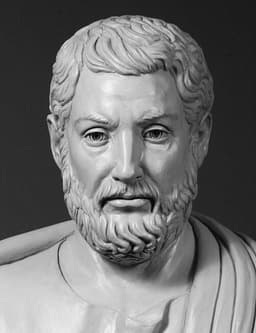
Cleisthenes of Athens
Politician · Ancient
68.5Total
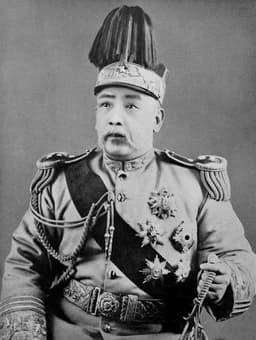
Yuan Shikai
Politician · Modern
60.0Total
Basic Information
Born
-570
1859
Died
-508
1916
Era
Ancient
Modern
Nationality
Athens
China
Occupation
Politician
Politician
Civilization
Western
Eastern
Score Comparison
Military (10%)
50.0
45.0
Political (20%)
62.7
72.0
Influence (20%)
80.0
57.2
Legacy (20%)
82.0
54.0
Leadership (15%)
62.0
72.0
Strategy (15%)
42.7
61.2
TOTAL
68.5
60.0
Cleisthenes of Athens — Complete Timeline
508 BC
Reform of the Athenian Tribes (Cleisthenes' Reforms)Reform
Cleisthenes reorganized the Athenian citizen body into ten new tribes based on demes (local districts), replacing the old four Ionian tribes. This broke the power of aristocratic clans and created a new political structure that formed the basis of Athenian democracy.
DemocracyPolitical ReformAthens
Impact: globalprogressive
Introduction of OstracismReform◆ Major
Cleisthenes introduced the practice of ostracism, allowing citizens to vote annually to exile a prominent figure for ten years. This mechanism was designed to prevent tyranny and remove threats to democracy. The first ostracism occurred in 487 BC.
DemocracyPolitical ReformExile
Impact: globalprogressive
Creation of the Council of 500 (Boule)Reform◆ Major
Cleisthenes established the Boule, a council of 500 citizens (50 from each tribe) chosen by lot. This body prepared legislation for the Assembly and oversaw daily administration. It replaced the aristocratic Areopagus as the main governing body, expanding citizen participation.
DemocracyPolitical ReformGovernment
Impact: globalprogressive
Exile of Isagoras and Spartan InterventionPolitical Action◆ Major
Cleisthenes' rival Isagoras called on Spartan king Cleomenes I to intervene in Athens. The Spartans expelled Cleisthenes and attempted to dissolve the Boule, but the Athenian people revolted, besieging the Acropolis and forcing the Spartans to withdraw. Cleisthenes was recalled.
Spartan InterventionDemocracyAthens
Impact: nationalconstructive
Yuan Shikai — Complete Timeline
1901 AD
Command of the Beiyang ArmyReform◆ Major
Yuan Shikai took command of the Beiyang Army, the most modern military force in late Qing China. He expanded and trained the army, which became the basis for his political power and later dominated Chinese politics.
Military reformBeiyang Army
Impact: national
1912 AD
Appointed First President of the Republic of ChinaPolitical Action
Yuan Shikai became the first president of the Republic of China after negotiating the abdication of the Qing emperor. He used his control of the Beiyang Army to pressure the revolutionary government into accepting his leadership.
PresidencyRepublic of China
Impact: national
1915 AD
Declaration of the Empire of ChinaPolitical Action◆ Major
Yuan Shikai declared himself emperor of the Empire of China, attempting to restore the monarchy. This move sparked widespread opposition from provincial leaders and foreign powers, leading to the collapse of his regime.
Monarchy restorationPolitical crisis
Impact: nationaldestructive
Signing of the Twenty-One DemandsPolitical Action◆ Major
Yuan Shikai accepted most of Japan's Twenty-One Demands, which expanded Japanese influence in China. The agreement granted Japan economic rights in Manchuria and Shandong, and was seen as a national humiliation.
DiplomacyJapanese imperialism
Impact: globaltragic
1916 AD
Death and Collapse of the Beiyang GovernmentPolitical Action◆ Major
Yuan Shikai died of uremia, leaving no clear successor. His death led to the fragmentation of the Beiyang Army into warlord factions, plunging China into a period of civil war and political instability.
Warlord eraPolitical fragmentation
Impact: nationaltragic
Expert Analysis
Yuan Shikai vs Cleisthenes of Athens
# The Architect and the Emperor: Cleisthenes and Yuan Shikai
History has a way of staging strange parallels. In 508 BC, an exiled Athenian aristocrat slipped back into his city under cover of political chaos, ready to reshape the foundations of governance. Twenty-four centuries later, in 1915, a man who had once been the hope of Chinese republicanism knelt in the Forbidden City, accepting the title of emperor. Both men stood at the crossroads of their civilizations. One built a system that would echo for millennia. The other tore one apart in a single, grasping gesture. Why did their paths diverge so radically?
Origins
Cleisthenes was born into the Alcmaeonid clan, one of Athens’ most powerful and controversial families. His grandfather had been cursed for sacrilege; his father had fled into exile. This was a world of fierce aristocratic rivalries, where power flowed through bloodlines and the common people had little voice. Yet Athens was also a city in ferment—its citizens had recently overthrown a tyrant, Hippias, and were experimenting with the dangerous idea that ordinary men might govern themselves.
Yuan Shikai was born in 1859 in Henan province, into a minor gentry family in a China reeling from the Opium Wars. The Qing Dynasty, once the Middle Kingdom, was crumbling under foreign guns and internal rebellion. Where Cleisthenes inherited a tradition of civic debate, Yuan inherited a world of imperial collapse. His path to power lay not through reform but through survival—mastering the arts of military command and political maneuver in a system where loyalty was currency and betrayal was common.
Rise to Power
Cleisthenes’ rise was paradoxical. He was an aristocrat who championed the demos—the common people. In the power vacuum after the fall of the tyrant Hippias, his rival Isagoras seized control. When Isagoras called in Spartan troops to purge the Alcmaeonids, Cleisthenes fled. But the people of Athens rose in fury, besieging the Spartans on the Acropolis and forcing their surrender. Cleisthenes returned not as a conqueror but as a popular leader, his authority resting on the will of the citizenry.
Yuan Shikai’s ascent was more deliberate and more ruthless. In 1901, he took command of the Beiyang Army, forging it into the most modern fighting force in China. He positioned himself as indispensable—too useful for the Qing to dismiss, too powerful for reformers to ignore. When the 1911 Revolution broke out, he became the broker between the dying empire and the fledgling republic. In 1912, he negotiated the abdication of the child emperor Puyi and became the first president of the Republic of China. He had not won power through popular acclaim; he had seized it through calculation.
Leadership & Governance
Cleisthenes’ genius was structural. In 508 BC, he reorganized the Athenian citizen body into ten new tribes, each composed of demes (local districts) from different regions—coast, city, and inland. This broke the power of the old aristocratic clans, whose influence had been rooted in regional loyalties. He created the Council of 500, chosen by lot, to prepare legislation for the Assembly. He introduced ostracism, allowing citizens to vote annually to exile a dangerous figure for ten years. These were not abstract reforms; they were weapons against tyranny, designed to distribute power so widely that no single faction could seize it.
Yuan Shikai’s governance was personal. He ruled through patronage, rewarding loyal generals and suppressing rivals. He maintained the trappings of democracy—a parliament, a constitution—but hollowed them out. In 1915, he accepted most of Japan’s Twenty-One Demands, granting Tokyo extensive economic and political control over China. It was a pragmatic decision, born of military weakness, but it shattered his legitimacy. Then came the fatal miscalculation: in December 1915, he declared himself emperor of the Empire of China.
Triumph & Tragedy
Cleisthenes’ triumph was the creation of Athenian democracy. The system he designed endured for nearly two centuries, producing the golden age of Pericles, the tragedies of Sophocles, and the philosophy of Socrates. His tragedy was personal: after his reforms, he vanished from the historical record. We do not know how he died. He built a system that outlived him, and that was enough.
Yuan Shikai’s triumph was his rise itself—a man from modest origins who commanded the most powerful army in China and held the fate of a nation in his hands. His tragedy was his fall. The declaration of empire sparked a wave of uprisings across China. His own generals abandoned him. Within months, he was forced to cancel the monarchy. In June 1916, he died of uremia, leaving a shattered government and a fractured army. The Beiyang Army fragmented into warlord factions, plunging China into a decade of civil war.
Character & Destiny
Cleisthenes was a reformer who understood that power must be shared to be stable. He was willing to sacrifice his own class privilege for a larger vision. Yuan Shikai was a survivor who believed power was a prize to be hoarded. He saw democracy as a mask for personal rule, and when the mask slipped, he reached for a crown. Their personalities shaped their decisions: Cleisthenes’ confidence in institutions, Yuan’s faith in himself.
History rewarded the one who trusted the people and destroyed the one who trusted only his own ambition.
Legacy
Cleisthenes is remembered as the Father of Athenian Democracy. His reforms laid the foundation for Western political thought—the idea that citizens, not kings, should govern. The word “democracy” itself owes its survival to his work.
Yuan Shikai is remembered as a cautionary tale. He is the man who could have saved China’s republic and chose instead to destroy it. His legacy is the warlord era, the chaos that paved the way for the rise of the Communists and the Nationalists. In China’s historical memory, he is a villain—a man who put his own ambition above his country.
Conclusion
One man built a house that stood for centuries. The other set fire to a house that might have stood. Cleisthenes and Yuan Shikai faced similar questions: How do you govern a society in crisis? How do you balance order and liberty? Their answers were opposite, and so were their fates. The Athenian gave power away and became immortal. The Chinese emperor grasped for it and became dust. In the end, history does not judge by ambition, but by what that ambition leaves behind.
Rankings
🥇
Cleisthenes of AthensLeader
Mil: 50.0Pol: 62.7Inf: 80.0
68.5
🥈
Yuan Shikai
Mil: 45.0Pol: 72.0Inf: 57.2
60.0
+8.5 behind
How This Comparison Works
Algorithm
Each figure is scored on 6 dimensions (0—100 scale) based on structured historical data: Military (10%), Political (20%), Influence (20%), Legacy (20%), Leadership (15%), Strategy (15%). The weighted total produces the final ranking.
Data Sources
Scores are computed from structured sub-indicators in the database. Scale factors adjust for era (Ancient ×0.85, Modern ×1.0) and civilization size (Eastern ×1.05, Other ×0.80) to account for differences in population and military scale.
Maximum 3 Figures
Comparisons are limited to 2—3 figures to ensure readability and statistical meaningfulness.
Error Margins
±5 points per dimension — Sub-scores are derived from historical records with inherent uncertainty. Two figures within 5 points on a dimension should be considered roughly equivalent in that area.
Total Score Accuracy
±3 points overall — The weighted combination of 6 dimensions produces a total score with approximately ±3 points of uncertainty. Differences of less than 3 points are not statistically significant— the figures are effectively tied.
Known Limitations
- Historical records are incomplete and uneven across civilizations
- Figures from oral-tradition societies may be underrepresented
- Occupation labels can misclassify multi-role figures
- Scores measure capability and impact, not moral character
- Quantitative scoring is a comparison tool, not absolute truth
Capability Radar
Military (10%) — Battles & Warfare
Battles
22
45
Win Rate
27
55
Expansion
28
50
Political (20%) — Governance & Reform
Reform
95
55
Diplomacy
70
70
Economy
40
50
Influence (20%) — Cultural & Global Reach
Cultural
85
40
Global
80
35
Legacy (20%) — Historical Impact
Historical
90
65
Longevity
95
40
Leadership (15%) — Power & Stability
Tenure
30
60
Stability
60
30
Strategy (15%) — Tactics & Innovation
Strategy
35
65
Tactics
34
60
Reform
40
80
Similar Comparisons
Comments & Discussion
数据猎人6/16/2026
我这个数据控要揭穿神话。常有人说袁世凯1915年称帝是“自私的倒退”,但看数字:他当总统时,中国国债从1912年的24.7亿两降到1915年的20.2亿两,裁撤了九成旧衙门。而克利斯提尼的“民主改革”呢?他执政时雅典人口不过4万有投票权的男性,8万奴隶和3万外邦人毫无权力。一个是稳定帝国的务实者,另一个在玩少数人的游戏。别给我讲理想,讲数据。
民国老炮6/16/2026
作为民国史迷,我烦透了把袁世凯比作克利斯提尼的烂梗。克利斯提尼是在城邦废墟上播种民主的生机,而袁世凯是在共和国婴儿期撤走一切支柱,然后骂它不会走路。关键是时间差:雅典从僭主到民主花了二十多年,克利斯提尼有空间试错;而中国从清朝到民国仅三年,袁世凯就急不可耐地收买议员、解散国会、称帝。他不是建筑师,是废墟上的抢劫者。
Historian4966/16/2026
Revisionist critic: both men failed in their own ways—neither deserves a crown. Cleisthenes’ constitution exiled his rivals, banned their families, and created a democracy that still executed Socrates; it was oligarchic liberation for a few thousand. Yuan crushed China’s fragile republic, but he inherited a carcass—the Qing hadn’t collected taxes in five provinces by 1911. Neither was a builder; both were opportunists who rode historical waves
Historian9926/16/2026
As a military historian, I see a stunning contrast in command of force. Cleisthenes used his exile strategically, returned with a coalition, and then codified power into institutions—he built a navy and army that served the state, not the man. Yuan, by contrast, hoarded the Beiyang Army as a personal army, then declared monarchy while it rotted in courts. Cleisthenes’ reforms gave Athens 150 years of hoplite dominance; Yuan’s grab gave China a century of warlord chaos. One controlled violence; t
Historian6596/16/2026
Classics scholar here: the comparison is valid only if we ignore the soul of governance. Cleisthenes didn't just draw tribes and assemblies ex nihilo—he wove them into Athens' existing religious festivals, like the Panathenaea, giving civic life sacred depth. Yuan, in his "monarchical restoration," cut off China's spiritual lineage: he abolished the Qing's official Confucian rites in 1914, then in 1915 tried to revive a hollow emperor cult without the Mandate's moral weight. One built a cathedra