Loading...
Lucius Junius Brutus vs Sitiveni Rabuka
Lucius Junius Brutus leads by 21.0 pts · 2 figures compared
…
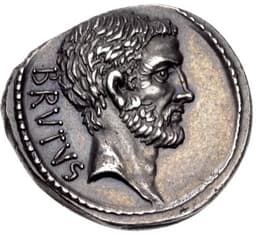
Lucius Junius Brutus
Politician · Ancient
72.7Total
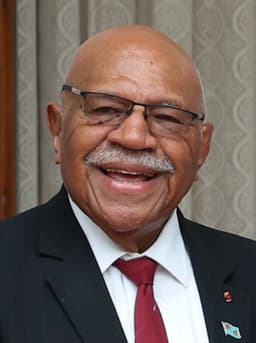
Sitiveni Rabuka
General · Modern
51.7Total
Basic Information
Born
-540
1948
Died
-509
—
Era
Ancient
Modern
Nationality
Roman Republic
Fiji
Occupation
Politician
General
Civilization
Western
Other
Score Comparison
Military (10%)
45.0
10.2
Political (20%)
72.0
60.0
Influence (20%)
75.0
53.3
Legacy (20%)
90.0
46.7
Leadership (15%)
71.0
85.0
Strategy (15%)
54.8
39.6
TOTAL
72.7
51.7
Lucius Junius Brutus — Complete Timeline
509 BC
Battle of Silva ArsiaWar◆ Major
Brutus led the Roman army against the forces of Tarquinius Superbus and his Etruscan allies at Silva Arsia. During the battle, Brutus and Arruns Tarquinius, the king's son, killed each other in single combat, but the Romans ultimately won the battle, securing the Republic's survival.
BattleSingle CombatFounding Myth
Impact: nationaltragic
Expulsion of the TarquinsPolitical Action
Lucius Junius Brutus led a revolt against the Tarquin monarchy after the rape of Lucretia by Sextus Tarquinius. He organized the Senate and the people to expel the royal family, ending the Roman Kingdom and establishing the Roman Republic with himself as one of the first consuls.
RevolutionFounding of RepublicOverthrow of Monarchy
Impact: globalprogressive
Execution of His SonsPolitical Action◆ Major
Brutus discovered that his own sons, Titus and Tiberius, had conspired to restore the Tarquins. As consul, he ordered their arrest, trial, and execution by beheading in the Forum, demonstrating his unwavering commitment to the Republic over family loyalty.
ExecutionConspiracyRepublican Virtue
Impact: nationaltragic
Oath of BrutusPolitical Action◆ Major
After the expulsion of the Tarquins, Brutus made the Roman people swear an oath never to allow a king to rule Rome again. This oath became a foundational principle of the Republic, reinforcing the commitment to liberty and opposition to tyranny.
OathRepublican IdeologyAnti-Monarchy
Impact: nationalprogressive
Sitiveni Rabuka — Complete Timeline
1987 AD
1987 Fijian Coup d'étatPolitical Action
Rabuka, as a colonel in the Fijian military, led a coup overthrowing the elected government of Timoci Bavadra. The coup was motivated by ethnic Fijian opposition to Indo-Fijian political influence. Rabuka declared Fiji a republic.
CoupMilitary InterventionEthnic Tension
Impact: nationaldestructive
1992 AD
1992 Election as Prime MinisterPolitical Action◆ Major
Rabuka transitioned from military leader to civilian politician, winning the 1992 general election as leader of the Fijian Political Party. He became Prime Minister, serving until 1999.
ElectionCivilian GovernmentPolitical Transition
Impact: national
1997 AD
1997 Constitution ReformReform◆ Major
Rabuka's government oversaw the adoption of a new constitution that removed ethnic-based voting and provided for a multi-ethnic government. The constitution aimed to reduce ethnic tensions and promote national unity.
ConstitutionReformEthnic Reconciliation
Impact: nationalconstructive
1999 AD
1999 General Election DefeatPolitical Action◆ Major
Rabuka's government was defeated in the general election by the Labour Party led by Mahendra Chaudhry. Rabuka stepped down as Prime Minister, marking the end of his first period in power.
Election DefeatGovernment ChangeChaudhry
Impact: national
2022 AD
2022 Return as Prime MinisterPolitical Action◆ Major
Rabuka led the People's Alliance to victory in the 2022 general election, forming a coalition government. He became Prime Minister again, 23 years after his previous tenure, promising democratic reforms.
ElectionReturn to PowerCoalition Government
Impact: national
Expert Analysis
Lucius Junius Brutus vs Sitiveni Rabuka
The Coup and the Oath
On a May morning in 1987, a Fijian colonel in battle fatigues strode into Parliament and ended a government with the click of a rifle. Nearly 2,500 years earlier, a Roman nobleman stood before a crowd of grieving citizens, holding a dagger still wet from his own sons’ blood. Sitiveni Rabuka and Lucius Junius Brutus—two men who destroyed the order they were born into, each convinced that liberty demanded a terrible price. One would spend decades trying to undo his own violent act; the other would die in battle, his name forever synonymous with republican virtue. What drove them down such different paths, and why did their stories end so differently?
Origins
Lucius Junius Brutus was born into the aristocracy of Rome’s final kings, the Tarquins, around 540 BCE. His family was powerful but hated the monarchy’s cruelty. Legend says he feigned stupidity—hence the name “Brutus,” meaning dullard—to survive the king’s purges. He waited, calculating, until the moment was ripe.
Sitiveni Rabuka was born in 1948 on the island of Vanua Levu, in a Fiji still under British colonial rule. He was a chief’s son from the indigenous Fijian community, raised in a world where ethnic Fijians held land but Indo-Fijians, descendants of indentured laborers, dominated commerce and, increasingly, politics. His path was military: Sandhurst-trained, disciplined, loyal to the chain of command. But beneath the uniform simmered a conviction that his people’s birthright was being stolen.
Rise to Power
Brutus’s rise came through a single, shocking event. In 509 BCE, a Tarquin prince raped the noblewoman Lucretia, who killed herself rather than live in dishonor. Brutus, dropping his mask of idiocy, pulled the dagger from her body and swore before the Roman people: never again would a king rule Rome. He led the revolt that expelled the Tarquins and, in the chaos, was elected one of the first consuls of the new Republic.
Rabuka’s rise was slower, bloodless in its own way, but no less revolutionary. In 1987, after an election brought the Indo-Fijian-led Labour Party to power, Rabuka—then a colonel—seized control in a coup. He claimed he was protecting indigenous Fijian rights. The coup toppled a democratically elected government and sent shockwaves through the Pacific. Unlike Brutus, Rabuka did not act as a liberator in the eyes of the world; he was condemned as a tyrant.
Leadership & Governance
Brutus governed with an iron commitment to principle. As consul, he shared power with a colleague, Tarquinius Collatinus, but soon forced him into exile for his family ties to the old regime. He then faced a conspiracy to restore the monarchy—and discovered his own sons, Titus and Tiberius, were among the plotters. Without hesitation, Brutus ordered them beaten and beheaded. He watched the execution, according to tradition, without flinching. For Brutus, the Republic was not a convenience; it was a sacred trust that demanded the ultimate sacrifice.
Rabuka’s governance was more pragmatic and, ultimately, more human. After the coup, he tried to rule as a military strongman but quickly realized that power without legitimacy was hollow. In 1992, he transformed himself into a civilian politician, winning the prime ministership. His great achievement came in 1997: a new constitution that abolished ethnic voting and created a multiracial democracy. It was a remarkable reversal—the man who had overthrown democracy became its architect. But his people did not reward him. In 1999, he lost the election to the very party he had ousted twelve years earlier.
Triumph & Tragedy
Brutus’s greatest moment came at the Battle of Silva Arsia, in 509 BCE, when he led the Roman army against the exiled Tarquins and their Etruscan allies. He fought in the front lines, and in the chaos of the forest, he fell, killed by a Tarquin prince. His tragedy was that he died for a Republic he would never see flourish. His triumph was that he died for it at all.
Rabuka’s triumph came late. After decades in the political wilderness, he returned to power in 2022, leading the People’s Alliance to victory. At 74, he became prime minister again, this time as a democratic elder statesman. His tragedy was the long shadow of the coup—a stain that never fully washed away. He could not escape the irony that his greatest act of statesmanship, the 1997 constitution, was born from his greatest act of betrayal.
Character & Destiny
Brutus’s character was carved from stone. He was unbending, fanatical, willing to sacrifice everything—including his own flesh and blood—for an idea. His destiny was to become a symbol: the father of Roman liberty, the man who made the Republic possible. He had no second act.
Rabuka’s character was more complex. He was a man of contradictions: a coup leader who became a democrat, a chief who learned to share power, a soldier who sought peace. His destiny was to live long enough to see his mistakes and try to correct them. He had not one act but three—soldier, dictator, reformer—and the final chapter is still being written.
Legacy
Brutus is remembered as the founder of the Roman Republic, a figure of mythic severity. His oath—never again a king—echoed through Western history, inspiring generations of republicans. His name became a warning: liberty demands blood, even the blood of your own children.
Rabuka’s legacy is more contested. In Fiji, he is both villain and hero, depending on who tells the story. Abroad, he is a cautionary tale about the fragility of democracy. But his later years have softened the judgment. He showed that a man can change, that a nation can heal, that even a coup can be redeemed by a constitution.
Conclusion
Two men, two coups, two republics. Brutus died in battle, his work unfinished, his legend secure. Rabuka grew old, watched his work nearly unravel, and then rebuilt it. One was a martyr to an ideal; the other, a survivor of his own worst self. Perhaps the difference is time: Brutus never had to live with the consequences of his act. Rabuka did—and chose, in the end, to live differently. The Roman gave his life for liberty; the Fijian gave his liberty to life. Which is the harder path? The answer, like history itself, is never simple.
Rankings
🥇
Lucius Junius BrutusLeader
Mil: 45.0Pol: 72.0Inf: 75.0
72.7
🥈
Sitiveni Rabuka
Mil: 10.2Pol: 60.0Inf: 53.3
51.7
+21.0 behind
How This Comparison Works
Algorithm
Each figure is scored on 6 dimensions (0—100 scale) based on structured historical data: Military (10%), Political (20%), Influence (20%), Legacy (20%), Leadership (15%), Strategy (15%). The weighted total produces the final ranking.
Data Sources
Scores are computed from structured sub-indicators in the database. Scale factors adjust for era (Ancient ×0.85, Modern ×1.0) and civilization size (Eastern ×1.05, Other ×0.80) to account for differences in population and military scale.
Maximum 3 Figures
Comparisons are limited to 2—3 figures to ensure readability and statistical meaningfulness.
Error Margins
±5 points per dimension — Sub-scores are derived from historical records with inherent uncertainty. Two figures within 5 points on a dimension should be considered roughly equivalent in that area.
Total Score Accuracy
±3 points overall — The weighted combination of 6 dimensions produces a total score with approximately ±3 points of uncertainty. Differences of less than 3 points are not statistically significant— the figures are effectively tied.
Known Limitations
- Historical records are incomplete and uneven across civilizations
- Figures from oral-tradition societies may be underrepresented
- Occupation labels can misclassify multi-role figures
- Scores measure capability and impact, not moral character
- Quantitative scoring is a comparison tool, not absolute truth
Capability Radar
Military (10%) — Battles & Warfare
Battles
10
5
Win Rate
10
5
Expansion
10
5
Political (20%) — Governance & Reform
Reform
90
50
Diplomacy
40
45
Economy
30
40
Influence (20%) — Cultural & Global Reach
Cultural
70
30
Global
70
20
Legacy (20%) — Historical Impact
Historical
80
40
Longevity
80
30
Leadership (15%) — Power & Stability
Tenure
30
55
Stability
40
35
Strategy (15%) — Tactics & Innovation
Strategy
10
10
Tactics
10
10
Reform
20
5
Similar Comparisons
Comments & Discussion
BrutusTheLoyal6/16/2026
Two men who broke oaths for what they called liberty—but only one truly paid for it. Rabuka apologized, converted to democracy, even became Prime Minister by the same voting system he'd overthrown. Brutus watched his own sons executed for conspiring to restore the monarchy. Rabuka wanted to save Fijian land; Brutus wanted to save the Republic itself. One was a pragmatist who came to regret his coup; the other was a fanatic who would've killed his whole family for Rome. That's not the same thing.
政变之斧6/16/2026
拉布卡是典型的“道歉型独裁者”——1987年政变后他声称保护原住民权益,结果自己后来当总理时照样推行多党民主。布鲁图斯杀了亲儿子,拉布卡连辞职都不敢干脆。说白了,斐济政变就是一场种族保护主义的军事闹剧,跟布鲁图斯捍卫共和制的理想根本不是一回事。拿这两人比较,简直侮辱了“暴君”这个词的分量。
DataSkeptic426/16/2026
Let’s be honest: we’re comparing a semi-mythological figure who may not have existed to a modern politician whose coup we have on video. The entire story of Brutus executing his sons first appears centuries after his supposed death, in Livy’s propaganda-heavy history of Rome. We have zero contemporary accounts. Rabuka’s 1987 coup is documented, measurable, and his motivations are clear—ethnic nationalism, not abstract liberty. One is a literary symbol; the other is a historical actor. Apples and
古罗马棒槌6/16/2026
布鲁图斯装傻二十多年躲过国王清洗,拉布卡装傻三天就被人看穿。罗马人的“杀子祭国”写在史书里当成美德典范,斐济人的“军人干政”被联合国制裁到哭。说到底,太平年代搞政变和乱世里杀儿子,哪个更狠?历史早就判了——布鲁图斯是英雄,拉布卡是独裁者。后人写诗只歌颂罗马,不会有人给斐济人写《斐济陆斯》的。