Loading...
Lucius Junius Brutus vs Muhammadu Buhari
Lucius Junius Brutus leads by 21.2 pts · 2 figures compared
…
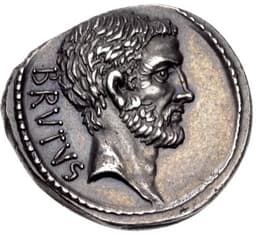
Lucius Junius Brutus
Politician · Ancient
72.7Total
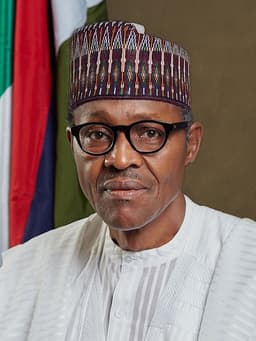
Muhammadu Buhari
General · Modern
51.5Total
Basic Information
Born
-540
1942
Died
-509
—
Era
Ancient
Modern
Nationality
Roman Republic
Nigeria
Occupation
Politician
General
Civilization
Western
Other
Score Comparison
Military (10%)
45.0
22.6
Political (20%)
72.0
68.0
Influence (20%)
75.0
53.3
Legacy (20%)
90.0
43.3
Leadership (15%)
71.0
72.0
Strategy (15%)
54.8
41.0
TOTAL
72.7
51.5
Lucius Junius Brutus — Complete Timeline
509 BC
Battle of Silva ArsiaWar◆ Major
Brutus led the Roman army against the forces of Tarquinius Superbus and his Etruscan allies at Silva Arsia. During the battle, Brutus and Arruns Tarquinius, the king's son, killed each other in single combat, but the Romans ultimately won the battle, securing the Republic's survival.
BattleSingle CombatFounding Myth
Impact: nationaltragic
Expulsion of the TarquinsPolitical Action
Lucius Junius Brutus led a revolt against the Tarquin monarchy after the rape of Lucretia by Sextus Tarquinius. He organized the Senate and the people to expel the royal family, ending the Roman Kingdom and establishing the Roman Republic with himself as one of the first consuls.
RevolutionFounding of RepublicOverthrow of Monarchy
Impact: globalprogressive
Execution of His SonsPolitical Action◆ Major
Brutus discovered that his own sons, Titus and Tiberius, had conspired to restore the Tarquins. As consul, he ordered their arrest, trial, and execution by beheading in the Forum, demonstrating his unwavering commitment to the Republic over family loyalty.
ExecutionConspiracyRepublican Virtue
Impact: nationaltragic
Oath of BrutusPolitical Action◆ Major
After the expulsion of the Tarquins, Brutus made the Roman people swear an oath never to allow a king to rule Rome again. This oath became a foundational principle of the Republic, reinforcing the commitment to liberty and opposition to tyranny.
OathRepublican IdeologyAnti-Monarchy
Impact: nationalprogressive
Muhammadu Buhari — Complete Timeline
1983 AD
1983 Nigerian coup d'étatPolitical Action
Major General Muhammadu Buhari led a military coup that overthrew the civilian government of President Shehu Shagari. Buhari cited corruption and economic mismanagement as justifications, and he became the head of state.
CoupMilitary RuleCorruption
Impact: nationaldestructive
1984 AD
War Against Indiscipline (WAI)Reform◆ Major
Buhari launched the War Against Indiscipline, a campaign to enforce discipline and order in Nigerian society. It included harsh penalties for minor offenses, such as queue-jumping, and was criticized for human rights abuses.
DisciplineSocial PolicyHuman Rights
Impact: nationaldestructive
1985 AD
Overthrow by Ibrahim BabangidaPolitical Action◆ Major
Buhari was overthrown in a palace coup led by his Chief of Army Staff, Ibrahim Babangida. Babangida cited Buhari's authoritarian style and failure to address the economy as reasons for the coup.
CoupOverthrowBabangida
Impact: national
2015 AD
Anti-corruption campaignReform◆ Major
Buhari launched a high-profile anti-corruption campaign, targeting government officials and recovering stolen assets. The campaign was praised internationally but criticized for being selective and politically motivated.
Anti-CorruptionReformGovernance
Impact: nationalconstructive
Election as President of NigeriaPolitical Action
Buhari won the 2015 Nigerian presidential election, defeating incumbent Goodluck Jonathan. This was the first time an opposition candidate had defeated a sitting president in Nigeria's history, marking a democratic milestone.
ElectionDemocracyOpposition Victory
Impact: nationalprogressive
Expert Analysis
Lucius Junius Brutus vs Muhammadu Buhari
# The Iron Hand and the Unyielding Oath
In the summer of 1985, Muhammadu Buhari sat in the State House in Lagos, a general who had seized power with promises of discipline and order, only to find himself betrayed by his own chief of army staff. Two and a half millennia earlier, in the Forum of Rome, Lucius Junius Brutus watched his own sons being led to execution for conspiring to restore the monarchy he had overthrown. Both men wielded absolute power. Both believed they were saving their nations. Yet one was overthrown in disgrace, while the other became the founding legend of a republic that would endure for centuries. What explains the difference?
Origins
Lucius Junius Brutus was born around 540 BCE into the patrician class of Rome, then a small city-state ruled by Etruscan kings. His family had reason to fear the Tarquin dynasty: his own father and brother had been murdered by the king’s agents. Brutus survived by playing the fool—his surname means "stupid"—feigning idiocy to avoid the same fate. His early life was a lesson in survival through deception, a mask worn for decades until the moment when truth could no longer be hidden.
Muhammadu Buhari was born in 1942 in Daura, a town in northern Nigeria, into a Fulani Muslim family. He joined the Nigerian Army in 1962, rising through the ranks during a period when the military was seen as the only institution capable of holding Nigeria together. His formative years were shaped by the Biafran War, the coups and counter-coups of the 1960s, and the creeping corruption that hollowed out civilian governments. Where Brutus learned to dissemble, Buhari learned to command.
Both men emerged from worlds where order was fragile and betrayal was commonplace. But Brutus’s Rome was a city of perhaps 30,000 people, a face-to-face society where personal honor mattered more than bureaucratic efficiency. Buhari’s Nigeria was a sprawling nation of tens of millions, an artificial state carved by colonial powers, where loyalty was often to ethnicity or region rather than to the nation itself.
Rise to Power
Brutus’s rise was sudden and revolutionary. In 509 BCE, after the rape of Lucretia by the king’s son, he threw off his mask of stupidity, seized the dagger from Lucretia’s wound, and rallied the Roman people. He led the expulsion of the Tarquin monarchy and, in that same year, was elected one of the first two consuls of the Roman Republic. His power came from a single, explosive act of moral outrage—a moment when the city’s collective anger fused with his personal vengeance.
Buhari’s path was more methodical. On December 31, 1983, as a major general, he led a military coup that overthrew President Shehu Shagari, whose civilian government had become synonymous with corruption and economic mismanagement. The coup was bloodless, and Buhari was initially welcomed as a savior. He assumed the title of Head of State, promising to restore discipline and accountability. His rise was not a revolution from below but a palace intervention from above—a general stepping in where politicians had failed.
The difference is critical: Brutus rose by channeling the fury of an entire people; Buhari rose by exploiting the institutional weakness of a fragile democracy. One was a liberator; the other, a caretaker.
Leadership & Governance
Brutus’s leadership was defined by a single, terrible act: the execution of his own sons. When they conspired to restore the Tarquins, Brutus, as consul, ordered their death. He watched as they were beaten and beheaded, his face reportedly unmoved. This was not cruelty for its own sake—it was a calculated display of absolute commitment to the Republic. By sacrificing his bloodline, he made the oath against kingship sacred. His military performance at the Battle of Silva Arsia, where he died fighting the Tarquins’ Etruscan allies, sealed his reputation as a leader willing to die for his cause.
Buhari’s governance was different. In 1984, he launched the War Against Indiscipline (WAI), a campaign to enforce order through public humiliation, forced labor for minor offenses, and draconian punishments. Civil servants who arrived late were made to do frog jumps; those who littered faced public flogging. The WAI was popular in principle—Nigerians were tired of chaos—but it was enforced without mercy or nuance. The regime also jailed journalists, suppressed dissent, and detained political opponents without trial.
Where Brutus used terror to establish a principle (no kings), Buhari used discipline to enforce a mood (no laziness). Brutus’s severity was surgical and symbolic; Buhari’s was bureaucratic and pervasive. Brutus’s republic gave rise to institutions—the Senate, the consulship, the tribunes—that would check power for centuries. Buhari’s WAI left no lasting institutions, only memories of humiliation.
Triumph & Tragedy
Brutus’s triumph was the expulsion of the Tarquins and the creation of the Republic. His tragedy was the execution of his sons and his own death in battle—but these were not failures; they were the price of his success. He died knowing the Republic would survive him.
Buhari’s triumph came decades later: in 2015, he was elected president of Nigeria in the first peaceful transfer of power between parties in the nation’s history. It was a remarkable redemption for a man who had been overthrown in 1985 and had spent years in detention. His anti-corruption campaign, launched that same year, targeted high-profile officials and recovered billions in stolen assets.
But his tragedy was that the campaign became politicized, targeting opponents while allies escaped scrutiny. The economy stagnated, inflation soared, and by the end of his term, Buhari’s reputation had frayed. He had returned as a democrat but governed with the same iron instincts that had marked his military rule.
Character & Destiny
Brutus was a fanatic—not in the modern sense of irrational zeal, but in the ancient sense of being possessed by a single idea. He believed that the Republic was sacred and that any threat to it, even from his own blood, must be eliminated. His character was rigid, unbending, and absolute. This made him a great founder but a difficult companion.
Buhari was also rigid, but his rigidity was that of a soldier, not a revolutionary. He believed in order, hierarchy, and discipline—not in the transformative power of a new political order. His 1983 coup was a reaction to decay, not a vision for rebirth. His 2015 election was a return to power, not a reimagining of it. Where Brutus shaped history, Buhari was shaped by it—a man who tried twice to fix Nigeria but never changed its fundamental nature.
Legacy
Brutus’s legacy is immortal. The Roman Republic lasted nearly five centuries, and its ideals of civic virtue, mixed government, and resistance to tyranny influenced Western civilization for two millennia. The oath he made the Romans swear—never again to tolerate a king—echoed through history, inspiring everyone from the American Founders to modern republicans. His total score of 70.3, with a legacy score of 90.0, reflects this enduring power.
Buhari’s legacy is more contested. His total score of 60.7, with a legacy score of 56.7, suggests a figure of moderate but not transformative impact. He is remembered as a man of integrity in a corrupt system, but also as a leader whose methods were too harsh for a democracy and too soft for a dictatorship. His greatest achievement—the peaceful transfer of power in 2015—may outlast his failures, but it is not yet clear whether it will become a tradition or an exception.
Conclusion
The difference between Brutus and Buhari is not simply one of time or place. It is the difference between a founder and a fixer. Brutus created something new; Buhari tried to repair something old. Brutus’s severity was in service of a principle that outlived him; Buhari’s severity was in service of a mood that faded. Both men were harsh, both were sincere, and both believed they were doing what their nations needed. But one built a republic; the other, merely a reputation. In the end, history forgives the tyrant who founds a free state, but it forgets the general who only wanted to clean house.
Rankings
🥇
Lucius Junius BrutusLeader
Mil: 45.0Pol: 72.0Inf: 75.0
72.7
🥈
Muhammadu Buhari
Mil: 22.6Pol: 68.0Inf: 53.3
51.5
+21.2 behind
How This Comparison Works
Algorithm
Each figure is scored on 6 dimensions (0—100 scale) based on structured historical data: Military (10%), Political (20%), Influence (20%), Legacy (20%), Leadership (15%), Strategy (15%). The weighted total produces the final ranking.
Data Sources
Scores are computed from structured sub-indicators in the database. Scale factors adjust for era (Ancient ×0.85, Modern ×1.0) and civilization size (Eastern ×1.05, Other ×0.80) to account for differences in population and military scale.
Maximum 3 Figures
Comparisons are limited to 2—3 figures to ensure readability and statistical meaningfulness.
Error Margins
±5 points per dimension — Sub-scores are derived from historical records with inherent uncertainty. Two figures within 5 points on a dimension should be considered roughly equivalent in that area.
Total Score Accuracy
±3 points overall — The weighted combination of 6 dimensions produces a total score with approximately ±3 points of uncertainty. Differences of less than 3 points are not statistically significant— the figures are effectively tied.
Known Limitations
- Historical records are incomplete and uneven across civilizations
- Figures from oral-tradition societies may be underrepresented
- Occupation labels can misclassify multi-role figures
- Scores measure capability and impact, not moral character
- Quantitative scoring is a comparison tool, not absolute truth
Capability Radar
Military (10%) — Battles & Warfare
Battles
10
10
Win Rate
10
10
Expansion
10
5
Political (20%) — Governance & Reform
Reform
90
30
Diplomacy
40
25
Economy
30
20
Influence (20%) — Cultural & Global Reach
Cultural
70
25
Global
70
25
Legacy (20%) — Historical Impact
Historical
80
30
Longevity
80
20
Leadership (15%) — Power & Stability
Tenure
30
45
Stability
40
15
Strategy (15%) — Tactics & Innovation
Strategy
10
15
Tactics
10
15
Reform
20
20
Similar Comparisons
Comments & Discussion
No comments yet. Be the first to share your thoughts!