Loading...
Lucius Junius Brutus vs Midhat Pasha
Lucius Junius Brutus leads by 8.4 pts · 2 figures compared
…
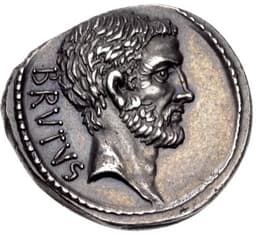
Lucius Junius Brutus
Politician · Ancient
72.7Total
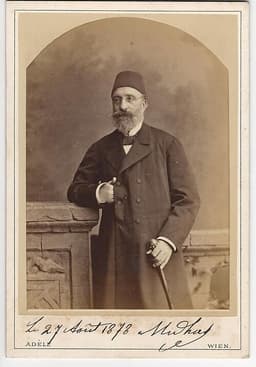
Midhat Pasha
Politician · Modern
64.3Total
Basic Information
Born
-540
1822
Died
-509
1884
Era
Ancient
Modern
Nationality
Roman Republic
Ottoman Empire
Occupation
Politician
Politician
Civilization
Western
Middle Eastern
Score Comparison
Military (10%)
45.0
10.0
Political (20%)
72.0
78.0
Influence (20%)
75.0
82.0
Legacy (20%)
90.0
72.0
Leadership (15%)
71.0
62.0
Strategy (15%)
54.8
38.3
TOTAL
72.7
64.3
Lucius Junius Brutus — Complete Timeline
509 BC
Battle of Silva ArsiaWar◆ Major
Brutus led the Roman army against the forces of Tarquinius Superbus and his Etruscan allies at Silva Arsia. During the battle, Brutus and Arruns Tarquinius, the king's son, killed each other in single combat, but the Romans ultimately won the battle, securing the Republic's survival.
BattleSingle CombatFounding Myth
Impact: nationaltragic
Expulsion of the TarquinsPolitical Action
Lucius Junius Brutus led a revolt against the Tarquin monarchy after the rape of Lucretia by Sextus Tarquinius. He organized the Senate and the people to expel the royal family, ending the Roman Kingdom and establishing the Roman Republic with himself as one of the first consuls.
RevolutionFounding of RepublicOverthrow of Monarchy
Impact: globalprogressive
Execution of His SonsPolitical Action◆ Major
Brutus discovered that his own sons, Titus and Tiberius, had conspired to restore the Tarquins. As consul, he ordered their arrest, trial, and execution by beheading in the Forum, demonstrating his unwavering commitment to the Republic over family loyalty.
ExecutionConspiracyRepublican Virtue
Impact: nationaltragic
Oath of BrutusPolitical Action◆ Major
After the expulsion of the Tarquins, Brutus made the Roman people swear an oath never to allow a king to rule Rome again. This oath became a foundational principle of the Republic, reinforcing the commitment to liberty and opposition to tyranny.
OathRepublican IdeologyAnti-Monarchy
Impact: nationalprogressive
Midhat Pasha — Complete Timeline
1864 AD
Governorship of the Danube VilayetReform◆ Major
As governor of the Danube Vilayet from 1864 to 1868, Midhat Pasha implemented extensive reforms. He built roads, bridges, and schools, established a provincial bank, and promoted agricultural development. His administration became a model for Tanzimat provincial governance.
GovernorshipReformInfrastructure
Impact: regionalconstructive
1872 AD
Appointment as Grand VizierPolitical Action◆ Major
Midhat Pasha was appointed Grand Vizier for the first time in 1872. He had previously served as governor of the Danube Vilayet and was known for his reformist ideas. His tenure was short-lived due to opposition from conservative factions and the sultan.
AppointmentReformOttoman Politics
Impact: nationalconstructive
1876 AD
Proclamation of the Ottoman Constitution of 1876Reform
Midhat Pasha was the chief architect of the first Ottoman Constitution, proclaimed on December 23, 1876. The constitution established a bicameral parliament, guaranteed civil liberties, and limited the sultan's powers. It was a landmark in Ottoman modernization, though it was suspended in 1878.
ConstitutionReformParliament
Impact: nationalprogressive
1881 AD
Exile and TrialPolitical Action◆ Major
Midhat Pasha was arrested in 1881 on charges of involvement in the murder of Sultan Abd
ExileTrialExecution
Impact: nationaltragic
Expert Analysis
Lucius Junius Brutus vs Midhat Pasha
# The Reformer and the Revolutionary
On December 23, 1876, a cannon salute echoed across Istanbul. The Ottoman Empire had just proclaimed its first constitution, and the man who had written it, Midhat Pasha, stood at the pinnacle of his power. Nearly two and a half millennia earlier and a thousand miles to the west, another man had stood before the Roman people, forcing them to swear an oath that would echo through history: never again would a king rule Rome. Lucius Junius Brutus had just expelled the Tarquins, and his own sons were about to die by his order. Two founders, two constitutions, two paths to freedom—and two utterly different destinies. What drove one to create a nation and the other to lose his life in exile?
Origins
Midhat Pasha was born in 1822 into a world of decay. The Ottoman Empire, once the terror of Europe, was now its "sick man." His father was a judge, his family part of the bureaucratic elite that had kept the empire running for centuries. He grew up in Istanbul, learning Arabic, Persian, and French, absorbing the ideas of the Tanzimat reforms—a generation of Ottoman statesmen who believed that modernization could save the empire. He was a child of the system, educated to preserve it.
Lucius Junius Brutus was born around 540 BCE into a world of tyranny. Rome was a small kingdom ruled by the Etruscan Tarquin dynasty, a family so cruel that the very word "king" would become a curse in Roman politics. Brutus was a patrician, but he had learned to hide his intelligence. According to tradition, he pretended to be a fool to avoid the Tarquins' suspicion—hence his cognomen "Brutus," meaning "dullard." He was a survivor, shaped by fear and cunning.
Their eras defined them. Midhat Pasha lived in an age of nationalism and liberalism, when constitutions were the currency of legitimacy. Brutus lived in an age of oath and blood, when freedom meant killing or being killed.
Rise to Power
Midhat Pasha's rise was a story of competence rewarded. In 1864, he was appointed governor of the Danube Vilayet, a vast province in the Balkans. He built roads, bridges, and hospitals. He established a provincial council with elected members. He created a postal system and a bank. The results were so impressive that the sultan took notice. By 1872, Midhat Pasha had become Grand Vizier, the highest office in the empire. But his power was always conditional. The sultan could dismiss him at will, and did—more than once.
Brutus's rise was a story of sudden revolution. In 509 BCE, a Roman noblewoman named Lucretia was raped by Sextus Tarquinius, the king's son. She told her father and her husband, then killed herself. Brutus, who had been with them, pulled the knife from her wound and swore to overthrow the monarchy. He organized a revolt, rallied the army, and forced King Tarquinius Superbus into exile. Within weeks, Brutus was elected one of the first two consuls of the new Roman Republic.
Midhat Pasha rose through institutions. Brutus shattered them.
Leadership & Governance
Midhat Pasha governed through reform. He believed that the Ottoman Empire could survive only if it became a constitutional monarchy, with a parliament, civil rights, and equality for all subjects regardless of religion. The 1876 constitution was his masterpiece. It guaranteed freedom of the press, established an elected parliament, and limited the sultan's power. Midhat Pasha was a political genius in the art of the possible—he negotiated with conservative clerics, liberal intellectuals, and the sultan himself.
Brutus governed through will. As consul, he faced an immediate crisis: the exiled Tarquins had convinced the Etruscan king Lars Porsenna to attack Rome. At the Battle of Silva Arsia, Brutus led the Roman army personally. He fought in the front ranks, and died in the battle. But Rome won.
Their military scores reflect this difference. Midhat Pasha's military score is 30.2—he was a civilian reformer, not a general. Brutus's is 34.8—slightly higher, but still modest. Neither was a conqueror. Their power was political, not martial.
Triumph & Tragedy
Midhat Pasha's greatest triumph was December 23, 1876. The constitution was proclaimed, and for a few months, the Ottoman Empire had a parliament. But the triumph was fragile. Sultan Abdülhamid II, who had signed the constitution, never intended to keep it. Within two years, he suspended it and dissolved the parliament. Midhat Pasha was arrested in 1881, accused of involvement in the murder of Sultan Abdülaziz. He was tried, sentenced to death, then exiled to Taif in Arabia. In 1884, he was strangled in his sleep by assassins sent from Istanbul.
Brutus's greatest triumph was the same as his greatest tragedy: his sons. When Brutus discovered that Titus and Tiberius had conspired to restore the Tarquins, he ordered their execution. As consul, he watched his own sons be beaten and beheaded. He showed no emotion. The Roman historian Livy records that Brutus "performed the office of consul, punishing his sons, so that even to his enemies he was an object of admiration." He died in battle later that year, but he died free.
Midhat Pasha was murdered by the state he tried to save. Brutus died for the state he created.
Character & Destiny
Midhat Pasha was a reformer who believed in progress. He was patient, diplomatic, and optimistic. He thought that reason and law could tame the sultan's power. He was wrong. The Ottoman system, for all its reforms, remained an autocracy. The sultan could not tolerate a rival, and Midhat Pasha's very success made him a threat. His character—his faith in institutions—led him to trust the system that would destroy him.
Brutus was a revolutionary who believed in absolutes. He was ruthless, theatrical, and unyielding. He understood that freedom requires sacrifice, and he was willing to sacrifice anything—including his own sons. His character—his fanatical commitment to the republic—made him a legend. But it also made him a man who could not compromise, even with his own blood.
Legacy
Midhat Pasha's legacy score is 73.9. He is remembered as the father of Ottoman constitutionalism, a martyr for liberal reform. His constitution, though short-lived, inspired later movements in Turkey and the Arab world. But his failure is also a warning: reform from within, without power, can be fatal.
Brutus's legacy score is 90.0. He is remembered as the founder of the Roman Republic, a symbol of civic virtue and paternal sacrifice. His oath—the oath never to allow a king—shaped Roman politics for centuries. Every Roman politician, from Cato to Caesar, had to reckon with the ghost of Brutus.
Conclusion
Two men, two constitutions, two deaths. Midhat Pasha died in exile, strangled by strangers. Brutus died in battle, mourned by his countrymen. One tried to save an empire; the other tried to create a republic. One trusted in law; the other trusted in blood. Their differences are not just personal—they are historical. Midhat Pasha lived in a world where reform was possible but revolution was not. Brutus lived in a world where revolution was the only path. The question their lives pose is as urgent today as it was then: Can freedom be granted, or must it be taken? The answer, perhaps, is written in the dust of two graves—one in Arabia, one in Rome.
Rankings
🥇
Lucius Junius BrutusLeader
Mil: 45.0Pol: 72.0Inf: 75.0
72.7
🥈
Midhat Pasha
Mil: 10.0Pol: 78.0Inf: 82.0
64.3
+8.4 behind
How This Comparison Works
Algorithm
Each figure is scored on 6 dimensions (0—100 scale) based on structured historical data: Military (10%), Political (20%), Influence (20%), Legacy (20%), Leadership (15%), Strategy (15%). The weighted total produces the final ranking.
Data Sources
Scores are computed from structured sub-indicators in the database. Scale factors adjust for era (Ancient ×0.85, Modern ×1.0) and civilization size (Eastern ×1.05, Other ×0.80) to account for differences in population and military scale.
Maximum 3 Figures
Comparisons are limited to 2—3 figures to ensure readability and statistical meaningfulness.
Error Margins
±5 points per dimension — Sub-scores are derived from historical records with inherent uncertainty. Two figures within 5 points on a dimension should be considered roughly equivalent in that area.
Total Score Accuracy
±3 points overall — The weighted combination of 6 dimensions produces a total score with approximately ±3 points of uncertainty. Differences of less than 3 points are not statistically significant— the figures are effectively tied.
Known Limitations
- Historical records are incomplete and uneven across civilizations
- Figures from oral-tradition societies may be underrepresented
- Occupation labels can misclassify multi-role figures
- Scores measure capability and impact, not moral character
- Quantitative scoring is a comparison tool, not absolute truth
Capability Radar
Military (10%) — Battles & Warfare
Battles
10
0
Win Rate
10
0
Expansion
10
0
Political (20%) — Governance & Reform
Reform
90
85
Diplomacy
40
70
Economy
30
60
Influence (20%) — Cultural & Global Reach
Cultural
70
55
Global
70
55
Legacy (20%) — Historical Impact
Historical
80
70
Longevity
80
60
Leadership (15%) — Power & Stability
Tenure
30
65
Stability
40
40
Strategy (15%) — Tactics & Innovation
Strategy
10
0
Tactics
10
0
Reform
20
10
Similar Comparisons
Comments & Discussion
章程破坏者6/16/2026
表面上卢修斯·布鲁图像个革命者,实际上他是个虚伪的精英之虎。他处死自己儿子不过是政治表演,用来巩固贵族特权,不是真的为了人民。罗马的“共和”本质上还是元老院寡头统治,普通人根本没权,这和奥斯曼的宪政梦一样是空中楼阁。历史学家总是把他神化成自由偶像,却忽略了他砍自己骨肉时那股冷血。
Skeptical Dataist6/16/2026
Let's not buy into the hero worship. The comparison says Brutus "forced an oath" and executed his sons, but where's the actual evidence for this? Our sources, like Livy, wrote centuries later with heavy political agendas. For all we know, Brutus was a convenient founding myth invented to justify aristocratic rule, not a real revolutionary. Midhat Pasha's reforms, on the other hand, are documented in Ottoman archives, complete with drafts and counterarguments. One is history with footnotes; the o
奥斯曼之盾6/16/2026
米德哈特帕夏才是真正的务实者。他在奥斯曼宪政中加入了苏丹的否决权和议会制平衡,这是深思熟虑后的妥协,不是布鲁图的极端主义。布鲁图杀了儿子,却留下了贵族内斗的种子,罗马后来陷入多少内战?米德哈特试图在帝国框架内改革,让各民族共存,这是唯一可行的现实路线。只可惜他生于逆境,死于专制之手,但他的蓝图至今影响着土耳其现代宪法。
Classical Ironist6/16/2026
The real joke is how both men tried to shape history, but history laughed in their faces. Brutus's noble republic produced the Gracchi's bloodbath and eventually Augustus, the most subtle king of all. And Midhat's constitution? Oh, it lasted barely two years before Sultan Abdul Hamid II suspended it and packed Midhat off to exile and murder. Every reformer thinks he can "save" his world. The only thing they truly save is a spot in a cautionary tale for ambitious students.