Loading...
Lord Dalhousie vs Winston Churchill
Winston Churchill leads by 13.4 pts · 2 figures compared
…
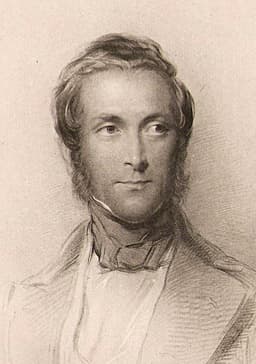
Lord Dalhousie
Politician · Modern
58.4Total
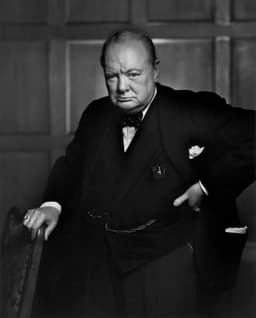
Winston Churchill
Politician · Modern
71.8Total
Basic Information
Born
1812
1874
Died
1860
1965
Era
Modern
Modern
Nationality
United Kingdom
United Kingdom
Occupation
Politician
Politician
Civilization
Western
Western
Score Comparison
Military (10%)
40.0
55.0
Political (20%)
60.0
78.0
Influence (20%)
58.3
75.0
Legacy (20%)
55.0
68.0
Leadership (15%)
74.0
82.0
Strategy (15%)
60.0
65.0
TOTAL
58.4
71.8
Lord Dalhousie — Complete Timeline
1848 AD
Second Anglo-Sikh WarWar◆ Major
Dalhousie oversaw the Second Anglo-Sikh War in 1848-1849, which resulted in the British annexation of the Punjab. The Sikh army was defeated at the Battle of Gujrat, and the Treaty of Lahore in 1849 formally annexed the region, ending Sikh sovereignty and extending British rule to the northwest frontier.
Anglo-Sikh WarAnnexationPunjab
Impact: regional
Doctrine of LapsePolitical Action
Lord Dalhousie, as Governor-General of India, implemented the Doctrine of Lapse, a policy that allowed the British to annex any princely state where the ruler died without a natural heir. This policy led to the annexation of states like Satara, Jhansi, and Nagpur, causing widespread resentment among Indian rulers and contributing to the 1857 Rebellion.
AnnexationPolicy1857 Rebellion
Impact: regionaldestructive
1853 AD
Railway and Telegraph ExpansionInvention◆ Major
Dalhousie championed the development of railways and telegraphs in India. The first railway line from Bombay to Thane opened in 1853, and a telegraph network was established connecting major cities. These projects aimed to improve communication, trade, and military control, laying the foundation for India's modern infrastructure.
InfrastructureRailwayTelegraph
Impact: regionalconstructive
1856 AD
Annexation of AwadhPolitical Action◆ Major
Dalhousie annexed the Kingdom of Awadh in 1856 under the pretext of misgovernment. The annexation was highly controversial and deeply resented by the local population and nobility. It became a major cause of the 1857 Indian Rebellion, as Awadh's soldiers and landlords joined the uprising against British rule.
AnnexationAwadh1857 Rebellion
Impact: regionaldestructive
Winston Churchill — Complete Timeline
1940 AD
Appointed Prime Minister of the United KingdomPolitical Action◆ Major
On May 10, 1940, Winston Churchill became Prime Minister of the United Kingdom, replacing Neville Chamberlain. His appointment came as Nazi Germany invaded France and the Low Countries, and Churchill formed a coalition government to lead Britain through World War II.
World War IILeadershipCoalition Government
Impact: globalconstructive
Delivered the 'We Shall Fight on the Beaches' SpeechOther◆ Major
On June 4, 1940, Churchill delivered a speech to the House of Commons following the evacuation of British forces from Dunkirk. He declared that Britain would fight on the beaches, landing grounds, fields, streets, and hills, and never surrender, rallying British morale during the darkest days of World War II.
World War IIOratoryMorale
Impact: nationalconstructive
1941 AD
Signed the Atlantic CharterOther◆ Major
On August 14, 1941, Churchill and U.S. President Franklin D. Roosevelt signed the Atlantic Charter aboard HMS Prince of Wales. This joint declaration outlined post-war goals including self-determination, disarmament, and free trade, and became a foundational document for the Allied war aims and the United Nations.
World War IIAllied CooperationPost-war Planning
Impact: globalconstructive
1945 AD
Attended the Yalta ConferenceOther◆ Major
In February 1945, Churchill attended the Yalta Conference with Roosevelt and Stalin to discuss the post-war reorganization of Europe. The conference agreed on the division of Germany, the establishment of the United Nations, and the fate of Eastern Europe, though Churchill later expressed regret over concessions to Stalin.
World War IIPost-war SettlementBig Three
Impact: global
1946 AD
Delivered the 'Iron Curtain' SpeechOther◆ Major
On March 5, 1946, Churchill delivered a speech at Westminster College in Fulton, Missouri, where he stated that an 'iron curtain' had descended across Europe from Stettin to Trieste. This speech is widely regarded as marking the beginning of the Cold War, as it highlighted the division between Soviet-controlled Eastern Europe and the West.
Cold WarSoviet UnionDivision of Europe
Impact: globaldestructive
1953 AD
Awarded the Nobel Prize in LiteratureOther◆ Major
In 1953, Churchill was awarded the Nobel Prize in Literature for his historical writings, particularly 'The Second World War' and 'A History of the English-Speaking Peoples'. The Nobel committee cited his mastery of historical and biographical description as well as his brilliant oratory in defending human values.
LiteratureNobel PrizeHistorical Writing
Impact: nationalconstructive
Expert Analysis
Winston Churchill vs Lord Dalhousie
# The Two Faces of British Power
On a bitter January morning in 1941, Winston Churchill stood amid the rubble of a London street, his cigar clamped between his teeth, and raised his hand in his signature V-for-Victory sign. The Blitz raged overhead, but the defiant old man seemed to draw strength from the destruction. Just ninety-three years earlier, another British statesman had stood in the heat of an Indian summer, watching as the last Sikh kingdom fell to British guns. James Ramsay, the tenth Earl of Dalhousie, was thirty-six years old, and he believed he was building an empire that would last a thousand years. Both men were products of the same imperial system, yet they could not have been more different—one a savior in his nation's darkest hour, the other an architect of its greatest imperial catastrophe.
Origins
Churchill was born into the aristocracy in 1874, but his path was never easy. His father, Lord Randolph Churchill, was a brilliant but erratic politician who died young, leaving Winston to carve his own way. The boy was a poor student, rebellious and lonely, yet he devoured history and military strategy. His mother, an American heiress, gave him ambition; his years as a cavalry officer in India, Sudan, and South Africa gave him a visceral understanding of war and empire.
Dalhousie, born in 1812, was the son of a Scottish nobleman who had served as Governor-General of Canada. He grew up in the shadow of imperial administration, educated at Harrow and Oxford, where he absorbed the Utilitarian philosophies of Jeremy Bentham and James Mill. Where Churchill was impulsive and romantic, Dalhousie was methodical and cold. He believed that efficiency, not charisma, was the engine of progress. His father had taught him that empire was a burden to be managed, not a drama to be performed.
Rise to Power
Churchill entered Parliament in 1900 at age twenty-six, already famous for his escape from a Boer prison camp. His rise was meteoric but erratic—he switched parties, made enemies, and was often dismissed as a showman. By 1940, he was considered a relic, a sixty-five-year-old has-been whose warnings about Nazi Germany had been ignored. Then the crisis came, and the nation turned to the man who had spent his entire life preparing for this moment.
Dalhousie arrived in India in 1848 at age thirty-six, appointed Governor-General by a British government that wanted a man who could modernize the subcontinent. He had never commanded troops, never faced a crisis of survival. His rise was smooth, bureaucratic, and utterly without drama. He was the perfect administrator for an empire that believed its greatest challenges were logistical, not existential.
Leadership & Governance
Churchill governed through sheer force of personality. He made decisions in the Cabinet War Rooms, often overruling his generals, and he inspired a nation through radio broadcasts that still resonate. "We shall fight on the beaches, we shall fight on the landing grounds, we shall fight in the fields and in the streets, we shall fight in the hills; we shall never surrender." His military score of 55 reflects his strategic errors—Gallipoli in 1915, the disastrous Norway campaign, the decision to divert resources from Singapore—but his leadership score of 85 captures the truth: he kept Britain in the war when all seemed lost.
Dalhousie governed through policy. His Doctrine of Lapse, implemented in 1848, allowed the British to annex any Indian state whose ruler died without a natural heir. By 1856, he had annexed seven states, including the wealthy kingdom of Awadh, using the pretext of "misgovernment." He also built railways and telegraphs—the first line from Bombay to Thane opened in 1853—and believed he was bringing progress to a backward land. His political score of 72 reflects his administrative genius; his military score of 10 reflects his blindness to the human cost. He never understood that efficiency without consent breeds rebellion.
Triumph & Tragedy
Churchill's greatest moment was the summer of 1940, when he stood alone against Hitler. His tragedy was that he lived to see the empire he defended dissolve. In 1945, he was voted out of office, and by the time he returned in 1951, Britain was a second-rate power. Yet he died in 1965 as the most beloved Englishman of his century.
Dalhousie's tragedy came sooner. In 1856, he left India believing he had created a model colony. One year later, the Indian Rebellion of 1857—sparked in part by his annexations—nearly destroyed British rule. The Doctrine of Lapse was abandoned, the East India Company was dissolved, and Dalhousie died in 1860 at age forty-eight, broken by the knowledge that his "progress" had unleashed chaos.
Character & Destiny
Churchill was a man of contradictions: a democrat who admired Mussolini, a defender of freedom who ordered the bombing of Dresden, a romantic who wrote history while making it. His flaws were inseparable from his greatness. He drank too much, slept too little, and treated his staff with a tyrant's impatience. But in 1940, those flaws became strengths. His stubbornness was courage; his recklessness was vision.
Dalhousie was a man without contradictions. He was consistent, efficient, and utterly devoid of imagination. He never asked whether the people of Awadh wanted railways or annexation. He never considered that the Doctrine of Lapse might be seen as theft. His flaw was not malice but myopia—the belief that administration could replace understanding.
Legacy
Churchill's legacy is a paradox. He saved British democracy but presided over the end of the British Empire. His speeches are studied in every school, his statue stands in Parliament Square, and his name is synonymous with defiance. Yet his views on race and empire—he once called Gandhi a "half-naked fakir"—are now subjects of heated debate.
Dalhousie's legacy is a warning. The railways he built still carry millions, but the rebellion he provoked reshaped India forever. His name is remembered in India as a symbol of colonial arrogance, and the Doctrine of Lapse is cited as a classic example of how efficiency without justice destroys empires. His total score of 61.9 reflects a man who was competent but catastrophic—a bureaucrat who forgot that history judges not by intentions but by outcomes.
Conclusion
Standing at the end of their lives, both men would have been astonished by how they are remembered. Churchill, who believed in empire, is celebrated for defending a democracy that would eventually reject it. Dalhousie, who believed in progress, is condemned for the very efficiency he prized. Perhaps the lesson is that history rewards those who understand the human heart, not those who merely manage the machinery of power. Churchill, for all his flaws, understood that leadership is about inspiring people to endure the unendurable. Dalhousie never understood that at all. And that is why one man saved his nation, while the other nearly destroyed an empire.
Rankings
🥇
Winston ChurchillLeader
Mil: 55.0Pol: 78.0Inf: 75.0
71.8
🥈
Lord Dalhousie
Mil: 40.0Pol: 60.0Inf: 58.3
58.4
+13.4 behind
How This Comparison Works
Algorithm
Each figure is scored on 6 dimensions (0—100 scale) based on structured historical data: Military (10%), Political (20%), Influence (20%), Legacy (20%), Leadership (15%), Strategy (15%). The weighted total produces the final ranking.
Data Sources
Scores are computed from structured sub-indicators in the database. Scale factors adjust for era (Ancient ×0.85, Modern ×1.0) and civilization size (Eastern ×1.05, Other ×0.80) to account for differences in population and military scale.
Maximum 3 Figures
Comparisons are limited to 2—3 figures to ensure readability and statistical meaningfulness.
Error Margins
±5 points per dimension — Sub-scores are derived from historical records with inherent uncertainty. Two figures within 5 points on a dimension should be considered roughly equivalent in that area.
Total Score Accuracy
±3 points overall — The weighted combination of 6 dimensions produces a total score with approximately ±3 points of uncertainty. Differences of less than 3 points are not statistically significant— the figures are effectively tied.
Known Limitations
- Historical records are incomplete and uneven across civilizations
- Figures from oral-tradition societies may be underrepresented
- Occupation labels can misclassify multi-role figures
- Scores measure capability and impact, not moral character
- Quantitative scoring is a comparison tool, not absolute truth
Capability Radar
Military (10%) — Battles & Warfare
Battles
20
55
Win Rate
30
60
Expansion
85
40
Political (20%) — Governance & Reform
Reform
75
70
Diplomacy
55
85
Economy
65
60
Influence (20%) — Cultural & Global Reach
Cultural
40
85
Global
70
85
Legacy (20%) — Historical Impact
Historical
75
90
Longevity
60
80
Leadership (15%) — Power & Stability
Tenure
70
75
Stability
20
70
Strategy (15%) — Tactics & Innovation
Strategy
60
85
Tactics
15
65
Reform
40
70
Similar Comparisons
Comments & Discussion
Churchill's Cigar6/16/2026
Churchill gets too much credit for WWII when his real legacy is the Bengal Famine. He diverted grain from India to Europe while millions starved. Dalhousie at least built railways and telegraphs. Churchill's heroism is selective memory—he's a product of imperial propaganda, not a savior.
铁路总督6/16/2026
达尔豪西是个被低估的帝国建筑师,但也是灾难性的莽夫。他用"代理权丧失"原则吞并了萨塔拉、詹西等邦,破坏了东印度公司与土邦主的传统关系,直接触发了1857年民族起义。他的铁路、电报网固然高效,但却是用殖民暴政铺就的。
Dissent from Delhi6/16/2026
Comparing a wartime PM to a colonial governor is apples and oranges, but let's be honest: both were ruthless imperialists. Churchill's "finest hour" in 1940 was saved by Indian troops he later let starve. Dalhousie's annexations in Punjab were executed with the same callousness that defined Churchill's treatment of colonies. No heroes here.
数据控6/16/2026
别被修辞骗了。 Churchill在1940-41年的支持率其实跌到过75%,而罗斯福同期有80%以上。Dalhousie的"铁路网"数据更漂亮:到1856年铺设了300多英里,但每英里成本是英国本土的三倍,纯粹是为了运兵镇压反抗。数字从来不会说谎,但叙事会。
古典的背叛6/16/2026
两人都是罗马式的悲剧人物。Churchill像西塞罗——内战前夜振臂高呼,却亲手葬送了英帝国的道德基础;Dalhousie则像庞培——痴迷于工程和控制,无视民众的愤怒。最终,帝国的砖石越堆越高,根基却早已被他们的傲慢蛀空了。