Loading...
Li Zongren vs Sitiveni Rabuka
Li Zongren leads by 6.8 pts · 2 figures compared
…
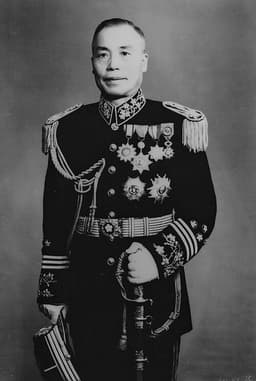
Li Zongren
General · Modern
58.5Total
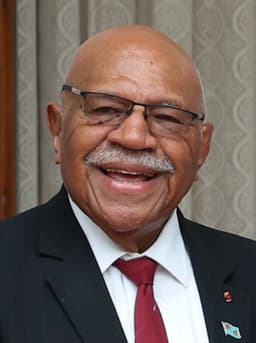
Sitiveni Rabuka
General · Modern
51.7Total
Basic Information
Born
1890
1948
Died
1969
—
Era
Modern
Modern
Nationality
China
Fiji
Occupation
General
General
Civilization
Eastern
Other
Score Comparison
Military (10%)
65.0
10.2
Political (20%)
53.8
60.0
Influence (20%)
58.0
53.3
Legacy (20%)
52.0
46.7
Leadership (15%)
72.0
85.0
Strategy (15%)
56.8
39.6
TOTAL
58.5
51.7
Li Zongren — Complete Timeline
1921 AD
Command of the Guangxi ArmyPolitical Action◆ Major
Li Zongren became a commander in the Guangxi Army and helped unify Guangxi province under the New Guangxi Clique. He established a powerful regional base that rivaled other warlords.
Guangxi CliqueMilitary CommandWarlord Era
Impact: regional
1926 AD
Alliance with the Nationalist GovernmentPolitical Action◆ Major
Li Zongren allied the Guangxi Clique with Chiang Kai-shek's Nationalist government during the Northern Expedition. His forces played a key role in defeating warlords and unifying China under KMT rule.
Northern ExpeditionAllianceKMT
Impact: nationalconstructive
1938 AD
Battle of TaierzhuangWar
Li Zongren commanded Chinese forces to a major victory over the Japanese at the Battle of Taierzhuang during the Second Sino-Japanese War. This was the first significant Chinese victory of the war and boosted national morale.
Second Sino-Japanese WarBattleVictory
Impact: nationalconstructive
1949 AD
Acting Presidency of the Republic of ChinaPolitical Action◆ Major
Li Zongren served as Acting President of the Republic of China after Chiang Kai-shek's resignation during the Chinese Civil War. He attempted to negotiate peace with the Communists but failed, leading to the KMT's retreat to Taiwan.
Chinese Civil WarPresidencyKMT
Impact: nationaltragic
Exile to the United StatesPolitical Action
After the Communist victory, Li Zongren fled to the United States, where he lived in exile. He criticized Chiang Kai-shek's leadership and advocated for a reformed KMT, but remained politically marginalized.
ExileChinese Civil WarPolitics
Impact: nationaltragic
Sitiveni Rabuka — Complete Timeline
1987 AD
1987 Fijian Coup d'étatPolitical Action
Rabuka, as a colonel in the Fijian military, led a coup overthrowing the elected government of Timoci Bavadra. The coup was motivated by ethnic Fijian opposition to Indo-Fijian political influence. Rabuka declared Fiji a republic.
CoupMilitary InterventionEthnic Tension
Impact: nationaldestructive
1992 AD
1992 Election as Prime MinisterPolitical Action◆ Major
Rabuka transitioned from military leader to civilian politician, winning the 1992 general election as leader of the Fijian Political Party. He became Prime Minister, serving until 1999.
ElectionCivilian GovernmentPolitical Transition
Impact: national
1997 AD
1997 Constitution ReformReform◆ Major
Rabuka's government oversaw the adoption of a new constitution that removed ethnic-based voting and provided for a multi-ethnic government. The constitution aimed to reduce ethnic tensions and promote national unity.
ConstitutionReformEthnic Reconciliation
Impact: nationalconstructive
1999 AD
1999 General Election DefeatPolitical Action◆ Major
Rabuka's government was defeated in the general election by the Labour Party led by Mahendra Chaudhry. Rabuka stepped down as Prime Minister, marking the end of his first period in power.
Election DefeatGovernment ChangeChaudhry
Impact: national
2022 AD
2022 Return as Prime MinisterPolitical Action◆ Major
Rabuka led the People's Alliance to victory in the 2022 general election, forming a coalition government. He became Prime Minister again, 23 years after his previous tenure, promising democratic reforms.
ElectionReturn to PowerCoalition Government
Impact: national
Expert Analysis
Sitiveni Rabuka vs Li Zongren
# The Warlord and the Coup-Maker: Two Paths Through the Storm
In the winter of 1949, Li Zongren sat in a borrowed office in Guangzhou, the Nationalist flag still fluttering overhead, signing orders that no one would follow. The Communists were crossing the Yangtze. Chiang Kai-shek had already fled to Taiwan, leaving him the title of Acting President and nothing else. Forty years later and ten thousand miles away, another soldier-turned-leader faced a different kind of reckoning. In 1987, Colonel Sitiveni Rabuka marched into Fiji’s Parliament House in Suva, sweating in his uniform, and told the world he had overthrown a democratically elected government. One man inherited a collapsing empire; the other built a democracy from the wreckage of his own coup. Their journeys—so different in geography and outcome—reveal how the same raw ambition can yield radically different legacies.
Origins
Li Zongren was born in 1890 in Guangxi, a rugged southern province of China that had bred rebels for centuries. His father was a poor schoolteacher, his mother a farmer’s daughter. The Qing Dynasty was crumbling, and young Li grew up surrounded by banditry, opium, and the whispers of revolution. He joined a local military academy at seventeen, not out of ideological passion but because soldiering offered a way out of poverty. In Guangxi, loyalty was local, and power came from the barrel of a gun.
Sitiveni Rabuka was born in 1948 in a small village on the island of Vanua Levu, into a Fiji still under British colonial rule. His father was a Methodist catechist; his mother raised nine children. Rabuka was a scholarship boy, educated at Queen Victoria School, the elite institution that trained Fiji’s future leaders. He joined the military in 1968, a time when Fiji’s army was small, ceremonial, and utterly loyal to the Crown. If Li Zongren learned war in the chaos of a dying dynasty, Rabuka learned it in the orderly barracks of a colonial outpost.
Rise to Power
Li Zongren’s ascent was brutal and direct. In 1921, at age thirty-one, he took command of the Guangxi Army and spent the next four years fighting rival warlords to unify his home province under the New Guangxi Clique. He was not a scholar or a visionary; he was a tactician who understood that in warlord China, victory meant survival. In 1926, he made a calculated gamble, allying his forces with Chiang Kai-shek’s Nationalist government during the Northern Expedition. It was a marriage of convenience—Chiang needed troops, Li needed legitimacy—and it worked. By 1938, Li was a national hero, commanding the Chinese forces that crushed the Japanese at the Battle of Taierzhuang, the first major Chinese victory of the Second Sino-Japanese War.
Rabuka’s rise was quieter until it wasn’t. He rose through the ranks of Fiji’s small army, becoming a colonel by 1987. That year, Fiji’s first Indian-majority government, led by Timoci Bavadra, took power. For indigenous Fijians like Rabuka, this was existential: they feared losing control of their land and identity. On May 14, 1987, Rabuka led a bloodless coup, marching into Parliament and announcing that the army had taken control. He was thirty-nine years old. Unlike Li, who fought for territory, Rabuka fought for ethnicity.
Leadership & Governance
Li Zongren was a military commander of genuine talent, scoring 83.4 in strategy and 79.9 in leadership. At Taierzhuang, he outmaneuvered a Japanese force that outgunned him, using the terrain and a defensive posture to bleed the enemy dry. But as a political leader, he was outmatched. His political score of 65.0 reflects a man who could win battles but not wars of influence. When he became Acting President in 1949, he had no party, no treasury, and no real authority. Chiang Kai-shek, from Taiwan, still controlled the Nationalist Party. Li tried to negotiate peace with the Communists, but Mao Zedong had no interest in sharing power. Within months, Li fled to the United States, where he lived in exile, criticizing Chiang but powerless to change anything.
Rabuka’s political journey is stranger and more hopeful. After the 1987 coup, he initially installed a civilian government loyal to indigenous Fijian interests. But in 1992, he ran for office himself and won the prime ministership. His political score of 72.0 reflects a man who learned that ruling by decree was unsustainable. In 1997, his government oversaw a new constitution that removed ethnic-based voting and created a multiracial democracy. It was a remarkable reversal: the coup leader became the democrat. He lost the 1999 election peacefully, stepping down when the Labour Party won. Then, in 2022, at age seventy-four, he returned as prime minister, leading a coalition government. Li Zongren never returned to power; Rabuka reinvented himself.
Triumph & Tragedy
Li Zongren’s greatest moment was Taierzhuang in 1938. For a few weeks, China had hope. His tragedy was 1949, when he held a title that meant nothing, watching a nation slip away. He died in 1969 in Beijing, having returned to China under Communist rule, an old man with no army, no country, and no legacy but memories.
Rabuka’s tragedy was the coup itself—a moment of short-term gain that plunged Fiji into decades of political instability, including another coup in 2000. His triumph was the 1997 constitution, a document that proved a soldier could learn to share power. In 2022, when he returned as prime minister, he was no longer a young colonel in fatigues but a gray-haired statesman who had outlived his own mistakes.
Character & Destiny
Li Zongren was a pragmatist, not an ideologue. He fought for Guangxi, then for China, then for himself. But he lacked the ruthlessness of Chiang or the vision of Mao. He was a general who became a politician too late, in a game where the rules had already changed. His destiny was to be a footnote in a story written by others.
Rabuka was a man of conviction who lived long enough to see his convictions change. He started as an ethnic nationalist, became a democrat, and ended as a coalition-builder. His character was flexible, his ego modest enough to learn. That is why, in 2022, he was welcomed back, while Li Zongren died alone.
Legacy
Li Zongren is remembered in China as a capable general who fought the Japanese, but not as a leader who shaped the nation. His legacy score of 67.1 reflects a man who mattered in his time but faded after. In Taiwan, he is a footnote; in mainland China, a minor hero.
Rabuka’s legacy is more complicated. To indigenous Fijians, he is a protector; to Indo-Fijians, a symbol of rupture. But his political score of 72.0 and leadership score of 77.4 suggest a figure who, for all his flaws, helped build a democracy from the ashes of his own coup. He is remembered not only for what he broke, but for what he later repaired.
Conclusion
Two soldiers, two centuries, two oceans. Li Zongren fought for a China that was already lost, while Sitiveni Rabuka fought for a Fiji that was still being born. One ended his life in exile and silence; the other returned to lead the nation he once overthrew. Their stories remind us that history is not written by the strongest, but by those who can change. Rabuka changed; Li did not. That is the difference between a footnote and a second act.
Rankings
🥇
Li ZongrenLeader
Mil: 65.0Pol: 53.8Inf: 58.0
58.5
🥈
Sitiveni Rabuka
Mil: 10.2Pol: 60.0Inf: 53.3
51.7
+6.8 behind
How This Comparison Works
Algorithm
Each figure is scored on 6 dimensions (0—100 scale) based on structured historical data: Military (10%), Political (20%), Influence (20%), Legacy (20%), Leadership (15%), Strategy (15%). The weighted total produces the final ranking.
Data Sources
Scores are computed from structured sub-indicators in the database. Scale factors adjust for era (Ancient ×0.85, Modern ×1.0) and civilization size (Eastern ×1.05, Other ×0.80) to account for differences in population and military scale.
Maximum 3 Figures
Comparisons are limited to 2—3 figures to ensure readability and statistical meaningfulness.
Error Margins
±5 points per dimension — Sub-scores are derived from historical records with inherent uncertainty. Two figures within 5 points on a dimension should be considered roughly equivalent in that area.
Total Score Accuracy
±3 points overall — The weighted combination of 6 dimensions produces a total score with approximately ±3 points of uncertainty. Differences of less than 3 points are not statistically significant— the figures are effectively tied.
Known Limitations
- Historical records are incomplete and uneven across civilizations
- Figures from oral-tradition societies may be underrepresented
- Occupation labels can misclassify multi-role figures
- Scores measure capability and impact, not moral character
- Quantitative scoring is a comparison tool, not absolute truth
Capability Radar
Military (10%) — Battles & Warfare
Battles
65
5
Win Rate
60
5
Expansion
60
5
Political (20%) — Governance & Reform
Reform
45
50
Diplomacy
60
45
Economy
40
40
Influence (20%) — Cultural & Global Reach
Cultural
40
30
Global
40
20
Legacy (20%) — Historical Impact
Historical
55
40
Longevity
45
30
Leadership (15%) — Power & Stability
Tenure
55
55
Stability
35
35
Strategy (15%) — Tactics & Innovation
Strategy
68
10
Tactics
70
10
Reform
55
5
Similar Comparisons
Comments & Discussion
PLANTER'S GHOST6/16/2026
Li Zongren got the worst deal in modern Chinese history — handed a phantom presidency while Chiang Kai-shek hoarded the real power and gold reserves on Taiwan. Anyone calling him a "warlord" forgets he actually tried to negotiate with Mao in 1949, unlike Chiang's stubborn flight. Rabuka at least owned his coup and later submitted to democratic elections. Li never got that second chance. A tragic figure, not a failure.
SkepticalScribe6/16/2026
The comparison is misleading because Rabuka's 1987 coup toppled an elected government over ethnic tensions, while Li Zongren was a dying regime's last gasp against a revolutionary tide. Different contexts, different moral weights. Rabuka later became PM democratically; Li's "acting presidency" was a sham title. One chose power grabs, the other inherited chaos. Apples and oranges unless you just want a "both were soldiers" headline.
HistorianEyes6/16/2026
Li Zongren was a Guangxi warlord who barely held southern China for months, but his military record against the Japanese at Tai'erzhuang in 1938 was genuine. Rabuka has no equivalent battlefield heroism — his fame is all political. Yet Rabuka's later democratic conversion is more complete. Li spent his final years in exile writing memoirs, never truly reconciling with either side. Different endpoints: one chose reform, the other chose silence.
MilitaryMindset6/16/2026
Li Zongren's problem wasn't ambition but timing — by 1949, his Central Army had defected or disintegrated. Rabuka's 1987 coup faced minimal resistance because Fiji's military was small