Loading...
Li Zongren vs Muhammadu Buhari
Li Zongren leads by 7.0 pts · 2 figures compared
…
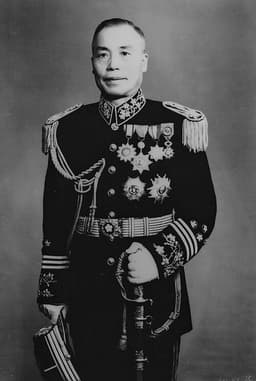
Li Zongren
General · Modern
58.5Total
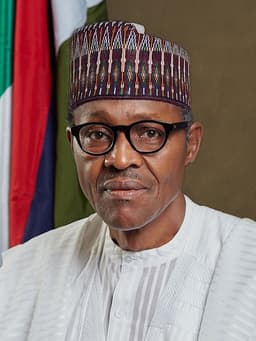
Muhammadu Buhari
General · Modern
51.5Total
Basic Information
Born
1890
1942
Died
1969
—
Era
Modern
Modern
Nationality
China
Nigeria
Occupation
General
General
Civilization
Eastern
Other
Score Comparison
Military (10%)
65.0
22.6
Political (20%)
53.8
68.0
Influence (20%)
58.0
53.3
Legacy (20%)
52.0
43.3
Leadership (15%)
72.0
72.0
Strategy (15%)
56.8
41.0
TOTAL
58.5
51.5
Li Zongren — Complete Timeline
1921 AD
Command of the Guangxi ArmyPolitical Action◆ Major
Li Zongren became a commander in the Guangxi Army and helped unify Guangxi province under the New Guangxi Clique. He established a powerful regional base that rivaled other warlords.
Guangxi CliqueMilitary CommandWarlord Era
Impact: regional
1926 AD
Alliance with the Nationalist GovernmentPolitical Action◆ Major
Li Zongren allied the Guangxi Clique with Chiang Kai-shek's Nationalist government during the Northern Expedition. His forces played a key role in defeating warlords and unifying China under KMT rule.
Northern ExpeditionAllianceKMT
Impact: nationalconstructive
1938 AD
Battle of TaierzhuangWar
Li Zongren commanded Chinese forces to a major victory over the Japanese at the Battle of Taierzhuang during the Second Sino-Japanese War. This was the first significant Chinese victory of the war and boosted national morale.
Second Sino-Japanese WarBattleVictory
Impact: nationalconstructive
1949 AD
Acting Presidency of the Republic of ChinaPolitical Action◆ Major
Li Zongren served as Acting President of the Republic of China after Chiang Kai-shek's resignation during the Chinese Civil War. He attempted to negotiate peace with the Communists but failed, leading to the KMT's retreat to Taiwan.
Chinese Civil WarPresidencyKMT
Impact: nationaltragic
Exile to the United StatesPolitical Action
After the Communist victory, Li Zongren fled to the United States, where he lived in exile. He criticized Chiang Kai-shek's leadership and advocated for a reformed KMT, but remained politically marginalized.
ExileChinese Civil WarPolitics
Impact: nationaltragic
Muhammadu Buhari — Complete Timeline
1983 AD
1983 Nigerian coup d'étatPolitical Action
Major General Muhammadu Buhari led a military coup that overthrew the civilian government of President Shehu Shagari. Buhari cited corruption and economic mismanagement as justifications, and he became the head of state.
CoupMilitary RuleCorruption
Impact: nationaldestructive
1984 AD
War Against Indiscipline (WAI)Reform◆ Major
Buhari launched the War Against Indiscipline, a campaign to enforce discipline and order in Nigerian society. It included harsh penalties for minor offenses, such as queue-jumping, and was criticized for human rights abuses.
DisciplineSocial PolicyHuman Rights
Impact: nationaldestructive
1985 AD
Overthrow by Ibrahim BabangidaPolitical Action◆ Major
Buhari was overthrown in a palace coup led by his Chief of Army Staff, Ibrahim Babangida. Babangida cited Buhari's authoritarian style and failure to address the economy as reasons for the coup.
CoupOverthrowBabangida
Impact: national
2015 AD
Anti-corruption campaignReform◆ Major
Buhari launched a high-profile anti-corruption campaign, targeting government officials and recovering stolen assets. The campaign was praised internationally but criticized for being selective and politically motivated.
Anti-CorruptionReformGovernance
Impact: nationalconstructive
Election as President of NigeriaPolitical Action
Buhari won the 2015 Nigerian presidential election, defeating incumbent Goodluck Jonathan. This was the first time an opposition candidate had defeated a sitting president in Nigeria's history, marking a democratic milestone.
ElectionDemocracyOpposition Victory
Impact: nationalprogressive
Expert Analysis
Muhammadu Buhari vs Li Zongren
# The General as Statesman: Li Zongren and Muhammadu Buhari
On a spring morning in 1938, General Li Zongren stood atop a collapsed wall in Taierzhuang, watching Japanese soldiers retreat in disarray. It was China’s first major victory against the Imperial Army, a triumph that would make his name synonymous with resistance. Half a century later and half a world away, Major General Muhammadu Buhari seized control of Nigeria’s state radio station in a bloodless coup, announcing that the country’s civilian government had been “tired, corrupt, and inefficient.” Two soldiers, two nations, two eras—yet both believed that military discipline could cure the ills of democracy. Why did one end his days in lonely exile, while the other returned from political death to lead his nation?
Origins
Li Zongren was born in 1890, the twilight of China’s Qing Dynasty, in the remote hills of Guangxi. The son of a village schoolteacher, he grew up in a world of bandits, opium traders, and warlord armies. China was bleeding—carved up by foreign powers and fractured by regional strongmen. Li’s education was practical: he learned to ride, shoot, and command before he learned to read classical texts. His world demanded ruthlessness.
Muhammadu Buhari was born in 1942 in Daura, a dusty town in northern Nigeria, then under British colonial rule. His father was a farmer; his mother sold groundnuts. Buhari’s path was shaped by the discipline of the military academy—first in Nigeria, then in India, Britain, and the United States. By the time Nigeria gained independence in 1960, Buhari belonged to a generation that saw the army as the only institution that could hold a fractious nation together.
Both men emerged from societies where the state was weak and the army strong. But Li’s China was a dying empire; Buhari’s Nigeria was a newborn state. That difference would define everything.
Rise to Power
Li’s ascent followed the logic of warlord politics. In 1921, at age 31, he took command of the Guangxi Army and began unifying his home province under what became the New Guangxi Clique. His method was not brute force alone—he built alliances, co-opted rivals, and created an efficient administration. In 1926, he made a fateful decision: he allied with Chiang Kai-shek’s Nationalist government during the Northern Expedition. Li was not a nationalist idealist; he was a pragmatist who saw that the future belonged to whoever could unify China.
Buhari’s rise was swifter and more violent. In December 1983, he led a coup that overthrew President Shehu Shagari’s civilian government. Nigeria was reeling from an oil bust, and Shagari’s administration was widely seen as corrupt. Buhari promised order. His justification was simple: “Democracy had failed.”
The difference is striking. Li rose through years of maneuvering within a chaotic system; Buhari seized power in a single night. One understood politics as a long game; the other saw it as a disease to be cured by surgery.
Leadership & Governance
Li’s finest hour came in 1938 at the Battle of Taierzhuang. Outnumbered and outgunned, he used the terrain of Shandong Province to trap Japanese forces in a narrow corridor, then attacked from all sides. It was a tactical masterpiece—the first time Chinese forces had defeated the Japanese in a major engagement. His strategy score of 83.4 reflects this: Li was a brilliant operational commander who understood that war was about position, not just firepower.
As a political leader, Li was more complex. When he became Acting President of the Republic of China in 1949, after Chiang Kai-shek’s resignation during the Civil War, he inherited a collapsing regime. He tried to negotiate peace with the Communists, but Chiang still controlled the army from behind the scenes. Li’s political score of 65.0 captures his limitations: he was a competent administrator but never a master of the machinery of power.
Buhari’s governance was defined by two campaigns. The first, his 1984 “War Against Indiscipline,” was a brutal attempt to force order on Nigerian society. People were forced to queue in lines, civil servants were publicly humiliated for lateness, and punishments were harsh. It was effective in the short term but alienated everyone. His second campaign, launched after he won the 2015 presidential election as a democrat, was an anti-corruption drive that targeted government officials and recovered stolen assets. This time, he had legitimacy—he had become the first Nigerian opposition candidate to defeat an incumbent president.
But Buhari’s military score of 20.7 is telling: he was never a battlefield commander. His strength was organizational discipline, not strategic genius.
Triumph & Tragedy
Li’s greatest triumph was Taierzhuang. His greatest tragedy was exile. After the Communist victory in 1949, he fled to the United States, where he lived in New York and criticized Chiang Kai-shek from afar. He never returned to China—he died in 1969, a stateless man, still hoping for a role he would never play again.
Buhari’s triumph was his return. Overthrown in 1985 by his own chief of army staff, he spent decades in the political wilderness. Then, in 2015, he won the presidency at age 72. It was an astonishing comeback. But his tragedy was the same as Li’s: the limits of military discipline in a democratic system. His anti-corruption campaign slowed, the economy stagnated, and his health declined. He left office in 2023 with a mixed record.
Character & Destiny
Li was a survivor, a man who bent with the wind. He allied with Chiang, then broke with him; he fought the Japanese, then tried to negotiate with the Communists. His leadership score of 79.9 reflects a man who could inspire loyalty but never build a lasting institution.
Buhari was rigid. His War Against Indiscipline was the same approach he brought to the presidency: enforce rules, punish violators, trust the system. His strategy score of 62.4 shows a man who could plan but not adapt. Where Li was flexible, Buhari was stubborn.
Legacy
Li is remembered in China as a patriotic general, a hero of the Anti-Japanese War. But his political legacy is ambiguous—a warlord who could not become a statesman. His total score of 71.8 places him as a significant but secondary figure.
Buhari’s legacy is still forming. He ended decades of military rule in Nigeria by proving that a former dictator could win a democratic election. But his presidency also showed that military discipline cannot solve democratic problems. His score of 60.7 reflects a figure of real influence but mixed achievement.
Conclusion
Both Li Zongren and Muhammadu Buhari believed that the virtues of a soldier—order, discipline, hierarchy—could save a nation from chaos. Both were wrong, but in different ways. Li failed because he could not escape the logic of warlord politics; Buhari failed because he could not escape the logic of military command. Their lives remind us that the skills that win battles are not the skills that build nations. The general who becomes a statesman must learn not just to command, but to listen.
Rankings
🥇
Li ZongrenLeader
Mil: 65.0Pol: 53.8Inf: 58.0
58.5
🥈
Muhammadu Buhari
Mil: 22.6Pol: 68.0Inf: 53.3
51.5
+7.0 behind
How This Comparison Works
Algorithm
Each figure is scored on 6 dimensions (0—100 scale) based on structured historical data: Military (10%), Political (20%), Influence (20%), Legacy (20%), Leadership (15%), Strategy (15%). The weighted total produces the final ranking.
Data Sources
Scores are computed from structured sub-indicators in the database. Scale factors adjust for era (Ancient ×0.85, Modern ×1.0) and civilization size (Eastern ×1.05, Other ×0.80) to account for differences in population and military scale.
Maximum 3 Figures
Comparisons are limited to 2—3 figures to ensure readability and statistical meaningfulness.
Error Margins
±5 points per dimension — Sub-scores are derived from historical records with inherent uncertainty. Two figures within 5 points on a dimension should be considered roughly equivalent in that area.
Total Score Accuracy
±3 points overall — The weighted combination of 6 dimensions produces a total score with approximately ±3 points of uncertainty. Differences of less than 3 points are not statistically significant— the figures are effectively tied.
Known Limitations
- Historical records are incomplete and uneven across civilizations
- Figures from oral-tradition societies may be underrepresented
- Occupation labels can misclassify multi-role figures
- Scores measure capability and impact, not moral character
- Quantitative scoring is a comparison tool, not absolute truth
Capability Radar
Military (10%) — Battles & Warfare
Battles
65
10
Win Rate
60
10
Expansion
60
5
Political (20%) — Governance & Reform
Reform
45
30
Diplomacy
60
25
Economy
40
20
Influence (20%) — Cultural & Global Reach
Cultural
40
25
Global
40
25
Legacy (20%) — Historical Impact
Historical
55
30
Longevity
45
20
Leadership (15%) — Power & Stability
Tenure
55
45
Stability
35
15
Strategy (15%) — Tactics & Innovation
Strategy
68
15
Tactics
70
15
Reform
55
20
Similar Comparisons
Comments & Discussion
TANK COMMANDER6/16/2026
Li Zongren’s victory at Taierzhuang wasn’t just strategic brilliance—it was raw attrition. Buhari’s 1983 coup? More like a panic grab when oil prices crashed. Li fought invaders with rifles and grit; Buhari jailed journalists for asking questions. One earned his stripes through blood and fire; the other inherited a uniform from a British syllabus. Let’s stop romanticizing a failed coup plotter like Buhari—he couldn’t even hold power long enough to fix Nigeria’s roads. Li at least died respected
统计之眼6/16/2026
数据会撒谎。拿两人对比?Li打赢的台儿庄只是一场战术胜利,日军主力两个月后就合围徐州。Buhari的经济数据呢?他执政18个月,粮食产量降了20%,通胀涨到40%。说他是救世主?搞笑。一个靠地方军阀撑腰,一个靠石油美元输血,都不是民主典范。别用“军人治国”这种浪漫标签糊弄人。
EPIGRAPHER6/16/2026
Let’s get real: Li Zongren called himself a “Marshall of the Republic” while running Guangxi like a private fiefdom, taxing peasants to fund his opium trade. Buhari’s “war against indiscipline” sounds noble until you remember he banned foreign exchange for Nigerian students. Both men claimed to fight corruption—Li’s army looted Nanjing in 1949. History isn’t a morality play; it’s a ledger of debts unpaid. These men didn’t save nations; they just delayed the reckoning.
岭南旧客6/16/2026
Li是桂系三杰之一,Buhari算啥?甘肃大漠里练出来的土军阀。Li年轻时单枪匹马收编土匪,后来把白崇禧压得服服帖帖——这才是真本事。Buhari呢?1985年就被政变赶下台,灰溜溜退休种地。拿俩军人比治国?Li至少带着新桂系撑起过半个中国抗日,Buhari连经济都管不明白。别拿殖民地军官跟老派军阀比,根本不是一个量级。
ARMOIR GOTH6/16/2026
Both losers. Li ran to America in 1949 when Mao’s troops crossed the Yangtze—abandoned his troops. Buhari lost three elections before finally winning, then hid in London for medical checkups during crises. Taierzhuang was a fluke; Buhari’s economic record is a joke. These “strongmen” were paper tigers. Military discipline doesn’t cure democracy—it just swaps civilian incompetence for military ineptitude. The real story is how easily they failed.