Loading...
Li Zongren vs Yitzhak Rabin
Yitzhak Rabin leads by 7.9 pts · 2 figures compared
…
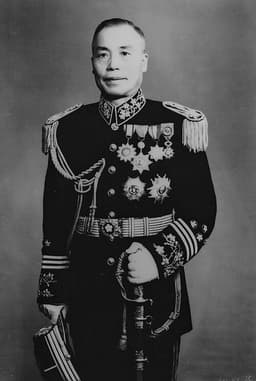
Li Zongren
General · Modern
58.5Total
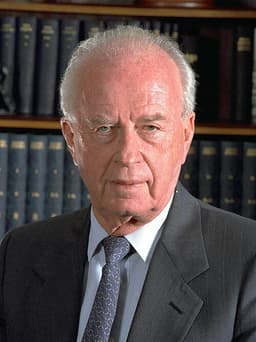
Yitzhak Rabin
General · Modern
66.4Total
Basic Information
Born
1890
1922
Died
1969
—
Era
Modern
Modern
Nationality
China
Israel
Occupation
General
General
Civilization
Eastern
Middle Eastern
Score Comparison
Military (10%)
65.0
61.7
Political (20%)
53.8
82.0
Influence (20%)
58.0
68.0
Legacy (20%)
52.0
55.0
Leadership (15%)
72.0
78.0
Strategy (15%)
56.8
55.0
TOTAL
58.5
66.4
Li Zongren — Complete Timeline
1921 AD
Command of the Guangxi ArmyPolitical Action◆ Major
Li Zongren became a commander in the Guangxi Army and helped unify Guangxi province under the New Guangxi Clique. He established a powerful regional base that rivaled other warlords.
Guangxi CliqueMilitary CommandWarlord Era
Impact: regional
1926 AD
Alliance with the Nationalist GovernmentPolitical Action◆ Major
Li Zongren allied the Guangxi Clique with Chiang Kai-shek's Nationalist government during the Northern Expedition. His forces played a key role in defeating warlords and unifying China under KMT rule.
Northern ExpeditionAllianceKMT
Impact: nationalconstructive
1938 AD
Battle of TaierzhuangWar
Li Zongren commanded Chinese forces to a major victory over the Japanese at the Battle of Taierzhuang during the Second Sino-Japanese War. This was the first significant Chinese victory of the war and boosted national morale.
Second Sino-Japanese WarBattleVictory
Impact: nationalconstructive
1949 AD
Acting Presidency of the Republic of ChinaPolitical Action◆ Major
Li Zongren served as Acting President of the Republic of China after Chiang Kai-shek's resignation during the Chinese Civil War. He attempted to negotiate peace with the Communists but failed, leading to the KMT's retreat to Taiwan.
Chinese Civil WarPresidencyKMT
Impact: nationaltragic
Exile to the United StatesPolitical Action
After the Communist victory, Li Zongren fled to the United States, where he lived in exile. He criticized Chiang Kai-shek's leadership and advocated for a reformed KMT, but remained politically marginalized.
ExileChinese Civil WarPolitics
Impact: nationaltragic
Yitzhak Rabin — Complete Timeline
1967 AD
Chief of Staff during the Six-Day WarWar
As Chief of Staff of the Israel Defense Forces, Rabin commanded the Israeli military during the Six-Day War against Egypt, Jordan, and Syria. Israel captured the Sinai Peninsula, Gaza Strip, West Bank, East Jerusalem, and Golan Heights, reshaping the region.
Six-Day WarTerritorial ExpansionMilitary Victory
Impact: global
1993 AD
Signing of the Oslo AccordsPolitical Action
As prime minister, Rabin signed the Oslo Accords with PLO Chairman Yasser Arafat on the White House lawn. The agreement established the Palestinian Authority and set a framework for Palestinian self-governance in the West Bank and Gaza Strip.
Peace ProcessPalestiniansOslo
Impact: globalconstructive
1995 AD
Assassination at Peace RallyPolitical Action
Rabin was assassinated by Israeli extremist Yigal Amir after a peace rally in Tel Aviv. The assassination shocked Israel and the world, derailing the Oslo peace process and leading to a period of political instability.
AssassinationPeace ProcessPolitical Violence
Impact: globaltragic
Expert Analysis
Yitzhak Rabin vs Li Zongren
# The Peacemaker and the Warlord
The bullet struck Yitzhak Rabin in the back on a warm November evening in 1995, as he folded a song sheet and prepared to descend from the stage of a peace rally in Tel Aviv. The assassin was a young Israeli law student who believed he was saving his country from betrayal. Half a world away and four decades earlier, Li Zongren sat in a modest house in New Jersey, a general without an army, a president without a country, watching the Communist victory in China from the bitter safety of exile. One man died at the moment of his greatest hope; the other lived long enough to see everything he had fought for slip away. What drives a soldier to become a peacemaker, and a warlord to become a statesman? The answers lie in the soil of two very different lands, and in the crucible of two very different wars.
Origins
Yitzhak Rabin was born in Jerusalem in 1922 to parents who had come to Palestine as part of the socialist Zionist wave. His father was a volunteer in the Jewish Legion of the British Army; his mother was a labor organizer. The family was secular, pragmatic, and deeply committed to building a Jewish state. Rabin grew up on a kibbutz, where the values of collective effort and self-defense were woven into daily life. He was not a brilliant student, but he was disciplined, quiet, and intensely focused.
Li Zongren was born in 1890 in Guangxi, a mountainous province in southern China known for its fierce independence and its poverty. His family were farmers of Hakka descent, a group often marginalized in Chinese society. As a young man, Li joined the Guangxi Army, a regional force loyal not to the central government but to local strongmen. China in the early twentieth century was a fractured land of warlords, foreign concessions, and collapsing dynasties. Li learned early that power was local, personal, and earned through blood.
The difference in their origins was not merely geographic. Rabin came from a society that was building something new—a nation from scratch, with an ideology and a flag. Li came from a society that was desperately trying to hold something old together—a civilization of four thousand years that was crumbling under the weight of modernity and invasion.
Rise to Power
Rabin’s path was that of a professional soldier in a small, embattled state. He joined the Palmach, the elite strike force of the Jewish underground, and fought in the 1948 War of Independence. He rose through the ranks not by political maneuvering but by competence and a reputation for blunt honesty. By 1964, he was Chief of Staff of the Israel Defense Forces. His moment came in June 1967, when he commanded the Israeli military during the Six-Day War. The victory was stunning: in six days, Israel captured the Sinai, the Golan Heights, the West Bank, and East Jerusalem. Rabin became a national hero, a symbol of military genius and Jewish pride.
Li Zongren’s rise was more tangled. He became a commander in the Guangxi Army in 1921 and helped unify the province under the New Guangxi Clique, a coalition of local warlords who were more modern and less brutal than their predecessors. In 1926, he allied with Chiang Kai-shek’s Nationalist government during the Northern Expedition, a campaign to reunify China. But the alliance was one of convenience. Li was a warlord first and a nationalist second. He fought for Guangxi, for his own power, and only then for China. His greatest military achievement came in 1938, when he commanded Chinese forces to a major victory over the Japanese at the Battle of Taierzhuang. It was the first significant Chinese victory in the Second Sino-Japanese War, and it made Li a national figure. But the victory was fleeting. The war ground on, and the alliance with Chiang grew more strained.
Leadership & Governance
Rabin’s leadership style was that of a reluctant politician. He was not a charmer; he was a problem-solver. As Prime Minister, he focused on security and economics, but the Oslo Accords of 1993 changed everything. Standing on the White House lawn with Yasser Arafat, Rabin shook the hand of a man he had once called a terrorist. The agreement was a gamble: give up land for peace, trust that the other side was sincere. Rabin’s military background gave him the credibility to make such a move. He could not be accused of weakness. He was the general who had won the Six-Day War; now he was the general who would try to end the occupation.
Li Zongren’s political career was a series of compromises and betrayals. He served as Acting President of the Republic of China in 1949, after Chiang Kai-shek resigned during the Civil War. But his position was a fiction. The Communists were winning; the Nationalists were disintegrating. Li tried to negotiate a settlement with Mao Zedong, but the talks failed. He had no real army, no real base, and no real authority. He was a warlord in a world that no longer had room for warlords.
Triumph & Tragedy
Rabin’s triumph was the Oslo Accords. His tragedy was the assassination that followed. The bullet that killed him also shattered the peace process. His death transformed him from a controversial politician into a martyr. The peace rally where he died became a sacred site. The song he was singing, “Shir LaShalom” (“Song for Peace”), became an anthem.
Li Zongren’s triumph was Taierzhuang. His tragedy was exile. After the Communist victory, he fled to the United States, where he lived in obscurity in New Jersey. He criticized Chiang Kai-shek, but to no effect. He was a ghost, a relic of a lost cause. He died in Beijing in 1969, having returned to China under Communist rule, a final act of reconciliation that few understood.
Character & Destiny
Rabin was a man of few words and deep convictions. He once said, “You don’t make peace with friends. You make peace with very nasty enemies.” His bluntness was both a strength and a weakness. He trusted his instincts, and his instincts told him that the time for peace had come. But he underestimated the hatred that peace would provoke. His assassin was not a foreign enemy but an Israeli, a product of the very society Rabin had helped build.
Li Zongren was a survivor, a man who knew when to fight and when to flee. He was a pragmatist in a time of ideologies. He fought for his province, then for his country, then for himself. His tragedy was that he never found a cause larger than his own ambition. He was a brilliant tactician but a poor strategist for his own life.
Legacy
Rabin is remembered as a martyr for peace. His name is attached to squares, schools, and memorials. The Oslo Accords are controversial, but Rabin himself is almost universally revered in Israel and abroad. He represents the possibility that even the most hardened soldier can choose peace.
Li Zongren is remembered, if at all, as a footnote in Chinese history. The Battle of Taierzhuang is taught in Chinese schools, but Li’s role is often downplayed. In Taiwan, he is a minor figure; in mainland China, a cautionary tale. He was a man of his time, and his time passed.
Conclusion
Rabin and Li Zongren were both soldiers who became statesmen, but their paths diverged because their worlds were different. Rabin lived in a small, modern state where one man’s decision could change the course of history. Li lived in a vast, ancient civilization where history was a river that swept individuals away. Rabin’s death was a tragedy because it was a moment of hope. Li’s life was a tragedy because it was a moment of futility. Both men tried to shape their times, but the times shaped them more. In the end, we remember Rabin because he chose peace at the cost of his life. We remember Li, if we remember him at all, because he fought a great battle and then disappeared. That is the difference between a martyr and a survivor.
Rankings
🥇
Yitzhak RabinLeader
Mil: 61.7Pol: 82.0Inf: 68.0
66.4
🥈
Li Zongren
Mil: 65.0Pol: 53.8Inf: 58.0
58.5
+7.9 behind
How This Comparison Works
Algorithm
Each figure is scored on 6 dimensions (0—100 scale) based on structured historical data: Military (10%), Political (20%), Influence (20%), Legacy (20%), Leadership (15%), Strategy (15%). The weighted total produces the final ranking.
Data Sources
Scores are computed from structured sub-indicators in the database. Scale factors adjust for era (Ancient ×0.85, Modern ×1.0) and civilization size (Eastern ×1.05, Other ×0.80) to account for differences in population and military scale.
Maximum 3 Figures
Comparisons are limited to 2—3 figures to ensure readability and statistical meaningfulness.
Error Margins
±5 points per dimension — Sub-scores are derived from historical records with inherent uncertainty. Two figures within 5 points on a dimension should be considered roughly equivalent in that area.
Total Score Accuracy
±3 points overall — The weighted combination of 6 dimensions produces a total score with approximately ±3 points of uncertainty. Differences of less than 3 points are not statistically significant— the figures are effectively tied.
Known Limitations
- Historical records are incomplete and uneven across civilizations
- Figures from oral-tradition societies may be underrepresented
- Occupation labels can misclassify multi-role figures
- Scores measure capability and impact, not moral character
- Quantitative scoring is a comparison tool, not absolute truth
Capability Radar
Military (10%) — Battles & Warfare
Battles
65
65
Win Rate
60
70
Expansion
60
50
Political (20%) — Governance & Reform
Reform
45
65
Diplomacy
60
85
Economy
40
60
Influence (20%) — Cultural & Global Reach
Cultural
40
55
Global
40
70
Legacy (20%) — Historical Impact
Historical
55
75
Longevity
45
60
Leadership (15%) — Power & Stability
Tenure
55
70
Stability
35
40
Strategy (15%) — Tactics & Innovation
Strategy
68
75
Tactics
70
60
Reform
55
55
Similar Comparisons
Comments & Discussion
GalileeVet6/16/2026
Rabin the hawk-turned-dove actually learned a lesson most generals never get: you can't bomb a people into submission. The First Intifada proved that to him - tanks don't stop kids with slingshots. Li Zongren never got that memo; he thought martial prowess could outrun history. Rabin shook Arafat's hand at the White House lawn; Li shook hands with Chiang Kai-shek while the Communists rolled through Manchuria. One evolved, the other fossilized.
数据猎手6/16/2026
把拉宾和李宗仁放在一起比?一个是现代国家陷入身份危机的缩影,一个是旧军阀在历史洪流里硬撑。拉宾遇刺时民意支持率不到三成,1995年那次和平集会根本没改变以色列左右对立的基本盘。李宗仁呢?1949年飞美时还幻想美国介入反攻,结果连"代总统"头衔都被蒋介石架空。数据不会骗人:两人都是被体制抛弃的棋子,只是拉宾死得够悲壮,成了符号。
AthenianSkeptic6/16/2026
Comparing a product of 20th-century socialist Zionism with a warlord rooted in Confucian militarism reveals more about the nature of legitimacy than about leadership. Rabin's kibbutz upbringing gave him collectivist instincts that eventually trumped his security obsession. Li, bred in Guangxi's clan-based honor culture, never developed the psychological framework for political compromise. Both were military men who attempted to shift into governance - but Rabin's Israel had functional institutio
蜀道残阳6/16/2026
说李宗仁是"没军队的将军"太轻巧了。1938年台儿庄大捷后,他的桂系部队伤亡过半,老蒋趁机把嫡系安插进空缺编制,这才是他沦为"空壳总统"的伏笔。相比之下,拉宾在六日战争后当驻美大使时积累的华盛顿人脉,恰恰是他在1974年成为总理的跳板。一个被盟友背刺到怀疑人生,一个靠敌人磨砺出权术。同样是将才变政客,路径天差地别。
RallyPointRhetoric6/16/2026
The real split here isn't peace vs. war - it's timing. Rabin got to die a martyr for a peace process that had already peaked and was decaying. Oslo was signed in '93; by '95 every settler was armed and Netanyahu was rewriting Likud playbooks. Li lived until 1969, long enough to watch the Cultural Revolution prove he was right about Mao being a disaster, but also long enough to write a memoir blaming everyone but himself. One died at the romantic crest of his narrative arc; the other survived int