Loading...
Li Zongren vs Ramon Castilla
Ramon Castilla leads by 1.2 pts · 2 figures compared
…
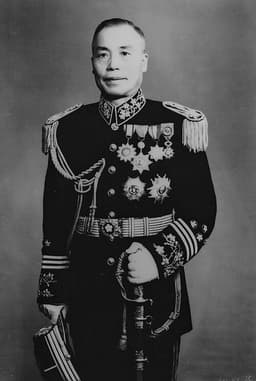
Li Zongren
General · Modern
58.5Total
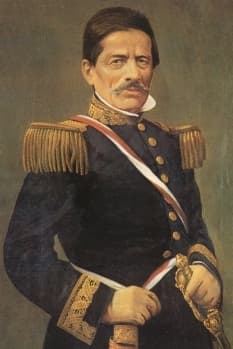
Ramon Castilla
General · Modern
59.7Total
Basic Information
Born
1890
1797
Died
1969
1867
Era
Modern
Modern
Nationality
China
Peru
Occupation
General
General
Civilization
Eastern
Western
Score Comparison
Military (10%)
65.0
40.0
Political (20%)
53.8
72.0
Influence (20%)
58.0
56.7
Legacy (20%)
52.0
52.0
Leadership (15%)
72.0
78.0
Strategy (15%)
56.8
60.0
TOTAL
58.5
59.7
Li Zongren — Complete Timeline
1921 AD
Command of the Guangxi ArmyPolitical Action◆ Major
Li Zongren became a commander in the Guangxi Army and helped unify Guangxi province under the New Guangxi Clique. He established a powerful regional base that rivaled other warlords.
Guangxi CliqueMilitary CommandWarlord Era
Impact: regional
1926 AD
Alliance with the Nationalist GovernmentPolitical Action◆ Major
Li Zongren allied the Guangxi Clique with Chiang Kai-shek's Nationalist government during the Northern Expedition. His forces played a key role in defeating warlords and unifying China under KMT rule.
Northern ExpeditionAllianceKMT
Impact: nationalconstructive
1938 AD
Battle of TaierzhuangWar
Li Zongren commanded Chinese forces to a major victory over the Japanese at the Battle of Taierzhuang during the Second Sino-Japanese War. This was the first significant Chinese victory of the war and boosted national morale.
Second Sino-Japanese WarBattleVictory
Impact: nationalconstructive
1949 AD
Acting Presidency of the Republic of ChinaPolitical Action◆ Major
Li Zongren served as Acting President of the Republic of China after Chiang Kai-shek's resignation during the Chinese Civil War. He attempted to negotiate peace with the Communists but failed, leading to the KMT's retreat to Taiwan.
Chinese Civil WarPresidencyKMT
Impact: nationaltragic
Exile to the United StatesPolitical Action
After the Communist victory, Li Zongren fled to the United States, where he lived in exile. He criticized Chiang Kai-shek's leadership and advocated for a reformed KMT, but remained politically marginalized.
ExileChinese Civil WarPolitics
Impact: nationaltragic
Ramon Castilla — Complete Timeline
1824 AD
Battle of AyacuchoWar
Castilla fought as a junior officer in the decisive Battle of Ayacucho, which ended Spanish rule in Peru. This victory secured Peruvian independence and marked the end of the Spanish Empire in South America, shaping Castilla's nationalist views.
Peruvian War of IndependenceBattleLiberation
Impact: regional
1845 AD
First Presidency of PeruPolitical Action◆ Major
Castilla was elected President of Peru in 1845, serving until 1851. His first term focused on economic development, including the guano boom, and infrastructure projects such as railroads and ports, modernizing the Peruvian state.
PresidencyEconomic DevelopmentGuano
Impact: nationalconstructive
1854 AD
Abolition of Slavery in PeruReform◆ Major
During his second presidency, Castilla issued a decree abolishing slavery in Peru on December 3, 1854. This reform freed approximately 25,000 slaves and was part of a broader liberal agenda, though it faced opposition from slave-owning elites.
AbolitionSlaveryHuman Rights
Impact: nationalprogressive
Abolition of Indigenous TributeReform◆ Major
Castilla also abolished the indigenous tribute tax in 1854, which had been a burden on native communities since colonial times. This measure aimed to integrate indigenous peoples into the Peruvian state as equal citizens, though its implementation was uneven.
Indigenous RightsTax ReformCitizenship
Impact: nationalprogressive
1855 AD
Second Presidency and Guano BoomPolitical Action◆ Major
Castilla served a second term from 1855 to 1862, during the peak of the guano export boom. He used guano revenues to fund public works, pay off foreign debt, and modernize the military, but also faced criticism for corruption and over-reliance on a single resource.
PresidencyGuanoModernization
Impact: nationalconstructive
1860 AD
Constitutional Reform of 1860Reform◆ Major
Castilla oversaw the adoption of a new constitution in 1860, which established a centralized republic with a strong executive. The constitution remained in effect until 1920 and shaped Peru's political structure, though it limited regional autonomy.
ConstitutionPolitical ReformCentralization
Impact: nationalconstructive
Expert Analysis
Ramon Castilla vs Li Zongren
# The General Who Freed Slaves and the General Who Lost a Nation
In 1854, as Ramon Castilla signed the decree that would free Peru’s slaves, he stood at the height of a boom that had transformed his country into a global supplier of fertilizer. Half a world away, a century later, Li Zongren stood in a crumbling presidential palace in Nanjing, watching his nation fall to Communist forces. Both men were generals. Both became presidents. One is remembered as a liberator, the other as a tragic footnote. What separated them was not talent, but the currents of history they rode—and the choices they made when those currents turned.
Origins
Ramon Castilla was born in 1797 in Tarapacá, then a remote province of the Spanish Viceroyalty of Peru. His father was a Spanish colonial official, his mother a descendant of indigenous nobility. This mixed heritage placed him at the intersection of Peru’s racial hierarchy, a position that would later inform his most radical reforms. The wars of independence swept him up as a young man; at twenty-seven, he fought as a junior officer in the Battle of Ayacucho in 1824, the final confrontation that ended three centuries of Spanish rule. That battlefield forged his identity: he would spend the rest of his life building the nation that victory had made possible.
Li Zongren was born in 1890 in Guilin, Guangxi, a mountainous province in southern China. His family were farmers of modest means, and his childhood was marked by the chaos of a dying empire. The Qing Dynasty collapsed when he was twenty-one, plunging China into an era of warlordism. Li rose through the ranks of the Guangxi Army, a provincial force fighting for survival in a land where power belonged to whoever could seize it. Where Castilla inherited a nation, Li inherited a war zone.
Rise to Power
Castilla’s path to the presidency was a slow ascent through Peru’s military and political elite. After Ayacucho, he held various government posts, building a reputation as a competent administrator. His moment came in 1845, when Peru’s political instability opened the door for a strongman. He was elected president with a mandate for order. The guano boom—the export of seabird droppings used as fertilizer—had begun, flooding Peru with unprecedented wealth. Castilla used this windfall to pay off foreign debts, build railroads, and modernize the army.
Li Zongren’s rise was more violent. In 1921, he became a commander in the Guangxi Army and helped unify the province under the New Guangxi Clique—a coalition of warlords who promised reform. His breakthrough came in 1926, when he allied with Chiang Kai-shek’s Nationalist government during the Northern Expedition, a campaign to reunify China under a single regime. Li’s forces fought brilliantly, and he emerged as one of Chiang’s most powerful subordinates. But the alliance was one of convenience, not loyalty. Li never fully trusted Chiang, and the feeling was mutual.
Leadership & Governance
Castilla governed during Peru’s golden age. His first term, from 1845 to 1851, focused on economic development, using guano revenues to fund infrastructure and education. His second term, from 1855 to 1862, was even more ambitious. On December 3, 1854, he issued a decree abolishing slavery, freeing thousands of Africans and their descendants. That same year, he abolished the indigenous tribute tax, a colonial-era levy that had impoverished native communities for centuries. These reforms were not merely humanitarian—they were strategic. Castilla understood that a stable nation required a free citizenry, not a caste system.
In 1860, he oversaw the adoption of a new constitution, creating a centralized republic with a strong executive. His leadership score of 84.0 reflects his ability to wield power without becoming a tyrant. He was a reformer who built institutions, not a warlord who ruled by fear.
Li Zongren’s governance was constrained by war. His greatest military achievement came in 1938, when he commanded Chinese forces to a major victory over the Japanese at the Battle of Taierzhuang. It was the first significant Chinese victory of the Second Sino-Japanese War, a morale boost for a nation on the brink of collapse. But victory on the battlefield did not translate into political power. By 1949, the Chinese Civil War had turned against the Nationalists. When Chiang Kai-shek resigned in January of that year, Li became Acting President—but he inherited a sinking ship. The Communists were advancing; the economy was in ruins; and Chiang, though nominally retired, still controlled the army and the party.
Triumph & Tragedy
Castilla’s triumph was the abolition of slavery. It was a moral act, but also a practical one: Peru needed labor for its guano mines, and free workers were more productive than slaves. His tragedy came later, after his death in 1867. The guano boom ended, and Peru descended into debt and war. The institutions he built could not survive the collapse of the resource that funded them.
Li Zongren’s triumph was Taierzhuang. His tragedy was everything that followed. As Acting President, he tried to negotiate a peace with the Communists, but Chiang undercut him at every turn. In December 1949, with the People’s Liberation Army marching into Nanjing, Li fled to the United States. He lived in exile in New Jersey, criticizing Chiang’s authoritarianism while watching his homeland fall under Mao’s rule. He never returned.
Character & Destiny
Castilla was a pragmatist with a moral core. He understood that power required legitimacy, and legitimacy required justice. His abolition of slavery and indigenous tribute were risky—they alienated Peru’s landed elite—but he calculated that the long-term stability of the nation was worth the short-term cost. He was also lucky: the guano boom gave him resources that no amount of political skill could have created.
Li Zongren was a brilliant military strategist—his strategy score of 83.4 is among the highest in this comparison—but he was outmaneuvered politically. He could win battles, but he could not win the peace. His alliance with Chiang was a Faustian bargain: it gave him power, but it tied him to a regime that was corrupt, divided, and doomed. In the end, his fate was sealed not by his own failures, but by the collapse of the system he served.
Legacy
Castilla is remembered as Peru’s great emancipator. His face appears on the 5 sol coin; schools and streets bear his name. His legacy is complicated—the guano boom enriched a few while leaving the majority poor—but his abolition of slavery remains a defining moment in Latin American history. His total score of 72.0 reflects a life of genuine achievement.
Li Zongren is remembered, if at all, as a tragic figure. In mainland China, he is a footnote to the Communist victory. In Taiwan, he is a reminder of the Nationalists’ failure. In the United States, he died in obscurity in 1969, a general without an army, a president without a country. His total score of 71.8 is almost identical to Castilla’s, but the numbers hide a deeper truth: one man built a nation; the other lost one.
Conclusion
The difference between Castilla and Li Zongren is not a matter of talent or character. Both were capable, ambitious men. What separated them was timing. Castilla governed during a boom; Li governed during a collapse. Castilla inherited a nation that was being born; Li inherited one that was dying. History does not reward generals who fight the losing side, no matter how bravely they fight. It remembers those who, like Castilla, seize the moment when the tide is rising—and use it to build something that lasts.
Rankings
🥇
Ramon CastillaLeader
Mil: 40.0Pol: 72.0Inf: 56.7
59.7
🥈
Li Zongren
Mil: 65.0Pol: 53.8Inf: 58.0
58.5
+1.2 behind
How This Comparison Works
Algorithm
Each figure is scored on 6 dimensions (0—100 scale) based on structured historical data: Military (10%), Political (20%), Influence (20%), Legacy (20%), Leadership (15%), Strategy (15%). The weighted total produces the final ranking.
Data Sources
Scores are computed from structured sub-indicators in the database. Scale factors adjust for era (Ancient ×0.85, Modern ×1.0) and civilization size (Eastern ×1.05, Other ×0.80) to account for differences in population and military scale.
Maximum 3 Figures
Comparisons are limited to 2—3 figures to ensure readability and statistical meaningfulness.
Error Margins
±5 points per dimension — Sub-scores are derived from historical records with inherent uncertainty. Two figures within 5 points on a dimension should be considered roughly equivalent in that area.
Total Score Accuracy
±3 points overall — The weighted combination of 6 dimensions produces a total score with approximately ±3 points of uncertainty. Differences of less than 3 points are not statistically significant— the figures are effectively tied.
Known Limitations
- Historical records are incomplete and uneven across civilizations
- Figures from oral-tradition societies may be underrepresented
- Occupation labels can misclassify multi-role figures
- Scores measure capability and impact, not moral character
- Quantitative scoring is a comparison tool, not absolute truth
Capability Radar
Military (10%) — Battles & Warfare
Battles
65
45
Win Rate
60
50
Expansion
60
30
Political (20%) — Governance & Reform
Reform
45
85
Diplomacy
60
70
Economy
40
75
Influence (20%) — Cultural & Global Reach
Cultural
40
55
Global
40
50
Legacy (20%) — Historical Impact
Historical
55
65
Longevity
45
60
Leadership (15%) — Power & Stability
Tenure
55
65
Stability
35
60
Strategy (15%) — Tactics & Innovation
Strategy
68
45
Tactics
70
40
Reform
55
55
Similar Comparisons
Comments & Discussion
No comments yet. Be the first to share your thoughts!