Loading...
Li Zongren vs Plutarco Elias Calles
Li Zongren leads by 0.0 pts · 2 figures compared
…
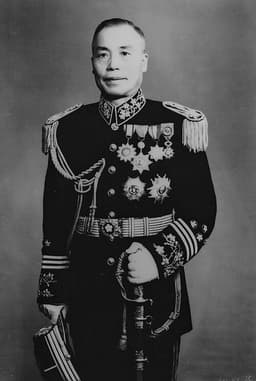
Li Zongren
General · Modern
58.5Total
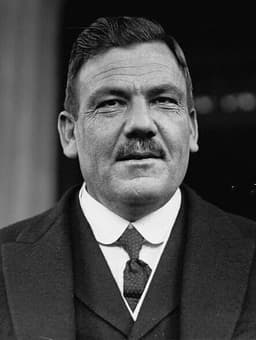
Plutarco Elias Calles
General · Modern
58.5Total
Basic Information
Born
1890
1877
Died
1969
1945
Era
Modern
Modern
Nationality
China
Mexico
Occupation
General
General
Civilization
Eastern
Western
Score Comparison
Military (10%)
65.0
40.0
Political (20%)
53.8
70.3
Influence (20%)
58.0
68.0
Legacy (20%)
52.0
40.0
Leadership (15%)
72.0
78.0
Strategy (15%)
56.8
52.5
TOTAL
58.5
58.5
Li Zongren — Complete Timeline
1921 AD
Command of the Guangxi ArmyPolitical Action◆ Major
Li Zongren became a commander in the Guangxi Army and helped unify Guangxi province under the New Guangxi Clique. He established a powerful regional base that rivaled other warlords.
Guangxi CliqueMilitary CommandWarlord Era
Impact: regional
1926 AD
Alliance with the Nationalist GovernmentPolitical Action◆ Major
Li Zongren allied the Guangxi Clique with Chiang Kai-shek's Nationalist government during the Northern Expedition. His forces played a key role in defeating warlords and unifying China under KMT rule.
Northern ExpeditionAllianceKMT
Impact: nationalconstructive
1938 AD
Battle of TaierzhuangWar
Li Zongren commanded Chinese forces to a major victory over the Japanese at the Battle of Taierzhuang during the Second Sino-Japanese War. This was the first significant Chinese victory of the war and boosted national morale.
Second Sino-Japanese WarBattleVictory
Impact: nationalconstructive
1949 AD
Acting Presidency of the Republic of ChinaPolitical Action◆ Major
Li Zongren served as Acting President of the Republic of China after Chiang Kai-shek's resignation during the Chinese Civil War. He attempted to negotiate peace with the Communists but failed, leading to the KMT's retreat to Taiwan.
Chinese Civil WarPresidencyKMT
Impact: nationaltragic
Exile to the United StatesPolitical Action
After the Communist victory, Li Zongren fled to the United States, where he lived in exile. He criticized Chiang Kai-shek's leadership and advocated for a reformed KMT, but remained politically marginalized.
ExileChinese Civil WarPolitics
Impact: nationaltragic
Plutarco Elias Calles — Complete Timeline
1915 AD
Governorship of SonoraPolitical Action
Calles served as Governor of Sonora from 1915 to 1919, implementing radical reforms including land redistribution, anti-clerical laws, and labor rights. His governorship established him as a key figure in the Sonoran dynasty and a proponent of revolutionary change.
GovernorshipSonoraReforms
Impact: regionalconstructive
1924 AD
Presidency of MexicoPolitical Action◆ Major
Calles was elected President of Mexico in 1924, serving until 1928. His administration continued revolutionary reforms, including land reform, labor rights, and secularization, but also faced opposition from the Catholic Church and conservative groups.
PresidencyMexican RevolutionReforms
Impact: nationalconstructive
1926 AD
Cristero WarWar◆ Major
Calles enforced anti-clerical laws, including the Calles Law, which restricted the Catholic Church's role in society. This sparked the Cristero War (1926-1929), a violent rebellion by Catholic peasants against the state, resulting in tens of thousands of deaths.
Cristero WarAnti-clericalismReligious Conflict
Impact: nationaldestructive
1928 AD
MaximatoPolitical Action◆ Major
After his presidency, Calles remained the de facto ruler of Mexico during the Maximato (1928-1934), controlling puppet presidents. He continued to influence policy, but his power waned as President L
MaximatoPolitical ControlCárdenas
Impact: national
1929 AD
Founding of the National Revolutionary Party (PNR)Political Action
Calles founded the National Revolutionary Party (PNR) in 1929, which later became the Institutional Revolutionary Party (PRI). This party dominated Mexican politics for over 70 years, institutionalizing the revolution's legacy and centralizing power.
Political PartyPRIInstitutionalization
Impact: nationalconstructive
Expert Analysis
Plutarco Elias Calles vs Li Zongren
# The Warlord and the Institutionalist
On a sweltering July morning in 1928, Plutarco Elías Calles stood before the Mexican Congress and delivered a speech that would reshape his nation’s political DNA. He was stepping down from the presidency, he announced—and he would not seek power again. The chamber erupted in applause, but those who knew Calles understood the irony: he had no intention of relinquishing control. Across the Pacific, in the muddy trenches of Taierzhuang, a Chinese general named Li Zongren was orchestrating a different kind of performance. In the spring of 1938, his troops ambushed a Japanese division in a daring pincer movement, handing Imperial Japan its first major defeat on land. One man built a party that ruled for seventy-one years; the other won a battle that changed a war. Both were generals. Both became acting heads of state. Yet their paths diverged like rivers splitting at a continental divide—one flowing toward institutional permanence, the other toward exile and memory.
Origins
Calles was born in 1877 in Sonora, a dusty frontier state where the Mexican Revolution was still a distant thunder. His father died when he was young, and he grew up poor, working as a schoolteacher and later a farmer. The revolution of 1910 gave him a cause and a gun. He rose through the ranks not by aristocratic birth but by sheer competence, becoming governor of Sonora in 1915 at age thirty-eight. There, he implemented land redistribution and attacked the power of the Catholic Church, setting a pattern of radical secularism that would define his career.
Li Zongren, born in 1890 in Guangxi, southern China, came from a land of rice paddies and bandits. The Qing Empire was collapsing, and young men with ambition turned to military academies. Li attended the Guangxi Military Academy and emerged as a commander of rare tactical instinct. By 1921, he had unified Guangxi under the New Guangxi Clique, a coalition of warlords who dreamed of a modern China. Where Calles inherited a revolutionary state in formation, Li inherited a nation fractured into feudal fragments.
Rise to Power
Calles’s ascent was meteoric and calculated. He served as Minister of War under President Álvaro Obregón, then won the presidency in 1924 with 84 percent of the vote. His legitimacy came from the ballot box, but his power came from the army and the emerging revolutionary party. Li’s path was messier. In 1926, he allied his Guangxi Clique with Chiang Kai-shek’s Nationalist government during the Northern Expedition—a pragmatic marriage of convenience. Li was never truly loyal to Chiang; he was loyal to Guangxi, to his troops, and to his own vision of a federal China.
The key difference was opportunity. Calles inherited a state that had already consolidated after the revolution; his task was to institutionalize it. Li inherited a civil war within a war, where loyalty shifted like desert sand.
Leadership & Governance
Calles governed with an iron fist wrapped in a velvet party charter. His Calles Law of 1926 restricted the Catholic Church’s role in education, property, and public worship—sparking the Cristero War, a bloody rebellion that killed an estimated 90,000 people. He suppressed dissent ruthlessly, but he also built schools, roads, and a centralized bureaucracy. In 1929, he founded the National Revolutionary Party (PNR), later the Institutional Revolutionary Party (PRI), which would dominate Mexican politics until 2000. His strategy was genius: create a party that absorbed all factions, then rule from behind the throne during the Maximato (1928–1934), when he controlled three puppet presidents.
Li Zongren governed differently. As a warlord, his authority was personal, not institutional. He taxed local merchants, commanded his own army, and negotiated alliances like a medieval prince. His military peak came at the Battle of Taierzhuang in 1938, where he outmaneuvered a Japanese force twice his size, using the terrain and local support to ambush and encircle. The victory was a propaganda triumph for China, but it did not translate into political power. Li’s political score of 65.0 reflects this: he was a brilliant general but a reluctant politician, always second-guessing Chiang’s centralizing ambitions.
Triumph & Tragedy
Calles’s greatest triumph was the PRI itself—a machine that outlived him. His tragedy was the Cristero War, a conflict born from his uncompromising secularism. He saw the Church as a rival state and crushed it, but the bloodshed stained his legacy. When he died in 1945, exiled in Los Angeles after falling out with his own party, he was a ghost of the man who had once ruled Mexico.
Li’s triumph was Taierzhuang, a battle that proved Chinese soldiers could defeat Japanese forces in conventional warfare. His tragedy came in 1949, when he served as Acting President of the Republic of China after Chiang’s resignation during the Civil War. He tried to negotiate peace with the Communists, but it was too late. When the People’s Liberation Army took Nanjing, Li fled to the United States, where he lived in exile until 1965, criticizing Chiang from afar. He died in Beijing in 1969, having returned to China under Mao’s rule—a final irony for a man who had fought both Communists and Nationalists.
Character & Destiny
Calles was a builder of systems. He believed that power should be institutionalized, not personalized. His leadership score of 75.5 reflects a man who could command loyalty but not love. He was ruthless, pragmatic, and visionary—a revolutionary who became a bureaucrat.
Li was a master of the battlefield, not the ballot box. His strategy score of 83.4 is the highest of any metric, and it shows: he won battles by reading terrain and enemy psychology, not by building coalitions. He was a warlord in the classical sense—loyal to his province, his men, and his code. But in a century of nation-states, that was not enough.
Legacy
Calles is remembered as the father of modern Mexico’s political system—for better and worse. The PRI gave stability but also corruption. His secularism shaped Mexican identity, but the Cristero War left wounds that still bleed. His legacy score of 72.0 captures this ambivalence: a founder, but also a suppressor.
Li Zongren is remembered as a patriot who fought the Japanese and a warlord who could not escape his era. In mainland China, he is honored as a hero of the Anti-Japanese War. In Taiwan, he is a footnote. His legacy score of 67.1 reflects a man whose achievements were real but whose political vision was incomplete.
Conclusion
These two generals, born a decade and an ocean apart, both rose from provincial roots to lead nations. Calles built a party that outlasted him; Li Zongren won a battle that defined a war. One institutionalized power; the other personalized it. The difference was not talent—both were extraordinary—but context. Calles had a state to inherit; Li had a country to invent. In the end, Calles’s legacy is a machine, still running. Li’s legacy is a moment, frozen in time—a general at Taierzhuang, watching the Japanese retreat, knowing that victory, like history, is never final.
Rankings
🥇
Li ZongrenLeader
Mil: 65.0Pol: 53.8Inf: 58.0
58.5
🥈
Plutarco Elias Calles
Mil: 40.0Pol: 70.3Inf: 68.0
58.5
How This Comparison Works
Algorithm
Each figure is scored on 6 dimensions (0—100 scale) based on structured historical data: Military (10%), Political (20%), Influence (20%), Legacy (20%), Leadership (15%), Strategy (15%). The weighted total produces the final ranking.
Data Sources
Scores are computed from structured sub-indicators in the database. Scale factors adjust for era (Ancient ×0.85, Modern ×1.0) and civilization size (Eastern ×1.05, Other ×0.80) to account for differences in population and military scale.
Maximum 3 Figures
Comparisons are limited to 2—3 figures to ensure readability and statistical meaningfulness.
Error Margins
±5 points per dimension — Sub-scores are derived from historical records with inherent uncertainty. Two figures within 5 points on a dimension should be considered roughly equivalent in that area.
Total Score Accuracy
±3 points overall — The weighted combination of 6 dimensions produces a total score with approximately ±3 points of uncertainty. Differences of less than 3 points are not statistically significant— the figures are effectively tied.
Known Limitations
- Historical records are incomplete and uneven across civilizations
- Figures from oral-tradition societies may be underrepresented
- Occupation labels can misclassify multi-role figures
- Scores measure capability and impact, not moral character
- Quantitative scoring is a comparison tool, not absolute truth
Capability Radar
Military (10%) — Battles & Warfare
Battles
65
45
Win Rate
60
50
Expansion
60
30
Political (20%) — Governance & Reform
Reform
45
85
Diplomacy
60
65
Economy
40
60
Influence (20%) — Cultural & Global Reach
Cultural
40
70
Global
40
60
Legacy (20%) — Historical Impact
Historical
55
75
Longevity
45
70
Leadership (15%) — Power & Stability
Tenure
55
70
Stability
35
55
Strategy (15%) — Tactics & Innovation
Strategy
68
55
Tactics
70
40
Reform
55
60
Similar Comparisons
Comments & Discussion
The Jefe Máximo of Bureaucracy6/16/2026
Calles was the OG institutionalist, but let's not romanticize him—his "revolutionary" party was a machine for personal control, not democracy. By 1929, he'd purged rivals like Serrano and Gómez with such brutality that even Stalin might've nodded. Sure, he built the PRI, but that "71-year rule" was a one-party dictatorship masquerading as stability. Li at least fought for a nation under existential threat; Calles fought for himself. Give me Taierzhuang's grit over Calles's cynical puppet-mastery
北伐老兵6/16/2026
李宗仁比卡列斯纯粹得多。卡列斯从教师蜕变为独裁者,靠的是权术和党派机器;李宗仁却是战场拼出来的,他在台儿庄顶着日军优势火力指挥包抄,那是真刀真枪的硬仗。数据上,国民党称歼敌万余,日本纪录是两千左右,但就算缩水十倍也改变不了这是正面战场的转折点。卡列斯呢?他下台后策动"最大派系",继续当太上皇。一个是军阀披着制度外衣,一个是军阀在危亡中扛起了国家。
The Skeptic's Scalpel6/16/2026
Let's talk numbers: Calles's land reform? He redistributed only 3 million hectares in Sonora by 1917, and much went to loyalists, not peasants. Compare that to Lázaro Cárdenas's 18 million hectares later—Calles was a placeholder, not a revolutionary. Li's Taierzhuang victory faces even harsher scrutiny: Chinese sources claim 16,000 Japanese casualties; Japanese archives list about 2,000. That's an 8:1 inflation ratio. Both men were geniuses of spin, not strategy. Calles built a mythology of stab
李宗仁的迷思家6/16/2026
卡列斯和胡亚雷斯一样,都从地方起家,但卡列斯玩的是现代政党,李宗仁玩的是老派军阀联盟。前者用教育法和反教权斗争树立意识形态,后者靠桂系军政体系维系实力。最有趣的是两人都当过临时元首——卡列斯1924-1928年改革了财政,李宗仁1949年仅百日代总统。可李宗仁的百日是在长江防线崩溃时,他试图和谈却无力回天;卡列斯的四年则是墨西哥国家构建的奠基期。一个输给时代洪流,一个塑造了时代。
The Warlord's Mirror6/16/2026
我认为两人最大盲点是都低估了草根力量。卡列斯推行毁教运动,1930年代引发上万农民武装的"基督战争",死了