Loading...
Abd el-Krim vs Li Zicheng
Abd el-Krim leads by 18.3 pts · 2 figures compared
…
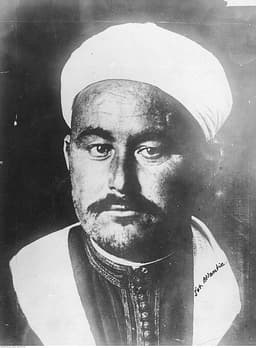
Abd el-Krim
Revolutionary · Modern
61.8Total
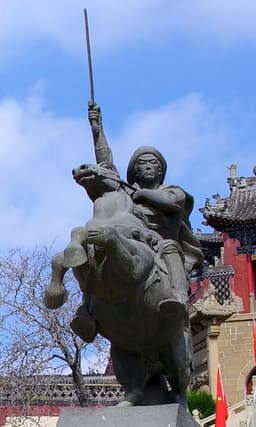
Li Zicheng
Revolutionary · Modern
43.5Total
Basic Information
Born
1882
1606
Died
1963
1645
Era
Modern
Modern
Nationality
Morocco
China
Occupation
Revolutionary
Revolutionary
Civilization
Middle Eastern
Eastern
Score Comparison
Military (10%)
75.0
50.0
Political (20%)
72.0
27.9
Influence (20%)
59.0
52.5
Legacy (20%)
50.0
44.2
Leadership (15%)
72.0
39.0
Strategy (15%)
55.0
43.3
TOTAL
61.8
43.5
Abd el-Krim — Complete Timeline
1921 AD
Battle of AnnualWar
Abd el-Krim's Riffian forces decisively defeated a Spanish army at Annual in Spanish Morocco. The Spanish suffered thousands of casualties and lost vast amounts of equipment. This victory established Abd el-Krim as a major military leader and led to the proclamation of the Rif Republic.
Rif WarSpanish ColonialismBattle
Impact: regional
1923 AD
Proclamation of the Rif RepublicPolitical Action◆ Major
Abd el-Krim formally proclaimed the independent Rif Republic in northern Morocco. He established a government and administrative system, challenging Spanish and French colonial rule. The republic was not internationally recognized but functioned as a de facto state.
Rif RepublicIndependenceAnti-Colonialism
Impact: regionalconstructive
1925 AD
Rif War against FranceWar◆ Major
Abd el-Krim's forces attacked French positions in Morocco, expanding the conflict beyond Spanish territory. The French responded with a massive military campaign, using superior firepower and chemical weapons. This led to the eventual defeat of the Rif Republic.
Rif WarFrench ColonialismChemical Weapons
Impact: regional
1926 AD
Surrender and Exile to RéunionWar◆ Major
After a prolonged campaign, Abd el-Krim surrendered to French forces. He was exiled to the island of R
Rif WarExileDefeat
Impact: regionaltragic
1947 AD
Release and Move to EgyptPolitical Action
Abd el-Krim was released by the French and allowed to move to Egypt. He settled in Cairo, where he continued to advocate for North African independence and became a symbolic figure for anti-colonial movements.
ExileAnti-ColonialismSymbol
Impact: regionalconstructive
Li Zicheng — Complete Timeline
1644 AD
Captured Beijing and Ended the Ming DynastyWar
Li Zicheng led his rebel army to capture Beijing. The Chongzhen Emperor committed suicide, ending the Ming dynasty. Li Zicheng proclaimed the Shun dynasty and briefly ruled from the Forbidden City before being defeated by Qing forces.
Ming-Qing TransitionRebellionBeijing
Impact: globaldestructive
Defeated at the Battle of Shanhai PassWar◆ Major
Li Zicheng's army was defeated by the combined forces of Wu Sangui and the Manchus at the Battle of Shanhai Pass. The defeat forced him to abandon Beijing and retreat westward, effectively ending his control over northern China.
Ming-Qing TransitionBattleDefeat
Impact: globaltragic
Proclaimed the Shun DynastyPolitical Action◆ Major
After capturing Beijing, Li Zicheng formally proclaimed the establishment of the Shun dynasty in Xi'an. He adopted the title of emperor and began implementing his own administrative policies, though his rule was short-lived.
Shun DynastyProclamationRebellion
Impact: nationalconstructive
1645 AD
Killed in Jiugong MountainWar◆ Major
Li Zicheng was killed by a local militia while fleeing through Jiugong Mountain in Hubei province. His death marked the end of the Shun dynasty and the collapse of his rebellion, though some accounts claim he survived and became a monk.
Shun DynastyDeathRebellion
Impact: nationaltragic
Expert Analysis
Abd el-Krim vs Li Zicheng
# The Rebel's Two Fates
In the spring of 1644, a peasant warlord named Li Zicheng rode through the gates of Beijing at the head of a ragged army, his tattered banners snapping in the wind as the last Ming emperor hanged himself on a hill behind the Forbidden City. Nearly three centuries later, in the summer of 1926, another rebel leader, Abd el-Krim, stood on a rocky hillside in northern Morocco and watched French artillery shells rain down on his mountain capital. One had seized an empire only to lose it in forty-two days; the other would spend decades in exile, yet plant a seed that would outlive him. What separates a flash in the pan from a lasting flame? The answer lies not only in their battles, but in the worlds that shaped them.
Origins
Li Zicheng was born in 1606 to a poor farming family in Shaanxi province, a region ravaged by drought, famine, and corrupt officials. He lost his parents early, worked as a shepherd and a blacksmith, and nursed a simmering hatred for the landlords and tax collectors who squeezed the life out of peasants. The Ming dynasty was collapsing under its own weight—plague, banditry, and bureaucratic decay had turned millions into refugees. Li was not educated; he could barely read. He understood hunger, not governance.
Abd el-Krim, born in 1882 in the Rif Mountains of northern Morocco, came from a very different world. His father was a qadi, a Muslim judge, and his family belonged to the local elite. Young Muhammad, later called Abd el-Krim, studied at the University of al-Qarawiyyin in Fez, one of the oldest universities in the world. He learned Islamic law, Arabic, and Spanish. He worked as a journalist and a colonial administrator for the Spanish protectorate. He knew the enemy from the inside. Where Li saw only oppression, Abd el-Krim saw a system to be dismantled and replaced.
Rise to Power
Li Zicheng’s ascent was born of desperation. In the 1630s, he joined a peasant rebellion that had spread like wildfire across northern China. He proved a capable fighter, but his rise was less about strategy than survival. By 1643, he had gathered a following by promising land and food—simple, powerful promises to starving men. His army swelled, but it remained a mob, united only by grievance.
Abd el-Krim’s rise was more deliberate. After the Spanish executed his brother in 1921, he abandoned his colonial post and retreated to the Rif, where he united fractious mountain tribes under a single banner. That same year, at the Battle of Annual, his forces annihilated a Spanish army of over 20,000 men, capturing thousands of rifles and artillery pieces. It was not a peasant revolt; it was a coordinated, modern insurgency. Abd el-Krim had studied European tactics and adapted them to the terrain. He was a revolutionary who thought like a statesman.
Leadership & Governance
Here lies the deepest chasm between the two men. Li Zicheng, after proclaiming the Shun dynasty in Xi'an in early 1644, proved utterly incapable of governing. He issued decrees but had no bureaucracy. He promised justice but allowed his soldiers to loot Beijing. He tried to win over Ming officials but could not control his own followers. His leadership score of 33.8 reflects a man who could destroy but not build. When Wu Sangui, the Ming general guarding the Great Wall, refused to submit, Li had no diplomatic tools left—only a sword.
Abd el-Krim, by contrast, built a functioning state. When he proclaimed the Rif Republic in 1923, he established a cabinet, collected taxes, organized a postal service, and even minted coins. He created a disciplined army with ranks, uniforms, and signals. His political score of 75.6 and leadership of 86.5 speak to a man who understood that revolution without administration is chaos. He negotiated with European powers, sought recognition from the League of Nations, and treated prisoners humanely. He was not just a warrior; he was a statesman in exile before he ever left.
Triumph & Tragedy
Li Zicheng’s greatest moment was also his undoing. In April 1644, he captured Beijing. The Ming dynasty fell. But he had no plan for what came next. When Wu Sangui allied with the Manchus and marched on the capital, Li led his army to Shanhai Pass. There, on a single day in late May, his forces were crushed by the combined Manchu-Ming army. He fled, was hunted down, and killed by a local militia in the mountains of Hubei in 1645. His dynasty lasted less than a year. His legacy score of 62.0 is a monument to a door that opened and slammed shut.
Abd el-Krim’s tragedy was slower and more dignified. In 1925, he attacked French positions, forcing France to join Spain in a massive counteroffensive. By 1926, with half a million enemy troops closing in, he surrendered on terms. He was exiled to Réunion, a remote island in the Indian Ocean, where he lived for twenty-one years. But he did not vanish. In 1947, he was released and moved to Cairo, where he became a symbol of anti-colonial resistance, meeting with Nasser and inspiring movements across Africa and Asia. He died in 1963, still dreaming of a free Morocco.
Character & Destiny
Li Zicheng’s personality was forged in fire and famine. He was ruthless, impulsive, and suspicious. He trusted no one, and no one trusted him for long. His military score of 55.5 and strategy of 59.6 suggest a competent guerrilla leader who could not make the leap to empire. He was a man of his time—a time when the old order was dying, but no new order had yet been born.
Abd el-Krim was patient, pragmatic, and visionary. He had seen the world beyond his mountains. He knew that a rebellion needed not just guns, but laws, schools, and diplomats. His strategy score of 72.0 reflects a mind that thought in years and decades, not days. He understood that defeat in battle was not the end—that ideas, once planted, would grow.
Legacy
Li Zicheng is remembered in China as a tragic figure, a warning against hubris and the limits of peasant rebellion. The Ming fell, but the Qing rose, and his name became a cautionary tale. His influence score of 74.3 is real, but it is the influence of failure—a story told to teach what not to do.
Abd el-Krim’s legacy is far more complex and enduring. He is honored in Morocco as a national hero, a father of independence. His Rif Republic, though crushed, became a blueprint for post-colonial states. In the wider Arab world, he is remembered as a pioneer of anti-imperial resistance, a man who fought two European empires and nearly won. His total score of 72.8 reflects not just military prowess, but a life of purpose.
Conclusion
Two rebels, two fates. Li Zicheng seized a throne and lost it in a month. Abd el-Krim lost a war and won a legacy. The difference was not courage—both men had that in abundance. It was vision. Li saw only the enemy in front of him; Abd el-Krim saw the world beyond the battlefield. One was a flame that burned bright and died; the other was a fire that, even in exile, never went out. In the end, the most dangerous weapon a revolutionary can carry is not a sword, but a plan.
Rankings
🥇
Abd el-KrimLeader
Mil: 75.0Pol: 72.0Inf: 59.0
61.8
🥈
Li Zicheng
Mil: 50.0Pol: 27.9Inf: 52.5
43.5
+18.3 behind
How This Comparison Works
Algorithm
Each figure is scored on 6 dimensions (0—100 scale) based on structured historical data: Military (10%), Political (20%), Influence (20%), Legacy (20%), Leadership (15%), Strategy (15%). The weighted total produces the final ranking.
Data Sources
Scores are computed from structured sub-indicators in the database. Scale factors adjust for era (Ancient ×0.85, Modern ×1.0) and civilization size (Eastern ×1.05, Other ×0.80) to account for differences in population and military scale.
Maximum 3 Figures
Comparisons are limited to 2—3 figures to ensure readability and statistical meaningfulness.
Error Margins
±5 points per dimension — Sub-scores are derived from historical records with inherent uncertainty. Two figures within 5 points on a dimension should be considered roughly equivalent in that area.
Total Score Accuracy
±3 points overall — The weighted combination of 6 dimensions produces a total score with approximately ±3 points of uncertainty. Differences of less than 3 points are not statistically significant— the figures are effectively tied.
Known Limitations
- Historical records are incomplete and uneven across civilizations
- Figures from oral-tradition societies may be underrepresented
- Occupation labels can misclassify multi-role figures
- Scores measure capability and impact, not moral character
- Quantitative scoring is a comparison tool, not absolute truth
Capability Radar
Military (10%) — Battles & Warfare
Battles
75
55
Win Rate
70
60
Expansion
60
65
Political (20%) — Governance & Reform
Reform
70
15
Diplomacy
65
20
Economy
50
10
Influence (20%) — Cultural & Global Reach
Cultural
60
40
Global
55
35
Legacy (20%) — Historical Impact
Historical
70
55
Longevity
55
30
Leadership (15%) — Power & Stability
Tenure
55
20
Stability
45
5
Strategy (15%) — Tactics & Innovation
Strategy
80
55
Tactics
85
50
Reform
65
30
Similar Comparisons
Comments & Discussion
RifFirePhil6/16/2026
Abd el-Krim was the smarter strategist by far. Li Zicheng captured Beijing in a few months but had zero plan to hold it. Abd el-Krim built a functioning Rif Republic with its own bureaucracy and tax system for five years. That's not a rebellion, that's a proto-state. Li Zicheng got drunk on victory; Abd el-Krim was already thinking about how to build something that would last. That's why his legacy outlived his exile, while Li's vanished with his army.
历史铁秤6/16/2026
李自成败在没有制度根基。他进北京后连粮饷都发不出,靠拷打旧官僚凑钱,如何长久?阿卜杜·克里姆在里夫山区建立了一个真正的政府:有部委、有正规军、有独立外交。军事胜利靠运气,制度建设却靠远见。李自成是个失败的赌徒,阿卜杜·克里姆是位真正的建国者。数据很清楚:统治时间差了几十倍。
ClassicsHawk6/16/2026
This comp is off—different eras demand different yardsticks. In Ming China, a literate ex-blacksmith beating 4,000-year-old state is insane. In 20th-century Morocco, Abd el-Krim's rebellion arrived during the interwar colonial crisis—France and Spain were already weakened. One was a miracle against a dying dynasty; the other was a calculated blow against an overstretched empire. Apples to oranges, unless you're just measuring body counts.
枪炮与玫瑰6/16/2026
我欣赏阿卜杜·克里姆,但把他俩对比不公平。李自成的敌人是明帝国——当时还是全球最强陆军,而1920年代西属摩洛哥军费的80%都来自本土殖民预算,兵力不足三万八。更重要的是,李自成没有现代武器支持。如果给里夫步枪,阿卜杜·克里姆能赢,但战局决定了结果。两人都在赌命,但对手的档位不同。
PerspectiveShift6/16/2026
Both men embody historical irony: Li Zicheng overthrew the Ming only to be crushed by the Manchu, a third-party actor. Abd el-Krim fought Spain and France simultaneously—and nearly won. The difference? The Rif had no Ming collapse ahead of it, no Han refugee wave. Li benefited from chaos he couldn't control; Abd el-Krim created order that his enemies had to work to destroy. One was a guy who caught a falling knife; the other built the knife.