Loading...
Li Zicheng vs Miguel Hidalgo
Miguel Hidalgo leads by 3.5 pts · 2 figures compared
…
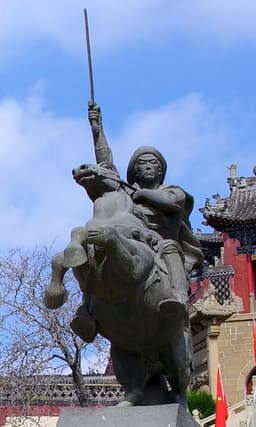
Li Zicheng
Revolutionary · Modern
43.5Total
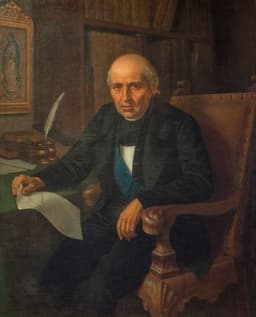
Miguel Hidalgo
Revolutionary · Modern
47.0Total
Basic Information
Born
1606
1753
Died
1645
1811
Era
Modern
Modern
Nationality
China
Mexico
Occupation
Revolutionary
Revolutionary
Civilization
Eastern
Western
Score Comparison
Military (10%)
50.0
50.0
Political (20%)
27.9
36.5
Influence (20%)
52.5
55.0
Legacy (20%)
44.2
52.0
Leadership (15%)
39.0
39.0
Strategy (15%)
43.3
39.6
TOTAL
43.5
47.0
Li Zicheng — Complete Timeline
1644 AD
Captured Beijing and Ended the Ming DynastyWar
Li Zicheng led his rebel army to capture Beijing. The Chongzhen Emperor committed suicide, ending the Ming dynasty. Li Zicheng proclaimed the Shun dynasty and briefly ruled from the Forbidden City before being defeated by Qing forces.
Ming-Qing TransitionRebellionBeijing
Impact: globaldestructive
Defeated at the Battle of Shanhai PassWar◆ Major
Li Zicheng's army was defeated by the combined forces of Wu Sangui and the Manchus at the Battle of Shanhai Pass. The defeat forced him to abandon Beijing and retreat westward, effectively ending his control over northern China.
Ming-Qing TransitionBattleDefeat
Impact: globaltragic
Proclaimed the Shun DynastyPolitical Action◆ Major
After capturing Beijing, Li Zicheng formally proclaimed the establishment of the Shun dynasty in Xi'an. He adopted the title of emperor and began implementing his own administrative policies, though his rule was short-lived.
Shun DynastyProclamationRebellion
Impact: nationalconstructive
1645 AD
Killed in Jiugong MountainWar◆ Major
Li Zicheng was killed by a local militia while fleeing through Jiugong Mountain in Hubei province. His death marked the end of the Shun dynasty and the collapse of his rebellion, though some accounts claim he survived and became a monk.
Shun DynastyDeathRebellion
Impact: nationaltragic
Miguel Hidalgo — Complete Timeline
1810 AD
Captured Guanajuato and massacred SpaniardsWar◆ Major
Hidalgo's army of 80,000 captured the city of Guanajuato on September 28, 1810. After taking the Alh
BattleMassacreViolence
Impact: regionaldestructive
Issued the Grito de DoloresPolitical Action
On September 16, 1810, Father Miguel Hidalgo rang the church bell in Dolores and called for rebellion against Spanish colonial rule. His speech, known as the Grito de Dolores, urged Mexicans to rise up against the Spanish and marked the beginning of the Mexican War of Independence.
IndependenceRebellionGrito de Dolores
Impact: nationalconstructive
1811 AD
Defeated at the Battle of Calderón BridgeWar◆ Major
Hidalgo's poorly trained army was decisively defeated by a smaller Spanish royalist force at the Battle of Calder
DefeatSpanish RoyalistsTurning Point
Impact: regionaltragic
Executed by Spanish authoritiesPolitical Action◆ Major
Hidalgo was captured in Acatita de Baj
ExecutionMartyrdomIndependence Movement
Impact: nationaltragic
Expert Analysis
Miguel Hidalgo vs Li Zicheng
**The Bell and the Throne: Two Revolutions That Failed**
On a September morning in 1810, a white-haired priest stepped onto the steps of a small church in the Mexican town of Dolores. He rang the bell, and the sound carried across the dusty plaza to the faces of the poor, the indigenous, and the mestizos who had gathered. Miguel Hidalgo shouted a call to arms against three centuries of Spanish rule. Thirty-four years earlier and half a world away, a different kind of leader had stood at the gates of a crumbling empire. Li Zicheng, a former postman and soldier, had led a peasant army through the ravaged countryside of northern China, past fields stripped bare by famine and drought, toward the walls of Beijing. Both men would shake their worlds to the foundations. Both would see their revolutions collapse in blood. Their stories, separated by oceans and civilizations, share a haunting symmetry: the fire of rebellion, the rush of victory, and the ruin that followed.
**Origins**
Miguel Hidalgo was born in 1753 into a world of order and privilege. He was a creole—a Spaniard born in Mexico—educated in the finest schools, ordained as a priest, and steeped in the ideals of the European Enlightenment. He read Rousseau and Voltaire in secret, questioned the authority of the Church and the Crown, and dreamed of a society where the poor might rise. His parish in Dolores was a place of poverty and injustice, and Hidalgo, despite his collar, was a man of action. He taught the indigenous people to cultivate grapes and olives, defying Spanish laws designed to protect peninsular monopolies.
Li Zicheng came from the opposite end of the social order. Born in 1606 in Shaanxi province, he was a peasant in a land buckling under the weight of the Ming dynasty’s collapse. Drought, locusts, and corrupt tax collectors had turned the countryside into a graveyard. As a boy, he worked as a blacksmith and a shepherd; as a young man, he became a postman, carrying messages across roads where bandits ruled. When the Ming government cut his wages and laid him off, he had nothing left to lose. He joined a rebel band, and his raw physical strength and tactical cunning quickly set him apart. Hidalgo was a priest who became a revolutionary; Li Zicheng was a starving man who became a king.
**Rise to Power**
Hidalgo’s path to power was sudden and explosive. On September 16, 1810, he issued the *Grito de Dolores*—a cry for independence, land reform, and justice. Within days, he commanded an army of 80,000 men, women, and children armed with machetes, slings, and stolen muskets. They swept through the countryside, capturing the wealthy mining city of Guanajuato on September 28. Inside the fortified granary known as the Alhóndiga de Granaditas, Spanish civilians and soldiers had barricaded themselves. Hidalgo’s mob broke through, and what followed was a massacre. Men, women, and children were hacked to death in the name of liberation. Hidalgo, a man of God, did not stop them. He had unleashed a force he could not control.
Li Zicheng’s rise was slower, more deliberate. He fought for years in the muddy chaos of late-Ming China, building a reputation for generosity toward the poor and ruthlessness toward officials. By 1643, he had unified many rebel factions under his banner and declared himself the “Dashing King.” His army moved with discipline, distributing grain and promising to abolish taxes. In April 1644, as the Ming dynasty crumbled under internal rebellion and Manchu pressure, Li Zicheng marched into Beijing unopposed. The Chongzhen Emperor, the last Ming ruler, hanged himself on a hill behind the Forbidden City. Li Zicheng took the throne and proclaimed the Shun dynasty. He had done what no peasant had done in centuries: he had captured the heart of the Middle Kingdom.
**Leadership & Governance**
Here the two men diverged. Hidalgo was a visionary, not an administrator. His political genius lay in his ability to articulate a dream—freedom, equality, and an end to caste oppression—but he had no plan for governing the territory he conquered. His army was a mob, his supply lines nonexistent, his generals often incompetent. He failed to march on Mexico City after Guanajuato, hesitating at the moment of decision. His leadership was charismatic but chaotic, driven by emotion rather than strategy.
Li Zicheng, by contrast, understood power but not its limits. Once inside Beijing, he attempted to rule. He executed Ming loyalists, redistributed land, and issued decrees. But he made a fatal mistake: he alienated the Ming general Wu Sangui, who controlled the strategic Shanhai Pass on the Great Wall. Li Zicheng seized Wu’s family and tried to force his submission. Instead, Wu opened the pass to the Manchu armies from the north. In May 1644, at the Battle of Shanhai Pass, Li Zicheng’s army faced a combined force of Wu’s defectors and Manchu cavalry. The Shun forces were routed. Li Zicheng fled Beijing, his dynasty barely a month old.
**Triumph & Tragedy**
Hidalgo’s greatest moment was also the seed of his destruction. The capture of Guanajuato proved that the Spanish could be beaten, but the massacre that followed turned many creoles—his natural allies—against him. He was defeated at the Battle of Calderón Bridge in January 1811, where a smaller, better-trained Spanish force shattered his army. He fled north, hoping to reach the United States, but was betrayed and captured in Acatita de Baján on March 21. The Spanish Inquisition tried him, defrocked him, and handed him to the civil authorities. On July 30, 1811, he was executed by firing squad. His last words were reportedly, “Though I die, the cause will live on.”
Li Zicheng’s tragedy was even swifter. After Shanhai Pass, his army disintegrated. He wandered south through the mountains of Hubei, a king without a kingdom. In 1645, while foraging for food, he was killed by a local militia in Jiugong Mountain. The exact circumstances remain murky—some say he was beaten to death, others that he was shot. His body was never recovered. The peasant who had sat on the Dragon Throne died in obscurity, his dream of a new dynasty buried with him.
**Character & Destiny**
Hidalgo was a man of ideas, not of war. His military score of 42 and strategy of 45 reflect a leader who could inspire but not command. He was a priest who preached revolution but could not control its violence. His political score of 63 suggests a man who understood what people wanted but not how to deliver it. Li Zicheng was a fighter, with a military score of 55 and a strategy of 59, but his political score of 40 reveals a fatal blindness. He knew how to seize power but not how to keep it. Both men were undone by the same flaw: they could start a revolution, but they could not finish it.
**Legacy**
Hidalgo’s legacy is immortal. Every year on September 16, the President of Mexico rings the same bell in the National Palace and reenacts the *Grito de Dolores*. He is remembered as the Father of Mexican Independence, a martyr whose death lit a fire that others—Morelos, Iturbide, and generations of reformers—would carry forward. His legacy score of 75 reflects a man whose name became a symbol.
Li Zicheng’s legacy is more ambiguous. In China, he is both a folk hero and a cautionary tale. Peasants remember him as a champion of the poor; historians remember him as the man who brought down the Ming but could not hold the gate against the Manchus. His influence score of 74 shows how deeply he shaped the Chinese imagination, but his legacy score of 62 suggests a figure whose failure overshadowed his triumph.
**Conclusion**
One rang a bell; the other seized a throne. Both men rose from the margins of their worlds and challenged the mighty. Hidalgo’s revolution sputtered and died, but his cry became a nation’s anthem. Li Zicheng’s dynasty lasted weeks, but his fall opened the door to the Qing, who would rule for nearly three centuries. In the end, they remind us that revolution is easier to begin than to sustain—and that the men who topple empires are not always the ones who build them. Their stories are mirrors, reflecting the same truth: that the bell of liberty, once rung, cannot be unrung, but the throne of the conqueror is always built on sand.
Rankings
🥇
Miguel HidalgoLeader
Mil: 50.0Pol: 36.5Inf: 55.0
47.0
🥈
Li Zicheng
Mil: 50.0Pol: 27.9Inf: 52.5
43.5
+3.5 behind
How This Comparison Works
Algorithm
Each figure is scored on 6 dimensions (0—100 scale) based on structured historical data: Military (10%), Political (20%), Influence (20%), Legacy (20%), Leadership (15%), Strategy (15%). The weighted total produces the final ranking.
Data Sources
Scores are computed from structured sub-indicators in the database. Scale factors adjust for era (Ancient ×0.85, Modern ×1.0) and civilization size (Eastern ×1.05, Other ×0.80) to account for differences in population and military scale.
Maximum 3 Figures
Comparisons are limited to 2—3 figures to ensure readability and statistical meaningfulness.
Error Margins
±5 points per dimension — Sub-scores are derived from historical records with inherent uncertainty. Two figures within 5 points on a dimension should be considered roughly equivalent in that area.
Total Score Accuracy
±3 points overall — The weighted combination of 6 dimensions produces a total score with approximately ±3 points of uncertainty. Differences of less than 3 points are not statistically significant— the figures are effectively tied.
Known Limitations
- Historical records are incomplete and uneven across civilizations
- Figures from oral-tradition societies may be underrepresented
- Occupation labels can misclassify multi-role figures
- Scores measure capability and impact, not moral character
- Quantitative scoring is a comparison tool, not absolute truth
Capability Radar
Military (10%) — Battles & Warfare
Battles
55
30
Win Rate
60
25
Expansion
65
20
Political (20%) — Governance & Reform
Reform
15
60
Diplomacy
20
30
Economy
10
20
Influence (20%) — Cultural & Global Reach
Cultural
40
70
Global
35
60
Legacy (20%) — Historical Impact
Historical
55
75
Longevity
30
70
Leadership (15%) — Power & Stability
Tenure
20
15
Stability
5
10
Strategy (15%) — Tactics & Innovation
Strategy
55
25
Tactics
50
20
Reform
30
10
Similar Comparisons
Comments & Discussion
Cattle Call Historian6/16/2026
Hidalgo’s Grito was a masterstroke of moral theater, but his army was a mob of 80,000 with no logistics or discipline—they sacked Guanajuato and butchered the Spanish in the Alhóndiga granary. Li Zicheng, by contrast, built a shadow state with tax reforms and a strict "no loot" policy that won peasant loyalty. If Hidalgo had Li’s organizational spine, he’d have held Mexico City instead of scampering north to get executed like a rat.
数字农民6/16/2026
数据不会撒谎:李自成从驿卒起步,饥荒中靠“迎闯王,不纳粮”的口号聚众百万,占领北京仅42天就被清军碾碎。伊达尔戈起义三个月就兵败被俘,麾下农民军连火枪都配不齐,全凭教堂钟声壮胆。说白了两场都是草台班子造反,但李自成至少打下了京城坐过龙椅,伊达尔戈连墨西哥城都没摸到,怎么有脸比?
Thane of the North6/16/2026
Li Zicheng was the ultimate cautionary tale for empire-defenders: a peasant with genuine grievance, but zero talent for managing victory. His army pillaged Beijing for forty days, turned the scholar-official class into enemies, and let Wu Sangui collude with the Manchus. Hidalgo at least had the decency to martyrize himself as a symbol—his head on a pike inspired a decade of guerrilla war. Li just drowned in his own incompetence, a footnote that cleared the way for the Qing.
四库全书逃兵6/16/2026
拿《清史稿》说话:李自成进北京后拷打明朝百官,抄家索饷7千万两白银,比满清入关后前十年税收还高。这哪是革命,分明是变本加厉的劫掠。伊达尔戈反倒是认认真真搞了一场种族战争——废除奴隶制,归还土地给原住民,比林肯早五十年。可惜他对手下的阿帕奇人和牧场主武装毫无威慑力,活脱脱一个堂吉诃德带土匪。
Iconoclast’s Quill6/16/2026
Stop romanticizing failure. Hidalgo’s “revolution” was a Creole temper tantrum dressed in priest robes—he freed slaves in one breath and ordered the massacre of 500 Spanish civilians in Guanajuato the next. Li Zicheng was just a bandit with a better PR team: his Grand Shun dynasty lasted less time than a summer peach. The real story here is not tragic symmetry, but the universal truth that peasant revolts implode the moment they stop burning and start governing. Both were spectacularly bad at st