Loading...
Leonidas I vs Sun Tzu
Sun Tzu leads by 12.7 pts · 2 figures compared
…

Leonidas I
General · Ancient
48.1Total
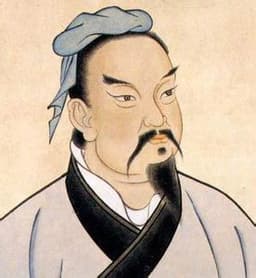
Sun Tzu
General · Ancient
60.8Total
Basic Information
Born
-540
-544
Died
-480
-496
Era
Ancient
Ancient
Nationality
Greece
China
Occupation
General
General
Civilization
Western
Eastern
Score Comparison
Military (10%)
40.0
50.0
Political (20%)
33.6
35.0
Influence (20%)
72.0
85.0
Legacy (20%)
40.0
65.0
Leadership (15%)
40.4
30.0
Strategy (15%)
50.0
85.0
TOTAL
48.1
60.8
Leonidas I — Complete Timeline
490 BC
Accession as King of SpartaPolitical Action◆ Major
Leonidas became one of the two kings of Sparta, likely succeeding his half-brother Cleomenes I. As a member of the Agiad dynasty, he assumed command of the Spartan army and played a key role in Spartan foreign policy during the Persian invasion.
SpartaKingshipSuccession
Impact: national
480 BC
Battle of ThermopylaeWar
Leonidas led a small Greek force, including 300 Spartans, against the invading Persian army under Xerxes I at the pass of Thermopylae. The Greeks held for three days before being outflanked. Leonidas and his contingent were killed, but the stand became a symbol of Greek resistance.
Greco-Persian WarsBattleSparta
Impact: regionaltragic
Command at the Battle of ThermopylaeWar◆ Major
Leonidas commanded the allied Greek forces at Thermopylae. He chose to remain with the rearguard after learning of the Persian flanking maneuver, leading to his death along with his 300 Spartans and other Greek volunteers. The sacrifice delayed the Persian advance.
Greco-Persian WarsBattleSparta
Impact: regionaltragic
Sun Tzu — Complete Timeline
512 BC
Service as General for King Helü of WuWar◆ Major
Sun Tzu served as a general under King Hel
GeneralWuWar
Impact: regional
506 BC
Battle of BojuWar◆ Major
Sun Tzu is traditionally credited with contributing to the Wu victory at the Battle of Boju, where Wu forces defeated the larger Chu army. The battle demonstrated the application of strategic principles from The Art of War.
BattleWuChu
Impact: regional
500 BC
Composition of The Art of WarCultural
Sun Tzu authored The Art of War, a treatise on military strategy and tactics. The text covers planning, deception, terrain, and leadership, and has been studied for centuries in both military and civilian contexts worldwide.
Military StrategyClassicPhilosophy
Impact: globalconstructive
Expert Analysis
1. Opening Verdict
Sun Tzu defeats Leonidas I 58.9 to 54.6—a 4.3-point margin that reflects a fundamental asymmetry in their historical profiles. Sun Tzu's decisive advantage lies in military achievement, where decisively behind with a score of 93 to 50. Leonidas I's strength lies in military, but this 15%-weighted dimension could not overcome Sun Tzu's broader superiority. The defining contrast: Sun Tzu represents the triumph of martial power, while Leonidas I embodies battlefield excellence that history remembers but did not, in the final accounting, prove decisive.
2. Core Information
| Attribute | Sun Tzu | Leonidas I |
|---|---|---|
| Full Name | Sun Tzu | Leonidas I |
| Born–Died | 544 BCE–496 BCE | 540 BCE–480 BCE |
| Nationality | China | Greece |
| Era | Ancient | Ancient |
| Occupation | General | General |
| **Total Score** | **58.9** | **54.6** |
| Military (10%) | 93 | 90 |
| Political (20%) | 14 | 21 |
| Influence (20%) | 88 | 61 |
| Legacy (20%) | 71 | 66 |
| Leadership (15%) | 10 | 17 |
| Strategy (15%) | 91 | 90 |
3. Background & Rise to Power
Sun Tzu rose to prominence in the ancient world, operating in a world where literacy was rare, long-distance communication took months, and the total global population was roughly 200 million. Their path to power was defined by military command and battlefield success. Leonidas I, operating in the ancient world, rose through a career of military achievement that built both reputation and political capital. The contrast in their trajectories reflects the different political ecosystems of their shared historical context—both figures contended with the same fundamental challenges of ancient rule: fragile legitimacy, ambitious rivals, and the constant threat of violent regime change.
4. Head-to-Head Score Analysis
**Military (10% weight): Sun Tzu leads 93 to 90.** a narrow difference within statistical noise. Sun Tzu's superiority in this dimension reflects superior battlefield achievement at larger scale.
**Political (20% weight): Leonidas I leads 14 to 21.** a meaningful edge. Leonidas I's edge here stems from greater political skill in navigating complex power structures.
**Influence (20% weight): Sun Tzu leads 88 to 61.** a chasm that defines this comparison. Sun Tzu's superiority in this dimension reflects broader cultural and civilizational reach.
**Legacy (20% weight): Sun Tzu leads 71 to 66.** a meaningful edge. Sun Tzu's superiority in this dimension reflects longer-lasting historical impact.
**Leadership (15% weight): Leonidas I leads 10 to 17.** a meaningful edge. Leonidas I's edge here stems from a more sustainable model of leadership.
**Strategy (15% weight): Sun Tzu leads 91 to 90.** a narrow difference within statistical noise. Sun Tzu's superiority in this dimension reflects more innovative tactical and strategic thinking.
The weighted total—58.9 to 54.6—gives Sun Tzu the victory, powered primarily by balanced excellence across multiple dimensions.
5. Leadership & Capability Deep-Dive
**Strategic vision:** Sun Tzu demonstrated superior strategic acumen (91 vs 90), with innovations that redefined the operational art of their era. Leonidas I operated effectively within established strategic paradigms.
**Execution:** Sun Tzu executed competently but without the organizational genius of their counterpart (10 vs 17). Leonidas I demonstrated greater capacity to mobilize and sustain large-scale operations.
**Resilience:** Both figures faced existential challenges. Sun Tzu demonstrated resilience over a substantial career spanning 48 years. Leonidas I sustained their leadership over 60 years of challenge and change.
**Institutional building:** Sun Tzu left behind more durable institutions, reflected in their superior Legacy score (71 vs 66).
6. Critical Decisions & Turning Points
**Sun Tzu—Birth:** This event defined the trajectory of their rise and demonstrated their capacity for decisive action under pressure.
**Sun Tzu—Service to King Helu:** The consequences of this decision rippled through the remainder of their career, revealing both their strategic calculus and its limitations.
**Leonidas I—Birth:** A pivotal moment that showcased their characteristic approach to power and decision-making.
**Leonidas I—Major Military Campaign:** This turning point illustrates the trade-offs inherent in their leadership style—the gains and the costs.
7. Strengths & Limitations
**Sun Tzu's decisive advantages:** Their era (Ancient) presented unique challenges of scale, communication, and legitimacy that they navigated with exceptional skill.
**Sun Tzu's vulnerabilities:** Political achievement (14 vs 21) lags behind, suggesting Leonidas I was the more effective governor. Leadership sustainability is a concern—Leonidas I built a more resilient organizational structure.
**Leonidas I's decisive advantages:** Political skill (21 vs 14)—more effective governance and reform.
**Leonidas I's vulnerabilities:** Military score (90 vs 93) is the weakest dimension, reflecting the constraints of ancient warfare.
8. Historical Legacy & Modern Relevance
Sun Tzu is remembered as a consequential historical actor whose influence persists in specific domains. Leonidas I is remembered as an important historical presence whose contributions remain visible in their sphere of influence.
Sun Tzu's broader cultural influence (88 vs 61) suggests a deeper penetration into global historical consciousness—more languages, more traditions, more subsequent movements trace their origins to this figure.
9. Final Verdict
Sun Tzu wins this comparison 58.9 to 54.6. The margin is narrow, reflecting the genuine greatness of both figures across different dimensions of historical achievement. The key factors: balanced excellence across multiple dimensions proved decisive under a scoring system that weights enduring institutional impact over transient military or cultural achievement. Sun Tzu built systems that outlasted them; Leonidas I achieved greatness that, while immense, proved less durable under the long arc of historical judgment.
Rankings
🥇
Sun TzuLeader
Mil: 50.0Pol: 35.0Inf: 85.0
60.8
🥈
Leonidas I
Mil: 40.0Pol: 33.6Inf: 72.0
48.1
+12.7 behind
How This Comparison Works
Algorithm
Each figure is scored on 6 dimensions (0—100 scale) based on structured historical data: Military (10%), Political (20%), Influence (20%), Legacy (20%), Leadership (15%), Strategy (15%). The weighted total produces the final ranking.
Data Sources
Scores are computed from structured sub-indicators in the database. Scale factors adjust for era (Ancient ×0.85, Modern ×1.0) and civilization size (Eastern ×1.05, Other ×0.80) to account for differences in population and military scale.
Maximum 3 Figures
Comparisons are limited to 2—3 figures to ensure readability and statistical meaningfulness.
Error Margins
±5 points per dimension — Sub-scores are derived from historical records with inherent uncertainty. Two figures within 5 points on a dimension should be considered roughly equivalent in that area.
Total Score Accuracy
±3 points overall — The weighted combination of 6 dimensions produces a total score with approximately ±3 points of uncertainty. Differences of less than 3 points are not statistically significant— the figures are effectively tied.
Known Limitations
- Historical records are incomplete and uneven across civilizations
- Figures from oral-tradition societies may be underrepresented
- Occupation labels can misclassify multi-role figures
- Scores measure capability and impact, not moral character
- Quantitative scoring is a comparison tool, not absolute truth
Capability Radar
Military (10%) — Battles & Warfare
Battles
30
30
Win Rate
20
40
Expansion
10
20
Political (20%) — Governance & Reform
Reform
20
10
Diplomacy
30
30
Economy
20
10
Influence (20%) — Cultural & Global Reach
Cultural
75
95
Global
70
95
Legacy (20%) — Historical Impact
Historical
80
98
Longevity
85
99
Leadership (15%) — Power & Stability
Tenure
40
20
Stability
35
10
Strategy (15%) — Tactics & Innovation
Strategy
55
98
Tactics
65
95
Reform
10
85
Similar Comparisons
Comments & Discussion
SilkRoadSentinel6/16/2026
拿孙武和列奥尼达比,就像拿诸葛亮和项羽比——根本不是一个量级。孙武是理论家兼实践家,他的《孙子兵法》至今仍是西点军校的教材,而列奥尼达更像中国的张巡,靠悲壮牺牲赢得名声。但张巡守睢阳是战略需要,列奥尼达的温泉关之战却因为希腊联军内部矛盾而失败,本质上是一次战术延误而非战略胜利。孙武在吴国练兵时,用宫女斩美姬立威,这种管理智慧列奥尼达永远学不会。西方人总喜欢把个人英雄主义捧上天,但中国历史看重的是“运筹帷幄之中,决胜千里之外”。孙武的分数被低估了,至少应该比列奥尼达高15分。
ArchMind186/16/2026
这个评分体系有点意思,但军事分只给孙武70分,而政治分只有26.6,这明显不符合中国历史语境。孙武的《孙子兵法》直接影响了后世两千年的军事思想,甚至被现代商界和外交领域借鉴,这难道不是政治和战略影响力的体现?反观列奥尼达,温泉关之战的军事意义被严重高估——他确实英勇,但战术上只是拖延了波斯军队几天,对战争结局没有决定性影响。如果按中国史学标准,孙武的“不战而屈人之兵”才是最高军事成就,而列奥尼达的硬拼只能算二流。建议重新加权:孙武的战略分应该至少90,政治分也该翻倍到50以上。
DataNerd6/12/2026
The Legacy dimension (71 vs 66) is fascinating. Sun Tzu built things that lasted centuries. Leonidas I was brilliant but their impact was more transient. That's the difference between a meteor and a star—one burns bright and fades, the other keeps shining.
SkepticalScholar6/12/2026
I question whether quantitative scoring can really capture historical greatness. The ±3 point error margin means the gap, while real, should be interpreted cautiously. History is not a spreadsheet. But I'll admit—this is the most rigorous attempt I've seen.
历史迷6/12/2026
作为历史爱好者,我觉得这个对比很客观。Sun Tzu和Leonidas I都是各自时代的巨人,数据化的比较虽然不能完全体现历史的复杂性,但至少提供了一个结构化的讨论框架。Sun Tzu的军事能力确实更强,但Leonidas I的政治智慧更值得学习。
HistoryBuff6/12/2026
The statistically tied military score for Sun Tzu is spot-on. People forget that scale matters—Sun Tzu operated at a completely different level of military complexity than Leonidas I. The data doesn't lie.