Loading...
Lazare Carnot vs Winston Churchill
Winston Churchill leads by 3.6 pts · 2 figures compared
…
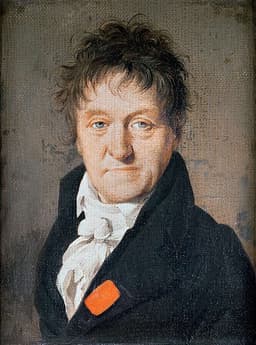
Lazare Carnot
Politician · Modern
68.2Total
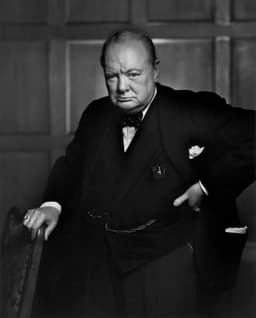
Winston Churchill
Politician · Modern
71.8Total
Basic Information
Born
1753
1874
Died
1823
1965
Era
Modern
Modern
Nationality
France
United Kingdom
Occupation
Politician
Politician
Civilization
Western
Western
Score Comparison
Military (10%)
61.7
55.0
Political (20%)
72.0
78.0
Influence (20%)
68.0
75.0
Legacy (20%)
65.0
68.0
Leadership (15%)
72.0
82.0
Strategy (15%)
72.0
65.0
TOTAL
68.2
71.8
Lazare Carnot — Complete Timeline
1793 AD
Directed the Victory at the Battle of WattigniesWar◆ Major
Carnot personally directed French forces at the Battle of Wattignies, a key victory that relieved the siege of Maubeuge. His strategic planning helped turn the tide against the Austrian army.
French RevolutionBattleVictory
Impact: regionalconstructive
Organized the Levée en MasseReform◆ Major
Carnot helped implement the lev
French RevolutionConscriptionMilitary Reform
Impact: globalconstructive
Appointed to the Committee of Public SafetyPolitical Action◆ Major
Carnot was appointed to the Committee of Public Safety, where he took charge of military organization. He reorganized the French army, introduced mass conscription, and coordinated the war effort against foreign coalitions.
French RevolutionCommittee of Public SafetyMilitary
Impact: nationalconstructive
1815 AD
Exiled as a RegicidePolitical Action
After the Bourbon restoration, Carnot was exiled as a regicide for having voted for the execution of Louis XVI. He spent his remaining years in Germany and died in Magdeburg.
ExileRegicideBourbon
Impact: nationaltragic
Winston Churchill — Complete Timeline
1940 AD
Appointed Prime Minister of the United KingdomPolitical Action◆ Major
On May 10, 1940, Winston Churchill became Prime Minister of the United Kingdom, replacing Neville Chamberlain. His appointment came as Nazi Germany invaded France and the Low Countries, and Churchill formed a coalition government to lead Britain through World War II.
World War IILeadershipCoalition Government
Impact: globalconstructive
Delivered the 'We Shall Fight on the Beaches' SpeechOther◆ Major
On June 4, 1940, Churchill delivered a speech to the House of Commons following the evacuation of British forces from Dunkirk. He declared that Britain would fight on the beaches, landing grounds, fields, streets, and hills, and never surrender, rallying British morale during the darkest days of World War II.
World War IIOratoryMorale
Impact: nationalconstructive
1941 AD
Signed the Atlantic CharterOther◆ Major
On August 14, 1941, Churchill and U.S. President Franklin D. Roosevelt signed the Atlantic Charter aboard HMS Prince of Wales. This joint declaration outlined post-war goals including self-determination, disarmament, and free trade, and became a foundational document for the Allied war aims and the United Nations.
World War IIAllied CooperationPost-war Planning
Impact: globalconstructive
1945 AD
Attended the Yalta ConferenceOther◆ Major
In February 1945, Churchill attended the Yalta Conference with Roosevelt and Stalin to discuss the post-war reorganization of Europe. The conference agreed on the division of Germany, the establishment of the United Nations, and the fate of Eastern Europe, though Churchill later expressed regret over concessions to Stalin.
World War IIPost-war SettlementBig Three
Impact: global
1946 AD
Delivered the 'Iron Curtain' SpeechOther◆ Major
On March 5, 1946, Churchill delivered a speech at Westminster College in Fulton, Missouri, where he stated that an 'iron curtain' had descended across Europe from Stettin to Trieste. This speech is widely regarded as marking the beginning of the Cold War, as it highlighted the division between Soviet-controlled Eastern Europe and the West.
Cold WarSoviet UnionDivision of Europe
Impact: globaldestructive
1953 AD
Awarded the Nobel Prize in LiteratureOther◆ Major
In 1953, Churchill was awarded the Nobel Prize in Literature for his historical writings, particularly 'The Second World War' and 'A History of the English-Speaking Peoples'. The Nobel committee cited his mastery of historical and biographical description as well as his brilliant oratory in defending human values.
LiteratureNobel PrizeHistorical Writing
Impact: nationalconstructive
Expert Analysis
Winston Churchill vs Lazare Carnot
# The Organizer and the Orator: Two Paths to Wartime Salvation
On a raw November afternoon in 1793, a middle-aged engineer with tired eyes stood on a muddy ridge near the French frontier, watching his improvised army hurl itself against Austrian lines at Wattignies. Lazare Carnot had no training as a general. He was a mathematician, a cartographer, a man of committees and calculations. Yet here he was, personally directing a battle that would save the French Revolution from collapse. A century and a half later, another man in another war would stand before a microphone in a London bunker, his jowls trembling as he told a terrified nation that they would never surrender. Winston Churchill never led troops into battle. He never organized a supply line or calculated artillery trajectories. But he, too, saved his country. Both men faced existential threats. Both rose to meet them. But they did so in ways so different that they reveal something essential about the nature of leadership itself.
Origins
Lazare Carnot was born in 1753 into a provincial legal family in Nolay, Burgundy. He was a child of the Enlightenment, educated by Jesuits, trained as a military engineer at the École Royale du Génie in Mézières. France under the old monarchy was a rigid hierarchy, and Carnot, competent but not aristocratic, advanced slowly. His mind was systematic, his temperament sober. He believed in reason, mathematics, and the power of organization. By the time the Revolution erupted in 1789, he was in his mid-thirties, a captain of engineers with a deep resentment of privilege and a quiet faith in republican virtue.
Winston Churchill was born in 1874 into the heart of the British aristocracy, at Blenheim Palace, the ancestral home of the Dukes of Marlborough. His father was a brilliant, erratic politician; his mother was an American heiress. Churchill grew up neglected by both, hungry for attention, drawn to military adventure and grand historical narratives. He attended Harrow and Sandhurst, served in colonial wars in India, Sudan, and South Africa, and wrote books to pay his debts. Where Carnot was systematic, Churchill was theatrical. Where Carnot believed in systems, Churchill believed in will.
Rise to Power
Carnot’s rise came through the crisis of 1793. Revolutionary France was surrounded by European coalitions, its armies in chaos, its generals suspect, its government in the grip of the Terror. The Committee of Public Safety needed a man who could impose order on the military chaos. Carnot was appointed in August 1793, not because he was a charismatic leader, but because he was a brilliant organizer. He reorganized the army into divisions, streamlined supply chains, and pushed through the *levée en masse*—the mass conscription that mobilized hundreds of thousands of French citizens into a citizen army. He did not inspire; he calculated.
Churchill’s rise was slower and more erratic. He had been in and out of government for decades, often distrusted for his impulsiveness and his disastrous role in the Gallipoli campaign of World War I. By the 1930s, he was a lonely voice warning against Nazi Germany, dismissed as a warmonger. When Neville Chamberlain finally fell in May 1940, Churchill became Prime Minister not because he was loved, but because he was the only one left who could rally the nation. His first speech to the House of Commons offered “blood, toil, tears and sweat.” Carnot would never have spoken that way. He would have presented a memorandum.
Leadership & Governance
Carnot governed through paper. He signed hundreds of orders, reviewed troop deployments, designed fortifications, and coordinated offensives across multiple fronts. He was called the “Organizer of Victory” because he made victory possible by removing chaos. He did not lead from the front in the romantic sense; he led from the desk. At Wattignies, he personally took command only because the general on the spot was wavering. He was ruthless when necessary—he supported the Terror, though he later claimed to have been moderate—and he was methodical always. His military score of 61.7 reflects a man who was not a battlefield genius but a systemic genius.
Churchill governed through words. His radio broadcasts, his speeches to Parliament, his defiant cigar-and-V-sign persona became the emotional backbone of British resistance. He micromanaged the war effort, bombarding his generals with memos and ideas, some brilliant, some absurd. He supported the disastrous Dieppe raid in 1942 and the ill-fated campaign in Greece. His strategic score is only 55.0, and for good reason: he was not a great military strategist. But his political score of 82.0 and leadership score of 85.0 capture his true genius—the ability to make people believe they could win when all evidence suggested otherwise.
Triumph & Tragedy
Carnot’s greatest moment was the victory at Wattignies in October 1793, which saved the northern frontier and proved that revolutionary armies could defeat professional ones. His greatest tragedy came after the war. When the Bourbon monarchy was restored in 1815, Carnot was exiled as a regicide for having voted to execute Louis XVI. He died in 1823 in Magdeburg, a lonely old man in a foreign land, forgotten by the country he had saved.
Churchill’s greatest moment was the summer of 1940, when he stood alone against Hitler and refused to negotiate. His tragedy came in 1945, when, having led Britain to victory, he was voted out of office in a landslide. He returned to power in 1951, but his second premiership was marked by decline and illness. He died in 1965, mourned by the world, but haunted in his final years by the sense that he had outlived his purpose.
Character & Destiny
Carnot was a man of the Enlightenment who believed that reason could conquer chaos. He was cold, precise, and tireless. His personality shaped a revolution that needed order more than inspiration. Churchill was a man of the Romantic age who believed that will could conquer reality. He was warm, reckless, and inexhaustible. His personality shaped a war that needed defiance more than calculation.
Both men were driven by a deep sense of duty, but they expressed it differently. Carnot’s duty was to the system, to the republic, to the machinery of victory. Churchill’s duty was to the nation, to the story of England, to the idea of freedom. One organized armies; the other organized hope.
Legacy
Carnot is remembered in France as a founder of the modern military system, a father of total war, and a hero of the Revolution. His name is engraved on the Arc de Triomphe. But he is not a household name outside France. Churchill is remembered globally as the symbol of British defiance, the voice of 1940, the man who refused to surrender. His legacy score of 75.0 matches Carnot’s, but his influence is far wider.
Conclusion
Two men, two wars, two ways of saving a civilization. Carnot saved France by organizing its fury into an army. Churchill saved Britain by turning its fear into defiance. One was an engineer who built victory from the ground up. The other was an artist who painted victory in the air. The difference between them is the difference between a blueprint and a battle cry. Both are necessary. Both are rare. And both remind us that in the darkest hours, salvation comes in many forms—sometimes in a pile of orders on a wooden desk, sometimes in a single voice that will not be silenced.
Rankings
🥇
Winston ChurchillLeader
Mil: 55.0Pol: 78.0Inf: 75.0
71.8
🥈
Lazare Carnot
Mil: 61.7Pol: 72.0Inf: 68.0
68.2
+3.6 behind
How This Comparison Works
Algorithm
Each figure is scored on 6 dimensions (0—100 scale) based on structured historical data: Military (10%), Political (20%), Influence (20%), Legacy (20%), Leadership (15%), Strategy (15%). The weighted total produces the final ranking.
Data Sources
Scores are computed from structured sub-indicators in the database. Scale factors adjust for era (Ancient ×0.85, Modern ×1.0) and civilization size (Eastern ×1.05, Other ×0.80) to account for differences in population and military scale.
Maximum 3 Figures
Comparisons are limited to 2—3 figures to ensure readability and statistical meaningfulness.
Error Margins
±5 points per dimension — Sub-scores are derived from historical records with inherent uncertainty. Two figures within 5 points on a dimension should be considered roughly equivalent in that area.
Total Score Accuracy
±3 points overall — The weighted combination of 6 dimensions produces a total score with approximately ±3 points of uncertainty. Differences of less than 3 points are not statistically significant— the figures are effectively tied.
Known Limitations
- Historical records are incomplete and uneven across civilizations
- Figures from oral-tradition societies may be underrepresented
- Occupation labels can misclassify multi-role figures
- Scores measure capability and impact, not moral character
- Quantitative scoring is a comparison tool, not absolute truth
Capability Radar
Military (10%) — Battles & Warfare
Battles
60
55
Win Rate
65
60
Expansion
80
40
Political (20%) — Governance & Reform
Reform
90
70
Diplomacy
60
85
Economy
75
60
Influence (20%) — Cultural & Global Reach
Cultural
60
85
Global
75
85
Legacy (20%) — Historical Impact
Historical
85
90
Longevity
70
80
Leadership (15%) — Power & Stability
Tenure
70
75
Stability
50
70
Strategy (15%) — Tactics & Innovation
Strategy
85
85
Tactics
70
65
Reform
95
70
Similar Comparisons
Comments & Discussion
GALLIC_SCHOOLMARM6/16/2026
Carnot wins this hands down if you judge by results. Churchill gave great speeches while others organized the war machine; Carnot *was* the war machine. In 1793, France had 14 armies decaying into mutiny. Carnot standardized division structure, requisitioned saltpeter for gunpowder, and mapped supply routes himself. The "Organizer of Victory" didn't just talk—he personally drafted battle plans at Wattignies while bullets whizzed past. Churchill's finest hour was rhetoric; Carnot's was mathematic
红蓝小将6/16/2026
把两人硬凑一起比较就很荒谬。英国人崇拜丘吉尔,就像他们崇拜莎士比亚——都是文字魔术师。但卡诺呢?他1793年推出《征兵法》时,法国数学学会连直角坐标都还没标准化!全欧洲都在嘲笑“鞋匠当将军”。结果呢?卡诺用统计学把文盲农民变成战争机器:每师8000人,火炮按固定比例配发,连行军速度都计算过。丘吉尔只会说“热血、辛劳、眼泪、汗水”,卡诺让法国流干了敌人的血。