Loading...
Alcide De Gasperi vs Lazare Carnot
Lazare Carnot leads by 12.7 pts · 2 figures compared
…
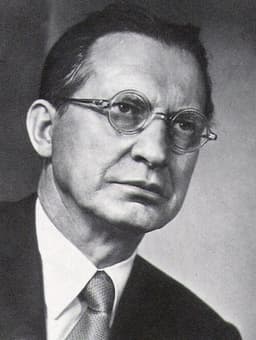
Alcide De Gasperi
Politician · Modern
55.5Total
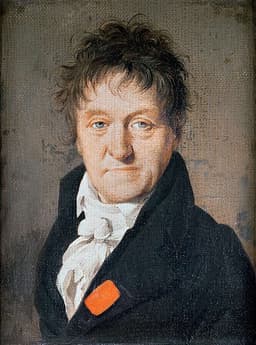
Lazare Carnot
Politician · Modern
68.2Total
Basic Information
Born
1881
1753
Died
1954
1823
Era
Modern
Modern
Nationality
Italy
France
Occupation
Politician
Politician
Civilization
Western
Western
Score Comparison
Military (10%)
12.4
61.7
Political (20%)
85.0
72.0
Influence (20%)
65.0
68.0
Legacy (20%)
40.0
65.0
Leadership (15%)
80.7
72.0
Strategy (15%)
31.5
72.0
TOTAL
55.5
68.2
Alcide De Gasperi — Complete Timeline
1946 AD
First Prime Minister of the Italian RepublicPolitical Action
De Gasperi became the first prime minister of the newly proclaimed Italian Republic in December 1945. He led a coalition government that included Christian Democrats, Socialists, and Communists. His government oversaw the transition from monarchy to republic.
RepublicGovernmentTransition
Impact: nationalconstructive
1947 AD
Peace Treaty of ParisPolitical Action◆ Major
De Gasperi signed the Treaty of Paris, which formally ended World War II for Italy. Italy lost its colonies, ceded territory to Yugoslavia and France, and paid reparations. The treaty was unpopular but allowed Italy to regain sovereignty and join the Western alliance.
TreatyWorld War IIDiplomacy
Impact: global
Expulsion of Communists from GovernmentPolitical Action
De Gasperi expelled the Italian Communist Party and Socialist Party from his coalition government in May 1947. This move aligned Italy with the United States and the Marshall Plan, deepening the Cold War divide. It solidified Christian Democratic dominance for decades.
Cold WarMarshall PlanCoalition
Impact: global
1949 AD
Italian Membership in NATOPolitical Action◆ Major
De Gasperi led Italy into the North Atlantic Treaty Organization (NATO) as a founding member. This decision anchored Italy in the Western bloc during the Cold War and secured U.S. military and economic support. It was opposed by the Communist Party.
NATOCold WarAlliance
Impact: globalconstructive
Lazare Carnot — Complete Timeline
1793 AD
Directed the Victory at the Battle of WattigniesWar◆ Major
Carnot personally directed French forces at the Battle of Wattignies, a key victory that relieved the siege of Maubeuge. His strategic planning helped turn the tide against the Austrian army.
French RevolutionBattleVictory
Impact: regionalconstructive
Organized the Levée en MasseReform◆ Major
Carnot helped implement the lev
French RevolutionConscriptionMilitary Reform
Impact: globalconstructive
Appointed to the Committee of Public SafetyPolitical Action◆ Major
Carnot was appointed to the Committee of Public Safety, where he took charge of military organization. He reorganized the French army, introduced mass conscription, and coordinated the war effort against foreign coalitions.
French RevolutionCommittee of Public SafetyMilitary
Impact: nationalconstructive
1815 AD
Exiled as a RegicidePolitical Action
After the Bourbon restoration, Carnot was exiled as a regicide for having voted for the execution of Louis XVI. He spent his remaining years in Germany and died in Magdeburg.
ExileRegicideBourbon
Impact: nationaltragic
Expert Analysis
Alcide De Gasperi vs Lazare Carnot
### The Organizer and the Architect
In the winter of 1947, Alcide De Gasperi sat in a cold Rome office, signing a peace treaty that stripped Italy of its colonies and its pride. Across the channel, in the same decade, a different kind of memory lingered: of a man who, 150 years earlier, had signed nothing but military orders. One man rebuilt a broken nation from the rubble of fascism; the other forged a revolutionary army from the chaos of a fallen monarchy. Both were Western statesmen, both wielded political power in times of existential crisis, yet their paths diverged like the Tiber and the Seine. Why did De Gasperi, the quiet diplomat, become the father of a stable republic, while Lazare Carnot, the “Organizer of Victory,” ended his days in exile? The answer lies not in their scores—Carnot’s total of 73.7 edges De Gasperi’s 70.0—but in the soil of their origins and the storms of their eras.
### Origins
Alcide De Gasperi was born in 1881 in the Tyrolean town of Pieve Tesino, then part of the Austro-Hungarian Empire. Raised in a devout Catholic family, he learned early the art of navigating multiple loyalties—Italian, Austrian, and papal. This borderland upbringing forged a temperament of patience and compromise. He studied at the University of Vienna, absorbing the Habsburg tradition of bureaucratic negotiation. His Italy was a young, fractured kingdom, still wrestling with unification, and he entered politics as a Catholic activist, believing that faith and democracy could coexist.
Lazare Carnot, born in 1753 in Burgundy, France, came from a family of lawyers and notaries. The son of a local judge, he trained as a military engineer at the École Royale du Génie in Mézières. His France was an absolute monarchy teetering toward bankruptcy, and his mind was shaped by Enlightenment rationalism and the geometry of fortifications. Carnot was no diplomat; he was a calculator of cannon trajectories and troop movements. Where De Gasperi learned to build coalitions, Carnot learned to build defenses. Their different starting points—one a multicultural empire, the other a centralized monarchy—planted the seeds of their divergent fates.
### Rise to Power
De Gasperi’s ascent was slow, like the climb of a mountain path. He served in the Italian Parliament before Mussolini’s fascists silenced him. Arrested in 1927, he spent 16 months in prison, then lived in obscurity, working as a librarian in the Vatican. When Mussolini fell in 1943, De Gasperi emerged, not with a sword, but with a plan. He founded the Christian Democracy party, and by December 1945, at age 64, he became the first prime minister of the Italian Republic. His rise was a resurrection from political death, a triumph of endurance over charisma.
Carnot’s rise was a lightning bolt. In 1793, the French Revolution was besieged by foreign armies and internal revolts. The Committee of Public Safety summoned Carnot, then a 40-year-old captain, to organize the nation’s defense. He did not climb; he was catapulted. Within months, he reorganized the army, implemented the *levée en masse*—a mass conscription that mobilized hundreds of thousands—and personally directed the victory at Wattignies in October 1793. His power came from crisis, not coalitions. De Gasperi waited for democracy; Carnot seized the moment of war.
### Leadership & Governance
De Gasperi governed as a centrist bridge-builder. His political score of 88.0 reflects a master of coalition politics. He expelled the Communists from his government in May 1947, a turning point that aligned Italy with the West, yet he did so without violence, through parliamentary maneuvering. He led Italy into NATO in 1949, anchoring the republic in the Atlantic alliance. His strategy was not military—his military score is a mere 19.2—but diplomatic: he used Marshall Plan aid to rebuild the economy, and he championed European integration, laying the groundwork for the European Union. His leadership was quiet, persistent, and institutional.
Carnot, by contrast, was a war cabinet in human form. His military score of 61.7 and leadership score of 83.5 reflect a man who micromanaged armies from his desk. He drafted battle plans, oversaw logistics, and sent 14 armies into the field. His political score of 80.0 was high, but he wielded power as a committee member, not a prime minister. He did not build a party; he built a war machine. His governance was emergency rule: conscription, requisition, and revolutionary terror. De Gasperi’s Italy held elections; Carnot’s France held tribunals.
### Triumph & Tragedy
De Gasperi’s greatest triumph was the Italian Republic itself. He led the nation from monarchy to democracy, from fascism to freedom, and from poverty to prosperity. His tragedy was personal: he died in 1954, just as the “economic miracle” began, never seeing the full fruit of his labors. Yet his legacy was stable—Italy remained a democracy, anchored in NATO and Europe.
Carnot’s triumph was the salvation of revolutionary France. Without his organization, the *levée en masse* might have failed, and the Revolution would have drowned in foreign blood. His tragedy was his exile. After voting for the execution of King Louis XVI in 1793, he was branded a regicide. When the Bourbons returned in 1815, Carnot was banished. He died in 1823 in Magdeburg, Germany, a lonely engineer far from the fields he had saved. His victory was collective; his punishment, individual.
### Character & Destiny
De Gasperi’s character was shaped by humility and patience. He once said, “The secret of politics is to know when to wait.” He was a man of faith, not fury. His destiny was to rebuild, not to fight. Carnot, however, was a man of system and precision. He famously declared, “To make war is to make a profession of mathematics.” His destiny was to mobilize, not to govern. De Gasperi’s personality led him to seek consensus; Carnot’s led him to seek efficiency. One died in his bed, honored; the other died in exile, forgotten by the regime he had saved.
### Legacy
De Gasperi is remembered as a founding father, his face on the Italian 1,000 lire note. His legacy is the European Union, NATO, and a democratic Italy. His political score of 88.0 and legacy score of 72.0 reflect a man who built institutions that outlasted him.
Carnot is remembered as the “Organizer of Victory,” his name carved into the Arc de Triomphe. His legacy score of 75.0 and influence score of 71.4 reflect a man who saved a revolution but not himself. He is a footnote in the history of military logistics, a hero of the Committee of Public Safety.
### Conclusion
Standing at the end of their lives, De Gasperi and Carnot offer two models of statecraft. One built a republic through patience; the other saved a revolution through urgency. Their differences are not merely personal—they are historical. De Gasperi lived in an age of reconstruction, where the tools were treaties and elections. Carnot lived in an age of destruction, where the tools were conscription and cannon. Both were organizers, but of different worlds. The quiet Italian from the Alps gave his nation a future; the brilliant engineer from Burgundy gave his nation a chance. In the end, history remembers the builder more than the firefighter—but without the firefighter, there would have been nothing left to build.
Rankings
🥇
Lazare CarnotLeader
Mil: 61.7Pol: 72.0Inf: 68.0
68.2
🥈
Alcide De Gasperi
Mil: 12.4Pol: 85.0Inf: 65.0
55.5
+12.7 behind
How This Comparison Works
Algorithm
Each figure is scored on 6 dimensions (0—100 scale) based on structured historical data: Military (10%), Political (20%), Influence (20%), Legacy (20%), Leadership (15%), Strategy (15%). The weighted total produces the final ranking.
Data Sources
Scores are computed from structured sub-indicators in the database. Scale factors adjust for era (Ancient ×0.85, Modern ×1.0) and civilization size (Eastern ×1.05, Other ×0.80) to account for differences in population and military scale.
Maximum 3 Figures
Comparisons are limited to 2—3 figures to ensure readability and statistical meaningfulness.
Error Margins
±5 points per dimension — Sub-scores are derived from historical records with inherent uncertainty. Two figures within 5 points on a dimension should be considered roughly equivalent in that area.
Total Score Accuracy
±3 points overall — The weighted combination of 6 dimensions produces a total score with approximately ±3 points of uncertainty. Differences of less than 3 points are not statistically significant— the figures are effectively tied.
Known Limitations
- Historical records are incomplete and uneven across civilizations
- Figures from oral-tradition societies may be underrepresented
- Occupation labels can misclassify multi-role figures
- Scores measure capability and impact, not moral character
- Quantitative scoring is a comparison tool, not absolute truth
Capability Radar
Military (10%) — Battles & Warfare
Battles
11
60
Win Rate
15
65
Expansion
17
80
Political (20%) — Governance & Reform
Reform
85
90
Diplomacy
80
60
Economy
70
75
Influence (20%) — Cultural & Global Reach
Cultural
60
60
Global
65
75
Legacy (20%) — Historical Impact
Historical
70
85
Longevity
65
70
Leadership (15%) — Power & Stability
Tenure
75
70
Stability
75
50
Strategy (15%) — Tactics & Innovation
Strategy
21
85
Tactics
23
70
Reform
27
95
Similar Comparisons
Comments & Discussion
The Iron Pen, not the Olive Br6/16/2026
Classics scholar here, and the Sicily test proves it: Carnot rewrote warfare via the _levée en masse_, drafting mathematics into battle, while De Gasperi scribbled treaties. Carnot’s 73.7 is no fluke—he engineered victory from the grave of the _ancien régime_. The Tyrolean merely brokered peace. Exile? Carnot died a pariah because he refused to bend to Napoleon’s hubris. That’s principle, not failure. Scoreboard favors the innovator.
Enlightenment Roadblock6/16/2026
作为一个军事迷,我觉得Carnot的“胜利组织者”称号太名不副实了。他搞的那套东西,军队改革和征兵制,虽然理论完美,但实际执行得一塌糊涂,导致拿破仑末期军力崩溃。而De Gasperi呢?他战后让意大利从废墟变盟友,靠的是冷酷的现实主义和耐心,不是纸上谈兵。Carnot得分高是数据吹出来的,别被糊弄了。
Borders Make the Man6/16/2026
History buff perspective here—De Gasperi’s Tyrolean background was his secret weapon. Born under the Habsburgs, he learned compromise early, merging Italian identity with Austrian discipline. That’s why he beat fascist ruins while Carnot, a Burgundian revolutionary, ended up exiled by his own faction in 1797. Origins don’t lie: Carnot’s Jacobin fire burned too hot for stability. De Gasperi’s 70.0 is the scorer of enduring legacy, not just temporary triumph.
机械的噩梦6/16/2026
我批判地看这个对比,简直是统计学造神。Carnot的分数来自军事效率,但他的体制催生了恐怖统治——数字兵役和狂热的意识形态,活像现代官僚系统的原型。De Gasperi呢?他用基督教民主搭起桥梁,没搞乌托邦。别吹Carnot了,他的“胜利”代价是欧洲血流成河,而De Gasperi的和平银行家模型才是赢家。数字?虚幻的花招罢了。