Loading...
Lazare Carnot vs Lucius Junius Brutus
Lucius Junius Brutus leads by 4.5 pts · 2 figures compared
…
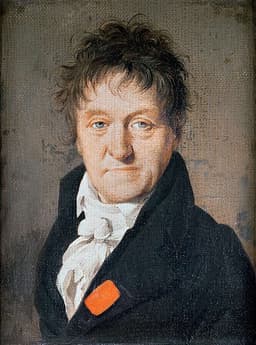
Lazare Carnot
Politician · Modern
68.2Total
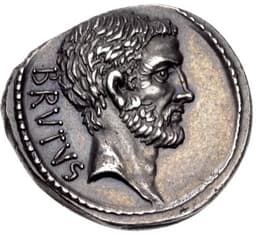
Lucius Junius Brutus
Politician · Ancient
72.7Total
Basic Information
Born
1753
-540
Died
1823
-509
Era
Modern
Ancient
Nationality
France
Roman Republic
Occupation
Politician
Politician
Civilization
Western
Western
Score Comparison
Military (10%)
61.7
45.0
Political (20%)
72.0
72.0
Influence (20%)
68.0
75.0
Legacy (20%)
65.0
90.0
Leadership (15%)
72.0
71.0
Strategy (15%)
72.0
54.8
TOTAL
68.2
72.7
Lazare Carnot — Complete Timeline
1793 AD
Directed the Victory at the Battle of WattigniesWar◆ Major
Carnot personally directed French forces at the Battle of Wattignies, a key victory that relieved the siege of Maubeuge. His strategic planning helped turn the tide against the Austrian army.
French RevolutionBattleVictory
Impact: regionalconstructive
Organized the Levée en MasseReform◆ Major
Carnot helped implement the lev
French RevolutionConscriptionMilitary Reform
Impact: globalconstructive
Appointed to the Committee of Public SafetyPolitical Action◆ Major
Carnot was appointed to the Committee of Public Safety, where he took charge of military organization. He reorganized the French army, introduced mass conscription, and coordinated the war effort against foreign coalitions.
French RevolutionCommittee of Public SafetyMilitary
Impact: nationalconstructive
1815 AD
Exiled as a RegicidePolitical Action
After the Bourbon restoration, Carnot was exiled as a regicide for having voted for the execution of Louis XVI. He spent his remaining years in Germany and died in Magdeburg.
ExileRegicideBourbon
Impact: nationaltragic
Lucius Junius Brutus — Complete Timeline
509 BC
Battle of Silva ArsiaWar◆ Major
Brutus led the Roman army against the forces of Tarquinius Superbus and his Etruscan allies at Silva Arsia. During the battle, Brutus and Arruns Tarquinius, the king's son, killed each other in single combat, but the Romans ultimately won the battle, securing the Republic's survival.
BattleSingle CombatFounding Myth
Impact: nationaltragic
Expulsion of the TarquinsPolitical Action
Lucius Junius Brutus led a revolt against the Tarquin monarchy after the rape of Lucretia by Sextus Tarquinius. He organized the Senate and the people to expel the royal family, ending the Roman Kingdom and establishing the Roman Republic with himself as one of the first consuls.
RevolutionFounding of RepublicOverthrow of Monarchy
Impact: globalprogressive
Execution of His SonsPolitical Action◆ Major
Brutus discovered that his own sons, Titus and Tiberius, had conspired to restore the Tarquins. As consul, he ordered their arrest, trial, and execution by beheading in the Forum, demonstrating his unwavering commitment to the Republic over family loyalty.
ExecutionConspiracyRepublican Virtue
Impact: nationaltragic
Oath of BrutusPolitical Action◆ Major
After the expulsion of the Tarquins, Brutus made the Roman people swear an oath never to allow a king to rule Rome again. This oath became a foundational principle of the Republic, reinforcing the commitment to liberty and opposition to tyranny.
OathRepublican IdeologyAnti-Monarchy
Impact: nationalprogressive
Expert Analysis
Lucius Junius Brutus vs Lazare Carnot
### The Iron Will of Founders: Lazare Carnot and Lucius Junius Brutus
In the cold winter of 1793, a French engineer-turned-revolutionary stood before the cannons at Wattignies, personally directing troops to lift a siege that threatened the very survival of the Republic. Twenty-three centuries earlier, a Roman consul watched his own sons being bound and beaten to death for conspiring against that same Republic. Two men, separated by millennia, yet bound by a common purpose: to forge a new political order from the chaos of revolution. Lazare Carnot, the "Organizer of Victory," and Lucius Junius Brutus, the founder of the Roman Republic, each faced the ultimate test of leadership—balancing justice against mercy, order against liberty. Their stories reveal how character shapes destiny, and how the price of founding a republic is often paid in blood.
**Origins**
Lazare Carnot was born in 1753 into a provincial bourgeois family in Burgundy, a world of Enlightenment ideals and military engineering. He was a mathematician and a soldier of the old regime, trained at the prestigious École du Génie in Mézières. His France was a monarchy crumbling under debt and inequality, a society ripe for the radical ideas of Rousseau and Montesquieu. Carnot was not a firebrand; he was a methodical organizer, a man who believed in reason and system.
Lucius Junius Brutus, born around 540 BCE, lived in a Rome that was a small city-state under the yoke of Etruscan kings. His family was patrician, connected to the royal house of the Tarquins, but he was no courtier. The Rome of his youth was a place of brutal power, where kings ruled by force and the Senate was a body of advisors, not equals. Brutus was a survivor. To escape the suspicion of the tyrannical king Tarquinius Superbus, he feigned idiocy—hence his cognomen "Brutus," meaning dullard. His cunning was a mask for a fierce, patient ambition.
**Rise to Power**
Carnot’s rise came not through oratory but through necessity. By 1793, the French Revolution was in mortal danger: foreign armies pressed its borders, royalist revolts ignited the Vendée, and the Committee of Public Safety seized dictatorial powers to save the Republic. Carnot was appointed to that committee, not as a politician but as a military organizer. He did not seek power; power sought him. His genius lay in turning chaos into order—reorganizing the armies, implementing the levée en masse on August 23, 1793, which drafted hundreds of thousands of citizens into a national army. He was the architect of victory, not its showman.
Brutus’s path was different. After the rape of Lucretia by the king’s son in 509 BCE, Brutus shed his mask of folly. He seized the moment, rallying the outraged Romans, leading the expulsion of the Tarquins, and establishing a republic with two annually elected consuls. He did not rise through a committee; he rose through a coup of conscience. His power was immediate, personal, and absolute—tempered only by the oath he made the people swear: never again to tolerate a king.
**Leadership & Governance**
Carnot’s leadership was that of a manager of war. He did not command armies in the field—except at Wattignies, where his personal intervention turned a defeat into a victory on October 15-16, 1793. His true battlefield was the map room, the supply depot, the arsenal. He standardized training, promoted talented officers like Napoleon Bonaparte, and created a system that turned raw recruits into a fighting force. Politically, he was a moderate Jacobin, uncomfortable with the Terror but unable to stop it. His governance was technocratic: he believed in efficiency, not ideology.
Brutus’s governance was that of a founder. As one of the first consuls, he wielded the fasces—the rods and axe symbolizing power over life and death. His political wisdom was harsh: a republic must be defended not only from external enemies but from internal corruption. When his own sons, Titus and Tiberius, conspired with the exiled Tarquins to restore the monarchy, Brutus ordered their execution. He watched them die, unmoved. This was not cruelty but principle: the state was more sacred than family. His reforms were simple but profound: the Senate gained real authority, and the people were given a voice through the Centuriate Assembly.
**Triumph & Tragedy**
Carnot’s greatest triumph was the salvation of Revolutionary France. By 1794, the armies he organized had pushed back the invaders, and the Republic survived. His tragedy came later. After the fall of Robespierre, he was denounced as a regicide for voting to execute Louis XVI. When the Bourbon monarchy was restored in 1815, he was exiled. He died in 1823 in Magdeburg, a forgotten hero, a victim of the very revolution he had saved.
Brutus’s triumph was the founding of a republic that would last nearly five centuries. His tragedy was immediate: at the Battle of Silva Arsia in 509 BCE, he died in single combat against Arruns Tarquinius, the king’s son. Both men killed each other. Brutus fell, but Rome was saved. His body was carried back, and the Roman matrons mourned him for a year. He died as he lived—a symbol of uncompromising virtue.
**Character & Destiny**
Carnot was a man of reason, not passion. His personality was that of an engineer: calculating, patient, and systematic. This made him an effective organizer but a poor politician. He could not match the ruthlessness of Robespierre or the charisma of Danton. His destiny was to be used by the revolution, then discarded. He lacked the will to seize power for himself, and that saved him from the guillotine but condemned him to obscurity.
Brutus was a man of iron will, capable of immense self-control and immense cruelty. His feigned idiocy was a strategy; his execution of his sons was a statement. He understood that a republic requires citizens who put the common good above personal ties. His character was forged in the furnace of tyranny, and he became the hammer that broke it. His destiny was to die for his creation, ensuring its survival.
**Legacy**
Carnot’s legacy is institutional. He is remembered as the "Organizer of Victory," a name given by Napoleon. His military reforms influenced the entire art of war, from conscription to logistics. In France, he is a minor figure in the revolutionary pantheon, but his methods live on. His total score of 73.7 reflects a man of high political and leadership skills, but not a conqueror or a visionary.
Brutus’s legacy is symbolic. He is the archetype of the republican martyr, a figure invoked by revolutionaries from the American Founders to the French Jacobins. His oath against kings echoed through history. His execution of his sons became a parable of civic virtue. His total score of 70.3, with a legacy score of 90, shows that his influence far exceeded his military or political achievements. He is not a man; he is a myth.
**Conclusion**
What drove these two men to such different outcomes? Carnot saw the republic as a machine to be perfected; Brutus saw it as a sacred trust to be defended at any cost. Carnot saved France through paperwork; Brutus saved Rome through sacrifice. One was a servant of the state; the other was its father. Both paid the ultimate price: Carnot in exile, Brutus in death. Their stories remind us that founding a republic is not a single act but a continuous struggle, one that demands both the organizer’s patience and the founder’s ruthlessness. In the end, the republic survives not because of its institutions alone, but because of the men and women willing to die for it—or to watch their own sons die.
Rankings
🥇
Lucius Junius BrutusLeader
Mil: 45.0Pol: 72.0Inf: 75.0
72.7
🥈
Lazare Carnot
Mil: 61.7Pol: 72.0Inf: 68.0
68.2
+4.5 behind
How This Comparison Works
Algorithm
Each figure is scored on 6 dimensions (0—100 scale) based on structured historical data: Military (10%), Political (20%), Influence (20%), Legacy (20%), Leadership (15%), Strategy (15%). The weighted total produces the final ranking.
Data Sources
Scores are computed from structured sub-indicators in the database. Scale factors adjust for era (Ancient ×0.85, Modern ×1.0) and civilization size (Eastern ×1.05, Other ×0.80) to account for differences in population and military scale.
Maximum 3 Figures
Comparisons are limited to 2—3 figures to ensure readability and statistical meaningfulness.
Error Margins
±5 points per dimension — Sub-scores are derived from historical records with inherent uncertainty. Two figures within 5 points on a dimension should be considered roughly equivalent in that area.
Total Score Accuracy
±3 points overall — The weighted combination of 6 dimensions produces a total score with approximately ±3 points of uncertainty. Differences of less than 3 points are not statistically significant— the figures are effectively tied.
Known Limitations
- Historical records are incomplete and uneven across civilizations
- Figures from oral-tradition societies may be underrepresented
- Occupation labels can misclassify multi-role figures
- Scores measure capability and impact, not moral character
- Quantitative scoring is a comparison tool, not absolute truth
Capability Radar
Military (10%) — Battles & Warfare
Battles
60
10
Win Rate
65
10
Expansion
80
10
Political (20%) — Governance & Reform
Reform
90
90
Diplomacy
60
40
Economy
75
30
Influence (20%) — Cultural & Global Reach
Cultural
60
70
Global
75
70
Legacy (20%) — Historical Impact
Historical
85
80
Longevity
70
80
Leadership (15%) — Power & Stability
Tenure
70
30
Stability
50
40
Strategy (15%) — Tactics & Innovation
Strategy
85
10
Tactics
70
10
Reform
95
20
Similar Comparisons
Comments & Discussion
Jansenist_of_Revolution6/16/2026
Carnot is the real founder, not Brutus. Rome's second king Numa Pompilius gave it laws; Brutus just swapped a king for two bosses. Carnot invented the metric system AND saved France—that’s founding a republic with measure AND sword. Brutus killed his kids for symbolism; Carnot built the Levée en Masse, a real instrument of national will. One is a myth, the other a man.
弑子者传说6/16/2026
我站布鲁图斯。卡诺是技术官僚,冷酷的数据,布鲁图斯有血性。处决儿子不是表演,是共和的底线:法律高于血亲。对比一下:卡诺搞了14支军队,布鲁图斯只有一把斧头。但布鲁图斯的行为定义了“共和国”三个字——正义得让人不寒而栗。卡诺赢了战役,布鲁图斯赢了灵魂。
Skeptical_Archivist6/16/2026
You’re romanticizing both. The “execution of his sons” is almost certainly a later Roman myth to justify patrician power—Livy himself admits the sources are messy. Carnot meanwhile didn’t even hold top command; he was a logistics man. Wattignies was a near-run thing, and his purges of incompetent generals were just political cover. These “founders” are retroactive propaganda, not reality.
纸上筑城人6/16/2026
卡诺其实是个宅男工程师,不是战场硬汉。他出名靠的是军事委员会里的 paperwork——规划14支军队,调配火药和靴子。但你知道吗?他后来反拿破仑,被流放,死前还在写几何学论文。布鲁图斯呢?传说里杀儿子,实际上可能根本没这回事。两位都是“纸上建国”的人,区别是卡诺的纸张还能算得出。