Loading...
Cleisthenes vs Lazare Carnot
Cleisthenes leads by 10.1 pts · 2 figures compared
…
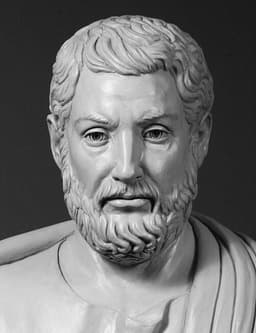
Cleisthenes
Politician · Ancient
78.3Total
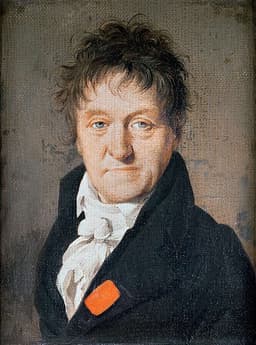
Lazare Carnot
Politician · Modern
68.2Total
Basic Information
Born
-570
1753
Died
-508
1823
Era
Ancient
Modern
Nationality
Greece
France
Occupation
Politician
Politician
Civilization
Western
Western
Score Comparison
Military (10%)
49.4
61.7
Political (20%)
62.7
72.0
Influence (20%)
92.0
68.0
Legacy (20%)
92.0
65.0
Leadership (15%)
72.0
72.0
Strategy (15%)
71.3
72.0
TOTAL
78.3
68.2
Cleisthenes — Complete Timeline
510 BC
Expulsion of the PeisistratidsPolitical Action◆ Major
Cleisthenes, with the support of the Alcmaeonid family and Spartan assistance, led the overthrow of the tyrant Hippias, son of Peisistratus. This ended the Peisistratid tyranny in Athens and opened the way for democratic reforms.
Tyranny OverthrownAthensSparta
Impact: nationalconstructive
508 BC
Reforms of CleisthenesReform
Cleisthenes reorganized the Athenian citizen body into ten new tribes based on demes, replacing the old four Ionian tribes. He established the Council of 500 (Boule) and introduced ostracism, creating a system of isonomia (equal rights) that is considered the foundation of Athenian democracy.
Athenian DemocracyConstitutional ReformAncient Greece
Impact: globalprogressive
507 BC
Introduction of OstracismReform◆ Major
Cleisthenes instituted ostracism, a procedure allowing Athenian citizens to vote annually to exile a prominent citizen deemed a threat to democracy for ten years. This mechanism aimed to prevent the rise of a new tyrant and stabilize the democratic system.
Athenian DemocracyPolitical MechanismExile
Impact: national
Lazare Carnot — Complete Timeline
1793 AD
Directed the Victory at the Battle of WattigniesWar◆ Major
Carnot personally directed French forces at the Battle of Wattignies, a key victory that relieved the siege of Maubeuge. His strategic planning helped turn the tide against the Austrian army.
French RevolutionBattleVictory
Impact: regionalconstructive
Organized the Levée en MasseReform◆ Major
Carnot helped implement the lev
French RevolutionConscriptionMilitary Reform
Impact: globalconstructive
Appointed to the Committee of Public SafetyPolitical Action◆ Major
Carnot was appointed to the Committee of Public Safety, where he took charge of military organization. He reorganized the French army, introduced mass conscription, and coordinated the war effort against foreign coalitions.
French RevolutionCommittee of Public SafetyMilitary
Impact: nationalconstructive
1815 AD
Exiled as a RegicidePolitical Action
After the Bourbon restoration, Carnot was exiled as a regicide for having voted for the execution of Louis XVI. He spent his remaining years in Germany and died in Magdeburg.
ExileRegicideBourbon
Impact: nationaltragic
Expert Analysis
Cleisthenes vs Lazare Carnot
# The Architect and the Organizer
In the winter of 508 BCE, as a cold wind swept across the Aegean, an aging Athenian aristocrat named Cleisthenes stood before a crowd of citizens in the Agora, proposing a radical restructuring of their entire political system. Two thousand three hundred years later, in the desperate autumn of 1793, a French engineer named Lazare Carnot sat hunched over maps in the Committee of Public Safety, calculating how to feed, arm, and move a million citizen-soldiers against the armies of Europe. Both men faced chaos. Both men chose order. But the orders they built could not have been more different—one gave birth to democracy, the other to the nation in arms. Why?
Origins
Cleisthenes was born into the Alcmaeonid family, one of Athens' most powerful clans, around 570 BCE. His grandfather had been the archon who massacred the followers of Cylon, a curse that haunted the family for generations. Cleisthenes grew up in a world of aristocratic feuds, where power belonged to the few and the many were merely subjects. The Ionian tribal system divided Athenians into four hereditary groups, each dominated by noble families who controlled land, religion, and law. It was a system designed for exclusion.
Lazare Carnot, born in 1753 in Nolay, Burgundy, came from a different world entirely—a world of Enlightenment salons, military academies, and the crumbling ancien régime. The son of a lawyer and notary, Carnot studied engineering at the École du Génie in Mézières, where he learned to think in terms of fortifications, logistics, and systematic organization. He was a product of the 18th-century faith in reason and method. Where Cleisthenes saw a society paralyzed by clan warfare, Carnot saw a nation paralyzed by aristocratic inefficiency.
Rise to Power
Cleisthenes entered history through the narrow gate of aristocratic rivalry. In 510 BCE, he allied with Sparta to expel the tyrant Hippias, ending decades of Peisistratid rule. But this was not a revolution from below—it was a factional struggle among elites. When a rival aristocrat named Isagoras gained the upper hand by appealing to Spartan conservatism, Cleisthenes did something unprecedented: he turned to the *demos*, the common people, for support. This was his masterstroke. By championing popular power, he transformed himself from a faction leader into a reformer.
Carnot's rise was no less dramatic, but it came through a different path: the machinery of revolutionary government. In 1793, with France besieged by Austria, Prussia, Britain, and Spain, the Committee of Public Safety needed men who could organize victory. Carnot, a captain of engineers and a Jacobin deputy, was appointed to the committee. He was not a charismatic orator like Danton or a ruthless ideologue like Robespierre. He was a technician of war. His rise came not from appealing to the masses but from mastering the mathematics of mobilization.
Leadership & Governance
Cleisthenes' reforms, enacted around 508 BCE, were a work of political architecture. He abolished the four Ionian tribes and replaced them with ten new tribes, each composed of demes (villages or neighborhoods) drawn from three regions: the city, the coast, and the interior. This crosscutting system shattered the old clan loyalties that had enabled aristocratic domination. Every citizen now belonged to a deme, a tribe, and the polis itself. He also introduced the Council of Five Hundred, chosen by lot from the tribes, to manage daily affairs. And around 507 BCE, he instituted ostracism—a procedure by which citizens could vote annually to exile a dangerously powerful figure for ten years. It was a safety valve against tyranny, a way to let the people police ambition itself.
Carnot's governance was of a different order. As the "Organizer of Victory," he centralized the French war effort with relentless efficiency. He reorganized the army into semi-brigades, standardised equipment, established training camps, and created a system of rapid communication between the front and Paris. In 1793, he helped implement the *levée en masse*, a mass conscription that mobilized hundreds of thousands of citizens. He personally directed the victory at Wattignies that same year, relieving the siege of Maubeuge. Where Cleisthenes built institutions for deliberation, Carnot built institutions for destruction. Both were architects, but one designed a forum, the other a forge.
Triumph & Tragedy
Cleisthenes' triumph was the creation of Athenian democracy—a system that would, over the next century, produce the Parthenon, the tragedies of Sophocles, and the philosophy of Socrates. Yet his tragedy was that he could not control what he unleashed. The democracy he founded soon fell under the sway of demagogues, and within a generation, Athens would become an imperial power that provoked the Peloponnesian War. Cleisthenes himself disappears from the historical record after his reforms; perhaps he was ostracized, perhaps he died in obscurity. The architect was forgotten even as his building stood.
Carnot's triumph was saving the French Revolution from foreign invasion. His organizational genius turned raw recruits into an army that defeated the coalitions of Europe. But his tragedy was personal and political. After Napoleon's fall, the Bourbon restoration in 1815 branded him a regicide for having voted to execute Louis XVI. He was exiled from France, spending his final years in Magdeburg, Prussia, writing memoirs and defending his legacy. The man who had mobilized the nation died far from the nation he saved.
Character & Destiny
Cleisthenes was a pragmatist who understood that power, to be stable, must be shared. His reforms were not ideological in the modern sense—they were practical solutions to the problem of faction. He trusted the people not out of romantic belief in their virtue but because he needed them against his rivals. This cold calculation gave his democracy a hard, realistic edge. It was designed to manage conflict, not to transcend it.
Carnot was a rationalist who believed that problems could be solved through system and method. He was incorruptible, meticulous, and coldly efficient—qualities that made him invaluable in a crisis but difficult in peacetime. His character was suited to the emergency of 1793, not the compromises of 1815. Destiny, in both cases, gave each man the era he was made for, then took it away.
Legacy
Cleisthenes is remembered as the "Father of Athenian Democracy," though his name is far less known than Pericles or Socrates. His legacy is not a monument but a method: the idea that citizens can govern themselves through institutions that balance participation with stability. Ostracism, his most famous invention, was rarely used, but it embodied a principle that still haunts democracies: how to contain the powerful without destroying the state.
Carnot's legacy is the modern nation in arms. He proved that mass conscription could work, that a republic could field an army of citizens, and that war could be total. His methods influenced Clausewitz and the Prussian general staff. Yet his name is largely forgotten outside France, overshadowed by the generals he enabled and the emperor he served. He is the organizer behind the victory, the engineer behind the glory.
Conclusion
Two men, two revolutions, two ways of ordering chaos. Cleisthenes gave the world a political technology: democracy as a system of checks, balances, and citizen participation. Carnot gave the world a military technology: the nation-state as a machine for war. Both succeeded brilliantly, both were consumed by their creations, and both left legacies that we still live with—for better and for worse. The Athenian Agora and the French battlefields are not as distant as they seem. They are the same story, told in different tongues: the story of how ordinary people, organized by extraordinary minds, changed the course of history.
Rankings
🥇
CleisthenesLeader
Mil: 49.4Pol: 62.7Inf: 92.0
78.3
🥈
Lazare Carnot
Mil: 61.7Pol: 72.0Inf: 68.0
68.2
+10.1 behind
How This Comparison Works
Algorithm
Each figure is scored on 6 dimensions (0—100 scale) based on structured historical data: Military (10%), Political (20%), Influence (20%), Legacy (20%), Leadership (15%), Strategy (15%). The weighted total produces the final ranking.
Data Sources
Scores are computed from structured sub-indicators in the database. Scale factors adjust for era (Ancient ×0.85, Modern ×1.0) and civilization size (Eastern ×1.05, Other ×0.80) to account for differences in population and military scale.
Maximum 3 Figures
Comparisons are limited to 2—3 figures to ensure readability and statistical meaningfulness.
Error Margins
±5 points per dimension — Sub-scores are derived from historical records with inherent uncertainty. Two figures within 5 points on a dimension should be considered roughly equivalent in that area.
Total Score Accuracy
±3 points overall — The weighted combination of 6 dimensions produces a total score with approximately ±3 points of uncertainty. Differences of less than 3 points are not statistically significant— the figures are effectively tied.
Known Limitations
- Historical records are incomplete and uneven across civilizations
- Figures from oral-tradition societies may be underrepresented
- Occupation labels can misclassify multi-role figures
- Scores measure capability and impact, not moral character
- Quantitative scoring is a comparison tool, not absolute truth
Capability Radar
Military (10%) — Battles & Warfare
Battles
58
60
Win Rate
62
65
Expansion
59
80
Political (20%) — Governance & Reform
Reform
95
90
Diplomacy
70
60
Economy
40
75
Influence (20%) — Cultural & Global Reach
Cultural
85
60
Global
85
75
Legacy (20%) — Historical Impact
Historical
90
85
Longevity
95
70
Leadership (15%) — Power & Stability
Tenure
30
70
Stability
60
50
Strategy (15%) — Tactics & Innovation
Strategy
62
85
Tactics
67
70
Reform
72
95
Similar Comparisons
Comments & Discussion
CleisthenesCrusader6/16/2026
As a military historian, I’d say Cleisthenes’ real genius was in breaking up the old regional clans to prevent civil war—he turned demes into squadrons of citizens, not just voters. But Carnot? His *levée en masse* was the first time a nation weaponized its entire population, creating the blueprint for total war. Forget democracy; Carnot showed how to mobilize a million men with logistics, something Cleisthenes couldn’t dream of. Carnot wins the war game, hands down.
数据侦探6/16/2026
我是数据怀疑论者。你们吹捧的克莱斯提尼改革?他把雅典人口重新分区,但数据缺失太多:我们根本不知道有多少穷人被排除在外。卡诺的全民动员听着很牛,但实际数字呢?1793年法国军队通货膨胀到70万人,可粮食短缺导致饿死率飙升——他算的是纸上的粮草,不是肚子的需求。两个人都用秩序包装混乱,结果都一样:穷人背锅。
ClassicsScribe6/16/2026
Calling Cleisthenes a ‘democracy architect’ is too kind—he was an aristocratic power-broker reacting to exile and crisis. His demes did shift power from clans to local wards, but real Athenian democracy didn’t bloom until Pericles pushed state pay for jurors decades later. Carnot, by contrast, invented the 14-army corps system that made Napoleon possible. Cleisthenes founded a house; Carnot built an empire’s engine. I’ll take the engineer over the politician anyday.
历史愤青6/16/2026
我又要泼冷水了。克莱斯提尼是雅典的吉祥物,他的方案依赖奴隶制支撑——真正的民主?扯淡!卡诺更虚伪:口中高喊自由,转身用恐怖统治镇压里昂反叛者。两个人都用“秩序”掩盖阶级压迫:克莱斯提尼让贵族继续掌权,卡诺让资产阶级征兵队撕裂农村。别美化他们了,历史不是偶像剧,是权力博弈的泥潭。
PragmaticPolity6/16/2026
Cleisthenes is overrated—his isonomia was just a re-label of existing tribal power, swapping one clique for another. Carnot, though, saw chaos as a system: his military organization turned raw volunteers into effective units by 1794, a logistical miracle. One gave Athens a 150-year democratic run; the other gave France a national army that still influences modern conscription. Carnot’s impact lasts longer—he made ‘citizen-soldier’ a reality, not a slogan.