Loading...
Lazare Carnot vs Yuan Shikai
Lazare Carnot leads by 8.2 pts · 2 figures compared
…
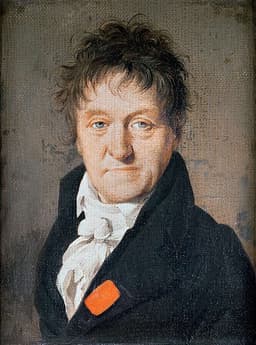
Lazare Carnot
Politician · Modern
68.2Total
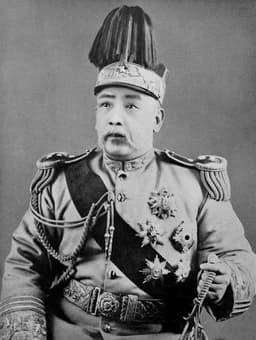
Yuan Shikai
Politician · Modern
60.0Total
Basic Information
Born
1753
1859
Died
1823
1916
Era
Modern
Modern
Nationality
France
China
Occupation
Politician
Politician
Civilization
Western
Eastern
Score Comparison
Military (10%)
61.7
45.0
Political (20%)
72.0
72.0
Influence (20%)
68.0
57.2
Legacy (20%)
65.0
54.0
Leadership (15%)
72.0
72.0
Strategy (15%)
72.0
61.2
TOTAL
68.2
60.0
Lazare Carnot — Complete Timeline
1793 AD
Directed the Victory at the Battle of WattigniesWar◆ Major
Carnot personally directed French forces at the Battle of Wattignies, a key victory that relieved the siege of Maubeuge. His strategic planning helped turn the tide against the Austrian army.
French RevolutionBattleVictory
Impact: regionalconstructive
Organized the Levée en MasseReform◆ Major
Carnot helped implement the lev
French RevolutionConscriptionMilitary Reform
Impact: globalconstructive
Appointed to the Committee of Public SafetyPolitical Action◆ Major
Carnot was appointed to the Committee of Public Safety, where he took charge of military organization. He reorganized the French army, introduced mass conscription, and coordinated the war effort against foreign coalitions.
French RevolutionCommittee of Public SafetyMilitary
Impact: nationalconstructive
1815 AD
Exiled as a RegicidePolitical Action
After the Bourbon restoration, Carnot was exiled as a regicide for having voted for the execution of Louis XVI. He spent his remaining years in Germany and died in Magdeburg.
ExileRegicideBourbon
Impact: nationaltragic
Yuan Shikai — Complete Timeline
1901 AD
Command of the Beiyang ArmyReform◆ Major
Yuan Shikai took command of the Beiyang Army, the most modern military force in late Qing China. He expanded and trained the army, which became the basis for his political power and later dominated Chinese politics.
Military reformBeiyang Army
Impact: national
1912 AD
Appointed First President of the Republic of ChinaPolitical Action
Yuan Shikai became the first president of the Republic of China after negotiating the abdication of the Qing emperor. He used his control of the Beiyang Army to pressure the revolutionary government into accepting his leadership.
PresidencyRepublic of China
Impact: national
1915 AD
Declaration of the Empire of ChinaPolitical Action◆ Major
Yuan Shikai declared himself emperor of the Empire of China, attempting to restore the monarchy. This move sparked widespread opposition from provincial leaders and foreign powers, leading to the collapse of his regime.
Monarchy restorationPolitical crisis
Impact: nationaldestructive
Signing of the Twenty-One DemandsPolitical Action◆ Major
Yuan Shikai accepted most of Japan's Twenty-One Demands, which expanded Japanese influence in China. The agreement granted Japan economic rights in Manchuria and Shandong, and was seen as a national humiliation.
DiplomacyJapanese imperialism
Impact: globaltragic
1916 AD
Death and Collapse of the Beiyang GovernmentPolitical Action◆ Major
Yuan Shikai died of uremia, leaving no clear successor. His death led to the fragmentation of the Beiyang Army into warlord factions, plunging China into a period of civil war and political instability.
Warlord eraPolitical fragmentation
Impact: nationaltragic
Expert Analysis
Yuan Shikai vs Lazare Carnot
**The Organizer and the Emperor**
In the winter of 1915, Yuan Shikai sat in the Forbidden City, a crown upon his head, believing he had restored the Mandate of Heaven. Half a world away and a century earlier, Lazare Carnot, exiled and alone, died in Magdeburg in 1823, a man who had saved a revolution only to be cast out by the kings it had unseated. Both were architects of military power in times of national crisis. One built an army that collapsed into warlord chaos; the other built an army that conquered Europe. Why did their paths diverge so sharply? The answer lies not in their ambition, but in the soil from which their power grew.
**Origins**
Yuan Shikai was born in 1859 to a minor landowning family in Henan province. The Qing Dynasty was crumbling, humiliated by foreign gunboats and internal rebellions. Young Yuan failed the civil service examinations—the traditional path to power—and instead bought a minor military post. He was a pragmatist in a dying empire, learning that loyalty was a currency and that modern rifles could buy more influence than Confucian scholarship. His world was one of patronage, secrecy, and survival.
Lazare Carnot, born in 1753 in Burgundy, was the son of a lawyer and a provincial magistrate. He was a product of the Enlightenment, educated in mathematics and engineering at the École du Génie de Mézières. Where Yuan learned the art of court intrigue, Carnot learned the science of fortification and logistics. He was a republican by conviction, not convenience, and his mind was trained to see war as a system of rational organization, not a game of personal loyalty.
**Rise to Power**
Yuan’s rise was a masterclass in opportunism. In 1901, he took command of the Beiyang Army, the most modern force in China. He expanded it through bribery, nepotism, and personal fealty, turning it into his own private instrument. He played the Qing court against the revolutionaries, and in 1912, after the Wuchang Uprising, he negotiated the abdication of the child emperor Puyi. The deal made him the first president of the Republic of China. He had not fought for a republic; he had simply seized the moment.
Carnot’s rise was born of desperation. In 1793, France was under attack from every side: Austrian, Prussian, British, and Spanish armies pressed its borders, while royalist revolts simmered within. The revolutionary government appointed Carnot to the Committee of Public Safety, tasked with saving the nation. He did not command armies through personal loyalty; he commanded them through paper—mobilization orders, supply requisitions, and strategic plans. He was the man who made the Terror work for the Republic.
**Leadership & Governance**
As a ruler, Yuan Shikai was a master of manipulation but a failure of vision. He governed through a network of generals and officials who owed him everything. In 1915, he accepted most of Japan’s Twenty-One Demands, granting Japan control over Shandong and vast economic privileges in exchange for diplomatic recognition. It was a short-term fix that poisoned his legitimacy. Then, in a catastrophic miscalculation, he declared himself emperor of the Empire of China in 1915. The provinces erupted in revolt. His own generals abandoned him. He was not a monarch; he was a warlord who had overreached.
Carnot governed through logic and law. As the “Organizer of Victory,” he implemented the *levée en masse* in 1793, drafting hundreds of thousands of citizens into the army. He reorganized the fragmented revolutionary forces into cohesive armies, standardizing equipment, training, and command. He personally directed the victory at the Battle of Wattignies in 1793, breaking the siege of Maubeuge. His genius was not in leading charges but in ensuring that the right troops, with the right supplies, arrived at the right place at the right time. He turned a rabble into a machine.
**Triumph & Tragedy**
Yuan’s greatest moment was also his greatest lie. In 1912, by forcing the Qing to abdicate, he ended two thousand years of imperial rule without a civil war. It was a bloodless transition, a diplomatic triumph. But his tragedy was that he could not see beyond the throne. When he died of uremia in 1916, the Beiyang Army splintered into warlord factions that would tear China apart for decades. He left a vacuum, not a legacy.
Carnot’s triumph was the salvation of the French Revolution. Without his organizational genius, the Republic would have fallen in 1793. His tragedy came later. After Napoleon’s defeat, the Bourbon monarchy was restored, and Carnot, who had voted to execute Louis XVI, was branded a regicide. He was exiled in 1815 and died in a foreign land, a man who had saved France but could never return to it.
**Character & Destiny**
Yuan Shikai believed that power was personal. He trusted no one, built no institutions, and thought that loyalty could be bought with silver and titles. His character was that of a survivor in a world of predators, and he died as he lived—alone, surrounded by men who would soon betray his memory. His destiny was the tragedy of the transitional figure: too modern for the old world, too old for the new.
Carnot believed that power was rational. He trusted systems, laws, and the collective will of the people. He was austere, principled, and stubborn. His character was that of an engineer, and his destiny was the tragedy of the revolutionary: his work outlived him, but the world he helped create had no place for him.
**Legacy**
Yuan Shikai is remembered in China today as a traitor and a would-be emperor, a man who sold out his country for a crown. His legacy is the fragmentation of the Beiyang Army and the rise of the warlord era. He scored a total of 70.6 in historical assessments, with his highest marks in leadership (81.3) and his lowest in military strategy (65.4)—a fitting judgment for a man who could command men but not battles.
Carnot is remembered as the “Organizer of Victory,” a founding father of modern military logistics and mass conscription. His legacy is the French army that Napoleon would lead to glory. He scored a total of 73.7, with his highest marks in leadership (83.5) and political skill (80.0). He is a hero of the Republic, his name engraved on the Arc de Triomphe.
**Conclusion**
Yuan Shikai and Lazare Carnot both built armies, but one built a machine for personal power and the other built a machine for national survival. Yuan’s tragedy was that he could not see beyond himself; Carnot’s tragedy was that he saw only the nation. In the end, the difference between a warlord and a statesman is not ambition—it is the willingness to build something that can stand without you. Yuan built a throne of sand; Carnot built a fortress of stone. And history, as always, judges by the foundation.
Rankings
🥇
Lazare CarnotLeader
Mil: 61.7Pol: 72.0Inf: 68.0
68.2
🥈
Yuan Shikai
Mil: 45.0Pol: 72.0Inf: 57.2
60.0
+8.2 behind
How This Comparison Works
Algorithm
Each figure is scored on 6 dimensions (0—100 scale) based on structured historical data: Military (10%), Political (20%), Influence (20%), Legacy (20%), Leadership (15%), Strategy (15%). The weighted total produces the final ranking.
Data Sources
Scores are computed from structured sub-indicators in the database. Scale factors adjust for era (Ancient ×0.85, Modern ×1.0) and civilization size (Eastern ×1.05, Other ×0.80) to account for differences in population and military scale.
Maximum 3 Figures
Comparisons are limited to 2—3 figures to ensure readability and statistical meaningfulness.
Error Margins
±5 points per dimension — Sub-scores are derived from historical records with inherent uncertainty. Two figures within 5 points on a dimension should be considered roughly equivalent in that area.
Total Score Accuracy
±3 points overall — The weighted combination of 6 dimensions produces a total score with approximately ±3 points of uncertainty. Differences of less than 3 points are not statistically significant— the figures are effectively tied.
Known Limitations
- Historical records are incomplete and uneven across civilizations
- Figures from oral-tradition societies may be underrepresented
- Occupation labels can misclassify multi-role figures
- Scores measure capability and impact, not moral character
- Quantitative scoring is a comparison tool, not absolute truth
Capability Radar
Military (10%) — Battles & Warfare
Battles
60
45
Win Rate
65
55
Expansion
80
50
Political (20%) — Governance & Reform
Reform
90
55
Diplomacy
60
70
Economy
75
50
Influence (20%) — Cultural & Global Reach
Cultural
60
40
Global
75
35
Legacy (20%) — Historical Impact
Historical
85
65
Longevity
70
40
Leadership (15%) — Power & Stability
Tenure
70
60
Stability
50
30
Strategy (15%) — Tactics & Innovation
Strategy
85
65
Tactics
70
60
Reform
95
80
Similar Comparisons
Comments & Discussion
LoyaltyButcher6/16/2026
Comparing Yuan’s bought loyalty to Carnot’s ideological fervor is naive. Carnot’s “Republican” army was fueled by conscription and nationalism—a luxury Yuan never had. In 1911, when the Qing fell, there was no “France” to rally behind, only regional warlords and foreign concessions. Yuan’s Beiyang Army was a feudal contract, not a people’s army. You can’t organize what doesn’t exist.
粮草大帅6/16/2026
说穿了,袁世凯是“练兵不练心”,北洋新军再精良,也只是他私人的工具。反观卡诺,搞的不是军队,是国家动员体系——1793年他在法国组织14支军团,每个士兵都知道为共和国而战。袁大头的兵?只知道给钱就上战场。层次根本不在一个维度。