Loading...
Lazare Carnot vs Themistocles
Themistocles leads by 0.2 pts · 2 figures compared
…
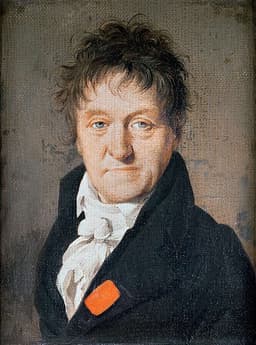
Lazare Carnot
Politician · Modern
68.2Total
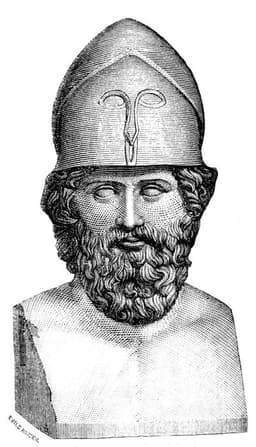
Themistocles
Politician · Ancient
68.4Total
Basic Information
Born
1753
-524
Died
1823
-459
Era
Modern
Ancient
Nationality
France
Greece
Occupation
Politician
Politician
Civilization
Western
Western
Score Comparison
Military (10%)
61.7
80.0
Political (20%)
72.0
72.0
Influence (20%)
68.0
40.0
Legacy (20%)
65.0
80.0
Leadership (15%)
72.0
79.8
Strategy (15%)
72.0
76.0
TOTAL
68.2
68.4
Lazare Carnot — Complete Timeline
1793 AD
Directed the Victory at the Battle of WattigniesWar◆ Major
Carnot personally directed French forces at the Battle of Wattignies, a key victory that relieved the siege of Maubeuge. His strategic planning helped turn the tide against the Austrian army.
French RevolutionBattleVictory
Impact: regionalconstructive
Organized the Levée en MasseReform◆ Major
Carnot helped implement the lev
French RevolutionConscriptionMilitary Reform
Impact: globalconstructive
Appointed to the Committee of Public SafetyPolitical Action◆ Major
Carnot was appointed to the Committee of Public Safety, where he took charge of military organization. He reorganized the French army, introduced mass conscription, and coordinated the war effort against foreign coalitions.
French RevolutionCommittee of Public SafetyMilitary
Impact: nationalconstructive
1815 AD
Exiled as a RegicidePolitical Action
After the Bourbon restoration, Carnot was exiled as a regicide for having voted for the execution of Louis XVI. He spent his remaining years in Germany and died in Magdeburg.
ExileRegicideBourbon
Impact: nationaltragic
Themistocles — Complete Timeline
483 BC
Construction of the Athenian FleetReform◆ Major
Themistocles persuaded the Athenian assembly to use silver from the Laurion mines to build a fleet of 200 triremes. This naval expansion transformed Athens into a major maritime power and was crucial for the victory at Salamis.
AthensNaval PowerReform
Impact: nationalconstructive
480 BC
Battle of SalamisWar
Themistocles commanded the Greek navy against the Persian fleet at Salamis. He lured the Persians into the narrow straits, where the Greek ships destroyed the larger Persian fleet. This victory ended the Persian threat to Greece and preserved Greek independence.
Greco-Persian WarsNaval BattleAthens
Impact: regionalconstructive
472 BC
Ostracism from AthensPolitical Action◆ Major
Themistocles was ostracized by the Athenian assembly, likely due to political rivalries and accusations of arrogance. He went into exile, first to Argos, then to Persia, where he was received by King Artaxerxes I.
AthensExileOstracism
Impact: nationaltragic
465 BC
Service under the Persian KingPolitical Action
After his ostracism, Themistocles fled to Persia and offered his services to King Artaxerxes I. He was granted governorship of Magnesia and other cities in Asia Minor, where he lived until his death. This act was seen as treason by many Athenians.
PersiaExileTreason
Impact: regional
Expert Analysis
Themistocles vs Lazare Carnot
# The Architect and the Organizer: Themistocles and Lazare Carnot
On a narrow strait off the coast of Salamis in 480 BCE, a Greek commander watched as the Persian fleet, twice his size, maneuvered into a trap he had set. The water churned with oars and blood as triremes collided, and the dream of Persian conquest of Europe died in those cramped waters. Two thousand three hundred years later, in the snow and mud of revolutionary France, another man stared at maps spread across a table in Paris, calculating troop movements that would save a republic from collapse. One man built a fleet from silver; the other built an army from nothing. Both saved their nations. Both were cast out by the very people they saved. Themistocles and Lazare Carnot—separated by millennia, united by the terrible burden of being indispensable in times of existential crisis.
Origins
Themistocles was born into a world of city-states and constant rivalry. His mother was not Athenian, which in the rigid social hierarchy of ancient Greece marked him as something of an outsider. This may have sharpened his ambition. Athens itself was a rising democracy, but still fragile, still learning to balance the power of the people with the demands of leadership. Themistocles grew up in the shadow of the Persian Wars, a conflict that would define his life. He was cunning, persuasive, and utterly convinced that Athens’ future lay not in its hoplites but in its ships.
Lazare Carnot came from a different world entirely. Born in 1753 in Burgundy, he was a product of the Enlightenment, trained as a military engineer. His mind was methodical, mathematical, drawn to systems and order. When the French Revolution erupted, Carnot was a captain in the royal army, but he embraced the new order with the zeal of a believer. The France he served was not a city-state but a nation of millions, torn apart by civil war and foreign invasion. Where Themistocles had to persuade a few thousand citizens, Carnot had to organize millions.
Rise to Power
Themistocles’ ascent was a masterclass in political maneuvering. He understood that in democratic Athens, power flowed from the assembly. He championed the construction of a navy at a time when Athens was more concerned with land threats from Sparta. In 483 BCE, he persuaded the assembly to dedicate the silver from the Laurion mines—a windfall that could have been distributed among citizens—to building 200 triremes. It was a gamble that only a man with extraordinary rhetorical gifts could have pulled off. He was not loved; he was feared and admired, which was enough.
Carnot’s rise was different. He did not charm an assembly; he was appointed to the Committee of Public Safety in 1793, at the height of the Terror. The Republic was surrounded: Austrian, Prussian, and British armies pressed from all sides, internal revolts threatened to tear France apart. Carnot was given the task no one else wanted: turn a chaotic rabble into a fighting force. He did not seek power; power sought him because he was the only one who could do the job.
Leadership & Governance
Themistocles commanded through cunning. At Salamis, he understood that the Persian fleet’s strength—its size and speed—became a weakness in the narrow straits. He sent a false message to the Persian king Xerxes, pretending to defect, luring the enemy into the trap. It was a deception worthy of Odysseus. But his genius was tactical, not administrative. He built the fleet, but he did not build the system that sustained it. His governance was personal, charismatic, and ultimately fragile.
Carnot was the opposite. He was called the “Organizer of Victory” for a reason. He reorganized the French army into divisions, created a system of rapid communication, and implemented the *levée en masse* in 1793—a mass conscription that mobilized hundreds of thousands of citizens. He did not lead from the front; he led from the map room. At the Battle of Wattignies in 1793, he personally directed operations, but his real contribution was systemic. He turned the French Republic into a war machine. Where Themistocles relied on a single brilliant stroke, Carnot built a machine that could win again and again.
Triumph & Tragedy
Themistocles’ triumph was Salamis, a victory so complete it became legend. The Persian fleet was shattered, Xerxes retreated, and Greek civilization was saved. It was the greatest naval battle of the ancient world, and Themistocles was its architect. But his tragedy followed swiftly. In 472 BCE, he was ostracized—exiled by the very people he had saved. The charges were vague: arrogance, political rivalry, the fear that he had become too powerful. He fled to Persia, of all places, and offered his services to the son of the king he had defeated. He died far from Athens, a servant of the enemy.
Carnot’s triumph was the survival of the French Republic. By 1794, the armies he had organized were victorious on all fronts. The Revolution was saved. But the Terror consumed its creators. Carnot survived the guillotine, but he could not survive the Restoration. After Napoleon’s final defeat at Waterloo in 1815, the Bourbon monarchy returned. Carnot had voted for the execution of Louis XVI. He was branded a regicide and exiled. He died in 1823, in Magdeburg, far from the France he had saved.
Character & Destiny
Themistocles was a fox: clever, adaptable, willing to lie and scheme. He had no ideology beyond the survival and greatness of Athens—and himself. His character made him effective but also made him enemies. He could not inspire loyalty; he inspired fear and grudging respect. When his usefulness ended, Athens discarded him.
Carnot was an engineer: systematic, principled, driven by duty. He believed in the Republic, in reason, in the power of organization. He was not a charismatic leader; he was a competent one. But in a revolution that devoured its children, competence was not enough. His character—his integrity, his refusal to bend—made him a target. When the monarchy returned, there was no place for a man who had voted for the king’s death.
Legacy
Themistocles is remembered as the father of Athenian naval power, the man who made the Delian League possible, and thus the Athenian Empire. Without him, the Battle of Salamis might have been lost, and Western civilization might have taken a very different path. But his legacy is complicated. He died in Persian service, a traitor to the city he saved.
Carnot is remembered as a founder of modern warfare. The *levée en masse* and the division system became the template for mass armies. His ideas influenced Clausewitz and Jomini. He is honored as a hero of the Revolution, but also as a man who served the Terror. His legacy is the modern nation in arms—both its power and its peril.
Conclusion
What drives a man to save his country, only to be cast out by it? Themistocles and Carnot both faced the same cruel paradox: the savior becomes a threat. Themistocles was too ambitious; Carnot was too principled. One was a fox, the other an engineer. One built a fleet, the other an army. But both understood that survival requires sacrifice, and that the people who need you most will often forget you fastest. Their stories are warnings etched in time: the hero is always temporary, the gratitude of nations is always fleeting. And yet, they built anyway. That is what makes them unforgettable.
Rankings
🥇
ThemistoclesLeader
Mil: 80.0Pol: 72.0Inf: 40.0
68.4
🥈
Lazare Carnot
Mil: 61.7Pol: 72.0Inf: 68.0
68.2
+0.2 behind
How This Comparison Works
Algorithm
Each figure is scored on 6 dimensions (0—100 scale) based on structured historical data: Military (10%), Political (20%), Influence (20%), Legacy (20%), Leadership (15%), Strategy (15%). The weighted total produces the final ranking.
Data Sources
Scores are computed from structured sub-indicators in the database. Scale factors adjust for era (Ancient ×0.85, Modern ×1.0) and civilization size (Eastern ×1.05, Other ×0.80) to account for differences in population and military scale.
Maximum 3 Figures
Comparisons are limited to 2—3 figures to ensure readability and statistical meaningfulness.
Error Margins
±5 points per dimension — Sub-scores are derived from historical records with inherent uncertainty. Two figures within 5 points on a dimension should be considered roughly equivalent in that area.
Total Score Accuracy
±3 points overall — The weighted combination of 6 dimensions produces a total score with approximately ±3 points of uncertainty. Differences of less than 3 points are not statistically significant— the figures are effectively tied.
Known Limitations
- Historical records are incomplete and uneven across civilizations
- Figures from oral-tradition societies may be underrepresented
- Occupation labels can misclassify multi-role figures
- Scores measure capability and impact, not moral character
- Quantitative scoring is a comparison tool, not absolute truth
Capability Radar
Military (10%) — Battles & Warfare
Battles
60
75
Win Rate
65
85
Expansion
80
60
Political (20%) — Governance & Reform
Reform
90
75
Diplomacy
60
85
Economy
75
65
Influence (20%) — Cultural & Global Reach
Cultural
60
70
Global
75
75
Legacy (20%) — Historical Impact
Historical
85
85
Longevity
70
80
Leadership (15%) — Power & Stability
Tenure
70
70
Stability
50
60
Strategy (15%) — Tactics & Innovation
Strategy
85
90
Tactics
70
95
Reform
95
80
Similar Comparisons
Comments & Discussion
ATHENA'S SHADOW6/16/2026
Themistocles gets the glory for Salamis, but Carnot's organizational genius is vastly underrated. Themistocles had a silver mine and a charismatic personality to sell his naval vision. Carnot? He had revolutionary chaos, empty coffers, and an entire continent at war with France. He created fourteen armies out of nothing, streamlined logistics, and invented modern military planning. Without him, the Revolution dies in 1793. Themistocles won a battle that mattered, but Carnot won a war that lasted
银矿舵手6/16/2026
别跟我扯什么“民主之父”或者“革命组织者”,这俩都是被权力游戏坑惨的倒霉蛋。地米斯托克利靠银矿忽悠雅典人造船,结果赢了波斯却被陶片放逐,跑去给波斯当狗头军师。卡诺更惨,救完共和国却被拿破仑踢出局,晚年流亡。历史就爱玩这种恶趣味:拯救国家的人,最后都被自己人捅刀子。所谓功高震主,不过是统治者忘恩负义的体面说法。
DATA_DRILLER6/16/2026
Let’s run the numbers: Salamis had roughly 370 Greek triremes vs. an estimated 600-800 Persian ships. Themistocles lured them into a strait where numbers didn’t matter—cunning, sure. But Carnot managed fourteen armies, coordinated across multiple fronts, with telegraphs and paperwork that would make a data analyst weep. Militarily, Themistocles won a single engagement; Carnot sustained a multi-year systemic campaign. Apples to oranges? Maybe. But oranges feed a nation longer.
帆桨上的赌徒6/16/2026
纯粹从战略纵深看,地米斯托克利就是个海权赌徒。他把雅典所有筹码压在萨拉米斯那场豪赌上,赢了封神,输了直接灭国。而卡诺玩的是体系——他设计的“大军团”加上“速决战”理论,让法国在欧陆多线作战还能撑住。要我说,地米斯托克利靠直觉和银币梭哈,卡诺靠逻辑和白纸黑字下棋。棋手总是比赌徒更难复制。
REVOLUTIONARY_ROSTER6/16/2026
Forget the battle comparisons—Carnot was an actual scientist and engineer who built the first modern military state. Themistocles was a brilliant politician-sailor, but his legacy is mostly Plutarch's anecdotes. Carnot wrote treatises on fortification, invented the concept of the "nation in arms," and his son Sadi became a famous physicist. The real comparison is between tactical cunning (Themistocles) and systemic transformation (Carnot). Which is more valuable? Ask the empires that fell becaus