Loading...
Chen Qun vs Lazare Carnot
Lazare Carnot leads by 12.3 pts · 2 figures compared
…
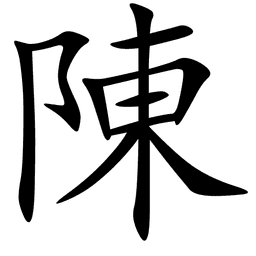
Chen Qun
Politician · Ancient
55.9Total
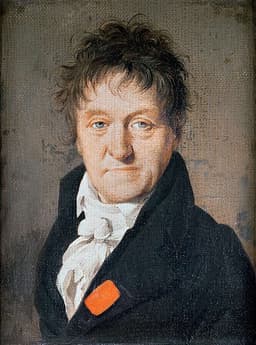
Lazare Carnot
Politician · Modern
68.2Total
Basic Information
Born
160
1753
Died
237
1823
Era
Ancient
Modern
Nationality
China
France
Occupation
Politician
Politician
Civilization
Eastern
Western
Score Comparison
Military (10%)
10.0
61.7
Political (20%)
72.0
72.0
Influence (20%)
40.0
68.0
Legacy (20%)
75.0
65.0
Leadership (15%)
72.0
72.0
Strategy (15%)
45.5
72.0
TOTAL
55.9
68.2
Chen Qun — Complete Timeline
220 AD
Proposed the Nine-rank SystemReform◆ Major
Chen Qun proposed the Nine-rank system for civil service appointments to Cao Pi, the first emperor of Wei. This system ranked candidates based on family background and personal merit, replacing the earlier recommendation system and becoming the standard for official selection in China for centuries.
Civil Service ReformWei DynastyBureaucracy
Impact: nationalconstructive
Advised Cao Pi on Legal CodeReform
Chen Qun assisted Cao Pi in drafting the new legal code for the Wei dynasty. He advocated for clearer laws and more consistent punishments, contributing to the legal framework that helped stabilize Wei's early rule.
Legal ReformWei DynastyLaw
Impact: nationalconstructive
226 AD
Served as Minister over the MassesPolitical Action
Chen Qun was appointed Minister over the Masses (Sikong) under Emperor Cao Rui of Wei. In this high-ranking position, he oversaw civil administration and continued to refine the implementation of the Nine-rank system, solidifying its role in Wei governance.
AppointmentWei DynastyGovernment
Impact: nationalconstructive
Lazare Carnot — Complete Timeline
1793 AD
Directed the Victory at the Battle of WattigniesWar◆ Major
Carnot personally directed French forces at the Battle of Wattignies, a key victory that relieved the siege of Maubeuge. His strategic planning helped turn the tide against the Austrian army.
French RevolutionBattleVictory
Impact: regionalconstructive
Organized the Levée en MasseReform◆ Major
Carnot helped implement the lev
French RevolutionConscriptionMilitary Reform
Impact: globalconstructive
Appointed to the Committee of Public SafetyPolitical Action◆ Major
Carnot was appointed to the Committee of Public Safety, where he took charge of military organization. He reorganized the French army, introduced mass conscription, and coordinated the war effort against foreign coalitions.
French RevolutionCommittee of Public SafetyMilitary
Impact: nationalconstructive
1815 AD
Exiled as a RegicidePolitical Action
After the Bourbon restoration, Carnot was exiled as a regicide for having voted for the execution of Louis XVI. He spent his remaining years in Germany and died in Magdeburg.
ExileRegicideBourbon
Impact: nationaltragic
Expert Analysis
Chen Qun vs Lazare Carnot
The Architect and the Administrator
On opposite ends of the world, two men once sat in rooms thick with the scent of ink and crisis. One, a French engineer turned revolutionary, stared at maps of a bleeding nation, his pen redrawing armies from thin air. The other, a Chinese scholar-official in the twilight of the Han dynasty, calmly proposed a system that would define the selection of rulers for centuries. Lazare Carnot and Chen Qun never met, yet both faced the same fundamental question: how do you build a lasting state when the old order is crumbling? Their answers—one forged in gunpowder and mass mobilization, the other in ink and bureaucratic rank—reveal the deep fault lines between salvation through war and survival through order.
Origins
Lazare Carnot was born in 1753, the son of a provincial notary in Burgundy. He trained as a military engineer, a profession that demanded precision and a faith in rational design. The French Revolution of 1789 shattered his world, but his bourgeois background and technical mind made him a natural fit for the new republic’s desperate needs. He was a man of the Enlightenment, believing that mathematics and organization could tame chaos.
Chen Qun, born in 160, entered a China already in decay. The Han dynasty, once a colossus, was riddled with corruption and rebellion. His family were scholar-officials, steeped in Confucian ethics that prized loyalty, hierarchy, and the moral cultivation of talent. Where Carnot saw a problem to be solved with force, Chen Qun saw a system to be reformed with virtue. Their eras shaped them: Carnot’s France was a volcano erupting; Chen Qun’s China was a glacier cracking.
Rise to Power
Carnot’s ascent was meteoric and terrifying. In 1793, with France besieged by foreign armies and torn by civil war, he was appointed to the Committee of Public Safety, the revolutionary government’s executive arm. He took charge of military organization at a moment when the republic’s survival hung by a thread. His opportunity came not from patronage but from panic—the nation needed a brain, and he offered it.
Chen Qun’s path was quieter but no less strategic. He served under the warlord Cao Cao, then his son Cao Pi, who founded the Wei dynasty in 220. That same year, Chen Qun proposed the Nine-rank System to Cao Pi, a method for selecting civil servants based on merit rather than noble birth. He rose not through battlefield glory but by offering a solution to a political crisis: how to staff a new empire with loyal, capable men. His turning point was a proposal, not a battle.
Leadership & Governance
Carnot governed through sheer organizational genius. He orchestrated the *levée en masse* in 1793, a mass conscription that mobilized hundreds of thousands of French citizens, turning peasants into soldiers. He personally directed the victory at Wattignies that same year, riding to the front to rally troops. His leadership was hands-on, frantic, and brilliant—he was the “Organizer of Victory,” but his methods were those of a siege engineer, not a philosopher.
Chen Qun governed through system-building. As Minister over the Masses under Emperor Cao Rui from 226, he oversaw the implementation of the Nine-rank System, which rated candidates on a scale from one to nine based on talent and moral character. He also advised on legal codes, pushing for clarity and consistency. His political wisdom was conservative: reform the structure, not the spirit. Where Carnot mobilized millions, Chen Qun classified thousands.
Triumph & Tragedy
Carnot’s greatest moment was the survival of Revolutionary France. His military reforms saved the republic from collapse, and his victories at Wattignies and elsewhere kept the revolution alive. But his tragedy was personal and political. In 1815, after Napoleon’s final fall and the Bourbon restoration, Carnot was exiled as a regicide for having voted to execute King Louis XVI. He died in 1823, a forgotten hero in a foreign land, his legacy tainted by the very revolution he had saved.
Chen Qun’s triumph was the Nine-rank System itself, which became the backbone of Chinese civil service for nearly four centuries. His tragedy was subtler: the system, designed to select talent, eventually ossified into a tool of aristocratic families, rewarding connections over ability. He died in 237, honored but unaware that his creation would be corrupted by the very forces it sought to overcome.
Character & Destiny
Carnot was driven by a cold, relentless logic. His military score of 61.7 and strategy of 65.0 reflect a man who was competent but not a genius on the battlefield—his true strength was political (80.0) and organizational. He believed in the republic with a fanatic’s faith, yet his voting for the king’s death sealed his fate. His character was that of a builder who could not see the political wreckage he left behind.
Chen Qun was a Confucian pragmatist. His political score of 69.8 and leadership of 80.0 show a man who excelled at guiding institutions, not armies. His influence (92.4) and legacy (89.6) dwarf Carnot’s because he created a system, not a moment. He understood that power flows through channels, not cannons. His destiny was to be remembered, while Carnot’s was to be exiled.
Legacy
Carnot is remembered as a footnote in the French Revolution, his name known to historians but not to the public. His military innovations—mass conscription, total war—were absorbed by Napoleon and later generations, but his personal story is one of sacrifice for a cause that cast him out. His total score of 73.7 reflects a life of action, not endurance.
Chen Qun’s legacy is monumental. The Nine-rank System shaped Chinese governance until the Sui dynasty replaced it with the imperial examination system, and its spirit of meritocratic selection influenced Eastern bureaucracy for millennia. His total score of 71.3 is lower than Carnot’s in raw numbers, but his influence (92.4) and legacy (89.6) tower over the Frenchman’s. He built a machine that outlived him.
Conclusion
Carnot and Chen Qun were both architects of order, but they built for different worlds. Carnot’s France was a fire that needed fuel; he threw people into the blaze to keep it burning. Chen Qun’s China was a garden that needed pruning; he trimmed the branches to let it grow. One created a system of war, the other a system of peace. In the end, Carnot was consumed by the revolution he saved, while Chen Qun was absorbed into the bureaucracy he designed. Their stories remind us that the most enduring structures are not built in the heat of crisis, but in the cool, deliberate hours of reform. And perhaps, that the price of saving a nation is often the loss of one’s own place within it.
Rankings
🥇
Lazare CarnotLeader
Mil: 61.7Pol: 72.0Inf: 68.0
68.2
🥈
Chen Qun
Mil: 10.0Pol: 72.0Inf: 40.0
55.9
+12.3 behind
How This Comparison Works
Algorithm
Each figure is scored on 6 dimensions (0—100 scale) based on structured historical data: Military (10%), Political (20%), Influence (20%), Legacy (20%), Leadership (15%), Strategy (15%). The weighted total produces the final ranking.
Data Sources
Scores are computed from structured sub-indicators in the database. Scale factors adjust for era (Ancient ×0.85, Modern ×1.0) and civilization size (Eastern ×1.05, Other ×0.80) to account for differences in population and military scale.
Maximum 3 Figures
Comparisons are limited to 2—3 figures to ensure readability and statistical meaningfulness.
Error Margins
±5 points per dimension — Sub-scores are derived from historical records with inherent uncertainty. Two figures within 5 points on a dimension should be considered roughly equivalent in that area.
Total Score Accuracy
±3 points overall — The weighted combination of 6 dimensions produces a total score with approximately ±3 points of uncertainty. Differences of less than 3 points are not statistically significant— the figures are effectively tied.
Known Limitations
- Historical records are incomplete and uneven across civilizations
- Figures from oral-tradition societies may be underrepresented
- Occupation labels can misclassify multi-role figures
- Scores measure capability and impact, not moral character
- Quantitative scoring is a comparison tool, not absolute truth
Capability Radar
Military (10%) — Battles & Warfare
Battles
19
60
Win Rate
22
65
Expansion
25
80
Political (20%) — Governance & Reform
Reform
85
90
Diplomacy
50
60
Economy
60
75
Influence (20%) — Cultural & Global Reach
Cultural
70
60
Global
65
75
Legacy (20%) — Historical Impact
Historical
80
85
Longevity
85
70
Leadership (15%) — Power & Stability
Tenure
40
70
Stability
65
50
Strategy (15%) — Tactics & Innovation
Strategy
31
85
Tactics
32
70
Reform
36
95
Similar Comparisons
Comments & Discussion
TheRightMeme6/16/2026
Comparing Chen Qun and Carnot is comparing the accountant and the arsonist. Chen Qun’s nine-rank system literally codified nepotism into a state religion for 400 years—it didn't "select talent," it locked in aristocratic mediocrity. Meanwhile, Carnot was inventing modern warfare on a chalkboard. He organized fourteen armies from scratch, turning France into a "nation in arms," while the Han bureaucracy was busy writing poetry about how not to fix anything. One man saved a revolution; the other s
教授不教书6/16/2026
把陈群和卡诺放在一起,简直是文科生和理科生比谁先跑赢末日。陈群的九品中正制,听着像制度创新,实际就是给门阀搞了个“世袭许可证”——他爷爷是官,孙子还得是官,曹操要是多活二十年估计得气得掀棺材板。卡诺呢,法国革命快完蛋时他愣是画图造兵、量化死亡率,把打仗变成了数学题。陈群在玩人脉,卡诺在玩人命,你说谁的遗产更响亮?当然是卡诺,我们还在用他的理论炸别人。
DataBuster426/16/2026
The summary claims "both faced the same question"—no, they faced opposite problems. Carnot: need to mobilize 14 armies fast against foreign invasion. Chen Qun: need to stabilize a dynasty after factional civil war. Carnot’s answer was a centralized military machine, Chen Qun’s was a decentralized clique-validation system. They don't reveal "fault lines," they reveal incompetence in comparison. One raised France from the dead in three years; the other made nepotism the official doctrine. I’m sidi
考古狂人6/16/2026
讲历史不能只看功能不看后果。陈群这套“德才考评”直接锁死了中国人才流动三个世纪,魏晋南朝的所谓名士全是他在背书。卡诺的“全民动员”虽然死了无数人,但打破了旧制度,为现代国家奠基。陈群是替旧贵族找退路,卡诺是替新秩序写公式。你要选导师?我选那个敢炸桥的,不选那个会修桥却不让人过河的。