Loading...
Lazare Carnot vs Qin Shi Huang
Qin Shi Huang leads by 17.0 pts · 2 figures compared
…
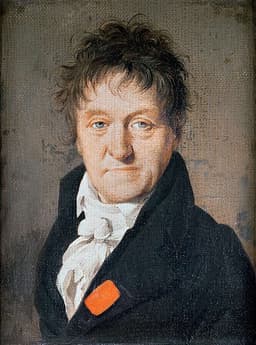
Lazare Carnot
Politician · Modern
68.2Total
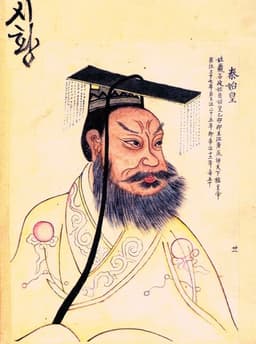
Qin Shi Huang
Emperor · Ancient
85.2Total
Basic Information
Born
1753
-259
Died
1823
-210
Era
Modern
Ancient
Nationality
France
China
Occupation
Politician
Emperor
Civilization
Western
Eastern
Score Comparison
Military (10%)
61.7
80.0
Political (20%)
72.0
90.0
Influence (20%)
68.0
85.0
Legacy (20%)
65.0
90.0
Leadership (15%)
72.0
78.0
Strategy (15%)
72.0
82.0
TOTAL
68.2
85.2
Lazare Carnot — Complete Timeline
1793 AD
Directed the Victory at the Battle of WattigniesWar◆ Major
Carnot personally directed French forces at the Battle of Wattignies, a key victory that relieved the siege of Maubeuge. His strategic planning helped turn the tide against the Austrian army.
French RevolutionBattleVictory
Impact: regionalconstructive
Organized the Levée en MasseReform◆ Major
Carnot helped implement the lev
French RevolutionConscriptionMilitary Reform
Impact: globalconstructive
Appointed to the Committee of Public SafetyPolitical Action◆ Major
Carnot was appointed to the Committee of Public Safety, where he took charge of military organization. He reorganized the French army, introduced mass conscription, and coordinated the war effort against foreign coalitions.
French RevolutionCommittee of Public SafetyMilitary
Impact: nationalconstructive
1815 AD
Exiled as a RegicidePolitical Action
After the Bourbon restoration, Carnot was exiled as a regicide for having voted for the execution of Louis XVI. He spent his remaining years in Germany and died in Magdeburg.
ExileRegicideBourbon
Impact: nationaltragic
Qin Shi Huang — Complete Timeline
246 BC
Construction of the Mausoleum and Terracotta ArmyOther◆ Major
Qin Shi Huang commissioned a vast mausoleum complex near Xi'an, guarded by thousands of life-sized terracotta soldiers, horses, and chariots. The project employed hundreds of thousands of workers and reflected his obsession with immortality and imperial power.
Impact: global
230 BC
Conquest of the Six Warring StatesWar
From 230 to 221 BCE, Ying Zheng led the Qin state in a series of campaigns that conquered the Han, Zhao, Wei, Chu, Yan, and Qi states. This unified China under a single ruler for the first time, ending the Warring States period.
Impact: global
221 BC
Standardization of Writing, Currency, and MeasurementsReform◆ Major
Qin Shi Huang ordered the standardization of Chinese script, currency, and weights and measures across the unified empire. This facilitated administration, trade, and cultural integration, laying a foundation for future dynasties.
Impact: globalconstructive
Proclamation of the Qin DynastyPolitical Action
After conquering the last independent state, Ying Zheng declared himself Shi Huangdi (First Emperor), founding the Qin Dynasty. He adopted a new title to signify his supreme authority and initiated centralized imperial rule.
Impact: global
214 BC
Initiation of the Great Wall ConstructionOther◆ Major
Qin Shi Huang ordered the connection and extension of existing northern fortifications to create a unified defensive wall against nomadic Xiongnu raids. This project involved massive conscripted labor and became the precursor to the later Great Wall.
Impact: regional
213 BC
Burning of Books and Burying of ScholarsPolitical Action◆ Major
On the advice of Li Si, Qin Shi Huang ordered the burning of historical records and philosophical texts not aligned with Legalist doctrine. He also had 460 Confucian scholars buried alive to suppress dissent and consolidate ideological control.
Impact: nationaldestructive
Expert Analysis
lazare-carnot-vs-qin-shi-huang
# The First Emperor and the Organizer of Victory
History has a way of pairing figures who, though separated by two thousand years and half a world, wrestled with the same fundamental question: how does one forge a nation from chaos? Qin Shi Huang answered with iron and fire, building an empire that would define China for millennia. Lazare Carnot answered with paper and mathematics, mobilizing a revolutionary people to defend a new idea of France. One created a system of absolute control; the other invented a system of total war. Their different fates tell us as much about their times as about the men themselves.
Origins
Ying Zheng was born in 259 BC into a world of endless war. The Warring States period had torn China apart for two centuries, and his childhood was spent in the shadow of political intrigue—his father was a hostage in the Zhao court, and the young prince learned early that trust was a luxury only the dead could afford. When he ascended the throne of Qin at thirteen, he inherited a state already hardened by Legalist philosophy, which taught that human nature was wicked and only harsh law could hold society together. His tutor, Li Si, drilled into him the belief that unity required uniformity.
Lazare Carnot was born in 1753 in Burgundy, the son of a notary. Unlike the emperor, he came of age in the Enlightenment, a world where reason and science were reshaping everything. He studied engineering at the École Royale du Génie in Mézières, learning to calculate trajectories and fortify positions. When the French Revolution erupted in 1789, Carnot was a captain in the royal army, a man of order thrust into chaos. But where Qin Shi Huang saw chaos as a threat to be crushed, Carnot saw it as energy to be channeled.
Rise to Power
Qin Shi Huang’s ascent was a matter of conquest. From 230 to 221 BC, he unleashed a series of campaigns that devoured the six rival kingdoms one by one—Han, Zhao, Wei, Chu, Yan, and finally Qi. He did not negotiate; he annihilated. When the last king surrendered, Ying Zheng proclaimed himself *Shi Huangdi*, the First Emperor, and declared that his dynasty would rule for ten thousand generations.
Carnot’s rise was far more improbable. In 1793, revolutionary France was collapsing. Foreign armies pressed its borders; internal revolts threatened to tear it apart. The Committee of Public Safety needed someone who could organize victory, and Carnot—a political moderate, a military engineer, a man who had never commanded an army—was appointed to oversee war. He did not seize power; he was drafted into it by desperation.
Leadership & Governance
The First Emperor ruled through standardization. He ordered that all writing across his empire use the same script, that all carts have the same axle width, that all coins be round with a square hole. He imposed uniform weights and measures, built roads connecting his domain, and initiated the Great Wall in 214 BC to seal his borders. But his vision of order had a terrifying cost. In 213 BC, on the advice of Li Si, he ordered the burning of all books except those on medicine, agriculture, and divination. Scholars who resisted were buried alive. He believed that memory itself must be erased to create a new world.
Carnot governed through mobilization. In 1793, he helped implement the *levée en masse*, a decree that drafted every able-bodied French citizen into service. This was not a professional army but a nation in arms—young men fought, women made uniforms, children scraped linen for bandages. Carnot reorganized the chaotic revolutionary armies into fourteen field armies, each with standardized divisions, and built a logistics system that kept them supplied. He directed the victory at Wattignies in 1793, personally riding to the front to rally wavering troops. His governance was not about control but about coordination—a symphony of supply lines, training camps, and strategic plans.
Triumph & Tragedy
Qin Shi Huang’s greatest triumph was the unification itself, a feat that had eluded every previous Chinese ruler. His mausoleum, begun in 246 BC and guarded by the Terracotta Army—thousands of life-sized clay soldiers, each with a unique face—stands as a monument to his ambition. But his tragedy was the fragility of his creation. He died in 210 BC, and within three years his dynasty collapsed, torn apart by rebellion and the very Legalist harshness he had used to build it.
Carnot’s triumph was the survival of the French Revolution. By 1794, his armies had pushed back every invader, and France stood as the most powerful military state in Europe. But his tragedy was personal. He had voted for the execution of King Louis XVI—a decision that would haunt him. After Napoleon’s fall and the Bourbon restoration in 1815, Carnot was exiled as a regicide. He died in 1823 in Magdeburg, a stranger in a foreign land.
Character & Destiny
Qin Shi Huang was a man possessed by the terror of death. He sent expeditions to find the elixir of immortality, built a vast underground palace to preserve his body, and believed that his will could conquer even time. His paranoia was his strength—it drove him to crush all opposition—and his weakness, for he trusted no one and built nothing that could survive him.
Carnot was a man possessed by the terror of disorder. He believed that systems—clear chains of command, standardized procedures, rational logistics—could tame the chaos of war. His engineering mind saw victory as a problem to be solved, not a prize to be seized. His modesty was his strength—he never sought personal glory—and his tragedy, for he was erased from the revolutionary narrative by the very leaders he had saved.
Legacy
Qin Shi Huang’s legacy is monumental. The Great Wall, the Terracotta Army, the standardized script—these endure. More profoundly, the idea of a unified China, ruled from a single capital with a single bureaucracy, was his creation. Every Chinese dynasty that followed built on his foundations. He is remembered as both a tyrant and a founder, the man who made China possible.
Carnot’s legacy is quieter but no less profound. He is remembered as the “Organizer of Victory,” the man who invented modern warfare—mass conscription, national mobilization, industrial logistics. Napoleon later refined his methods, but it was Carnot who first understood that a nation at war is a machine that must be engineered. He is the father of the *levée en masse*, the ancestor of every citizen army from the American Civil War to the World Wars.
Conclusion
Two men, two millennia, one question. Qin Shi Huang built an empire by crushing diversity; Lazare Carnot saved a republic by harnessing it. The First Emperor demanded uniformity because he feared difference; Carnot demanded organization because he feared defeat. Both succeeded, and both failed—their creations outlasted them only to be transformed. The Terracotta Army still stands, silent and eternal, while Carnot’s principles still march in every army that fights for a cause larger than itself. Perhaps the deepest lesson is this: power can be seized by a single will, but it can only be sustained by a system. And systems, unlike emperors, can learn.
Rankings
🥇
Qin Shi HuangLeader
Mil: 80.0Pol: 90.0Inf: 85.0
85.2
🥈
Lazare Carnot
Mil: 61.7Pol: 72.0Inf: 68.0
68.2
+17.0 behind
How This Comparison Works
Algorithm
Each figure is scored on 6 dimensions (0—100 scale) based on structured historical data: Military (10%), Political (20%), Influence (20%), Legacy (20%), Leadership (15%), Strategy (15%). The weighted total produces the final ranking.
Data Sources
Scores are computed from structured sub-indicators in the database. Scale factors adjust for era (Ancient ×0.85, Modern ×1.0) and civilization size (Eastern ×1.05, Other ×0.80) to account for differences in population and military scale.
Maximum 3 Figures
Comparisons are limited to 2—3 figures to ensure readability and statistical meaningfulness.
Error Margins
±5 points per dimension — Sub-scores are derived from historical records with inherent uncertainty. Two figures within 5 points on a dimension should be considered roughly equivalent in that area.
Total Score Accuracy
±3 points overall — The weighted combination of 6 dimensions produces a total score with approximately ±3 points of uncertainty. Differences of less than 3 points are not statistically significant— the figures are effectively tied.
Known Limitations
- Historical records are incomplete and uneven across civilizations
- Figures from oral-tradition societies may be underrepresented
- Occupation labels can misclassify multi-role figures
- Scores measure capability and impact, not moral character
- Quantitative scoring is a comparison tool, not absolute truth
Capability Radar
Military (10%) — Battles & Warfare
Battles
60
85
Win Rate
65
90
Expansion
80
90
Political (20%) — Governance & Reform
Reform
90
95
Diplomacy
60
75
Economy
75
90
Influence (20%) — Cultural & Global Reach
Cultural
60
95
Global
75
85
Legacy (20%) — Historical Impact
Historical
85
95
Longevity
70
95
Leadership (15%) — Power & Stability
Tenure
70
70
Stability
50
65
Strategy (15%) — Tactics & Innovation
Strategy
85
85
Tactics
70
80
Reform
95
95
Similar Comparisons
Comments & Discussion
秦火未央6/17/2026
拿一个两千年前的专制帝王跟法国革命工程师比组织能力?根本是苹果比橘子。秦始皇的“书同文车同轨”是用焚书坑儒和连坐法推的,那不是管理是恐吓。而卡尔诺在1793年面对六国联军时,发明了军师参谋制和气球侦察,靠的是数学建模和科学调度。一个靠暴政统一度量衡,一个靠天才整合散兵游勇。我选卡尔诺,因为他证明了组织可以来自智慧而非恐惧。
Coal of Mars6/17/2026
Carnot vs. the First Emperor? That’s like comparing a pocket calculator to a forge. Qin Shi Huang unified China by burying scholars alive—crude, yes, but brutal enough to carve a nation from seven warring states. Carnot, however, used logistics to raise the Levée en Masse, fielding 14 armies from scratch. Qin centralized by terror—Carnot by paper. I’d trust Carnot’s numbers over Qin’s iron fists any day. History’s not about who burned brighter; it’s about who built smarter.
数据铁证6/17/2026
你们都在谈理念,我只想敲黑板看数据。秦始皇灭六国前,秦国用商鞅法户籍登记人力,但战后统一却强征70万民工修陵墓,结果陈胜吴广起义一触即发——这算“组织胜利”?反观卡尔诺,1793年法军只有11.4万人,到他1794年辞职时已经膨胀到75万,而且通过标准化弹药和地形图让这些新兵能打胜仗。效率、比例、可持续性—卡尔诺完胜,不服拿数字来辩。
Revolutionary Ghost6/17/2026
Lazare Carnot wasn’t just a paper-pusher—he was the soul of 1793. While Qin Shi Huang built a pyramid of skulls, Carnot saved a revolution by turning terrified farmers into a calculable force. He didn’t just "organize" victory—he democratized war. The First Emperor’s archives were burned; Carnot’s plans are still studied. One gave us terracotta soldiers; the other gave us the concept of the nation-in-arms. I know which legacy I’d rather inherit.
刻舟求剑6/17/2026
你们总是被“统一”的宏大叙事迷住。但仔细想,秦始皇的“同文”不过是小篆强制取代了六国文字,结果汉代一来全改成隶书了——这算哪门子永恒?而卡尔诺在1800年发明的军用道路网络和浮动桥梁,直接影响了拿破仑的作战节奏。一个帝国靠焚书维持了15年,一个工程师的草稿纸却塑造了现代战争。时间会说话,但只会说给听数据