Loading...
Lazare Carnot vs Napoleon Bonaparte
Napoleon Bonaparte leads by 2.7 pts · 2 figures compared
…
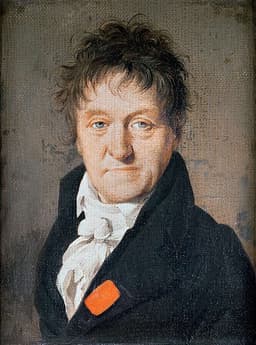
Lazare Carnot
Politician · Modern
68.2Total

Napoleon Bonaparte
General · Modern
70.9Total
Basic Information
Born
1753
1769
Died
1823
1821
Era
Modern
Modern
Nationality
France
France
Occupation
Politician
General
Civilization
Western
Western
Score Comparison
Military (10%)
61.7
94.0
Political (20%)
72.0
72.0
Influence (20%)
68.0
40.0
Legacy (20%)
65.0
80.0
Leadership (15%)
72.0
78.0
Strategy (15%)
72.0
90.0
TOTAL
68.2
70.9
Lazare Carnot — Complete Timeline
1793 AD
Directed the Victory at the Battle of WattigniesWar◆ Major
Carnot personally directed French forces at the Battle of Wattignies, a key victory that relieved the siege of Maubeuge. His strategic planning helped turn the tide against the Austrian army.
French RevolutionBattleVictory
Impact: regionalconstructive
Organized the Levée en MasseReform◆ Major
Carnot helped implement the lev
French RevolutionConscriptionMilitary Reform
Impact: globalconstructive
Appointed to the Committee of Public SafetyPolitical Action◆ Major
Carnot was appointed to the Committee of Public Safety, where he took charge of military organization. He reorganized the French army, introduced mass conscription, and coordinated the war effort against foreign coalitions.
French RevolutionCommittee of Public SafetyMilitary
Impact: nationalconstructive
1815 AD
Exiled as a RegicidePolitical Action
After the Bourbon restoration, Carnot was exiled as a regicide for having voted for the execution of Louis XVI. He spent his remaining years in Germany and died in Magdeburg.
ExileRegicideBourbon
Impact: nationaltragic
Napoleon Bonaparte — Complete Timeline
1799 AD
Coup of 18 BrumaireOther◆ Major
Napoleon Bonaparte, with support from his brother Lucien and key political figures, overthrew the Directory in a bloodless coup. He established the Consulate with himself as First Consul, effectively becoming the ruler of France. This event ended the French Revolution's most unstable period.
French RevolutionCoupRise to Power
Impact: regional
1804 AD
Promulgation of the Napoleonic CodeOther◆ Major
Napoleon enacted the Civil Code of the French, known as the Napoleonic Code, a comprehensive set of laws that replaced the fragmented feudal legal systems. The code established legal equality, protected property rights, and secularized law. It became the basis for legal systems in many European and world countries.
Legal ReformNapoleonic CodeCivil Law
Impact: globalconstructive
1805 AD
Battle of AusterlitzWar◆ Major
Napoleon's Grande Arm
Napoleonic WarsBattleDecisive Victory
Impact: global
1812 AD
Invasion of RussiaWar◆ Major
Napoleon led the Grande Arm
Napoleonic WarsInvasionDisaster
Impact: globaldestructive
1815 AD
Battle of WaterlooWar◆ Major
Napoleon's French army was defeated by the combined forces of the Duke of Wellington's Anglo-Allied army and Gebhard Leberecht von Bl
Napoleonic WarsBattleFinal Defeat
Impact: globaldestructive
Expert Analysis
lazare-carnot-vs-napoleon-bonaparte
# The Organizer and The Conqueror
In the winter of 1793, as the fledgling French Republic teetered on the brink of collapse, a middle-aged engineer named Lazare Carnot sat in a cramped Paris office, surrounded by maps, dispatches, and the urgent scribbling of clerks. Across the Channel, a young artillery officer from Corsica was still dreaming of glory in the dusty streets of Toulon. Within two decades, one of these men would be hailed as the "Organizer of Victory," the architect of an army that would terrify Europe; the other would become that army's most dazzling commander, a man whose name would eclipse the very Republic he served. How did two Frenchmen, born just sixteen years apart, forge such different paths—and why did one end his days in exile on a remote Atlantic island while the other died forgotten in a Prussian town?
Origins
Carnot came of age in the twilight of the Old Regime. Born in 1753 to a provincial lawyer, he was a creature of the Enlightenment—methodical, rational, and deeply committed to the idea that systems could perfect human endeavor. He studied engineering at the École Royale du Génie in Mézières, where mathematics and fortification were his tools. When the Revolution erupted, Carnot was already forty years old, a seasoned officer who believed in order, not glory.
Napoleon, by contrast, was born in 1769 on Corsica, an island only recently annexed by France. His family was minor nobility, but his world was one of precarious ambition. He entered a military academy at nine, a small, intense boy with a thick accent, mocked by his wealthier classmates. Where Carnot saw systems, Napoleon saw opportunities. The Revolution would be his ladder; he would climb it with audacity, not patience.
Rise to Power
Carnot's ascent was the product of crisis. In 1793, with foreign armies closing in and internal rebellion tearing at the Republic, the Committee of Public Safety needed a man who could turn chaos into order. Carnot was appointed to the Committee in August of that year, and he immediately set to work. He reorganized the army into semi-independent corps, streamlined supply lines, and—most crucially—helped implement the *levée en masse*, a mass conscription that mobilized hundreds of thousands of French citizens. He personally directed the victory at Wattignies in October 1793, riding among the troops to rally them. His power was real, but it was the power of the desk and the map.
Napoleon's rise was the stuff of legend. At the siege of Toulon in 1793, the twenty-four-year-old artillery captain devised a plan that captured the British-held port. His reward was a promotion to brigadier general. In 1795, he saved the Directory from a royalist mob with a "whiff of grapeshot"—a brutal, decisive act that made him a national figure. By 1796, he was commanding the Army of Italy, where his lightning campaigns forced Austria to sue for peace. He was thirty years old.
Leadership & Governance
Carnot led through organization. He was not a battlefield genius—his military scores reflect a solid but unspectacular strategist—but he understood that wars are won by logistics, by the steady flow of men and matériel. His political score of 80 reflects a man who could navigate the treacherous currents of revolutionary politics, serving on the Committee of Public Safety while avoiding the guillotine. He was a republican to his core, believing that the nation's survival depended on discipline and sacrifice.
Napoleon led through vision and will. His military score of 94 and strategy score of 93 place him among history's greatest commanders. He redefined warfare: the rapid march, the concentration of force, the decisive battle. But his political score of 75 reveals a more complex figure. He was a brilliant administrator—the Napoleonic Code, the Bank of France, the centralized state—but he was also an emperor who crowned himself, who placed his brothers on European thrones, who seemed to believe that his glory was France's glory. Where Carnot built systems, Napoleon built monuments.
Triumph & Tragedy
Carnot's greatest triumph was the survival of the Republic itself. The *levée en masse* created an army of citizens, not mercenaries, and his organizational genius turned raw recruits into a fighting force that could match the professional armies of Europe. But his tragedy was personal: after the Bourbon restoration in 1815, he was exiled as a regicide for having voted to execute Louis XVI. He died in 1823 in Magdeburg, a forgotten man in a foreign land.
Napoleon's triumphs were global: Austerlitz, Jena, Wagram—battles that shattered coalitions and redrew the map of Europe. His tragedy was hubris. The invasion of Russia in 1812, the refusal to compromise, the final gamble at Waterloo in 1815—these were the acts of a man who could not stop. He died in 1821 on Saint Helena, a prisoner of the British, his empire reduced to memory.
Character & Destiny
Carnot's character was that of the engineer: cautious, methodical, principled. He believed in the Republic, not in himself. His leadership score of 83.5 reflects a man who could inspire loyalty without charisma, who could command respect without fear. His destiny was to be a servant of history, not its master.
Napoleon's character was that of the artist: ambitious, restless, driven. He believed in his own star. His leadership score of 80 is lower than Carnot's, perhaps because his style was more about awe than affection. His destiny was to be a force of nature, magnificent and destructive.
Legacy
Carnot's legacy is quiet but profound. The *levée en masse* became the model for modern national armies. His organizational principles influenced military thinkers for generations. He is remembered as the "Organizer of Victory," a man who made Napoleon's triumphs possible. His legacy score of 75 reflects a solid, respectable place in history.
Napoleon's legacy is loud and contested. He is a symbol of genius and tyranny, of reform and conquest. The Napoleonic Code influenced legal systems across Europe and the Americas. His campaigns are studied in military academies worldwide. His legacy score of 78 is slightly higher than Carnot's, but it is a legacy of extremes—admired by some, reviled by others.
Conclusion
Standing on the deck of the *Bellerophon* in 1815, Napoleon might have looked back at the coast of France and thought of Carnot. The old engineer had given him the tools—the army, the system, the nation. But Napoleon had used those tools to build an empire of one, while Carnot had labored to build a republic for all. In the end, the organizer died in obscurity, the conqueror in exile. One had built a foundation; the other had built a monument. History remembers the monument, but it rests on the foundation.
Rankings
🥇
Napoleon BonaparteLeader
Mil: 94.0Pol: 72.0Inf: 40.0
70.9
🥈
Lazare Carnot
Mil: 61.7Pol: 72.0Inf: 68.0
68.2
+2.7 behind
How This Comparison Works
Algorithm
Each figure is scored on 6 dimensions (0—100 scale) based on structured historical data: Military (10%), Political (20%), Influence (20%), Legacy (20%), Leadership (15%), Strategy (15%). The weighted total produces the final ranking.
Data Sources
Scores are computed from structured sub-indicators in the database. Scale factors adjust for era (Ancient ×0.85, Modern ×1.0) and civilization size (Eastern ×1.05, Other ×0.80) to account for differences in population and military scale.
Maximum 3 Figures
Comparisons are limited to 2—3 figures to ensure readability and statistical meaningfulness.
Error Margins
±5 points per dimension — Sub-scores are derived from historical records with inherent uncertainty. Two figures within 5 points on a dimension should be considered roughly equivalent in that area.
Total Score Accuracy
±3 points overall — The weighted combination of 6 dimensions produces a total score with approximately ±3 points of uncertainty. Differences of less than 3 points are not statistically significant— the figures are effectively tied.
Known Limitations
- Historical records are incomplete and uneven across civilizations
- Figures from oral-tradition societies may be underrepresented
- Occupation labels can misclassify multi-role figures
- Scores measure capability and impact, not moral character
- Quantitative scoring is a comparison tool, not absolute truth
Capability Radar
Military (10%) — Battles & Warfare
Battles
60
95
Win Rate
65
90
Expansion
80
95
Political (20%) — Governance & Reform
Reform
90
95
Diplomacy
60
80
Economy
75
85
Influence (20%) — Cultural & Global Reach
Cultural
60
85
Global
75
90
Legacy (20%) — Historical Impact
Historical
85
95
Longevity
70
90
Leadership (15%) — Power & Stability
Tenure
70
85
Stability
50
70
Strategy (15%) — Tactics & Innovation
Strategy
85
95
Tactics
70
98
Reform
95
92
Similar Comparisons
Comments & Discussion
No comments yet. Be the first to share your thoughts!